|
|
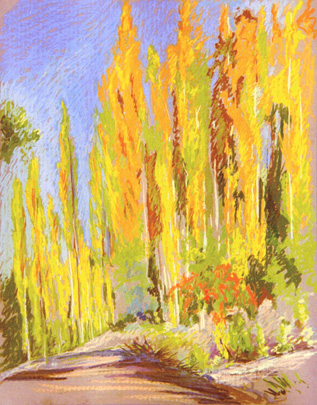
Fr. Eleuthere's
Garden |
|
|
Fr. Eleuthere's
Garden |
[2]
50th
Anniversary Reminiscences
Br. Dominique Guillen,
O.S.B.
Fr. Werner Papeians DeMorchoven,
O.S.B.
Sister Elizabeth,
S.S.S.
Temi Doty
Sheila Thomas
Dick Bennett
Bud and Paula Ogren
[3] Four Foundational Pillars of Benedictine Spirituality, Fr. Simon O'Donnell, O.S.B
[4] The Uniqueness of a Retreat Center in a Monastic Setting , Sr. Karen Wilhelmy, S.S.J.
[5] Quarterly Book Review, Fr. Philip Edwards, O.S.B
LETTER FROM THE
ABBOT
DEAR FRIENDS,
THERE are moments in our lives when we are given the grace to look through the events of the present and glimpse what God has been speaking to our soul for a long time, perhaps even a life time. All of us have core life values that begin within us at a very young age. Of course, they are related to our family upbringing and our social environment but, very often, these life values transcend those formative surroundings. These personal values turn into life themes, recurring dreams or ongoing longings to receive or to become more who we really are meant to be. For a spiritually attuned child, young person or adult there is a personal solitude or unique unfolding which invites us to more than what this world seems to hold important.
I was four years old when my parents moved our family from the Midwest to California. Both of their families were tight knit and did everything together. The journey to California created a vacuum—there was no extended family to provide this family identity through frequent presence to one another. My parents had to reach out to neighbors and fellow workers for a sense of belonging. We children had no grandparents, aunts, uncles or cousins with whom to share our lives. Our household became an open house, a place of welcome. It invited people not of our family or faith into our lives.
THIS theme of welcome or hospitality became for me an image of what my life was to become, how it was to unfold. Having entered monastic life at a young age, I grew up as a young adult in this monastic family. From the start, I looked at the elders in our community to model that human dimension of our spirituality. What seemed so natural in my nuclear family was expanded to greater proportions in the hospitality I participated in here at Valyermo. Over the years I have reflected on how this theme of hospitality can become a paradigm for prayer, for friendship, and for all human relations.
THE reality of prayer is based, I believe, on the fact of creation and God’s desire for human beings to be in communion with Him. Since our very existence depends on God and is intimately related to God, it is natural for us as creatures to long for meaning, understanding and relationship with the Source of our being, the transcendent God. God becomes imminent to us through creation, revelation, and ultimately through the Person of the incarnate God-man Jesus Christ. Our existence and our growth in faith are signs of God’s welcome—into His life, into His heart, into the eternity of His love. Hospitality is a reflection of God for us, God with us, and God within us. God wants us to be with Him. In this light, our prayer becomes an act of personal receptivity, of attentive welcome, of loving service. Prayer becomes a listening to, a longing for and a welcome of the God who comes, the God who visits us, the God who is always actually present to us in Word and Sacrament, and in the sacrament of life itself. Everything is potentially an encounter with God. Through the mystery of the Incarnation, which changes the whole of human history, Christ comes to us in a movement which brings us to God. As Christ washed his disciples’ feet and showed that servant love is the way to God, so we wash His feet every time we serve our brothers or sisters. Christ lived and died for us that we might live for and die in Him. Christ welcomes us as a guest into the divine mysteries and transforms us through the relationship of faith into co-heirs, adopted sons and daughters, friends of God. We welcome Christ in others as guest, as friend and as brother or sister; and the mutuality of hospitality expresses who we are in Christ.
SPIRITUAL friendship is a gift, given and received, which denotes recognition of the good of the other for their own sake. It is an opening to the mystery of the other in the Other. It the early stages of friendship, there is a welcome, a desire to be with and to partake of the unique qualities of the other. There is also the willingness to share the truth of one’s self, to generously serve the good of the friend, and to dwell securely in the trust that grows through mutual self-disclosure of all that is important to the self and to the friend. Jesus and reveals to us that He embodies a love that lays down its life for one’s friends (John 15: 13). Friendship by its nature is reciprocal; therefore it becomes itself through mutual hospitality one to the other. Friendship promotes sacrificial love, a love that gives to the end. Love of Jesus promotes love for “the many” because Christian love is inclusive, reaching out to more than one special friend or circle of friends. Every person has the potential of becoming a friend of the soul. Jesus says to us, as He said to His disciples, “I call your friends…because I have made known to you all that the Father has told me” (John 15: 15). Jesus is our Friend because He reveals Himself and the Father through the Spirit of truth expressed in Self-donating love.
HOSPITALITY enlarges the circle of acquaintances into a circle of friends. To God, there is no stranger. To us strangers, when welcomed and received, become related to us as brother and sister. The very act of welcoming, listening and serving promotes an atmosphere of hospitable love. Over the years in this monastery, I have shared deeply with people too many to be counted. They keep returning regularly or infrequently to seek God, to be welcomed to this house of prayer, to be cared for silently and in meaningful conversation. Many people find a spiritual home here which allows their truest self and their deepest longings to be nurtured and to be recognized as good. For not a few, this place has become the most stable home in their life pilgrimage. This monastery becomes a sacrament of encounter with God, with self and with others. The monks participate in this dynamic ministry by welcoming others, strangers and friends, as if they were Christ Himself (RB 53:1; Matthew 25:35).
WE are all quite aware that we live in a rather hostile world. People lock their houses and their cars to protect themselves from loss. There are passwords on our computers, cell phones, and credit accounts to protect from identity theft or violation of one’s privacy. We are taught to drive defensively to avoid accidents. Competition and mistrust abound in so many arenas of our everyday life. Welcoming Christ in prayer, others in friendship, and strangers through hospitality—such an attitude and behavior become a major remedy for what afflicts the soul of society and the heart of each person.
WHEN we give or receive hospitality, God is present in our midst. In such an atmosphere of welcome, we become free to be ourselves and we progressively let go of fear. We find security and hope for the future. We are enabled to give as a gift what we have received as a gift (cf. Matthew 10: 8). A love that shares with others is as much a blessing to the self as to them. The Letter to the Hebrews says it so beautifully: “Love your fellow Christians always. Do not neglect to show hospitality, for by that means some have entertained angels without knowing it” (Hebrews 13: 1-2). I pray that hospitality will become more and more the paradigm of our Christian love, of our profound prayer and of our growing friendship with others. May the gift of your life become an abundant blessing to the world that God so loves and to every person you meet.
IN God’s unfailing love,
Abbot Francis, O.S.B.
50th
ANNIVERSARY
REMINISCENCES
Introduction:
ONE of the main reasons St. Andrew’s was able to root itself in Valyermo was the help so generously offered by many early friends; all of whom responded to the challenge and the hope of the founding monks seeking to serve a new land. We want to start publicly remembering these good friends of the first hour—through their own reminiscences, and through memories offered by others. As editor, I asked some of these early friends, of who so many are now one, to share their reflections of and on the early days of St. Andrew’s. It is a way of focusing in on what our founding monks intended their vision of monasticism to be, the things we would build our own monastic traditions upon. If any reader has personal reflections or photos to offer, please send them to the Chronicle. The individual friends mentioned in the following articles in no way reflect the number of, the affection towards, the names of all who helped. This is just a beginning sample for all to share.
The Editor (Fr. Ælred Niespolo, O.S.B.)
Br.
DOMINIQUE
GUILLEN,
O.S.B.
(Friends
of the First Hour)
THE MARINES
PETER COYNE, U.S,M.C., Trained Carpenter thru the Marine Corp. and Vice President of the “Catholic Action Club” Air Station in EI Torro, Ca. It was six Marines and Fr. Yang who designed and built the original Altar in the Priory Chapel. It was Pete, Dominic and Bob who put in the original Harringbone design floor plan in and around the original Priory Chapel.
One day before the chapel was fully completed Fr. Yang had the ranch house dining table brought down into the chapel in order to say Mass for the local Mexican’s workers from the Valyermo Ranch. Pete was the altar server and Fr. Yang informed Pete that he was going to say the Mass in Spanish ...Pete replied, Father I don’t know the language. Father merely told Pete to “wing it!” Mass went on as scheduled. .
Peter was also for a while a member of the monastic community.
DOMINIC GUERRERA, U.S.M.C., from New Jersey. An electrician at the base and member of the Catholic Action Club., stationed at EI Torro, Ca. in Orange Co. He would organize and oversee the electrical work projects taking place at the Priory on those work weekends.
SGT. JAKE WILLUS, U.S.M.C., of Indiana, stationed at EI Torro, Ca. came to work weekend after weekend to help the monks. He received religious instructions during those visits from Fr. Gaetan and was baptized into the Faith shortly before Conventual Mass in February 1957. Jack Horan, U.S.M.C., of Haverstraw, N.Y., served as his Baptismal sponsor. After the military Jack went on to attend the Police Academy after which he served out his law enforcement days in Fullerton, California.
ROBERT “BOB” MURPHY, U.S.M.C., Aviation & Flight Trainer and faithful friend of the First Hour’s, he helped organize the Marines to come and gather on weekends to help get things built and started in 1956. Bob was the founder and first President of the Catholic Action Club of EI Torro, Ca. He also was able to get this Catholic Action Club started at five other bases during that time.
JAMES “JIM”GALBRAITH, U.S.M.C. faithful friend is pictured in a recent A.V. Press front page article dated Tuesday November 28th 2006 marking the 50th Anniversary of the monastery, Jim is pictured raking leaves while Father (ta-teh) Yang chats with him. In those days the marines would compare youthful exchanges as to which one of them would receive the most attention from the founding fathers.. Though the monks were totally unaware of such happenings as both marines and monks worked side by side striving to get the place off to a fresh start.
JEAN AND BARNEY EVANS,
owners of the Valyermo Ranch, were our next door neighbors at the inception of the Priory. Barney was the nephew of Dorothy and Levi Noble who had received the Valyermo Ranch as a wedding gift in July 07, 1910 from her father, Dr. Cadwalder Evans, of Harrisburg, Pa. Dr. & Maggie Evans were exceedingly indulgent to their six children of whom Dorothy was one of six. She was considered “the tomboy of the family” she disliked most of the social things but when needed she could rise to the occasion.
Both Dorothy and Levi lived on the ranch from 1910 to 1965. Uncle Levi died in Palmdale, California at Swan Memorial Hospital on August 04; 1965. On Levi’s side of the family he Levi was born and raised in Auburn, N.Y., in a four story mansion which encaged 17 fire places one of which has been hand carved by none other than Brigham Young at the age of 16.
Note well, that Deane Evans, Dorothy’s brother had died unexpectedly at the age of 23 in the little red “homesteader’s” cabin slightly above the Noble house in spring of 1914 of an apparent heart attack. He was buried on the knoll above the red house.
Barney lived and ran the daily operations of the Valyermo Ranch at the invitation of his aunt Dorothy in September 1952. His Aunt Dorothy however died in 1968 of an apparent heart attack at age 83. To my recollection Dorothy had died at 192 Genesee Street in Auburn, New York.
Subsequently Dorothy’s will was read before several family members. Her house was to go to her sister, Mary. The ranch was to be sold and the money from the sale divided among her nieces and nephews of which Barney was in part. When the ranch was put up for sale, Mary requested that Dorothy’s house be sold with the rest of the property. Norman’s house together with the 36 acres was to be included to complete the sale of the ranch. Barney and Jean together with their children (namely, Berne, Betsy, Norman, Cathy and David) lived in what was known as Norman’s house on the compound.
MADAME OSCARINE BRASSEUR,
taught Dominique how to cook! She together with Jack & Lucille prepared all the meals and did all the washing of cloths for the early founders together with the linens for the retreat house.
Lucille and Jack Lee, Lucille taught me how to bake especially wedding cakes. Jack taught Gaetan to be the “Jack of all trades” during those early days.
Fr.
WERNER
PAPEIANS
DeMORCHOVEN,
O.S.B.
(Reminiscences)
SISTER Henrietta CSJ was the real power behind the support given to St. Andrew’s by Orange County Catholic groups:
St. Andrew Laymen League 1956-1970-197D
St. Andrew’s Sewing Basket
The Catholic Daughters, Court of St. Benedict, Fullerton
The Young Ladies Institute
WE have to be thankful and remember very specially, Mother Louis and Mother Felix, the two Superiors General of the Sisters of St. Joseph of Orange. They gave their full support to the work of Sister Henrietta. .
SISTER Henrietta met Father Raphael in Orange some time in 1955 and she decided to help him in his new endeavor.
SISTER organized the St. Andrew’s Laymen’s League with its twenty two captains to collect money for the new born monastery. Every month we were receiving checks collected by them, for quite a few years. She found a great helper among them in the person of Gerry Crammer. Gerry was also helping Fr. Werner with the financial accounts and statements every month for at least ten years. Gerry was also printing all the newsletters until the end of the 1960’s, free of charge.
GERRY Crammer and Sister Henrietta got the support of Fr. McEvoy, pastor of the Holy Family Church, now the Orange diocese Cathedral. All these great people have now passed away.
SISTER Henrietta founded in 1956 the St. Andrew’s Sewing Basket, to help the Priory with linen, food supplies and cash, so badly needed. Every month, there was a meeting with dinner and bingo for the benefit of the Priory. All the moneys were given to Father Raphael. The amount of money collected over a twenty years period is very impressive. The dinner and the bingo were held in the parish hall of St. Anthony Claret Church on East Palma Avenue, Anaheim. Msgr James Nash pastor of St. Anthony Claret was very supportive of the group and very kind to us. Msgr. Nash is now Pastor Emeritus of St. Anthony Claret. Most of the members of the Sewing Basket have passed away. But we should specially remember Mrs. Margaret Sullivan the tireless secretary of the Sewing Basket and Mrs. Verheyden who made the habits of the monks with material bought by Sister Henrietta. Each time, I was going to Orange County, visiting Sister Henrietta or with Father Raphael to a meeting or a dinner, I would come back to Valyermo with a car load of supplies.
THEN came the “Catholic Daughters, Court of St. Benedict” in Fullerton, organized in January 1957. The name Court of St. Benedict was because of Fr. Raphael and the monks of Valyermo. They too gave us a great help. They use to meet in the parish hall of St. Philip in Fullerton. The pastor Msgr. O’Brien was most gracious to the Benedictines.
The earlier Grand Regents, Martha Montgomery, Margaret Gieser and Vera Fisher, were great friends of St. Andrew., St. Andrew”s Priory was made the recipient of all the charitable activities of the Court. Sister had something to say there, too. The Catholic Daughters, Court St. Benedict closed in 1979.
The Festival.
SISTER and the Orange County groups were very much involved in the Festival. The first BBQ of 1957 Festival was made by Orange County people. After that BBQ the Roast Beef Dinner was completely in the hands of the Laymen’s League and the Sewing Basket with Pierre and Georgette Goubert, as chef, until 1987. (30 years). Other ladies staffed and supplied 5 or 6 booths, with 100% profit for the monastery. Martha Montgomery with her own money and supplies started the “Donut Booth”. Martha died, but the children kept the “Donut” alive until now. Last year the Montgomery Tribe, 50 strong came to help the “Donut Booth. It became a traditional Family yearly reunion event.
LELA Schade, a Sewing Basket Lady, under the advise of Sister Henrietta, chairs until now the “Artist Alley” It is still operating an brings a good income.
SISTER Henrietta’s last visit to the Abbey was on Festival 1988. She died in 1989.
Sister also enrolled the Young Ladies Institute to help in connection with the Sewing Basket and the Catholic Daughters
Sr.
ELIZABETH,
S.S.S.
(Reminiscences)
I FIRST met Father Vincent Martin on a Sunday morning in 1952 when he came to celebrate Mass as a replacement for the retreat master who could not come. Father Joseph Woods, a Benedictine from Portsmouth Priory, New Jersey, who had. stayed with us for some time, recommended him. It was the feast of St. Lawrence, deacon and martyr, at our old Motherhouse in Los Angeles, and I was so impressed by his celebration of the Mass and the beautiful, unusual homily he gave, that I begged God not to “let him get away”. He was just back from Harvard, with his thesis to write, and the assignment from his Superior in Belgium to find a location in California to re-locate the monks who had just been expelled from Communist China and were scattered in Europe and the United States.
FATHER Vincent didn’t get away! He stayed in an apartment we had and filled a long table with books and papers for his research, and. daily he went in search of a place to establish a new priory. He had the blessing and encouragement of the Archbishop of Los Angeles, and a beloved Citroen French car, that took him all over north. and south of the state. One rainy Sunday morning I took him a glass of orange juice .He was holding a torn out piece of the Los .Angeles Times. It was an advertisement for the sale of Hidden Springs Ranch in Valyermo! “You have watered our new priory with orange juice” he confidently said, and from then on there was no stopping. He had me introduce by phone “Mr. Vincent Martin” to the owner of the ranch property in Valyermo because of a bit of prejudice against Catholics. When the negotiations were finally settling into place, Father went to see the owner, who was utterly charmed by him and they became good friends.
NONE of the exiled monks had yet come to Valyermo and Father was completely alone that first year. There was the turkey ranch with 50,000 turkeys, the cherry orchard, the ranch house, and concern about surveys, water rights, and roads, the stable to be converted to a chapel, the chicken house was to be the monks’ monastery, and then the immediate need to establish a support group for the new priory. Father made contacts wherever he could. The Catholic Alumni group of youth, willing helpers was contacted. One of the members remembers they laid the brick chapel floor, and searched. the grounds for rock and pebbles (Father said to find pretty ones!) for the foundation of the chapel, altar. It was built by hand by Father Vincent and his helpers, with an enclosure for relics and a Holy Spirit medal.
DURING that first beginning we served as base for his myriad activities and visits to Los Angeles, though he soon had enthusiastic and willing help f ram many people and groups. We helped keep the Valyermo Post Office alive when it was threatened to be closed due to lack of patronage. We sent every bit of mail we could find to be mailed there, as well as our orders for postage stamps. It survived. For the first Festival we made beautiful, hand printed menus and delicious pastries and other delicacies for sale. There was great joy and a wonderful family spirit at the Festival. Father inspired everyone’s latent creativity and artistic ability by his own exceptional gifts and vision.
The first Mass in Valyermo was a momentous occasion. The privileged Sisters of Social Service and novices brought the altar linens, the altar stone, the altar wine and breads, and gathered on the floor on one side of the table in the living room of the guest house overlooking the lake, with Father Vincent on the other side, a large spinning wheel in the background, and plenty of incense (we brought that too), and sang a Gregorian High Mass. Father gave a magnificent homily, noting that this was the first time Mass was ever celebrated in that part of Southern California.
AFTER breakfast Father took us for a whole tour of the ranch, driving from one end of the property to the other. He was alive with plans for the present and future. We climbed to the top of the property, sang a Magnificat, and planted a St. Benedict medal, with a prayer for the future magnificent monastery to be built there. God thought otherwise, and the monastery remains at the base of the hill where its humble beginning began.
FATHER served for a short time at Our Lady of the Assumption Church in Claremont before he “found” Valyermo, and it was in Claremont that that Mrs. Oscarinne Brasseur, “Mother Brasseur” really became a mother for the monastic family, and she and Jack and Lucile built Valyermo with their staunch friendship and untiring love and support through the years. Also, before Father “found” Valyermo he gave a Married Couples’ retreat in Ojai, California, the .first in the Archdiocese, sponsored by Holy Family Adoption Services, and that is where Marie and Bud Brown, and Leo and Muriel Langlois first met him. They became his first Oblates and unfailing friends and supporters.
FATHER had a charism and vision that attracted many people, a superb intellect and cultural background, a creative and intuitive artistic gift, and an amazing ability to speak in French, Chinese, Hebrew, and English fluently. He had a deep biblical and. liturgical knowledge which he lived and shared. by his very being. Above all, he was a true Benedictine and monk, a wonderful man of God.
Sister Elizabeth
TEMI
DOTY
(Reminiscences)
I FIRST learned about the Benedictine Monks who were exiled from China through the Sisters of Social Service with who Father Vincent Martin was residing while he searched for a location to reestablish his family of Monks. I believe that Father Raphael, Father Gaetan, Father Werner and Father Yang were living in other parishes in the L.A. Diocese. The Ogrens lived in Lynwood, CA and we lived in Long Beach. We all attended a bible discussion group at their home and Father was our mentor. The Christines was a group of women (formed as a female counterpart to the Christophers, a men's group) which was formed by Ann Reher, Cecil Piantadosi and other women in Los Angeles who wanted a way of getting together for religious and community service. In those days most women were at home and not working so they appreciated this opportunity to meet and act together. Several Christines were involved in Valyermo in its beginnings. I can't recall all who were but I am sure Paula can go through the list of supporters and point them out. I met Father through the Bible group. It was wonderful. Of course, we all knew that Father was looking for property. He told us all about his Community and we were anxious for them to come here and be settled.
ON December 29, 1955, Father called and told us he had the property in Valyermo and invited us and the Ogrens to come visit. We did as I have mentioned to you before. My daughter Judith Marie was born 12/30/55, early in the morning.
FOR over 50 years, St. Andrew's has been and still is very close to my heart. During these years, there have been some very deep low times and that if it weren't for my being able to think about Valyermo as an emotional sanctuary I don't know what I would have done. There is one thing though and it is a source of dismay in some ways and I haven't been able to solve it. The only place I can sit through and apprieciate a Mass is at St. Andrew's during our retreat. I have now reached a point where I feel I must get to the Church. Our parish church is St. Hedwig's. Did you know that that is where Father Yang lived while waiting to find a new home for our beloved Benedictine Monks. I wonder if they would welcome this Benedictine Oblate. I am looking forward to coming there for retreat in July. I don't know why I am going on like this but you asked for my feelings about Valyermo. There is not a day that I don't think about it. I have everyone's pictures by my desk. How could I miss.
THERE is no one I know, who has been to St. Andrew's that doesn't love it. I know that if all of my children did not live right around me, I'd move up there in a minute and volunteer my help to you.
SHEILA
THOMAS
(Reminiscences)
MOTHER, Florence Kramer, first met Fr. Vincent Martin when he was invited to speak to the Christines about the community of St. Andrew's Priory that had been expelled from China by the Communists. Fr. Vincent had just purchased the Hidden Springs Ranch and he was inviting people who were interesting in Benedictine spirituality and helping convert the ranch into a monastery to come up to Valyermo. I remember my mother telling me that the first time she and my father, Leo Kramer, made the trip from our home in Lynwood she could not believe how long and desolate the drive seemed. When they arrived her first thought was that they would need to make the same drive back and she could not imagine why Fr. Vincent bought something so far from everything.
IN those days the original ranch buildings were where the community lived. The turkey ranch (where the youth center is today) still had turkeys. The orchards, including cherry, peach, and pear trees filled most of the areas between the cloister and the turkey ranch, now used for festival parking. The apple orchards near the stone house (now used for the business office and the Abbey Art Shop) and those beyond the turkey ranch to the west, now in remnants, are all that is left.
IN July of 1956 the entire family came to work at the Priory. It was the first of many such summers. In the early days, when our family would come to stay and work, we would stay most often in the Ranch House by the lake or occasionally in the Rose Cottage by the turkey ranch. Sometimes Fr. Vincent would say mass for us in the living room of the ranch house, our own private mass. That July the horse stable was in process of being converted into the Chapel. The altar and the exterior was complete, but the inner walls were still exposed studs. The chapel had been remodeled on the inside but still had the original stable stall doors on the outside, complete with the original hardware. As a child, I used to open the stable doors, which would expose the backside of the interior wood walls, and imagine what it would have been like when horses were still there. Today the window in the original east end of the chapel is the last of what was original upper door of the stall. By the Feast of St. Andrew that year the conversion was complete and Fr. Rafael celebrated mass in the newly converted stable.
MY family spent Christmas Eve and Christmas of 1956 at in the ranch house, this first of several such holidays.
Although my parents became Oblates as well, and spent Oblate Sundays at the Priory each month, more often we would come to work. My father would spend all of his holiday weekends, vacation days, and several weekend days after his vacation was used up, helping with plumbing and general construction. My father would work with Fr. Werner, John Cajegos (then Brother Joseph), Jack Lee, Ed Bradshaw and many other of the original members of the monastery family. My father, because of his job with Mobil Oil in Torrance, was able to bring surplus pipe and personally installed much of the plumbing in the early buildings. (When my father finally retired in from Mobil in 1978, part of his retirement "roast" include his boss saying that while most people relied on prayer, Leo Kramer had donated so much pipe to St. Andrews that he thought we was trying to plumb his way into heaven.)
WORK and prayer was part of every day and the Priory. In addition to the continual process of converting Hidden Springs Ranch into St. Andrews Priory, the ranch was still a working ranch for many years. Each morning before breakfast Brother Joseph would milk the two cows, so the milk was always fresh, and consequently still warm in the mornings at breakfast. When it was harvest time we would all work, even the kids, packing or moving crates. The Warehouse and the Stone House both had walk-ins to keep the fruit in cold storage. Even when my father had to return to work during the week, the rest of the family would stay and work. My mother would mend and sew habits and vestments, as well as help cover and organize the monastery books. The summer of 1956 she also taught Fr. Gaton to drive.
EVERYONE who came to work became like extended family. It did not matter what job or income level someone had outside the monastery, we worked cooperatively side by side. Monks were in their work clothes, and were working, when they were not in the chapel. We grew up with. a personal understanding that monks were real people who were both human and spiritual.
I STILL believe that it is the bond created through working together that has kept the 2nd and 3rd generations of the first families coming back to St. Andrews. Each time we come to visit, we are visually reminded of our contributions. The small patios on the lower retreat room were my Lent project of 1984. Jack Lee and I worked on the fences, concrete, and irrigation part of each week. I had my two older girls, then age 7 and not yet 3 years help me plant the patio shrubs the day before Easter. My son help us rebuild the walls of the Tea Garden Kitchen in 2001 and my youngest daughter has already volunteered to help with the pavers to be placed at the entry road of the new Gatehouse.
DICK
BENNETT
(Reminiscences)
I HAVE no record of my first visit to the monastery but it had to have been in the late 1950’s or 1960. It was a retreat and I recall one set of retreat rooms and the dining room fronted by a giant concrete slab which was to become the great room of today. The monks lived for the most part in the barn I believe and they kept a cow for the milk. The chapel was tiny of course consisting only of a portion of the stable but even then it had its magic.
I had made previous retreats with the Jesuits, the Franciscans and some et ceteras. This one was different. The presence of priests from both Europe and China and the lovely combination of both strangeness and. other world spirituality. It was my introduction to Benedictine spirituality and resulted in an affliction I shall carry to my grave.
THE following September one of my fellow parishioners at St. John Baptist de la Salle told me about the Fall Festival. He was supplying the sound equipment and asked me if I wanted to come along and help out. It sounded like fun and I agreed to go with him. Little did I know, I was about to expose myself to a highly infectious fatal disease. Naturally, I caught it. One is never quite sure how it happened but spends the rest of their days nurturing it in hopes that it will go away if one treats it decently. A fatal error. It not only does not go away, it is highly contagious and I am guilty of infecting my sons Michael, Mark and Charlie with the same disease. They in turn have infected their children and their children’s children with the same affliction. And,waiting in the wings are a potential host of great grand children. Lord, will there be no end to it?
OVER the years there were the special days of preparing for the Festival with Jack Lee and his fellow volunteers. As dear and fun-loving a group of unpaid workers, including Tim Fitzpatrick & John Hickey, as one could hope to meet anywhere on earth and, it is my devout wish, I hope to meet in heaven. In addition to the usual construction of stages and booths and the vast Cafe Continental there was always some new piece of construction Fr. Werner would give orders for us to build. As I recall, the specifics of what we were supposed to construct were always very clear. The financing was in the hands of God. I’m not sure how he did it but Jack Lee always found a way for us to complete the project.
IN truth, if it hadn’t been for a plentiful supply of beer to drink and the old turkey sheds to be dismantled for the lumber the tasks would have been impossible. I don’t have too clear a remembrance of the projects we built but do have fond memories of the camaraderie and the beer.
OVER time I found myself involved in other activities at the Monastery. I was interested in photography and eventually took many photographs of the grounds and the monks. One of my special interests was photographing special masses in the Chapel. In time I developed a technique for shooting special Masses and affairs in the tiny Chapel without being a distraction to either the celebrants or the congregation. The secret was to use two cameras, one with a wide angle lens and one with a longer lens for close ups, working from the sides and using no flash in the dimness of that magical space. In time it became one of my passions and my fervor was rewarded when Fr. Maur created a Photographer Angel carrying two cameras.
FOR several years Sean McClory, the very gifted Irish actor, and I would put together an annual yearbook of photographs and articles about the monastery which would be given out to everyone as they entered the Festival grounds. In time we became so artistic and expensive the Monastery wisely dropped the practice.
BUD
and PAULA
OGREN
(Reminiscences)
FATHER Vincent Martin had been appointed to find an appropriate monastery site in Southern California. Paula and I hadn’t been in the church a year when he became our friend.
WE lived in Lynwood in the fifties and attended St. Emydius Church, where Father Charles O’Carroll, our pastor, invariably said week-day masses in black vestments. One Saturday morning, after a visit with us while he was on his search, Father Vincent was to say a mass immediately after Father O’Carroll’s. Paula and I were there, along with the Sisters of St. Joseph who taught in our parish school who had attended the first mass.
FATHER Vincent, brimming with fervor and conviction as always, his vestments ablaze in the colors of the day, filled the cavernous church with his rich, booming voice: “Dominus Vobiscum” The rafters shook. The sisters decided to stay. One young sister, however, refused join in standing, kneeling, and saying the responses. When after mass the others wanted to know why she had behaved as she had, she explained, “He’s not a real priest!”
IN 1956 Johnny Banks, our son Tommy’s non-Catholic friend, spent a weekend with our family at the monastery, which had been founded only months before.
At sundown on Sunday, we piled into our station wagon, ready to leave for home, when the Chinese monk, Father Thadeus Yang, stood in front of the car and gave us his blessing.
“What’s that for?” Johnny asked... “That’s so you will all come back real soon,” Father Yang replied.
ABOUT 15 miles later, we had a flat tire, and when I stopped, the car was poised perilously on the edge of a ditch, making repair impossible. We had no choice but to hitchhike back to the Priory - no easy task, in the dark along a highway where the traffic went by at seventy miles an hour. Before long, however, a farmer driving a pick-up stopped and offered to take us back to Valyermo. A prominently pregnant Paula in the cab with him, three year old David on her lap, while Liz, Rachel, Tommy, Paul, Johnny and I rode in the back, sharing the space with a chained 350 pound prize boar, which moved freely about as if the truck bed belonged to him. Indeed, it did!
WHEN we got back to Valyermo, Father Yang was the first to greet us. Before we were out of the truck, he quickly got Johnny Banks attention, and said, “See?”
The Priory had been a going concern for less than a year’ when, in 1956, the first class of Oblates was established, and Paula and I along with a dozen or so friends were admitted. Our group, drawn from greater Los Angeles area, met monthly, and for years the meetings were at our house, first in Lynwood and later in L.A. Father Vincent served as our spiritual director
THE first Valyermo festival celebrated cherry trees, but the trees became diseased, and the monks cut them down. Arthur Piantadosi, and I were then asked to serve with the monks on the festival planning committee. For the next four or five years we met every Saturday for roughly five or six months. The central problem: How to give these gatherings a genuinely Benedictine flavor - “not a huge parish bash” and at the same time raise much-needed money. A typical problem: should the Continental Cafe music be shut down while masses were being celebrated? The meetings were always long and occasionally strenuous, but a reasonably fair balance between the competing priorities was usually achieved. From the start, the festival has had a distinct Benedictine character, with a heavy emphasis on religious art, music, liturgy, dance, and even drama.
ARTHUR, a seasoned connoisseur, traveled hundreds of miles summer after summer, borrowing masterful works from California’s most gifted religious painters and sculptors for display at the festival. Among them were Louisa Jenkins, who designed the glorious window at the refectory, John August Swanson, Sister Carita, I.H.M., and many others. At an early festival a ten year old boy carefully examined every painting on display. When he finally decided which one he would like to buy, he asked Arthur, “How much is it?” Arthur replied, ‘Two fifty,” whereupon the boy dug into his pocket and proudly produced two dollars and fifty cents!
WORK at the Fall Festival was an annual Doty-Piantadosi-Ogren family event for many years. Paula and a friend, usually Temi Doty, and Lucy were in charge of an elaborate display of religious books they carted up from L.A. To provide security, our younger kids spent the night sleeping under the book tables.
AFTER a couple of years in the role of janitor, I became festival chairman for three years. The job became more manageable after we managed to reduce volunteer rivalries by drawing hard lines between booths, making the volunteers responsible for keeping the grounds-clean within their assigned areas. The monks reserved the right to overrule my decision, which was appropriate. However, In my last year as chairman the Prior, a deeply spiritual monk on loan from Belgium, refused to back me when I ordered that small beer wagons with ineffective brakes not be driven through the crowd. Luckily, no was hurt.
BUT the time had come for something and for over 20 years, the tireless and ever-cheerful S Elizabeth Prus, S.S. and I took charge of name tags, meaning that our small crew of volunteers tagged as many of the approximately 20,000 weekend guests as we could persuade to accept our invitation It was a rewarding activity. Many a conversation got an easy start when visitors could call another by name, and the volunteer vendors avoided the embarrassment of not recalling names of guests they saw only once a year at the festival.
OUR son Tom, 17, met his bride-to-be, Yvonne’ Bradshaw, at an early festival, and one summer he and his brother Paul raised watermelons on monastery grounds.
NO wonder that today, after 44 years, Valyermo’s beautiful Benedictine hospitality has firmly bonded the monetary to everyone in our family, including some who seldom darken church doors. The same may be said of the families of many other Oblates and friends. Prominent among these loving families were the Doty’s, the McDonnel’s, the O’Loughlin’s, the Taylors, the Fitzgeralds, the Piantadosi’s, the Kramer’s, the Dooley’s, the Ferris’s, and last but not least, the Bradshaw’s. The dishes Betty Bradshaw washed festival after festival were as numerous as the descendants of Father Abraham. Ed Bradshaw helped with building repairs, and Betty and their children worked long hours at the Continental Cafe for decades.
WHENEVER we came to the monastery. Leo Kramer was there. Leo was Valyermo plumber, and the plumbing always seemed to need professional attention. Our love for the monks, especially Father Werner, Father Gaetan, Father Elutharius, Father Philip and Brother Dominic has made each visit to the monastery a joy. Father Elutharius’ garden has been a welcome place of rest and relaxation on our every visit.
PS Be sure to note Jean McDonnell’s plantings of those lovely trees.
FOUR
FOUNDATIONAL
PILLARS
of BENEDICTINE
SPIRITUALITY
Introduction
Many people see value in the Benedictine Rule and tradition. Not a few attempt to find meaning for their own spiritual lives in the way of life set forth by Saint Benedict. It seems to me, however, that if we are to fully appreciate the manner of living exemplified in the Rule then we must go very deeply into the mind of Benedict and see whether it is possible to extract some basic suppositions or foundational pillars for his spirituality. I am going to propose four such pillars, not necessarily excluding others, but these are my conclusions from looking at the rule for over forty years.
A. THE FACT OF CREATION
B. THE INCOMPLETENESS OF THE HUMAN PERSON
C. THE CONNECTING SPACES IN LIFE TOGETHER
D. THE PRESENCE OF GOD AS THE MOST REAL OF ALL REALITY
A. THE FACT OF CREATION
WE are quickly passing from a culture that was permeated with the idea of Creator and creation, creature and Creator to a culture in which these words and concepts become not only not necessary but unwanted and meaningless. Matter so accounts for all that even consciousness seems to be simply a matter of evolution. An intelligent being is no longer necessary to account for any aspect of our experiences. It is not so much that we have rejected the idea of God as there is not a recognizable need for God to account for anything in reality. What can it possibly mean to contemporary men and women to stand together in a profession of faith that begins: “We believe in God, the creator of heaven and earth.” In the Rule’s final chapter, Benedict implies that our whole life is intended to be nothing other that the way by which “we reach our Creator”. Unless we have come from Him, why should be strive to return to Him?
IN our Christian faith we want to preserve the doctrine of “creatio ex nihilo” or creation from nothing. God has brought all things into being. Yet, when we approach the Scriptures what do we encounter. Obviously, the first chapter of Genesis has a lot to say about creation. But what is the real content of this chapter? Is it not that God is the Creator of the week of seven days? A solid case could be built showing that the real creation narrative is about the six days leading up to the Sabbath.
Likewise, what is the content of chapter two – obviously again it is creation. But the real content of this chapter seems to be the creation of monogamous marriage. And we might say that the rest of the Book of Genesis is about the creation of a people to be God’s own. None of these creations are “ex nihilo” but they are seen as the exclusive and creative work of God. I do not propose to substitute these insights for the doctrine of creation. But these thoughts are probably closer to the original authors and hearers insights and experiences than our developed theology. And my question is: do they not give us a way to a foundational pillar of Benedictine spirituality?
The Creative Power of God as the Experience of Vocational Summons:
Called to Sabbath
Called to Monogamy
Called to be a People Set Apart for God
THESE are completely new things and though they utilize existing matter they are, nevertheless, so new that they may indeed be called creations. The significance of each of these “creations” is that they provide a way to hear and respond to God, to his creative power. As such “Sabbath” and ‘monogamy” and “holy people” have only the purpose that God has implanted within them. They are not “human” creations but ‘divine” and as such they point us to a transcendent meaning of life. They invite a response to the Other who has created them, they invite us into a relationship of shared existence with this Other, they call us to make of this life a vocational response to this Other.
Moreover, such a relationship and response call us to find in this “creator” not only the purpose and goal of our being but that this Creator is also the source and origin of our being. If there is a creation beyond Sabbath, Sabbath is created to lead us to see that the “purpose of creation “ex nihilo” is Sabbath. The existence of male/female is to lead us to see that the purpose of matter is not only to provide these counter polarities for communion and procreation, but that monogamy does not simply have GOD as its goal, but God is its source and is the origin of the “matter” that constitutes the foundation for monogamy. The creation of a people is likewise the purpose of people existing in the first place – not simply a people as the apex of reality but as called to become the people of God.
In this line of thinking we find a creator/God who is interested in creating those institutions that will help people to discover his presence. When people begin to see that God is this interested in their day to day life they may find the God who has created all things. At a first look, we might think that these “creations” are indeed limitations imposed on multiplicity: one day out of many, one spouse out of many, one people out of many. Yet, the imposed or created limits are for FREEDOM! THIS one day frees us from work and frees us for God and family, rest and worship. The one spouse frees us from endless passing from one to another to a stable, abiding, loving relation. The one people frees us from the hubris of the nations to the humility of being chosen as God’s own people.
TO see the hand of God in the creation of these institutions opens up an avenue for discerning the creative purposes of God in the whole of creation. We might ask the question whether without these creations there would be room in the human experience for encountering the Creator/God? The creation of the Sabbath forces the person to abandon his own program of work and creativity and letting go of his own efforts to open up to the God who reveals himself as Creator! The revelations of God on the Sabbath Day open us to the purposes and intentions of God in reality. Each of these purposes and intentions transcends whatever the scientist can tell us about matter. All that is becomes a revelation of the glory of the Lord and an invitation to discern what God intends by this and that material reality. The worker and the scientist work reality to unlock its power and to eke out a living; the celebrator of Sabbath beholds reality to breathe its awesomeness and to find the giftedness of it. He who does and he who sees arrive at different perspectives. The beholder is awed and encounters majesty and mystery, the worker is bound to matter simply to understand its workings and to see its causes and its potentials.
THE faith of the beholder causes him to be quiet and attentive to the mystery; the work of the worker causes him to toil to uncover what this matter can do, can become. In the simplest terms: how can I get something out of this for me?
The Creation of Sabbath
The Sabbath is certainly so designated and so hallowed by God that it becomes a most special day. But it is not inappropriate to speak of the “creation of Sabbath”. It is a completely new thing, it provides a way to hear and respond to God, to his creative power. Now the Sabbath imposes limits. People must abandon their own programs of work and creativity and let go of their own efforts and open up to the God who reveals himself as Creator.
BUT the Sabbath opens humankind to FREEDOM. This ONE day frees us from work and frees us for God and family, rest and worship. It is a day to carries us out of the realm of human proposing and initiatives into the realm of divine proposing and initiatives. These divine proposals and initiatives transcend whatever the scientist can tell us about matter. All that exists is an invitation to behold the glory of the Lord and an invitation to discern what God intends in this and that material reality. The worker and the scientist seek to unlock reality’s power and to eke out a living and explain how things come to be and what they can bring about. The observer of Sabbath beholds reality to breathe in its awesomeness and to find the giftedness of it. He who does and he who behold arrive at very different perspectives. The beholder is awed and encounters majesty and mystery, the worker is bound to matter simply to understand its workings and to see its causes and its potentials. The faith of the beholder causes him to be quiet and attentive to the mystery; the work of the worker causes him to toil to uncover what this matter does, can do, and can become.
ABOVE all the Sabbath is a day of worship, a day to turn to God, a intrude upon him, to show himself.
Come, let us bow down, and bend the knee,
Let us kneel be our lord and maker!
Psalm 95.6
IN worship we learn that God is the Lord and Creator. In worship we learn that all creation reveals the glory of the Lord. In worship we learn our proper positioning before this God and Creator, to kneel before Him. The phrase “bend the knee” can have four meanings in Greek usage: a) to worship, b) to submit fully, c) to be humbly obedient, d) to rest. In a constellation of these meanings we find the virtues demanded by the Sabbath. Likewise, we find the preliminary conditions for monastic spirituality. The Rule of Benedict’s Chapters five through eighteen demand this “bending of the knee” for spirituality and for worship.
The Creation of Monogamy
Chapter Two of the Book of Genesis is about the creation of man and woman, obviously. Yet the real content of this chapter is found only at the end with the creation of monogamous marriage. In a world without a notion of Creation, maleness and femaleness can have two purposes: reproduction and pleasure. Neither of these essentially demands monogamy. There may be a certain practicality for a one man and one woman parenting, and for a one man and one woman sharing intimacy. But where is the need or demand for absolute monogamy?
WE are living in an age that witnesses at best serial monogamy, the separation of intimacy from marriage, marriage from bearing children, parent from family. Monogamy as the haven for spousal intimacy, for begetting and rearing children, for fidelity and stability seems to be a by-gone institution.
More than ever we need to discover what the monogamy of Genesis involves.
ALTHOUGH Adam is placed over creation it is necessary that Adam be constituted with a helpmate like unto himself. Thus, there are two, man and woman, husband and wife. These two create a new family in creation, and joined together for live they are to take identity and purpose from one another. They share life not only for procreation but for coming into existence as a new entity who share life in such a way that they take purpose and identity one from each other. This is not just for procreation but for their life together. The “two become one flesh” not just in the child of their union but in their shared life. In their correspondence and in their conversation, in their turning toward each other, they “discover” themselves not only in their individuality, but in their unity, the new ONE.
THE whole of their life together demands that they respect the “otherness of the other” and that they maintain a stability and permanence in this relationship in such a way that they never let go of the “otherness of the other” and in this relation their really is created another who is the one of the two and in this new creature something exists that was not there before. The stability of this new creature is guaranteed by always looking to the other before they look to the self for the manner in which to go forward. There must be a submission of self to the other if the “one” is to be preserved. Here is the nature of monogamy: submission to the other for identity, for purpose, for life.
This insight of the creation of monogamy needs to be understood if we are to appreciate St. Benedict’s insistence on the cenobitic life. Life cannot be lived alone if we are to achieve a lasting unity among each other.
The Creation of a People
THE final great new creation is that of a special people: Abraham, Isaac, Jacob and his twelve sons. These are a people formed to receive the revelation of God and to keep this revelation alive unto future generations. The two strongest marks of this people are that their God dwells in the midst of them and that they are his people, they belong to him, they are his own. The social and communal nature of the human person is brought forth in the constitution of this people. Situated in the community an individual finds himself in the “formation for life” program. In a people conscious of their special place in the eyes of the Other to whom they belong, each person finds the opportunity to share the hopes and expectations of the community.
Creation as a Foundational Pillar for the Rule of Saint Benedict
THE creative work of God leads us to worship, to stable relationships, to community. It is precisely these elements that are foundational for Benedict and for his version of monastic life. If we read the Rule with the expectation that we shall be taught to worship, to stability in relations, to live in community, we shall find something of these things on every page of the Rule.
Therefore, we should offer praise to our creator for his just judgments (RB 16.5)
The workshop for these instruments (of good works)
Is the enclosure of the monastery and stability in the community (RB 4.78)
and preserving in the monastery until death
…..we will be partakers of his kingdom. (RB Prol)
IF we bring these back through the creation stories, does not a great light shine upon the instructions of the Rule?
PART II :
THE INCOMPLETENESS OF THE HUMAN PERSON
CONTEMPORARY rhetoric about the human person is apt to lead us to think that nothing is lacking. We tend to think that each person is not only an individual but an individual is quite autonomous, very independent, a self-sufficient entity, needing no one else and able to fend for all others needs independently of others. Of course, individuality points to the uniqueness of each person and to a kind of completeness in the self. After all, whatever it is that drives the individual to be a particular self and not another constitutes the person as a wonder and awesome creation possessing a meaning and a purpose that belongs to no other.
HOWEVER much we want to make of the completeness and wholeness of the individual there are two things, in Christian thinking, which stop us from over playing this: namely, individuals are not yet what God intended them to be nor are they where God intends them to be. That is, they are not saints in glory nor are they in heaven.
The subconscious recognition of our incompleteness is most easily recognized in the desire for companionship and, in particular, for marriage with its promise of friendship, conversation, and intimacy.
LET us look at each of these words, beginning with conversation. The human face and, in fact, the whole head seems to be made for conversation. The ear to hear, the mouth to speak. It would be difficult to imagine what else the face is for. Even with the youngest infant, we hold them face to face and begin to speak to them. It is not only a way of welcome into the human family; it is almost the announcement that “hey little fellow, you are not complete until you learn to converse”.
THERE is a phenomenon today, however, in which “real” conversation is not held in great esteem – that is when we engage in “virtual” conversation with a “faceless” other on the internet, the phone, the ever present cell phone. In my worst of nightmares I dream that faces evolve into eyes and nose only, ears and mouth are gone. All conversation is controlled by what we used to call thumbs and are now pencil thin digits with an inflexible bend for controlling small keyboards. A face is a human face only when it is beheld by another human person, a word is a human word only when it is heard by another’s human ear.. A conversation, in the best of worlds, is a face to face interchange in which words matter and expressions are indicative of the degree of communication between the two faces.
THE face of another is a human face only when I recognize in the other a humanness like unto my own and vice versa. In this recognition there is an awareness that the other is not only there by himself or herself, but the other is there in relationship to me. To look on the face of one other is potentially to behold every other. How awful to be in the face of another simply to impress our face upon them: in anger, in hate, in bossiness. My face, my eyes, are there simply, really, to behold the other. This is human inter-regard.
FRIENDSHIP, genuine friendship, is quite dependent upon conversation. Conversation brings “knowledge” about the other and, in particular, how the other expresses his or her desiring of the good – what do they want and how is this perceived in relation to their best good and what is truly the good for them. Even if I were to know absolutely what is the good for another, I do not
KNOW it really until they have given me a particular expression of it. Moreover, the other does not know my good until I have given expression to it in conversation with him or her. How the other perceives the good and the good for them is perhaps the ultimate aim of conversation. And the mutual sharing of my perception of the good and the others perception of the good is the basis for friendship.
THIS is Aquinas’ understanding when he defines friendship as “the mutual well-wishing of the other’s best good”. Conversation uncovers it, friendship wills it. We could say that until there is conversation in this genre and until there is the deep willing of this good for the other, and until there is a mutuality in this deep willing there is no friendship.
In this sense conversation and friendship seek to overcome the “incompleteness” of the human person.
INTIMACY is an attempt at fusing this mutual well wishing in a truly generative mode. Sexual intimacy, obviously, is the way of generating human life. Just as the offspring of two is a wonderful mixing of the two parents, so, too, there is a generativity in every intimate relation, sexual or not. What results from such intimacy is the fusion, without loss of individuality, into a one. In intimacy, unlike in math one and one equals one and not two. A shared existence without the loss of individuality. This shared existence is best expressed as the willingness to define myself, give identity to myself, in relationship to the other. From the other and to the other, from me and to me becomes the manner of lifting up, of bearing up, the other in his or her incompleteness. The biblical expression “to cleave to other” is an attempt to say what happens when this web of inter-identity is established. In sexual cleaving there is the resultant one – the child: another who takes his or her incompleteness for the two parents. In all other intimate cleaving the resultant one – the one: in the strength of togetherness this one takes on identity that he or she does not have alone. It is the social sense of belonging to another in a human way: to tribe, to religion, to family, to a group, to another.
ONE way to get a picture of this incompleteness is to make a simply analysis of what it is we do when we seek conversation, seek friends, seek intimacy. And even if our incompleteness remains after these efforts, these efforts point to the need to overcome incompleteness. In the Christian story it is only God that can bring about completeness. And our striving for completeness points to the need for God if we are to be successful.
ALL wisdom and all true transformative theories are attempts at hastening the process of completion. In Benedictine wisdom and transformation theory it is
stability above all that fosters this completion.
BUT how does St. Benedict envision the incompleteness of the human person?
Jean Mouroux (The Meaning of man, pp 140-142) has stated that the incompleteness of the human person is recognized in a “body sense” and in a “soul sense”. The spirit of a person is not strong enough to reach into every part of the body establishing therein proper control and giving proper direction. Nor can the spirit of a person reach, on its own, its goal, that is, God and life with God.
St. Benedict could resonate completely with this idea of incompleteness. And so we read in the Chapter on Humility (RB 7.31ff) “a man (is) not to love his own will nor (to) take pleasure in the satisfaction of his desires”. But this proves impossible without God’s help. Moreover, humility is that which shows not only one’s incompleteness (finite, limited humanness) but it is also the virtue (or constellation of virtues) that prepares a person to live with others to show forth a greater completeness.
In addition to the Chapter on Humility, St. Benedict’s understanding of “excommunication” shows our incompleteness. It supposes that a person is more complete in community and is some how most “incomplete” when living in excommunication, exile from common table, common prayer, common work, common conversation. It is the supposition of what is “common” that shows Benedict’s understanding of incompleteness.
PERHAPS more that other indices of incompleteness in the Rule is some of the vocabulary itself. I will not enter into detail here but suffice it to mention some words and to attach a brief understanding of the words.
“iungere” (to join, to relate, to espouse): This word implies that in a relation there is a greater completeness that when one is unjoined, unrelated, unspoused. In the Rule it is used in conjunction with excommunication in a negative sense. A brother is not to associate (iungere) with the excommunicated. He is to be left alone, incomplete.
THERE are also three nearly synonymous words which point to the same reality
“sociare” (to be a member of); “consortium” (a life of shared goods); “participatio” (a share table life). These words imply that to be without the status implied is to be incomplete. We need others for a greater depth of completenss. It becomes necessary to wonder if Benedict could really have imagined anyone meeting the standard of the hermit: “self-reliant now without the need of another’s support”. Rather, is not the cenobite the truly strongest kind of monk for he provides companionship and consolation to the brothers?
THE word with which I choose to end this reflection is “impendere”. It is used two times in Chapter 72, that hallmark of cenobitic shared life. It has been translated in various ways: to show, to compete, to vie with. In classical Latin the word was frequently used in relationship to the market place to refer to the cost of an item, the desirability of the item, the eager even avid or greedy pursuit of the item. It always implies, too, the degree of engagement of a person with the item: how badly do I want it, how much am I willing to spend to obtain it. In light of this, I offer the following translation:
Supposition: I become more incomplete heeding my own inner voices:
Therefore: (monks) are fully engaged in listening to each other (RB 72.6)
And
Supposition: I become less human when absorbed in self-love:
Therefore: (monks) are fully engaged in unselfish brotherly love (RB 72.8)
THE
UNIQUENESS
of a RETREAT
CENTER
in a MONASTIC
SETTING
RECENTLY I had the opportunity of spending time with a number of Sisters of St. Joseph of Carondelet, several of whom administer retreat centers. As the conversation turned from community talk to ministry talk, I found myself reflecting on and sharing something about the uniqueness of St. Andrew’s Abbey Retreat Center. After six years of being the administrator, I would like to share what I have experienced as differences.
What Makes St. Andrew’s Retreat Center Unique?
PERHAPS a bit of the history of St. Andrew’s Abbey would set the stage for understanding my reflections. Founded in 1956, St. Andrew’s Abbey began its apostolic outreach to the Southern California community with most of the founding monks (who had eventually regrouped here after being forced to flee from China) preaching retreats and receiving guests here at the then St. Andrew’s Priory. The history of this monastery has been deeply involved with the retreat outreach and many people have returned year after year to find more solitude and wisdom in this desert setting. As the demands increased, rooms were constructed to accommodate those who came seeking. As the years have passed, the monastic involvement with the guests has subtly changed from presence in the guest lounge and elsewhere for spontaneous conversation, to presenting retreats and programs and being involved in a more obvious way in this fashion. This is not to say that the individual guest is not welcomed, but that what originally was the welcome format has changed. The monks in past times received the guests and made sure that they were settled in their rooms. There was almost always a monk available in the guest office for the immediate needs/wants of the guests. This has changed because the retreat office is now staffed by non-monks and the physical presence of the monks is visible. These changes have taken place slowly and subtly over the years. It is in retrospect that one sees the impact of these gentle adjustments. Yet there remains a semblance of the original and the early concepts of the guesthouse now-become retreat center.
MY own involvement with the Abbey, both as a summer volunteer for more than 2 decades, and my experience of having a sabbatical year here, and finally my six years as an employee affords a vantage point for my personal grappling with the identity of this unique sacred space.
I early on discovered that the primary difference between the Abbey retreat center and other such centers rests in the monastic setting that surrounds and permeates it. This is not only a retreat center, but rather a monastery which houses a retreat center and guesthouse. As the administrator it has been my constant challenge to keep these two realities as a “both/and” rather than an “either/or”. In order to accomplish such a meshing, it has been necessary to plumb the depths of the meaning of both concepts. Some of this is done through the patchwork of conflicts that have arisen and challenged me to ponder the greater good.
AN ordinary retreat center offers more than adequate space and ambience for individuals and/or groups to gather and follow the program(s) they bring with them or one which is provided.
By contrast, St. Andrew’s Retreat Center is a part of the monastery’s daily life and existence, without being the total means of monastery income. The Rule of St. Benedict provides for guests (not retreatants) and the concept of the monastic guesthouse is rooted the Benedictine hospitality as expressed in the Rule. Guests are to be welcomed and treated as Jesus Himself. The guests are invited to participate in the prayer life of the community, the abbot is to greet them (or in his absence, the monk appointed guestmaster), and there are specific duties connected with the hospitality offered to guests in a monastery. The gospels remind us that whatever we do to the least one, we do to Jesus Himself. He provides the model: feeding the hungry, consoling those in anguish, healing the infirmed, and loving the outcast. This evangelical challenge brings me closer to my own shortcomings on a regular basis. The Rule of St. Benedict describes how we are to struggle with acquiring the virtue of humility. This essential virtue makes the fulfillment of the demands of hospitality less trying and frustrating.
THIS leads to another reality: this guest house/retreat center is governed by the Rule of St. Benedict where it abbot has the responsibility for all of the monastery and the authority to govern it as he sees fit. One consequence of this truth is that what might be perceived by the retreat center administrator to be a good, may be viewed as a much lesser need/value in light of the entire monastery. This is especially true in the arena of hospitality. Thus the Jesus of the Gospels calls us to grow and change our perspectives from what worldly organization might expect/want to the monastic point of view.
Here at the Abbey, we have both a retreat center and a guesthouse. This IS our uniqueness. On occasion there is tension between the Biblical concepts of hospitality and stewardship (which should and can be “both/and”) occurs. The tension can at times develop into stress. When this happens, the “both/and” vs. “either/or” concepts have to be revisited, redefined, and reinstated. When this is not done, the hospitality of the monastery suffers. The administrator (in this case myself) then has to discern how to wed the two realities into a “both/and” situation. This is indeed challenging and demands flexibility. These are issues other retreat centers rarely, if ever, are forced to address.
HOW might this be, you ask. Perhaps an example would suffice. This past year presented a unique opportunity. Christmas fell on Monday. During the past five years, this had not been the case. We offered a time “Christmas at Valyermo” which was a 2 night program. The participants came to celebrate Christmas at the monastery and there was no formal retreat. This past Christmas however, we either lost the income from a weekend retreat which could not be given, or we did not have a “Christmas at Valyermo” time. In the attempt to mesh the two identity concepts, we offered a 4 night program including formal conferences. Because of the time, the suggested donation was considerably higher than some felt they could afford. We had family members of the monks who came to the guesthouse to celebrate with their monk-relative(s). We had a few who came for the retreat. The reality is that the monks should be able to have their families come for the major holidays. Yet there are not sufficient monk relatives to fill the house, so either we offer a retreat or we have guests who come merely to be here. Does this make a difference, you ask. I think it does. Again it is the tension between hospitality and stewardship.
ST. Andrew’s Abbey offers the spiritual ambience for retreats. It is a monastic setting where silence is part of the daily way of living, a common table for meals, and a monastic prayer life to be shared five times each day make it unique. To encourage guests and retreatants to get maximum benefit from their time at the abbey, the importance of silence and reflection must be paramount. This need also includes the nourishment of spiritual reading at table and that means everyone comes on time for meals. Since the meals are those of the monastic community which guests/retreatants are invited to share, respect for the definitive beginning and end need to be respected. The silence of the chapel also calls for awareness that there is more than vocal silence. In these areas retreatants and guests are asked to be aware of what is needed/desired. This can be a challenge when the guests are only here for a very limited time.
Another dilemma frequently occurs on weekends when families bring their children to Mass and then make use of the facilities as if it were a park. A Guesthouse would admit of this. The question becomes, how does one reconcile this with the silence for retreatants?
ANOTHER question surfaces: In this age of sexual abuse, addictions, etc., how can a facility that is dual in purpose safeguard those who come for retreats? Jesus approached and healed the lepers, the social outcasts of His day. A monastic guesthouse should be able to receive anyone who comes, regardless of their status in life; a retreat center must be concerned with legal issues, among other things. Suppose someone who has been accused or sexual abuse, or any other crime, comes to the monastery. Genuine monastic hospitality requires that they be received as Christ. This is a moral issue and brings with it another set of challenges. There are no simple solutions to this portion of the tensions. Housing for all needs to be secure ~ all need to feel safe. How can this contemporary issue be addressed, given the demands of the Rule of St. Benedict? Again it is the gospel challenge: “love one another as I have loved you”, said the Incarnate God who loved sinners enough to eat with them in public despite the repercussions of his choice. Faith is action according to the dictates of Jesus call for courage!
How Can St. Andrew’s Abbey Retreat Center Retain Its Uniqueness?
IN trying to answer this question, the bottom line still requires that the monastic community make the decision of which it will have: a “both/and” situation as currently exists, or a, “either/or”. How this would be carried out needs reflection and vision.
Some of these items may be partially resolved with the completion of the new welcome center.
What Might the Future Hold For This Retreat Center?
IT would seem essential to maintain the spiritual dimension and to share the sacredness of silence as a way of living in closer relationship with God. Perhaps a vision of the future demands discernment and prayer to make the necessary commitment to living the ideal of the founding fathers in this next century. Whatever the future, it will be built on the solid ground of a history that tried to evolve responsibly and honor the demands of the Rule of St. Benedict. We can only pray that the God who called the founding fathers here to this space to make is sacred space, will continue to bless it with good monks, generous benefactors, and an openness on the part of all who come to enter into the sacredness of the demands of the Rule that all be received in the person of Christ.
QUARTERLY
BOOK
REVIEW
Fr. Philip Edwards
O.S.B.
THE
CREATION:
An
Appeal To Save
Life on Earth, by
Edwards Osborne Wilson
THIS book is presented as a plea to a Southern Baptist Pastor, but intended for any believing preacher or teacher within the Christian family – and certainly by extension to anyone concerned with responsible husbandry of the goods and space of his or her lebensraum. “ . . . the human species has adapted physically and mentally to life on Earth and no place else. Ethics is the code of behavior we share on the basis of reason, law, honor, and an inborn sense of decency, even as some ascribe it to God’s will . . . You and I and every human being strive for the same imperatives of security, freedom of choice, personal dignity, and a cause to believe in that is larger than ourselves. Let us see, then, if we can, and you are willing, to meet on the near side of metaphysics in order to deal with the real world we share . . .” (p. 4). This is an altar call to conviction of sin and repentance in the face of the Doomsday of dissipation by humankind of what believers recognize as “creation”. “ . . . if habit conversion, and other destructive human activities continue at their present rates, half the species of plants and animals on Earth could either be gone or at least fated for early extinction by the end of the century . . .” (pp. 4-5).
THE author makes no bones about his own stance on the battle lines of random evolution versus intelligent design but appeals to a sort of higher conscience of compassionate conservation and purposeful protection that he calls “existential conservatism.” (p. 28) “Surely we can agree that each species, however inconspicuous and humble it may seem to us at this moment, is a masterpiece of biology, and well worth saving. Each species possesses a unique combination of genetic traits that fits it more or less precisely to a particular part of the environment. Prudence alone dictates that we act quickly to prevent the extinction of species and, with it, the pauperization of Earth’s ecosystems – hence of the Creation.” (p. 5). He is “puzzled that so many religious leaders, who spiritually represent a large majority of people around the world, have hesitated to make protection of the Creation an important part of their magisterium. Do they believe that human-centered ethics and preparation for the afterlife are the only things that matter?” (pp. 5-6). [A Catholic but not necessarily an evangelical ‘faith only’ sort of Protestant] would recognize that the Commandments respecting life are a necessary preparation for the after-life] “ . . . however you will respond, let me here venture an alternative ethic. The great challenge of the twenty-first century is to raise people everywhere to a decent standard of living while preserving as much of the rest of life as possible. Science has provided this part of the argument for the ethic: the more we learn about the biosphere, the more complex and beautiful it turns out to be. Knowledge of it is a magic well: the more you draw from it, the more there is to draw. Earth, and especially the razor-thin life of life enveloping it, is our home, our well-spring, our physical and much of our spiritual sustenance . . .” (p. 7).
HE postulates a variation of the loss of Eden and the disorder of original sin:
“According to archaeological evidence, we strayed from Nature with the beginning of civilization roughly ten thousand years ago. That quantum leap beguiled us with an illusion of freedom from the world that had given us birth. It nourished the belief that the human spirit can be molded into something new to fit changes in the environment and culture, and as a result the timetables of history desynchronized. A wiser intelligence might now truthfully say of us at this point: here is a chimera, a new and very odd species come shambling into our universe, a mix of Stone Age emotion, medieval self-image, and godlike technology. The combination makes the species unresponsive to the forces that count for its own long-term survival.” (p. 10)
HE challenges Christians to read Genesis – and the Apocalypse – more carefully: “Nature” fresh from the hands of God is “good” but infected with our hubris that “will not serve” but insists on “being like God” in short-term “quick-fixes” that misuse the gift of knowledge and dominion that should make fruitful not sterile the life around us. Noblesse oblige, we must be humble, rich in humus, that crumbly loam of our fruitful garden from which we are made – and whether Socrates, Siddhartha or Sophonias, learn to know ourselves more truly, to be vigilant – watchful and alert (in the words of another Hebrew prophet) “to walk humbly with our God.”
RECOGNIZE that “we have a long way to go to make peace with this planet, and with each other. We took a wrong turn when we launched the Neolithic revolution. We have been trying to ascend from Nature instead of to Nature. It is not too late for us to come around, without losing the quality of life already gained, in order to receive the deeply fulfilling beneficence of humanity’s natural heritage. Surely the reach of religious belief is great enough, and its teachers generous and imaginative enough to encompass this larger truth not adequately expressed in Holy Scripture.” (p. 13) He recognizes the care and confusion that afflict us in our ignorance and so out of his own expertise as an “ant-man” and hands-on experience of practical projects such as the renewal of Boston’s harbor and waterways he regales and enlightens us. Like any true prophet, he warns and admonishes but encourages hope. Repent and live!
This document was last updated on 3/21/08 at 11:15 am.