|
|
THE
NATURE and
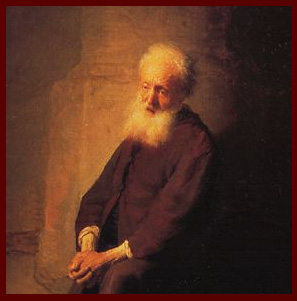
SCOPE The Penitence of Peter, Rembrandt |
|
|
THE
NATURE and
SCOPE The Penitence of Peter, Rembrandt |
See also: Pro Publica Database
A Research Study Conducted by the John Jay College of Criminal Justice, March 2004
In June 2002 the full body of Catholic bishops of the United States in their General Meeting in Dallas approved the Charter for the Protection of Children and Young People. The Charter created a National Review Board, which was assigned responsibility to commission a descriptive study, with the full cooperation of the dioceses/eparchies, of the nature and scope of the problem of sexual abuse of minors by clergy. The National Review Board engaged the John Jay College of Criminal Justice of the City University of New York to conduct research, summarize the collected data and issue a summary report to the United States Conference of Catholic Bishops of its findings. This report by the John Jay College is authorized for publication by the undersigned.
---Msgr. William P. Fay
General Secretary
CONTENTS
PREFACE AND ACKNOWLEDGMENTS
CREDITS: THE JOHN JAY COLLEGE RESEARCH TEAM
EXECUTIVE SUMMARY
PART ONE: The mandate for the study
1.1 Introduction
1.2 Methodology: How the study was carried out
1.3 Study Terminology
PART TWO: Prevalence of abuse of youth under 18 by Catholic priest and deacons
2.1 Estimation of prevalence of sexual abuse of youth under 18 in the United States
2.2 Summary Results: Prevalence of sexual abuse of youth under 18 by Catholic priests and deacons
2.3 Detailed data on prevalence of sexual abuse of youth under 18 by Catholic priests
PART THREE: The priest and deacons accused of sexual abuse
3.1 Introduction
3.2 Summary results: Priest and deacons who have allegations of sexual abuse
3.3 Demographic characteristics of priests and deacons accused of sexual abuse of youths under 18
3.4 Priests with behavioral problems
3.5 Priests and deacons and the allegations
3.6 Serial abusers: Priests with multiple allegations
3.7 Criminal prosecutions and penalties
PART FOUR: Incidents and allegations of child sexual abuse
4.1 Introduction
4.2 Summary results: Characteristics of the incidents of alleged sexual abuse by priests
4.3 Characteristics of children who alleged sexual abuse by Catholic priests
4.4 Characteristics of acts of sexual abuse by Catholic priests
4.5 Circumstances of the abuse allegations
PART FIVE: The response from the dioceses and religious communities
5.1 Introduction
5.2 Reporting of allegations of sexual abuse
5.3 Responses to child sex abuse allegations by dioceses and religious communities
5.4 Sex offender treatment
PART SIX: Costs to dioceses and religious communities
6.1 Total Costs
APPENDIX
A.1.1.1 Questions
A.1.1.2 Diocesan Profile
A.1.1.3 Religious Order Profile
A.1.1.4 Cleric Survey
A.1.1.5 Victim Survey
A.1.1.6 Written Instructions
A.1.1.7 Research Participation Statement
A.1.1.8 Request for Certificate of Confidentiality
A.1.2.1 Regions
PREFACE and ACKNOWLEDGEMENTS
John Jay College of Criminal Justice was honored to have been asked by the United States Conference of Catholic Bishops to undertake the critically important task of obtaining a comprehensive description of sexual abuse of minors by Catholic priests. From the beginning, the college well understood its profound responsibility: to describe the dimensions of the abuse problem as accurately and completely as possible, to be scrupulously objective in carrying out the study, and to report the facts in an honest, forthright manner. The gravity of the assignment entrusted to the college cannot be over-estimated.
Some advised the college to reject the request to do the study: it was too controversial; it was too complicated; it could expose the college to lawsuits; and it could engender negative publicity. After listening carefully to this counsel, I came to the conclusion that despite the problems which might arise, the college had a civic obligation to use its resources and academic talent to help provide facts about the sexual abuse phenomenon which has been such a sad chapter in the history of the Catholic Church. Because it is a significant part of the college’s stated mission to engage in research dealing with public safety, I became convinced that we would be shirking our duty if we turned down the opportunity to do research on the victimization of children which hopefully will help protect them in years to come.
The administrators, faculty and students invited to participate in this endeavor shared my conviction. They committed themselves to making the study a high priority, to immersing themselves in the many tasks which had to be done, and to maintaining the highest level of professionalism in carrying out the sensitive mandate entrusted to us. This was a “fast-track” project, taking less than a year from start to finish, but the faculty nevertheless faithfully adhered to the established norms of research ethics at every step along the way.
The findings presented in this report are very disturbing. As we at John Jay College pored over the data, we were deeply moved by the recitation of the large numbers of offenses committed against children and the seriousness of their nature. But we are genuinely hopeful that out of this excruciating inquiry will emerge not only a better understanding of the abuse problem but a series of sensible, effective measures to reduce the possibility that other children will suffer the kinds of abuses which we have uncovered.
I would like to thank the many men and women of good will without whose cooperation this study would have been impossible to accomplish. I thank with special gratitude the many Catholic bishops across the country who provided us in record time the detailed, revealing data from their files. The remarkable 98 per cent response rate which we obtained from the dioceses is virtually unheard of in social science research. The National Review Board, all of whose lay members have very demanding responsibilities, worked with us endlessly as we met the various challenges that confronted us on an almost daily basis. I must also acknowledge my deep appreciation of the efforts of Dr.Kathleen McChesney, Executive Director of the Office of Child and Youth Protection of the United States Conference of Catholic Bishops, and her staff who repeatedly walked the extra mile to help us complete our assignment.
I would be remiss if I did not acknowledge the staff at John Jay College who facilitated the work of the team doing the study. Everything including finding space for the project office, installation of computers, providing logistical support for meetings, and printing of this report in record time happened because many individuals pitched in. This was truly a collective endeavor of the college, and as president I would like to thank each and every person who contributed to this historic social science research project.
The data which John Jay College collected will provide the basis for the development of hypotheses and analyses which explain the causes of the distressing sexual abuse phenomenon presented in this report. Even more important, it is my fervent hope that the facts which the John Jay study presents will ultimately work to prevent recurrence of such victimization of children in the future.
Gerald W. Lynch
President
John Jay College of Criminal Justice
CREDITS – THE JOHN JAY COLLEGE RESEARCH TEAM
PRESIDENT, JOHN JAY COLLEGE: GERALD W LYNCH, PHD
President of John Jay College of Criminal Justice for 28 years. He received his Ph.D. in clinical psychology in 1968 from New York University. He has been personally involved in many scholarly inquiries dealing with controversial topics, including casino gambling and policing in Northern Ireland. He is the editor of Human Dignity and the Police, a volume which describes and analyzes a program designed by Dr Lynch and others for training police officials about respecting the rights of citizens with whom they interact.
ADMINISTRATIVE COORDINATOR: JAMES LEVINE, PHD
Dean of Graduate Studies and Research at John Jay College of Criminal Justice where he is also professor of government. He received his Ph.D. in political science from Northwestern University in 1968. Prior to joining John Jay College in 1993, he was on the faculties of Michigan State University, the University of Oregon, and Brooklyn College of The City University of New York. He is the author of four books and fifty articles in the fields of criminal justice, criminology, and policy analysis.
PRINCIPAL INVESTIGATOR: KAREN TERRY, PHD
Associate Professor in the Department of Law, Police Science, and Criminal Justice Administration at John Jay College of Criminal Justice and the Deputy Executive Officer of the Doctoral Program in Criminal Justice, CUNY. She holds a doctorate in criminology from Cambridge University and she has several publications on sex offender treatment, management and supervision. She is also the Editor of the Sex Offender Law Report.
DATA ANALYST: MARGARET LELAND SMITH, ABD
Trained as a criminologist at Rutgers School of Criminal Justice, Margaret Smith is a member of the Institute for Criminal Justice Ethics at John Jay College and the Coordinator of the Prisoners Self Help Legal Clinic in Newark, New Jersey.
RESEARCH ASSOCIATES:
MICHELE GALIETTA, PHD
Assistant Professor of Psychology at John Jay College of Criminal Justice. She received a Ph.D. in clinical psychology and a M.A. in Religion from Fordham University in New York City. Dr. Galietta is a researcher and clinician specializing in the assessment and treatment of various offender groups.
MAUREEN O’CONNOR, JD, PHD
Chair of the Psychology Department at John Jay College of Criminal Justice. She received her law degree and her Ph.D. from the University of Arizona. Her research interests are in the intersection of psychology, gender, and law. Prior to graduate school, Dr. O’Connor worked for six years in the research and grants agencies of the U.S. Department of Justice, specializing in crime victim issues.
STEVEN PENROD, JD, PHD
Distinguished Professor of Psychology at John Jay College of Criminal Justice. He received his law degree and his doctorate from Harvard University. He was formerly Professor of Law and Psychology at the University of Nebraska, Professor of Law at the University of Minnesota and Professor of Psychology at the University of Wisconsin. His primary area of research is legal decision making--with a particular emphasis on juries and eyewitness reliability, and he has over 100 book and journal publications.
LOUIS SCHLESINGER, PHD
Professor of Psychology, John Jay College of Criminal Justice and a Diplomate in Forensic Psychology, American Board of Professional Psychology. He received his doctorate from the New School of Social Research. Dr. Schlesinger's area of expertise is criminal psychopathology and sexually motivated antisocial acts, and he has published numerous articles, chapters, and eight books on the topic.
WITH THANKS TO:
RICHARD LOVELY, PHD
Sociologist and Co-Director of Masters of Science program in Forensic Computing and John Jay College of Criminal Justice.
TIMOTHY STEVENS, PHD
Chair of the English Department at John Jay College of Criminal Justice. He was one of the editors of Criminal Justice Ethics from 1993-2002.
RESEARCH ASSISTANTS:
Stephanie Adduci ; Frank Coffaro ; Kristina Cummings ; Dana Everly ; Jeannine Goff ; Subena Gustave ; Michael Hayes ; Jennifer Leconte ; Jason Malone ; Jennifer McCarthy ; Matthew Opesso ; Meredith Patten ; Bonnie Starfield ; Jennifer Tallon ; Brenda Vollman ; Sue-Lin Wong
This Webpage was created for a workshop held at Saint Andrew's Abbey, Valyermo, California in 2005