|
|
|
|
|
|
FEAST of
ST.
FRANCIS in the
VATICAN
GARDENS
Celebration of
the Season of Creation and the dedication of the Synod to St. Francis
October 4, 2019
|
|
|
|
|
|
|
|
|
|
|
|
|
|
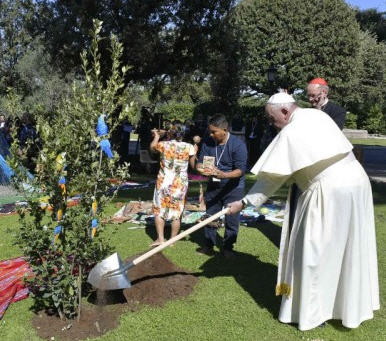
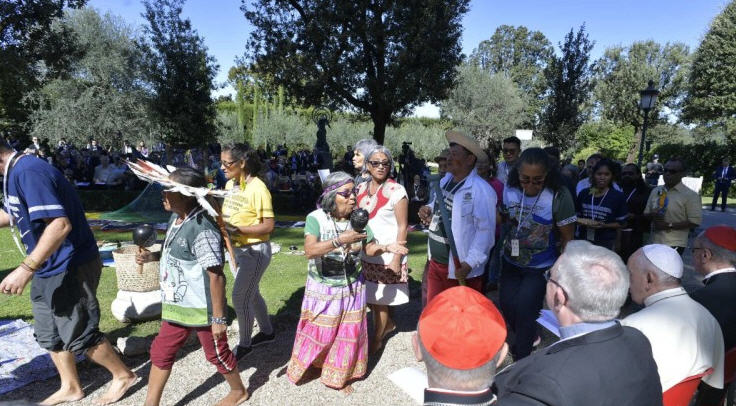
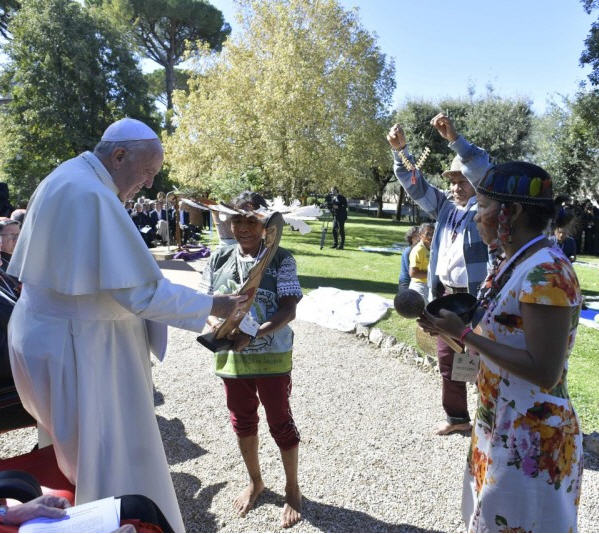
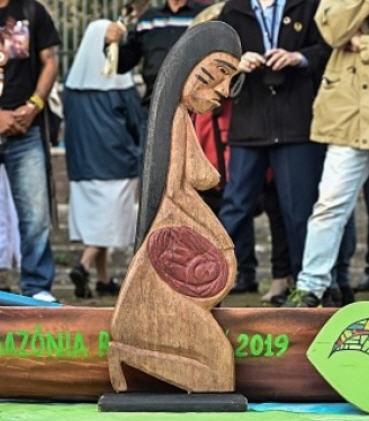
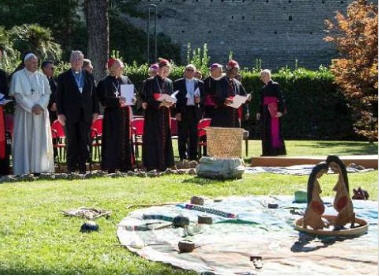
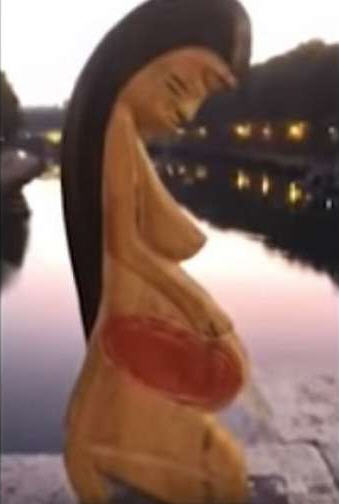
POPE Francis witnessed an indigenous performance at a tree planting ceremony in the Vatican gardens Friday, during which people held hands and bowed before carved images of pregnant women, one of which reportedly represented the Blessed Virgin Mary.
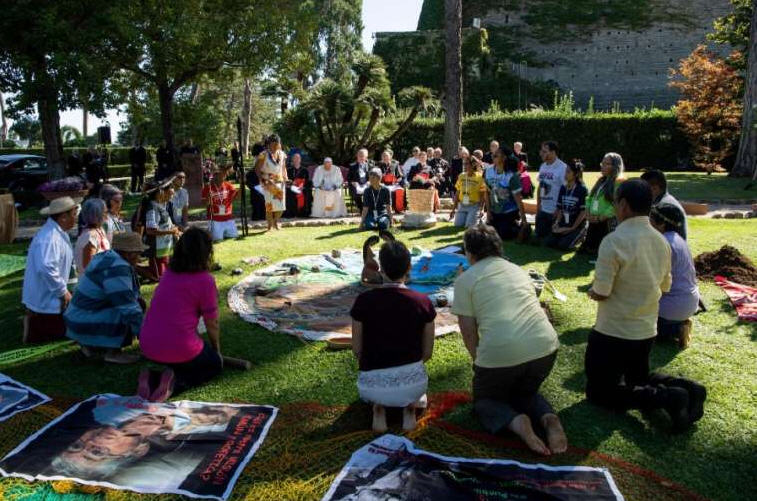
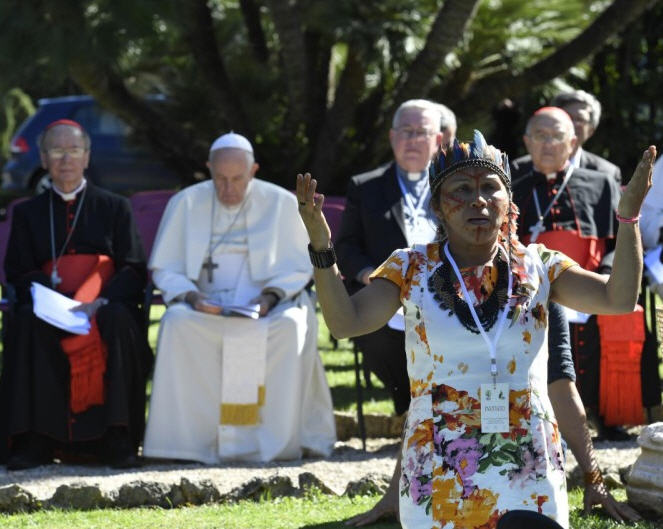
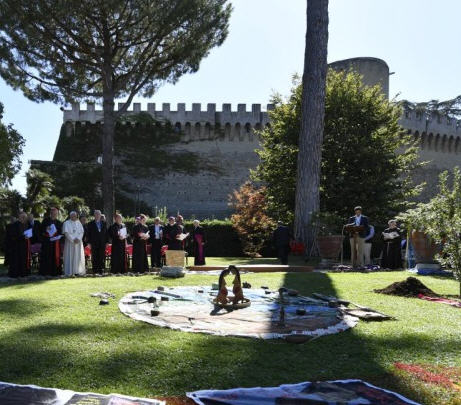
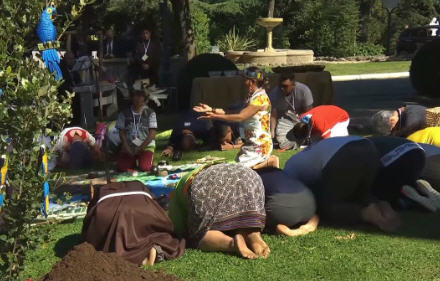
A group of people, including Amazonians in ritual dress, as well people in lay clothes and a Franciscan brother, knelt and bowed in a circle around images of two pregnant women who appeared to be semi-clothed, in the presence of the pope and members of the curia.
After witnessing the ritual, Pope Francis set aside his prepared remarks, opting instead to offer the Our Father without comment.
Vatican spokesman Matteo Bruni told CNA Friday that “at the end of the ceremony, the Pope decided to entrust his reflection, thoughts and words to the Prayer of the Our Father, which is in itself a message of faith, witness, repentance and hope.”
The ceremony in the Vatican gardens -- organized by the Global Catholic Climate Movement, Pan-Amazonian Ecclesial Network, and the Order of Franciscan Friars Minor -- was described as a celebration of the feast of St. Francis and the opening of the Synod of bishops on the Pan-Amazon region Oct. 6-27.
Participants sang and held hands while dancing in a circle around the images, in a dance resembling the “pago a la tierra,” a traditional offering to Mother Earth common among indigenous peoples in some parts of South America. No explanation was provided by the event organizers as to why the dance was performed for the Feast of St. Francis or what it symbolized.
Pope Francis remained seated in a chair outside the group throughout the ceremony.
A representative from the Vatican Dicastery for Promoting Integral Human Development said after the event that the dicastery’s officials were invited to attend the event, but neither organized nor promoted it.
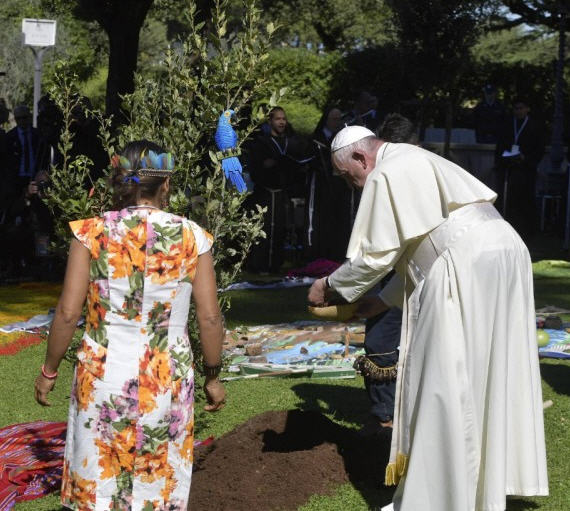
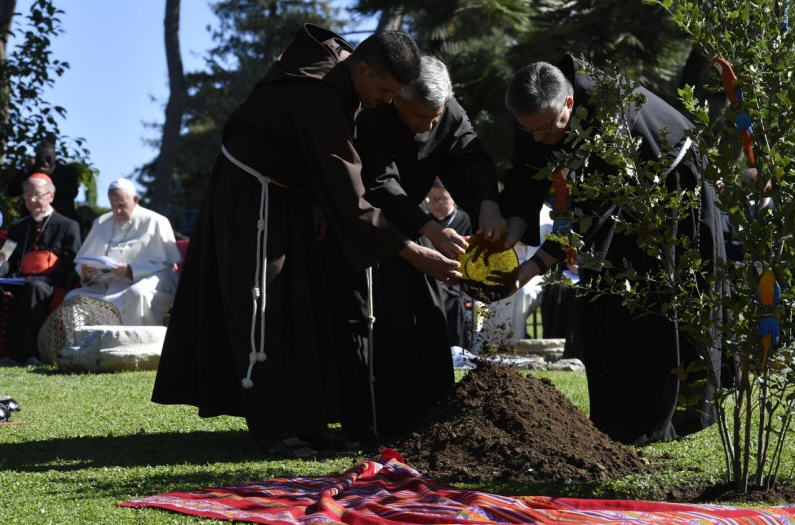
People carried bowls of dirt from different places around the world, each symbolizing a different issue from ecological devastation to migration. The dirt was placed around a tree from Assisi, which was planted as a “symbol of integral ecology.”
After what appeared to be the offering of prayers by participants, who prostrated themselves on the grass around a blanket upon which fruit, candles, and several carved items were set, an indigenous woman approached the pope and presented him with a black ring, which appeared identical to the one she was wearing.
The ring appeared to be a tucum ring -- a black ring worn in Brazil and Latin America as a sign of dedication to certain social causes, and often associated with liberation theology advocate Bishop Pedro Casaldáliga.
The Vatican declined to comment on the ring or on other aspects of the ceremony, and noted that the event was organized by outside organizations.
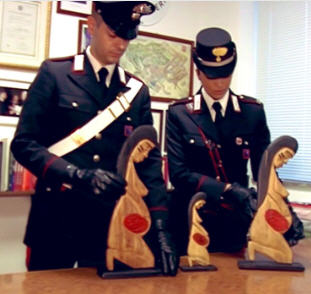
One of the statues was presented to Pope Francis, by a woman who referred to it as “Our Lady of the Amazon.” The pope blessed the statue. [n.b. It was later explained by a Vatican spokesperson that the image was not intended to represent the Blessed Virgin. Still later, after four of the statues were stolen, thrown into the Tiber, and later recovered (see below), Pope Francis settled the controversy over their significance by referring to the images as Pachamama.]
Prior to the pope’s decision not to offer his prepared remarks, Cardinal Peter Turkson, Prefect of the Dicastery for Promoting Integral Human Development, spoke about Francis’ environmental encyclical Laudato Si.
“Not only is our environment deteriorating globally, little effort is also made to safeguard the moral conditions for an authentic human ecology,” Turkson said.
“God’s Word transformed ‘chaos’ at the dawn of creation into a ‘cosmos,’ an ordered world system, capable of supporting human life, and suitable to be home for man. And the lesson here is simple: ‘Chaos’ with the Word of God becomes ‘Cosmos.’ Conversely, ‘Cosmos’ without God’s Word turns into ‘chaos,’” he said.
PACHAMAMA CONTROVERSY
|
|
|
PACHAMAMA, - Encyclopedia Britannica: “Pachamama is a goddess revered by the indigenous people of the Andes. She is also known as the earth/time mother. In Inca mythology, Pachamama is a fertility goddess who presides over planting and harvesting, embodies the mountains, and causes earthquakes. ” - Wikipedia |
FROM the ENCYCLOPEDIA BRITANNICA
https://www.britannica.com/place/Bolivia/Languages-and-religion
SOME characteristics of pantheistic pre-Columbian religion have survived in the Indian communities of the Altiplano, especially the worship of Pachamama, the goddess of the Earth. Also worshiped is the sun god, legendary creator of the first Inca emperor Manco Capac and his sister-wife Mama Ocllo on the Island of the Sun in Lake Titicaca. Through the centuries, the Roman Catholic Church has accepted some indigenous rituals and customs by assimilation, mainly through combined Catholic and traditional celebrations that continue to be an important part of life in rural and urban settings. For example, in the mining cities of Potosí and Oruro, tens of thousands of Bolivians and foreign tourists celebrate Carnival by paying homage to the Virgin of the Mines and to Pachamama. During the festival, dancers wear elaborate masks and outfits that depict devils, their blue-eyed mistresses, Inca rulers, and African slave drivers. In the mines, llamas are sacrificed as part of the worship of Pachamama and of Tío, the protector of the mines.
 |
|
Pope Francis explained that the statues of the Pachamama [indigenous fertility goddess] were displayed “without blasphemous intentions.” |
 |
|
Paolo Ruffini, the prefect of the dicastery for Communications, explained at the Press Conference on October 25 that “there was no ritual, no prostration took place”. |
 |
|
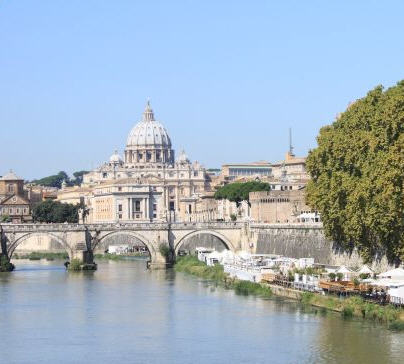
Early on Monday morning, Oct. 21, 2019, two men entered the church of Santa Maria in Traspontina removed the Pachamama images that had been on display there, and threw them into the Tiber River.
|
|
 |
|
Several Pachamama images were recovered from the Tiber |
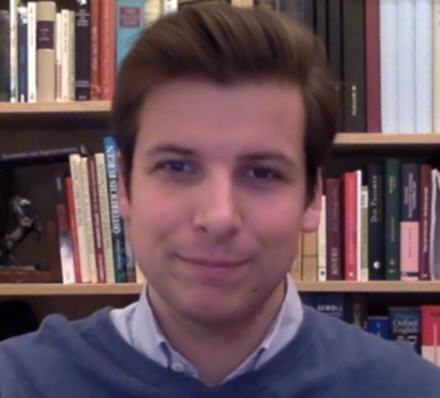
Austrian Catholic AlexanderTschugguel claimed responsibility. |
|
|
|
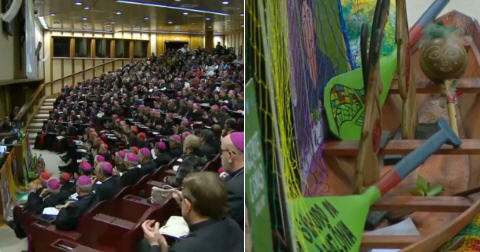
The recovered Pachamama images were displayed prominently at the final meeting of the Synod, but not at the closing mass in St. Peter's. |
This Webpage was created for a workshop held at Saint Andrew's Abbey, Valyermo, California in 2013