|
|
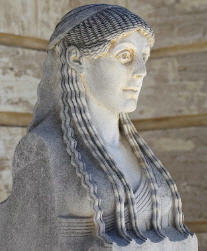
Diotima Plato, The School of Athens |
|
|
|
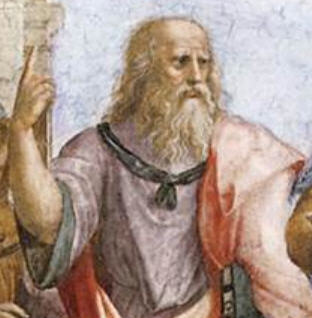
Diotima Plato, The School of Athens |
|
|
“‘[…] Into these matters of love (erótica)- even you, Socrates, might haply be initiated; |
ταῦτα μὲν οὖν τὰ ἐρωτικὰ ἴσως, ὦ Σώκρατες, κἂν σὺ [210α] μυηθείης: |
|
[210a] but I doubt if you could approach the rites and revelations to which these, for the properly instructed, are merely the avenue. |
τὰ δὲ τέλεα καὶ ἐποπτικά, ὧν ἕνεκα καὶ ταῦτα ἔστιν, ἐάν τις ὀρθῶς μετίῃ, οὐκ οἶδ᾽ εἰ οἷός τ᾽ ἂν εἴης. |
|
However I will speak of them,’ she said, ‘and will not stint my best endeavors; only you on your part must try your best to follow. |
ἐρῶ μὲν οὖν, ἔφη, ἐγὼ καὶ προθυμίας οὐδὲν ἀπολείψω: πειρῶ δὲ ἕπεσθαι, ἂν οἷός τε ᾖς. |
|
He who would proceed rightly in this business must not merely begin from his youth to encounter beautiful bodies. In the first place, indeed, if his conductor guides him aright, he must be in love with one particular body, and engender beautiful converse (logos kalos) therein; [210b] |
δεῖ γάρ, ἔφη, τὸν ὀρθῶς ἰόντα ἐπὶ τοῦτο τὸ πρᾶγμα ἄρχεσθαι μὲν νέον ὄντα ἰέναι ἐπὶ τὰ καλὰ σώματα, καὶ πρῶτον μέν, ἐὰν ὀρθῶς ἡγῆται ὁ ἡγούμενος, ἑνὸς αὐτὸν σώματος ἐρᾶν καὶ ἐνταῦθα γεννᾶν λόγους καλούς, |
|
but next he must remark how the beauty attached to this or that body is cognate to that which is attached to any other, and that if he means to ensue beauty in form, it is gross folly not to regard as one and the same the beauty belonging to all; and so, having grasped this truth, he must make himself a lover of all beautiful bodies, and slacken the stress of his feeling for one by contemning it and counting it a trifle. |
ἔπειτα δὲ αὐτὸν κατανοῆσαι ὅτι τὸ κάλλος [210β] τὸ ἐπὶ ὁτῳοῦν σώματι τῷ ἐπὶ ἑτέρῳ σώματι ἀδελφόν ἐστι, καὶ εἰ δεῖ διώκειν τὸ ἐπ᾽ εἴδει καλόν, πολλὴ ἄνοια μὴ οὐχ ἕν τε καὶ ταὐτὸν ἡγεῖσθαι τὸ ἐπὶ πᾶσιν τοῖς σώμασι κάλλος: τοῦτο δ᾽ ἐννοήσαντα καταστῆναι πάντων τῶν καλῶν σωμάτων ἐραστήν, ἑνὸς δὲ τὸ σφόδρα τοῦτο χαλάσαι καταφρονήσαντα καὶ σμικρὸν ἡγησάμενον: |
|
But his next advance will be to set a higher value on the beauty of souls than on that of the body, so that however little the grace that may bloom in any likely soul [210c] it shall suffice him for loving and caring, and for bringing forth and soliciting such converse as will tend to the betterment of the young; |
μετὰ δὲ ταῦτα τὸ ἐν ταῖς ψυχαῖς κάλλος τιμιώτερον ἡγήσασθαι τοῦ ἐν τῷ σώματι, ὥστε καὶ ἐὰν ἐπιεικὴς ὢν τὴν ψυχήν τις κἂν σμικρὸν ἄνθος [210ξ] ἔχῃ, ἐξαρκεῖν αὐτῷ καὶ ἐρᾶν καὶ κήδεσθαι καὶ τίκτειν λόγους τοιούτους καὶ ζητεῖν, οἵτινες ποιήσουσι βελτίους τοὺς νέους, |
|
and that finally he may be constrained to contemplate the beautiful as appearing in our observances and our laws, and to behold it all bound together in kinship and so estimate the body’s beauty as a slight affair. |
ἵνα ἀναγκασθῇ αὖ θεάσασθαι τὸ ἐν τοῖς ἐπιτηδεύμασι καὶ τοῖς νόμοις καλὸν καὶ τοῦτ᾽ ἰδεῖν ὅτι πᾶν αὐτὸ αὑτῷ συγγενές ἐστιν, ἵνα τὸ περὶ τὸ σῶμα καλὸν σμικρόν τι ἡγήσηται εἶναι: |
|
From observances he should be led on to the branches of knowledge, that there also he may behold a province of beauty, and by looking thus on beauty in the mass may escape from the mean, meticulous slavery of a single instance, where he must center all his care, [210d] like a lackey, upon the beauty of a particular child or man or single observance; and turning rather towards the main ocean of the beautiful may by contemplation of this bring forth in all their splendor many fair fruits of discourse and meditation in a plenteous crop of philosophy; until with the strength and increase there acquired he descries a certain single knowledge connected with a beauty which has yet to be told. And here, I pray you,’ [210e] said she, ‘give me the very best of your attention. |
μετὰ δὲ τὰ ἐπιτηδεύματα ἐπὶ τὰς ἐπιστήμας ἀγαγεῖν, ἵνα ἴδῃ αὖ ἐπιστημῶν κάλλος, καὶ βλέπων πρὸς [210δ] πολὺ ἤδη τὸ καλὸν μηκέτι τὸ παρ᾽ ἑνί, ὥσπερ οἰκέτης, ἀγαπῶν παιδαρίου κάλλος ἢ ἀνθρώπου τινὸς ἢ ἐπιτηδεύματος ἑνός, δουλεύων φαῦλος ᾖ καὶ σμικρολόγος, ἀλλ᾽ ἐπὶ τὸ πολὺ πέλαγος τετραμμένος τοῦ καλοῦ καὶ θεωρῶν πολλοὺς καὶ καλοὺς λόγους καὶ μεγαλοπρεπεῖς τίκτῃ καὶ διανοήματα ἐν φιλοσοφίᾳ ἀφθόνῳ, ἕως ἂν ἐνταῦθα ῥωσθεὶς καὶ αὐξηθεὶς κατίδῃ τινὰ ἐπιστήμην μίαν τοιαύτην, ἥ ἐστι καλοῦ [210ε] τοιοῦδε. πειρῶ δέ μοι, ἔφη, τὸν νοῦν προσέχειν ὡς οἷόν τε μάλιστα. |
|
“‘When a man has been thus far tutored in the lore of love, passing from view to view of beautiful things, in the right and regular ascent, suddenly he will have revealed to him, as he draws to the close of his dealings in love, a wondrous vision, beautiful in its nature; and this, Socrates, is the final object of all those previous toils. |
ὃς γὰρ ἂν μέχρι ἐνταῦθα πρὸς τὰ ἐρωτικὰ παιδαγωγηθῇ, θεώμενος ἐφεξῆς τε καὶ ὀρθῶς τὰ καλά, πρὸς τέλος ἤδη ἰὼν τῶν ἐρωτικῶν ἐξαίφνης κατόψεταί τι θαυμαστὸν τὴν φύσιν καλόν, τοῦτο ἐκεῖνο, ὦ Σώκρατες, οὗ δὴ ἕνεκεν καὶ οἱ ἔμπροσθεν πάντες πόνοι ἦσαν, |
|
First of all, it is ever-existent [211a] and neither comes to be nor perishes, neither waxes nor wanes; next, it is not beautiful in part and in part ugly, nor is it such at such a time and other at another, |
πρῶτον μὲν [211α] ἀεὶ ὂν καὶ οὔτε γιγνόμενον οὔτε ἀπολλύμενον, οὔτε αὐξανόμενον οὔτε φθίνον, ἔπειτα οὐ τῇ μὲν καλόν, τῇ δ᾽ αἰσχρόν, οὐδὲ τοτὲ μέν, τοτὲ δὲ οὔ, |
|
nor in one respect beautiful and in another ugly, nor so affected by position as to seem beautiful to some and ugly to others. |
οὐδὲ πρὸς μὲν τὸ καλόν, πρὸς δὲ τὸ αἰσχρόν, οὐδ᾽ ἔνθα μὲν καλόν, ἔνθα δὲ αἰσχρόν, ὡς τισὶ μὲν ὂν καλόν, τισὶ δὲ αἰσχρόν: |
|
Nor again will our initiate find the beautiful presented to him in the guise of a face or of hands or any other portion of the body, nor as a particular description or piece of knowledge, nor as existing somewhere in another substance, such as an animal or [211b] the earth or sky or any other thing; but existing ever in singularity of form independent by itself, while all the multitude of beautiful things partake of it in such wise that, though all of them are coming to be and perishing, it grows neither greater nor less, and is affected by nothing. |
οὐδ᾽ αὖ φαντασθήσεται αὐτῷ τὸ καλὸν οἷον πρόσωπόν τι οὐδὲ χεῖρες οὐδὲ ἄλλο οὐδὲν ὧν σῶμα μετέχει, οὐδέ τις λόγος οὐδέ τις ἐπιστήμη, οὐδέ που ὂν ἐν ἑτέρῳ τινι, οἷον ἐν ζῴῳ ἢ ἐν γῇ ἢ ἐν οὐρανῷ [211β] ἢ ἔν τῳ ἄλλῳ, ἀλλ᾽ αὐτὸ καθ᾽ αὑτὸ μεθ᾽ αὑτοῦ μονοειδὲς ἀεὶ ὄν, τὰ δὲ ἄλλα πάντα καλὰ ἐκείνου μετέχοντα τρόπον τινὰ τοιοῦτον, οἷον γιγνομένων τε τῶν ἄλλων καὶ ἀπολλυμένων μηδὲν ἐκεῖνο μήτε τι πλέον μήτε ἔλαττον γίγνεσθαι μηδὲ πάσχειν μηδέν.
|
|
So when a man by the right method of boy-loving ascends from these particulars and begins to descry that beauty, he is almost able to lay hold of the final secret. Such is the right approach [211c] or induction to love-matters. |
ὅταν δή τις ἀπὸ τῶνδε διὰ τὸ ὀρθῶς παιδεραστεῖν ἐπανιὼν ἐκεῖνο τὸ καλὸν ἄρχηται καθορᾶν, σχεδὸν ἄν τι ἅπτοιτο τοῦ τέλους. τοῦτο γὰρ δή ἐστι τὸ ὀρθῶς ἐπὶ [211ξ] τὰ ἐρωτικὰ ἰέναι ἢ ὑπ᾽ ἄλλου ἄγεσθαι, |
|
of BEAUTY |
|
|
Beginning from obvious beauties he must for the sake of that highest beauty be ever climbing aloft, as on the rungs of a ladder, |
ἀρχόμενον ἀπὸ τῶνδε τῶν καλῶν ἐκείνου ἕνεκα τοῦ καλοῦ ἀεὶ ἐπανιέναι, ὥσπερ ἐπαναβασμοῖς χρώμενον, |
|
from one to two, |
ἀπὸ ἑνὸς ἐπὶ δύο καὶ |
|
and from two to all beautiful bodies; |
ἀπὸ δυοῖν ἐπὶ πάντα τὰ καλὰ σώματα, |
|
from beautiful bodies to beautiful observances, |
καὶ ἀπὸ τῶν καλῶν σωμάτων ἐπὶ τὰ καλὰ ἐπιτηδεύματα, |
|
from observance to beautiful learning, |
καὶ ἀπὸ τῶν ἐπιτηδευμάτων ἐπὶ τὰ καλὰ μαθήματα, |
|
and from learning at last to that particular study |
καὶ ἀπὸ τῶν μαθημάτων ἐπ᾽ ἐκεῖνο τὸ μάθημα τελευτῆσαι, |
|
which is concerned with the beautiful itself and that alone; |
ὅ ἐστιν οὐκ ἄλλου ἢ αὐτοῦ ἐκείνου τοῦ καλοῦ μάθημα, |
|
so that in the end he comes to know [211d] beauty itself. |
καὶ γνῷ αὐτὸ τελευτῶν ὃ ἔστι [211δ] καλόν. |
|
In that state of life above all others, my dear Socrates,’ said the Mantinean woman, ‘a man finds it truly worth while to live, as he contemplates beauty itself. |
ἐνταῦθα τοῦ βίου, ὦ φίλε Σώκρατες, ἔφη ἡ Μαντινικὴ ξένη, εἴπερ που ἄλλοθι, βιωτὸν ἀνθρώπῳ, θεωμένῳ αὐτὸ τὸ καλόν. |
|
This, when once beheld, will outshine your gold and your vesture, your beautiful boys and striplings, whose aspect now so astounds you and makes you and many another, at the sight and constant society of your darlings, ready to do without either food or drink if that were any way possible, and only gaze upon them and have their company. |
ὃ ἐάν ποτε ἴδῃς, οὐ κατὰ χρυσίον τε καὶ ἐσθῆτα καὶ τοὺς καλοὺς παῖδάς τε καὶ νεανίσκους δόξει σοι εἶναι, οὓς νῦν ὁρῶν ἐκπέπληξαι καὶ ἕτοιμος εἶ καὶ σὺ καὶ ἄλλοι πολλοί, ὁρῶντες τὰ παιδικὰ καὶ συνόντες ἀεὶ αὐτοῖς, εἴ πως οἷόν τ᾽ ἦν, μήτ᾽ ἐσθίειν μήτε πίνειν, ἀλλὰ θεᾶσθαι μόνον καὶ συνεῖναι. |
|
[211e] But tell me, what would happen if one of you had the fortune to look upon essential beauty entire, pure and unalloyed; not infected with the flesh and color of humanity, and ever so much more of mortal trash? What if he could behold the divine beauty itself, in its unique form? |
τί δῆτα, ἔφη, οἰόμεθα, εἴ τῳ γένοιτο [211ε] αὐτὸ τὸ καλὸν ἰδεῖν εἰλικρινές, καθαρόν, ἄμεικτον, ἀλλὰ μὴ ἀνάπλεων σαρκῶν τε ἀνθρωπίνων καὶ χρωμάτων καὶ ἄλλης πολλῆς φλυαρίας θνητῆς, ἀλλ᾽ αὐτὸ τὸ θεῖον καλὸν δύναιτο μονοειδὲς κατιδεῖν; |
|
[212a] Do you call it a pitiful life for a man to lead—looking that way, observing that vision by the proper means, and having it ever with him? Do but consider,’ she said, ‘that there only will it befall him, as he sees the beautiful through that which makes it visible, to breed not illusions but true examples of virtue, since his contact is not with illusion but with truth. So when he has begotten a true virtue and has reared it up he is destined to win the friendship of Heaven; he, above all men, is immortal.’ |
ἆρ᾽ οἴει, ἔφη, φαῦλον βίον [212α] γίγνεσθαι ἐκεῖσε βλέποντος ἀνθρώπου καὶ ἐκεῖνο ᾧ δεῖ θεωμένου καὶ συνόντος αὐτῷ; ἢ οὐκ ἐνθυμῇ, ἔφη, ὅτι ἐνταῦθα αὐτῷ μοναχοῦ γενήσεται, ὁρῶντι ᾧ ὁρατὸν τὸ καλόν, τίκτειν οὐκ εἴδωλα ἀρετῆς, ἅτε οὐκ εἰδώλου ἐφαπτομένῳ, ἀλλὰ ἀληθῆ, ἅτε τοῦ ἀληθοῦς ἐφαπτομένῳ: τεκόντι δὲ ἀρετὴν ἀληθῆ καὶ θρεψαμένῳ ὑπάρχει θεοφιλεῖ γενέσθαι, καὶ εἴπέρ τῳ ἄλλῳ ἀνθρώπων ἀθανάτῳ καὶ ἐκείνῳ; [212β] |
|
[212b] “This, Phaedrus and you others, is what Diotima told me, and I am persuaded of it; in which persuasion I pursue my neighbors, to persuade them in turn that towards this acquisition the best helper that our human nature can hope to find is Love. Wherefore I tell you now that every man should honor Love, as I myself do honor all love-matters with especial devotion, and exhort all other men to do the same; both now and always do I glorify Love’s power and valor [212c] as far as I am able. So I ask you, Phaedrus, to be so good as to consider this account as a eulogy bestowed on Love, or else to call it by any name that pleases your fancy.” |
ταῦτα δή, ὦ Φαῖδρέ τε καὶ οἱ ἄλλοι, ἔφη μὲν Διοτίμα, πέπεισμαι δ᾽ ἐγώ: πεπεισμένος δὲ πειρῶμαι καὶ τοὺς ἄλλους πείθειν ὅτι τούτου τοῦ κτήματος τῇ ἀνθρωπείᾳ φύσει συνεργὸν ἀμείνω Ἔρωτος οὐκ ἄν τις ῥᾳδίως λάβοι. διὸ δὴ ἔγωγέ φημι χρῆναι πάντα ἄνδρα τὸν ἔρωτα τιμᾶν, καὶ αὐτὸς τιμῶ τὰ ἐρωτικὰ καὶ διαφερόντως ἀσκῶ, καὶ τοῖς ἄλλοις παρακελεύομαι, καὶ νῦν τε καὶ ἀεὶ ἐγκωμιάζω τὴν δύναμιν καὶ ἀνδρείαν τοῦ Ἔρωτος καθ᾽ ὅσον οἷός τ᾽ εἰμί. τοῦτον [212ξ] οὖν τὸν λόγον, ὦ Φαῖδρε, εἰ μὲν βούλει, ὡς ἐγκώμιον εἰς ἔρωτα νόμισον εἰρῆσθαι, εἰ δέ, ὅτι καὶ ὅπῃ χαίρεις ὀνομάζων, τοῦτο ὀνόμαζε |
|
|
|
|
|
|
This Webpage was created for a workshop held at Saint Andrew's Abbey, Valyermo, California in 1998