The Works of the Emperor Julian Vol. 1 , Engl.Transl. Wilmer Cave Wright, (Harvard Univ. Press, 1913). Introduction
|
JULIAN, EMPEROR |
ΙΟΥΛΙΑΝΟΥ ΑΥΤΟΚΡΑΤΟΡΟΣ |
|
HYMN
to THE
MOTHER
of
THE
GODS |
ΕΙΣ ΤΗΝ ΜΗΤΕΡΑ ΤΩΝ ΘΕΩΝ |
|
(Ought I to say something on this subject also? And shall I write about things not to be spoken of and divulge what ought not to be divulged? Shall I utter the unutterable? Who is Attis or Gallus, who is the Mother of the Gods, and what is the manner of their ritual of purification? And further why was it introduced in the beginning among us Romans? It was handed down by the Phrygians in very ancient times, and was first taken over by the Greeks, and not by any ordinary Greeks but by Athenians who had learned by experience that they did wrong to jeer at one who was celebrating the Mysteries of the Mother. |
Ἆρά γε χρὴ φάναι καὶ ὑπὲρ τούτων; καὶ ὑπὲρ τῶν ἀρρήτων γράψομεν καὶ τὰ ἀνέξοιστα ἐξοίσομεν καὶ τὰ ἀνεκλάλητα ἐκλαλήσομεν; τίς μὲν ὁ Ἄττις ἤτοι Γάλλος, τίς δὲ ἡ τῶν θεῶν Μήτηρ, καὶ ὁ τῆς ἁγνείας ταυτησί τρόπος ὁποῖος, καὶ προσέτι τοῦ χάριν οὑτοσὶ τοιοῦτος ἡμῖν ἐξ ἀρχῆς κατεδείχθη, παραδοθεὶς μὲν ὑπὸ τῶν ἀρχαιοτάτων Φρυγῶν, παραδεχθεὶς δὲ πρῶτον ὑφ᾽ Ἑλλήνων, καὶ τούτων οὐ τῶν τυχόντων, ἀλλ᾽ Ἀθηναίων, ἔργοις διδαχθέντων, ὅτι μὴ καλῶς ἐτώθασαν ἐπὶ τῷ τελοῦντι τὰ ὄργια τῆς Μητρός; |
|
For it is said that they wantonly insulted and drove out Gallus, on the ground that he was introducing a new cult, because they did not understand what sort of goddess they had to do with, and that she was that very Deo whom they worship, and Rhea and Demeter too. Then followed the wrath of the goddess and the propitiation of her wrath. For the priestess of the Pythian god who guided the Greeks in all noble conduct, bade them propitiate the wrath of the Mother of the Gods. And so, we are told, the Metroum was built, where the Athenians used to keep all their state records. |
λέγονται γὰρ οὗτοι περιυβρίσαι καὶ ἀπελάσαι τὸν Γάλλον ὡς τὰ θεῖα καινοτομοῦντα, οὐ ξυνέντες ὁποῖόν τι τῆς θεοῦ τὸ χρῆμα καὶ ὡς ἡ παρ᾽ αὐτοῖς τιμωμένη Δηὼ καὶ Ῥέα καὶ Δημήτηρ. εἶτα μῆνις τὸ ἐντεῦθεν τῆς θεοῦ καὶ θεραπεία τῆς μήνιδος. ἡ γὰρ ἐν πᾶσι τοῖς καλοῖς ἡγεμὼν γενομένη τοῖς Ἕλλησιν, ἡ τοῦ Πυθίου πρόμαντις θεοῦ, τὴν τῆς Μητρὸς τῶν θεῶν μῆνιν ἐκέλευσεν ἱλάσκεσθαι· καὶ ἀνέστη, φασίν, ἐπὶ τούτῳ τὸ μητρῷον, οὗ τοῖς Ἀθηναίοις δημοσίᾳ πάντα ἐφυλάττετο τὰ γραμματεῖα. |
|
After the Greeks the Romans took over the cult, when the Pythian god had advised them in their turn to bring the goddess from Phrygia as an ally for their war against the Carthaginians. And perhaps there is no reason why I should not insert here a brief account of what happened. When they learned the response of the oracle, the inhabitants of Rome, that city beloved of the gods, sent an embassy to ask from the kings of Pergamon who then ruled over Phrygia and from the Phrygians themselves the most holy statue of the goddess. |
μετὰ δὴ τοὺς Ἕλληνας αὐτα Ῥωμαῖοι παρεδέξαντο, συμβουλεύσαντος καὶ αὐτοῖς τοῦ Πυθίου ἐπὶ τὸν πρὸς Καρχηδονίους πόλεμον ἄγειν ἐκ Φρυγίας τὴν θεὸν σύμμαχον. καὶ οὐδὲν ἴσως κωλύει προσθεῖναι μικρὰν ἱστορίαν ἐνταῦθα. μαθόντες γὰρ τὸν χρησμὸν στέλλουσιν οἱ τῆς θεοφιλοῦς οἰκήτορες Ῥώμης πρεσβείαν αἰτήσουσαν παρὰ τῶν Περγάμου βασιλέων, οἳ τότε ἐκράτουν τῆς Φρυγίας, καὶ παρ᾽ αὐτῶν δὲ τῶν Φρυγῶν τῆς θεοῦ τὸ ἁγιώτατον ἄγαλμα. |
|
And when they had received it they brought back their most sacred freight, putting it on a broad cargo-boat which could sail smoothly over those wide seas. Thus she crossed the Aegean and Ionian Seas, and sailed round Sicily and over the Etruscan Sea, and so entered the mouth of the Tiber. And the people and the Senate with them poured out of the city, and in front of all the others there came to meet her all the priests and priestesses in suitable attire according to their ancestral custom. And in excited suspense they gazed at the ship as she ran before a fair wind, and about her keel they could discern the foaming wake as she cleft the waves. |
λαβόντες δὲ ἦγον τὸν ἱερὸν φόρτον ἐνθέντες εὐρείᾳ φορτίδι πλεῖν εὐπετῶς δυναμένῃ τὰ τοσαῦτα πελάγη. περαιωθεῖσα δὲ Αἴγαιόν τε καὶ Ἰόνιον, εἶτα περιπλεύσασα Σικελίαν τε καὶ τὸ Τυρρηνὸν πέλαγος ἐπὶ τὰς ἐκβολὰς τοῦ Τύβριδος κατήγετο· καὶ δῆμος ἐξεχεῖτο τῆς πόλεως σὺν τῇ γερουσίᾳ, ὑπήντων γε μὴν πρὸ τῶν ἄλλων ἱερεῖς τε καὶ ἱέρειαι πᾶσαι καὶ πάντες ἐν κόσμῳ τῷ πρέποντι κατὰ τὰ πάτρια, μετέωροι πρὸς τὴν ναῦν οὐριοδρομοῦσαν ἀποβλέποντες, καὶ περὶ τὴν τρόπιν ἀπεσκόπουν τὸ ῥόθιον σχιζομένων τῶν κυμάτων· |
|
And they greeted the ship as she sailed in and adored her from afar, everyone where he happened to be standing. But the goddess, as though she desired to show the Roman people that they were not bringing a lifeless image from Phrygia, but that what they had received from the Phrygians and were now bringing home possessed greater and more divine powers than an image, stayed the ship directly she touched the Tiber, and she was suddenly as though rooted in mid-stream. So they tried to tow her against the current, but she did not follow. Then they tried to push her off, thinking they had grounded on a shoal, but for all their efforts she did not move. Next every possible device was brought to bear, but in spite of all she remained immovable. Thereupon a terrible and unjust suspicion fell on the maiden who had been consecrated to the most sacred office of priestess, and they began to accuse Claudia—for that was the name of that noble maiden—of not having kept herself stainless and pure for the goddess; wherefore they said that the goddess was angry and was plainly declaring her wrath. For by this time the thing seemed to all to be supernatural. |
εἶτα εἰσπλέουσαν ἐδεξιοῦντο τὴν ναῦν προσκυνοῦντες ἕκαστος ὡς ἔτυχε προσεστὼς πόρρωθεν. ἡ δὲ ὥσπερ ἐνδείξασθαι τῷ Ῥωμαίων ἐθέλουσα δήμῳ, ὅτι μὴ ξόανον ἄγουσιν ἀπὸ τῆς Φρυγίας ἄψυχον, ἔχει δὲ ἄρα δύναμίν τινα μείζω καὶ θειοτέραν ὃ δὴ παρὰ τῶν Φρυγῶν λαβόντες ἔφερον, ἐπειδὴ τοῦ Τύβριδος ἥψατο, τὴν ναῦν ἵστησιν ὥσπερ ῥιζωθεῖσαν ἐξαίφνης κατὰ τοῦ Τύβριδος. εἷλκον δὴ οὖν πρὸς ἀντίον τὸν ῥοῦν, ἡ δὲ οὐχ εἵπετο. ὡς βραχέσι δὲ ἐντετυχηκότες ὠθεῖν ἐπειρῶντο τὴν ναῦν, ἡ δὲ οὐκ εἶκεν ὠθούντων. πᾶσα δὲ μηχανὴ προσήγετο τὸ ἐντεῦθεν, ἡ δὲ οὐχ ἧττον ἀμετακίνητος ἦν· ὥστε ἐμπίπτει κατὰ τῆς ἱερωμένης τὴν παναγεστάτην ἱερωσύνην παρθένου δεινὴ καὶ ἄδικος ὑποψία, καὶ τὴν Κλωδίαν ᾐτιῶντο· τοῦτο γὰρ ὄνομα ἦν τῇ σεμνῇ παρθένῳ· μὴ παντάπασιν ἄχραντον μηδὲ καθαρὰν φυλάττειν ἑαυτὴν τῷ θεῷ· ὀργίζεσθαι οὖν αὐτὴν καὶ μηνίειν ἐμφανῶς· ἐδόκει γὰρ ἤδη τοῖς πᾶσιν εἶναι τὸ χρῆμα δαιμονιώτερον. |
|
Now at first she was filled with shame at the mere name of the thing and the suspicion; so very far was she from such shameless and lawless behaviour. But when she saw that the charge against her was gaining strength, she took off her girdle and fastened it about the prow of the ship, and, like one divinely inspired, bade all stand aside: and then she besought the goddess not to suffer her to be thus implicated in unjust slanders. |
ἡ δὲ τὸ μὲν πρῶτον αἰδοῦς ὑπεπίμηπλατο πρός τε τὸ ὄνομα καὶ τὴν ὑποψίαν· οὕτω πάνυ πόρρω ἐτύγχανε τῆς αἰσχρᾶς καὶ παρανόμου πράξεως. ἐπεὶ δὲ ἑώρα τὴν αἰτίαν ἤδη καθ᾽ ἑαυτῆς ἐξισχύουσαν, περιελοῦσα τὴν ζώνην καὶ περιθεῖσα τῆς νεὼς τοῖς ἄκροις, ὥσπερ ἐξ ἐπιπνοίας τινὸς ἀποχωρεῖν ἐκέλευεν ἅπαντας, εἶτα ἐδεῖτο τῆς θεοῦ μὴ περιιδεῖν αὐτὴν ἀδίκοις ἐνεχομένην βλασφημίας. |
|
Next, as the story goes, she cried aloud as though it were some nautical word of command, “O Goddess Mother, if I am pure follow me!” And lo, she not only made the ship move, but even towed her for some distance up stream. |
βοῶσα δὲ ὥσπερ τι κέλευσμα, φασί, ναυτικόν, Δέσποινα Μῆτερ εἴπερ εἰμὶ σώφρων, ἕπου μοι, ἔφη. καὶ δὴ τὴν ναῦν οὐκ ἐκίνησε μόνον, ἀλλὰ καὶ εἵλκυσεν ἐπὶ πολὺ πρὸς τὸν ῥοῦν· |
|
Two things, I think, the goddess showed the Romans on that day: first that the freight they were bringing from Phrygia had no small value, but was priceless, and that this was no work of men’s hands but truly divine, not lifeless clay but a thing possessed of life and divine powers. This, I say, was one thing that the goddess showed them. And the other was that no one of the citizens could be good or bad and she not know thereof. Moreover the war of the Romans against the Carthaginians forthwith took a favourable turn, so that the third war was waged only for the walls of Carthage itself.) |
καὶ δύο ταῦτα Ῥωμαίοις ἔδειξεν ἡ θεὸς οἶμαι κατ᾽ ἐκείνην τὴν ἡμέραν. ὡς οὔτε μικροῦ τινος τίμιον ἀπὸ τῆς Φρυγίας ἐπήγοντο φόρτον, ἀλλὰ τοῦ παντὸς ἄξιον, οὔτε ὡς ἀνθρώπινον τοῦτον, ἀλλὰ ὄντως θεῖον, οὔτε ἄψυχον γῆν, ἀλλὰ ἔμπνουν τι χρῆμα καὶ δαιμόνιον. ἓν μὲν δὴ τοιοῦτον ἔδειξεν αὐτοῖς ἡ θεός· ἕτερον δέ, ὡς τῶν πολιτῶν οὐδὲ εἶς λάθοι ἂν αὐτὴν χρηστὸς ἢ φαῦλος ὤν. κατωρθώθη μέντοι καὶ ὁ πόλεμος αὐτίκα Ῥωμαίοις πρὸς Καρχηδονίους, ὥστε τὸν τρίτον ὑπὲρ τῶν τειχῶν αὐτῆς μόνον Καρχηδόνος γενέσθαι. |
|
(As for this narrative, though some will think it incredible and wholly unworthy of a philosopher or a theologian, nevertheless let it here be related. For besides the fact that it is commonly recorded by most historians, it has been preserved too on bronze statues in mighty Rome, beloved of the gods. |
Τὰ μὲν οὖν τῆς ἱστορίας, εἰ καί τισιν ἀπίθανα δόξει καὶ φιλοσόφῳ προσήκειν οὐδὲν οὐδὲ θεολόγῳ, λεγέσθω μὴ μεῖον, κοινῇ μὲν ὑπὸ πλείστων ἱστοριογράφων ἀναγραφόμενα, σωζόμενα δὲ καὶ ἐπὶ χαλκῶν εἰκόνων ἐν τῇ κρατίστῃ καὶ θεοφιλεῖ Ῥώμῃ. |
|
And yet I am well aware that some over-wise persons will call it an old wives’ tale, not to be credited. But for my part I would rather trust the traditions of cities than those too clever people, whose puny souls are keen-sighted enough, but never do they see aught that is sound.) |
καίτοι με οὐ λέληθεν ὅτι φήσουσιν αὐτά τινες τῶν λίαν σοφῶν ὕθλους εἶναι γρᾳδίων οὐκ ἀνεκτούς. ἐμοὶ δὲ δοκεῖ ταῖς πόλεσι πιστεύειν μᾶλλον τὰ τοιαῦτα ἢ τουτοισὶ τοῖς κομψοῖς, ὧν τὸ ψυχάριον δριμὺ μέν, ὑγιὲς δὲ οὐδὲ ἓν βλέπει. |
|
(I am told that on this same subject of which I am impelled to speak at the very season of these sacred rites, Porphyry too has written a philosophic treatise. But since I have never met with it I do not know whether at any point it may chance to agree with my discourse. But him whom I call Gallus or Attis I discern of my own knowledge to be the substance of generative and creative Mind which engenders all things down to the lowest plane of matter,and comprehends in itself all the concepts and causes of the forms that are embodied in matter. |
Ὕπὲρ δὲ ὧν εἰπεῖν ἐπῆλθέ μοι παρ᾽ αὐτὸν ἄρτι τὸν τῆς ἁγιστείας καιρόν, ἀκούω μὲν ἔγωγε καὶ Πορφυρίῳ τινὰ πεφιλοσοφῆσθαι περὶ αὐτῶν, οὐ μὴν οἶδά γε, οὐ γὰρ ἐνέτυχον, εἰ καὶ συνενεχθῆναί που συμβαίη τῷ λόγῳ. τὸν Γάλλον δὲ ἐγὼ τουτονὶ καὶ τὸν Ἄττιν αὐτὸς οἴκοθεν ἐπινοῶ τοῦ γονίμου καὶ δημιουργικοῦ νοῦ τὴν ἄχρι τῆς ἐσχάτης ὕλης ἅπαντα γεννῶσαν οὐσίαν εἶναι, ἔχουσάν τε ἐν ἑαυτῇ πάντας τοὺς λόγους καὶ τὰς αἰτίας τῶν ἐνύλων εἰδῶν· |
|
For truly the forms of all things are not in all things, and in the highest and first causes we do not find the forms of the lowest and last, after which there is nothing save privation coupled with a dim idea. Now there are many substances and very many creative gods, but the nature of the third creator, who contains in himself the separate concepts of the forms that are embodied in matter and also the connected chain of causes, I mean that nature which is last in order, and through its superabundance of generative power descends even unto our earth through the upper region from the stars,—this is he whom we seek, even Attis. But perhaps I ought to distinguish more clearly what I mean. We assert that matter exists and also form embodied in matter. |
οὐ γὰρ δὴ πάντων ἐν πᾶσι τὰ εἴδη, οὐδὲ ἐν τοῖς ἀνωτάτω καὶ πρώτοις αἰτίοις τὰ τῶν ἐσχάτων καὶ τελευταίων, μεθ᾽ ἃ οὐδέν ἐστιν ἣ τὸ τῆς στερῆσεως ὄνομα μετὰ ἀμυδρᾶς ἐπινοίας. οὐσῶν δὴ πολλῶν οὐσιῶν καὶ πολλῶν πάνυ δημιουργῶν τοῦ τρίτου δημιουργοῦ, ὃς τῶν ἐνύλων εἰδῶν τοὺς λόγους ἐξῃρημένους ἔχει καὶ συνεχεῖς τὰς αἰτίας, ἡ τελευταία καὶ μέχρι γῆς ὑπὸ περιουσίας τοῦ γονίμου διὰ τῆς ἄνωθεν παρὰ τῶν ἄστρων καθήκουσα φύσις ὁ ζητούμενός ἐστιν Ἀττις. ἴσως δὲ ὑπὲρ οὗ λέγω χρὴ διαλαβεῖν σαφέστερον. εἶναί τι λέγομεν ὕλην, ἀλλὰ καὶ ἔνυλον εἶδος. |
|
But if no cause be assigned prior to these two, we should be introducing, unconsciously, the Epicurean doctrine. For if there be nothing of higher order than these two principles, then a spontaneous motion and chance brought them together. “But,” says some acute Peripatetic like Xenarchus, “we see that the cause of these is the fifth or cyclic substance. Aristotle is absurd when he investigates and discusses these matters, and Theophrastus likewise. At any rate he overlooked the implications of a well-known utterance of his. |
ἀλλὰ τούτων εἰ μή τις αἰτία προτέτακται, λανθάνοιμεν ἂν ἑαυτοὺς εἰσάγοντες τὴν Ἐπικούρειον δόξαν. ἀρχαῖν γὰρ δυοῖν εἰ μηδέν ἐστι πρεσβύτερον, αὐτόματός τις αὐτὰς φορὰ καὶ τύχη συνεκλήρωσεν. ἀλλ᾽ ὁρῶμεν, φησὶ Περιπατητικός τις ἀγχίνους ὥσπερ ὁ Ξέναρχος, τούτων αἴτιον ὂν τὸ πέμπτον καὶ κυκλικὸν σῶμα. γελοῖος δὲ καὶ Ἀριστοτέλης ὑπὲρ τούτων ζητῶν τε καὶ πολυπραγμονῶν, ὁμοίως δὲ καὶ Θεόφραστος· ἠγνόησε γοῦν τὴν ἑαυτοῦ φωνήν. |
|
For just as when he came to incorporeal and intelligible substance he stopped short and did not inquire into its cause, and merely asserted that this is what it is by nature; surely in the case of the fifth substance also he ought to have assumed that its nature is to be thus; and he ought not to have gone on to search for causes, but should have stopped at these, and not fallen back on the intelligible, which has no independent existence by itself, and in any case represents a bare supposition.” |
ὥσπερ γὰρ εἰς τὴν ἀσώματον οὐσίαν ἐλθὼν καὶ νοητὴν ἔστη μὴ πολυπραγμονῶν τὴν αἰτίαν, ἀλλὰ φὰς οὕτω ταῦτα πεφυκέναι· χρῆν δὲ δήπουθεν καὶ ἐπὶ τοῦ πέμπτου σώματος τὸ πεφυκέναι ταῦτῃ λαμβάνοντα μηκέτι ζητεῖν τὰς αἰτίας, ἵστασθαι δὲ ἐπὶ αὐτῶν καὶ μὴ πρὸς τὸ νοητὸν ἐκπίπτειν ὂν μὲν οὐδὲν φύσει καθ᾽ ἑαυτό, ἔχον δὲ ἄλλως κενὴν ὑπόνοιαν. |
|
This is the sort of thing that Xenarchus says, as I remember to have heard. Now whether what he says is correct or not, let us leave to the extreme Peripatetics to refine upon. But that his view is not agreeable to me is, I think, clear to everyone. For I hold that the theories of Aristotle himself are incomplete unless they are brought into harmony with those of Plato; or rather we must make these also agree with the oracles that have been vouchsafed to us by the gods.) |
τοιαῦτα γὰρ ἐγὼ μέμνημαι τοῦ Ξενάρχου λέγοντος ἀκηκοώς. εἰ μὲν οὖν ὀρθῶς ἢ μὴ ταῦτα ἐκεῖνος ἔφη, τοῖς ἄγαν ἐφείσθω Περιπατητικοῖς ὀνυχίζειν, ὅτι δὲ οὐ προσηνῶς ἐμοὶ παντί που δῆλον, ὅπου γε καὶ τὰς Ἀριστοτελικὰς ὑποθέσεις ἐνδεεστέρως ἔχειν ὑπολαμβάνω, εἰ μή τις αὐτὰς ἐς ταὐτὸ τοῖς Πλάτωνος ἄγοι, μᾶλλον δὲ καὶ ταῦτα ταῖς ἐκ θεῶν δεδομέναις προφητείαις. |
|
(But this it is perhaps worth while to inquire, how the cyclic substance can contain the incorporeal causes of the forms that are embodied in matter. For that, apart from these causes, it is not possible for generation to take place is, I think, clear and manifest. For why are there so many kinds of generated things? Whence arise masculine and feminine? Whence the distinguishing characteristics of things according to their species in well-defined types, if there are not pre-existing and pre-established concepts, and causes which existed beforehand to serve as a pattern? |
Ἐκεῖνο δὲ ἴσως ἄξιον πυθέσθαι, πῶς τὸ κυκλικὸν σῶμα δύναται τὰς ἀσωμάτους ἔχειν αἰτίας τῶν ἐνύλων εἰδῶν. ὅτι μὲν γὰρ δίχα τούτων ὑποστῆναι τὴν γένεσιν οὐκ ἐνδέχεται, πρόδηλόν ἐστί που καὶ σαφές. τοῦ χάριν γάρ ἐστι τοσαῦτα τὰ γιγνόμενα; πόθεν δὲ ἄρρεν καὶ θῆλυ; πόθεν δὲ ἡ κατὰ γένος τῶν ὄντων ἐν ὡρισμένοις εἴδεσι διαφορά, εἰ μή τινες εἶεν προϋπάρχοντες καὶ προϋφεστῶτες λόγοι αἰτίαι τε ἐν παραδείγματος λόγῳ προϋφεστῶσαι; |
|
And if we discern these causes but dimly, let us still further purify the eyes of the soul. And the right kind of purification is to turn our gaze inwards and to observe how the soul and embodied Mind are a sort of mould and likeness of the forms that are embodied in matter. |
πρὸς ἃς εἴπερ ἀμβλυώττομεν, ἔτι καθαιρώμεθα τὰ ὄμματα τῆς ψυχῆς. κάθαρσις δὲ ὀρθὴ στραφῆναι πρὸς ἑαυτὸν καὶ κατανοῆσαι, πῶς μὲν ἡ ψυχὴ καὶ ὁ ἔνυλος νοῦς ὥσπερ ἐκμαγεῖόν τι τῶν ἐνύλων εἰδῶν καὶ εἰκών ἐστιν. |
|
For in the case of the corporeal, or of things that though incorporeal come into being and are to be studied in connection with the corporeal, there is no single thing whose mental image the mind cannot grasp independently of the corporeal. But this it could not have done if it did not possess something naturally akin to the incorporeal forms. Indeed it is for this reason that Aristotle himself called the soul the “place of the forms,” |
ἓν γὰρ οὐδέν ἐστι τῶν σωμάτων ἢ τῶν περὶ τὰ σώματα γινομένων τε καὶ θεωρουμένων ἀσωμάτων, οὗ τὴν φαντασίαν ὁ νοῦς οὐ δύναται λαβεῖν ἀσωμάτως, ὅπερ οὔποτ᾽ ἂν ἐποίησεν, εἰ μή τι ξυγγενὲς εἶχεν αὐτοῖς φύσει. |
|
only he said that the forms are there not actually but potentially. Now a soul of this sort, that is allied with matter, must needs possess these forms potentially only, but a soul that should be independent and unmixed in this way we must believe would contain all the concepts, not potentially but actually. |
ταῦτά τοι καὶ Ἀριστοτέλης τὴν ψυχὴν τόπον εἰδῶν ἔφη, πλὴν οὐκ ἐνεργείᾳ, ἀλλὰ δυνάμει. τὴν μὲν οὖν τοιαύτην ψυχὴν καὶ τὴν ἐπεστραμμένην πρὸς τὸ σῶμα δυνάμει ταῦτα ἔχειν ἀναγκαῖον· εἰ δέ τις ἄσχετος εἴη καὶ ἀμιγὴς ταύτῃ, τοὺς λόγους οὐκέτι δυνάμει, πάντας δὲ ὑπάρχειν ἐνεργείᾳ νομιστέον. |
|
Let us make this clearer by means of the example which Plato himself employed in the Sophist, with reference certainly to another theory, but still he did employ it. And I bring forward the illustration, not to prove my argument; for one must not try to grasp it by demonstration, but only by apprehension. For it deals with the first causes, or at least those that rank with the first, if indeed, as it is right to believe, we must regard Attis also as a god. What then, and of what sort is this illustration? |
λάβωμεν δὲ αὐτὰ σαφέστερον διὰ τοῦ παραδείγματος, ᾧ καὶ Πλάτων ἐν τῷ Σοφιστῇ πρὸς ἕτερον μὲν λόγον, ἐχρήσατο δ᾽ οὖν ὅμως. τὸ παράδειγμα δὲ οὐκ εἰς ἀπόδειξιν φέρω τοῦ λόγου· καὶ γὰρ οὐδὲ ἀποδείξει χρὴ λαβεῖν αὐτόν, ἀλλ᾽ ἐπιβολῇ μόνῃ, περὶ γὰρ τῶν πρώτων αἰτιῶν ἐστιν ἢ τῶν γε ὁμοστοίχων τοῖς πρώτοις, εἴπερ ἡμῖν ἐστιν, ὥσπερ οὖν ἄξιον νομίζειν, καὶ ὁ Ἄττις θεός. τί δὲ καὶ ποῖόν ἐστι τὸ παράδειγμα; |
|
Plato says that, if any man whose profession is imitation desire to imitate in such a way that the original is exactly reproduced, this method of imitation is troublesome and difficult, and, by Zeus, borders on the impossible; but pleasant and easy and quite possible is the method which only seems to imitate real things. For instance, when we take up a mirror and turn it round we easily get an impression of all objects, and show the general outline of every single thing. From this example let us go back to the analogy I spoke of, and let the mirror stand for what Aristotle calls the “place of the forms” potentially.) |
φησί που Πλάτων, τῶν περὶ τὴν μίμησιν διατριβόντων εἰ μὲν ἐθέλοι τις μιμεῖσθαι, ὥστε καθυφεστάναι τὰ μιμητά, ἐργώδη τε εἶναι καὶ χαλεπὴν καὶ νὴ Δία γε τοῦ ἀδυνάτου πλησίον μᾶλλον, εὔκολον δὲ καὶ ῥᾳδίαν καὶ σφόδρα δυνατὴν τὴν διὰ τοῦ δοκεῖν τὰ ὄντα μιμουμένην. ὅταν οὖν τὸ κάτοπτρον λαβόντες περιφέρωμεν ἐκ πάντων τῶν ὄντων ῥᾳδίως ἀπομαξάμενοι, δείκνυμεν ἑκάστου τοὺς τύπους. ἐκ τούτου τοῦ παραδείγματος ἐπὶ τὸ εἰρημένον μεταβιβάσωμεν τὸ ὁμοίωμα, ἵν᾽ ᾖ τὸ μὲν κάτοπτρον ὁ λεγόμενος ὑπὸ Ἀριστοτέλους δυνάμει τόπος εἰδῶν. |
|
(Now the forms themselves must certainly subsist actually before they subsist potentially. If, therefore, the soul in us, as Aristotle himself believed, contains potentially the forms of existing things, where shall we place the forms in that previous state of actuality? Shall it be in material things? |
Αὐτὰ δὲ χρὴ τὰ εἴδη πρότερον ὑφεστάναι πάντως ἐνεργείᾳ τοῦ δυνάμει. τῆς τοίνυν ἐν ἡμῖν ψυχῆς, ὡς καὶ Ἀριστοτέλει δοκεῖ, δυνάμει τῶν ὄντων ἐχούσης τὰ εἴδη, ποῦ πρῶτον ἐνεργείᾳ θησόμεθα ταῦτα; πότερον ἐν τοῖς ἐνύλοις; |
|
No, for the forms that are in them are evidently the last and lowest. Therefore it only remains to search for immaterial causes which exist in actuality prior to and of a higher order than the causes that are embodied in matter. And our souls must subsist in dependence on these and come forth together with them, and so receive from them the concepts of the forms, as mirrors show the reflections of things; and then with the aid of nature it bestows them on matter and on these material bodies of our world. |
ἀλλ᾽ ἔστι γε ταῦτα φανερῶς τὰ τελευταῖα. λείπεται δὴ λοιπὸν ἀύλους αἰτίας ζητεῖν ἐνεργείᾳ προτεταγμένας τῶν ἐνύλων, αἷς παρυποστᾶσαν καὶ συμπροελθοῦσαν ἡμῶν τὴν ψυχὴν δέχεσθαι μὲν ἐκεῖθεν, ὥσπερ ἐξ ὄντων τινῶν τὰ ἔσοπτρα, τοὺς τῶν εἰδῶν ἀναγκαῖον λόγους, ἐνδιδόναι δὲ διὰ τῆς φύσεως τῇ τε ὕλῃ καὶ τοῖς ἐνύλοις τουτοισὶ σώμασιν. |
|
For we know that nature is the creator of bodies, universal nature in some sort of the All; while that the individual nature of each is the creator of particulars is plainly evident. But nature exists in us in actuality without a mental image, whereas the soul, which is superior to nature, possesses a mental image besides. If therefore we admit that nature contains in herself the cause of things of which she has however no mental image, why, in heaven’s name, are we not to assign to the soul these same forms, only in a still higher degree, and with priority over nature, seeing that it is in the soul that we recognise the forms by means of mental images, and comprehend them by means of the concept? |
ὅτι μὲν γὰρ ἡ φύσις ἐστὶ δημιουργὸς τῶν σωμάτων ἴσμεν, ὡς ὅλη τις οὖσα τοῦ παντός, ἡ δὲ καθ᾽ ἕκαστον ἑνὸς ἑκάστου τῶν ἐν μέρει, πρόδηλόν ἐστί που καὶ σαφές, ἀλλ᾽ ἡ φύσις ἐνεργείᾳ δίχα φαντασίας ἐν ἡμῖν, ἡ δὲ ὑπὲρ ταύτης ψυχὴ καὶ τὴν φαντασίαν προσείληφεν. εἰ τοίνυν ἡ φύσις καὶ ὧν οὐκ ἔχει τὴν φαντασίαν ἔχειν ὅμως ὁμολογεῖται τὴν αἰτίαν, ἀνθ᾽ ὅτου πρὸς θεῶν οὐχὶ τοῦτο αὐτὸ μᾶλλον ἔτι καὶ πρεσβύτερον τῇ ψυχῇ δώσομεν, ὅπου καὶ φανταστικῶς αὐτὸ γιγνώσκομεν ἤδη καὶ λόγῳ καταλαμβάνομεν; |
|
Who then is so contentious as to admit on the one hand that the concepts embodied in matter exist in nature—even though not all and equally in actuality, yet all potentially—while on the other hand he refuses to recognise that the same is true of the soul? |
εἶτα τίς οὕτως ἐστὶ φιλόνεικος, ὡς τῇ φύσει μὲν ὑπάρχειν ὁμολογεῖν τοὺς ἐνύλους λόγους, εἰ καὶ μὴ πάντας καὶ κατὰ τὸ αὐτὸ ἐνεργείᾳ, ἀλλὰ δυνάμει γε πάντας, τῇ ψυχῇ δὲ μὴ δοῦναι τοῦτο αὐτό; |
|
If therefore the forms exist in nature potentially, but not actually, and if also they exist potentially in the soul,only in a still purer sense and more completely separated, so that they can be comprehended and recognised; but yet exist in actuality nowhere at all; to what, I ask, shall we hang the chain of perpetual generation, |
οὐκοῦν εἰ δυνάμει μὲν ἐν τῇ φύσει καὶ οὐκ ἐνεργείᾳ τὰ εἴδη, δυνάμει δὲ ἔτι καὶ ἐν τῇ ψυχῇ καθαρώτερον καὶ δικεκριμένως μᾶλλον, ὥστε δὴ καὶ καταλαμβάνεσθαι καὶ γινώσκεσθαι, ἐνεργείᾳ δὲ οὐδαμοῦ· πόθεν ἀναρτήσομεν τῆς ἀειγενεσίας τὰ πείσματα; |
|
and on what shall we base our theories of the imperishability of the universe? |
ποῦ δὲ ἑδράσομεν τοὺς ὑπὲρ τῆς ἀιδιότητος κόσμου λόγους; |
|
For the cyclic substance itself is composed of matter and form. It must therefore follow that, even though in actuality these two, matter and form, are never separate from one another, yet for our intelligence the forms must have prior existence and be regarded as of a higher order. |
τὸ γὰρ τοι κυκλικὸν σῶμα ἐξ ὑποκειμένου καὶ εἴδους ἐστίν. ἀνάγκη δὴ οὖν, εἰ καὶ μήποτε ἐνεργείᾳ ταῦτα δίχα ἀλλήλων, ἀλλὰ ταῖς γε ἐπινοίαις ἐκεῖνα πρῶτα ὑπάρχοντα εἶναί τε καὶ νομίζεσθαι πρεσβύτερα. |
|
Accordingly, since for the forms embodied in matter a wholly immaterial cause has been assigned, which leads these forms under the hand of the third creator—who for us is the lord and father not only of these forms but also of the visible fifth substance—from that creator we distinguish Attis, the cause which descends even unto matter, and we believe that Attis or Gallus is a god of generative powers. Of him the myth relates that, after being exposed at birth near the eddying stream of the river Gallus, he grew up like a flower, and when he had grown to be fair and tall, he was beloved by the Mother of the Gods. |
οὐκοῦν ἐπειδὴ δέδοταί τις καὶ τῶν ἐνύλων εἰδῶν αἰτία προηγουμένη παντελῶς ἄυλος ὑπὸ τὸν τρίτον δημιουργόν, ὃς ἡμῖν οὐ τούτων μόνον ἐστίν, ἀλλὰ καὶ τοῦ φαινομένου καὶ πέμπτου σώματος πατὴρ καὶ δεσπότης· ἀποδιελόντες ἐκείνου τὸν Ἄττιν, τὴν ἄχρι τῆς ὕλης καταβαίνουσαν αἰτίαν, καὶ θεὸν γόνιμον Ἄττιν εἶναι καὶ Γάλλον πεπιστεύκαμεν, ὃν δή φησιν ὁ μῦθος ἀνθῆσαι μὲν ἐκτεθέντα παρὰ Γάλλου ποταμοῦ ταῖς δίναις, εἶτα καλὸν φανέντα καὶ μέγαν ἀγαπηθῆναι παρὰ τῆς Μητρὸς τῶν θεῶν. |
|
And she entrusted all things to him, and moreover set on his head the starry cap. But if our visible sky covers the crown of Attis, must one not interpret the river Gallus as the Milky Way?For it is there, they say, that the substance which is subject to change mingles with the passionless revolving sphere of the fifth substance. |
τὴν δὲ τά τε ἄλλα πάντα ἐπιτρέψαι αὐτῷ καὶ τὸν ἀστερωτὸν περιθεῖναι πῖλον. ἀλλ᾽ εἰ τὴν κορυφὴν σκέπει τοῦ Ἄττιδος ὁ φαινόμενος οὐρανὸς οὑτοσί, τὸν Γάλλον ποταμὸν ἄρα μή ποτε χρὴ τὸν γαλαξίαν αἰνίττεσθαι κύκλον; ἐνταῦθα γάρ φασι μίγνυσθαι τὸ παθητὸν σῶμα πρὸς τὴν ἀπαθῆ τοῦ πέμπτου κυκλοφορίαν. |
|
Only as far as this did the Mother of the Gods permit this fair intellectual god Attis, who resembles the sun’s rays, to leap and dance. But when he passed beyond this limit and came even to the lowest region, the myth said that he had descended into the cave, and had wedded the nymph. And the nymph is to be interpreted as the dampness of matter; though the myth does not here mean matter itself, but the lowest immaterial cause which subsists prior to matter. Indeed Heracleitus also says:) |
ἄχρι τοι τούτων ἐπέτρεψεν ἡ Μήτηρ τῶν θεῶν σκιρτᾶν τε καὶ χορεύειν τῷ καλῷ τούτῳ καὶ ταῖς ἡλιακαῖς ἀκτῖσιν ἐμφερεῖ τῷ νοερῷ θεῷ, τῷ Ἄττιδι. ὁ δὲ ἐπειδὴ προïὼν ἦλθεν ἄχρι τῶν ἐσχάτων, ὁ μῦθος αὐτὸν εἰς τὸ ἄντρον κατελθεῖν ἔφη καὶ συγγενέσθαι τῇ νύμφῃ, τὸ δίυγρον αἰνιττόμενος τῆς ὕλης· καὶ οὐδὲ τὴν ὕλην αὐτὴν νῦν ἔφη, τὴν τελευταίαν δὲ αἰτίαν ἀσώματον, ἣ τῆς ὕλης προüφέστηκε. λέγεταί τοι καὶ πρὸς Ἡρακλείτου |
|
ψυχῇσιν θάνατος ὑγρῇσι γενέσθαι· |
|
|
(“It is death to souls to become wet.”) |
|
|
(We mean therefore that this Gallus, the intellectual god, the connecting link between forms embodied in matter beneath the region of the moon, is united with the cause that is set over matter, but not in the sense that one sex is united with another, but like an element that is gathered to itself.) |
τοῦτον οὖν τὸν Γάλλον, τὸν νοερὸν θεόν, τὸν τῶν ἐνύλων καὶ ὑπὸ σελήνην εἰδῶν συνοχέα, τῇ προτεταγμένῃ τῆς ὕλης αἰτίᾳ συνιόντα, συνιόντα δὲ οὐχ ὡς ἄλλον ἄλλῃ, ἀλλ᾽ οἷον αὐτὸ εἰς ἑαυτὸ λέγομεν ὑποφερόμενον. |
|
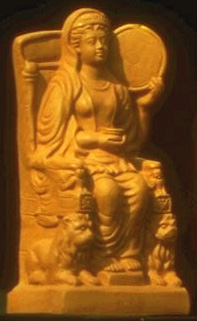
(Who then is the Mother of the Gods? She is the source of the intellectual and creative gods, who in their turn guide the visible gods: she is both the mother and the spouse of mighty Zeus; she came into being next to and together with the great creator; she is in control of every form of life, and the cause of all generation; she easily brings to perfection all things that are made; without pain she brings to birth, and with the father’s aid creates all things that are; she is the motherless maiden, enthroned at the side of Zeus, and in very truth is the Mother of all the Gods. |
Τίς οὖν ἡ Μήτηρ τῶν θεῶν; ἡ τῶν κυβερνώντων τοὺς ἐμφανεῖς νοερῶν καὶ δημιουργικῶν θεῶν πηγή, ἡ καὶ τεκοῦσα καὶ συνοικοῦσα τῷ μεγάλῳ Διὶ θεὸς ὑποστᾶσα μεγάλη μετὰ τὸν μέγαν καὶ σὺν τῷ μεγάλῳ δημιουργῷ, ἡ πάσης μὲν κυρία ζωῆς, πάσης δὲ γενέσεως αἰτία, ἡ ῥᾷστα μὲν ἐπιτελοῦσα τὰ ποιούμενα, γεννῶσα δὲ δίχα πάθους καὶ δημιουργοῦσα τὰ ὄντα μετὰ τοῦ πατρός· αὕτη καὶ παρθένος ἀμήτωρ καὶ Διὸς σύνθωκος καὶ μήτηρ θεῶν ὄντως οὖσα πάντων. |
|
For having received into herself the causes of all the gods, both intelligible and supra-mundane, she became the source of the intellectual gods. Now this goddess, who is also Forethought, was inspired with a passionless love for Attis. |
τῶν γὰρ νοητῶν ὑπερκοσμίων τε θεῶν δεξαμένη πάντων τὰς αἰτίας ἐν ἑαυτῇ πηγὴ τοῖς νοεροῖς ἐγένετο. ταύτην δὴ τὴν θεὸν οὖσαν καὶ πρόνοιαν ἔρως μὲν ὑπῆλθεν ἀπαθὴς Ἄττιδος· |
|
For not only the forms embodied in matter, but to a still greater degree the causes of those forms, voluntarily serve her and obey her will. Accordingly the myth relates the following: that she who is the Providence who preserves all that is subject to generation and decay, loved their creative and generative cause, and commanded that cause to beget offspring rather in the intelligible region; |
ἐθελούσια γὰρ αὐτῇ καὶ κατὰ γνώμην ἐστὶν οὐ τὰ ἔνυλα μόνον εἴδη, πολὺ δὲ πλέον τὰ τούτων αἴτια. τὴν δὴ τὰ γινόμενα καὶ φθειρόμενα σώζουσαν προμήθειαν ἐργᾶν ὁ μῦθος ἔφη τῆς δημιουργικῆς τούτων αἰτίας καὶ γονίμου, καὶ κελεύειν μὲν αὐτὴν ἐν τῷ νοητῷ τίκτειν μᾶλλον |
|
and she desired that it should turn towards herself and dwell with her, but condemned it to dwell with no other thing. For only thus would that creative cause strive towards the uniformity that preserves it, and at the same time would avoid that which inclines towards matter. |
καὶ βούλεσθαι μὲν πρὸς ἑαυτὴν ἐπεστράφθαι καὶ συνοικεῖν, ἐπίταγμα δὲ ποιεῖσθαι, μηδενὶ τῶν ἄλλων, ἅμα μὲν τὸ ἑνοειδὲς σωτήριον διώκουσαν, ἅμα δὲ φεύγουσαν τὸ πρὸς τὴν ὕλην νεῦσαν· |
|
And she bade that cause look towards her, who is the source of the creative gods, and not be dragged down or allured into generation. For in this way was mighty Attis destined to be an even mightier creation, seeing that in all things the conversion to what is higher produces more power to effect than the inclination to what is lower. |
πρὸς ἑαυτήν τε βλέπειν ἐκέλευσεν, οὖσαν πηγὴν μὲν τῶν δημιουργικῶν θεῶν, οὐ καθελκομένην δὲ εἰς τὴν γένεσιν οὐδὲ θελγομένην· οὕτω γὰρ ἔμελλεν ὁ μέγας Ἄττις καὶ κρείττων εἶναι δημιουργός, ἐπείπερ ἐν πᾶσιν ἡ πρὸς τὸ κρεῖττον ἐπιστροφὴ μᾶλλόν ἐστι δραστήριος τῆς πρὸς τὸ χεῖρον νεύσεως. |
|
And the fifth substance itself is more creative and more divine than the elements of our earth, for this reason, that it is more nearly connected with the gods. Not that anyone, surely, would venture to assert that any substance, even if it be composed of the purest aether, is superior to soul undefiled and pure, that of Heracles for instance, as it was when the creator sent it to earth. For that soul of his both seemed to be and was more effective than after it had bestowed itself on a body. |
ἐπεὶ καὶ τὸ πέμπτον σῶμα τούτῳ δημιουργικώτερόν ἐστι τῶν τῇδε καὶ θειότερον, τῷ μᾶλλον ἐστράφθαι πρὸς τοὺς θεούς, ἐπεί τοι τὸ σῶμα, κἂν αἰθέρος ᾖ τοῦ καθαρωτάτου, ψυχῆς ἀχράντου καὶ καθαρᾶς, ὁποίαν τὴν Ἡρακλέους ὁ δημιουργὸς ἐξέπεμψεν, οὐδεὶς ἂν εἰπεῖν κρεῖττον τολμήσειε. τότε μέντοι ἦν τε καὶ ἐδόκει μᾶλλον δραστήριος, ἢ ὅτε αὑτὴν ἔδωκεν ἐκείνη σώματι. |
|
Since even Heracles, now that he has returned, one and indivisible, to his father one and indivisible, more easily controls his own province than formerly when he wore the garment of flesh and walked among men. And this shows that in all things the conversion to the higher is more effective than the propensity to the lower. |
ἐπεὶ καὶ αὐτῷ νῦν Ἡρακλεῖ ὅλῳ πρὸς ὅλον κεχωρηκότι τὸν πατέρα ῥᾴων ἡ τούτων ἐπιμέλεια καθέστηκεν ἢ πρότερον ἦν, ὅτε ἐν τοῖς ἀνθρώποις σαρκία φορῶν ἐστρέφετο. οὕτως ἐν πᾶσι δραστήριος μᾶλλον ἡ πρὸς τὸ κρεῖττον ἀπόστασις τῆς ἐπὶ τὸ χεῖρον στροφῆς. |
|
This is what the myth aims to teach us when it says that the Mother of the Gods exhorted Attis not to leave her or to love another. But he went further, and descended even to the lowest limits of matter. Since, however, it was necessary that his limitless course should cease and halt at last, mighty Helios the Corybant, who shares the Mother’s throne and with her creates all things, with her has providence for all things, and apart from her does nothing, persuaded the Lion to reveal the matter. |
ὁ δὴ βουλόμενος ὁ μῦθος διδάξαι παραινέσαι φησὶ τὴν Μητέρα τῶν θεῶν τῷ Ἄττιδι θεραπεύειν αὑτὴν καὶ μήτε ἀποχωρεῖν μήτε ἐρᾶν ἄλλης. ὁ δὲ προῆλθεν ἄχρι τῶν ἐσχάτων τῆς ὕλης κατελθών. ἐπεὶ δὲ ἐχρῆν παύσασθαί ποτε καὶ στῆναι τὴν ἀπειρίαν, Κορύβας μὲν ὁ μέγας Ἥλιος, ὁ σύνθρονος τῇ Μητρὶ καὶ συνδημιουργῶν αὐτῇ τὰ πάντα καὶ συμπρομηθούμενος καὶ οὐδὲν πράττων αὐτῆς δίχα, πείθει τὸν λέοντα μηνυτὴν γενέσθαι. |
|
And who is the Lion? Verily we are told that he is flame-coloured. He is, therefore, the cause that subsists prior to the hot and fiery, and it was his task to contend against the nymph and to be jealous of her union with Attis. (And who the nymph is, I have said.) And the myth says that the Lion serves the creative Providence of the world, which evidently means the Mother of the Gods. Then it says that by detecting and revealing the truth, he caused the youth’s castration. |
τίς δὲ ὁ λέων; αἴθωνα δήπουθεν ἀκούομεν αὐτόν, αἰτίαν τοίνυν τὴν προüφεστῶσαν τοῦ θερμοῦ καὶ πυρώδους, ἣ πολεμήσειν ἔμελλε τῇ νύμφῃ καὶ ζηλοτυπήσειν αὐτὴν τῆς πρὸς τὸν Ἄττιν κοινωνίας· εἴρηται δὲ ἡμῖν τίς ἡ νύμφη· τῇ δὲ δημιουργικῇ προμηθείᾳ τῶν ὄντων ὑπουργῆσαί φησιν ὁ μῦθος,δηλαδὴ τῇ Μητρὶ τῶν θεῶν· εἶτα φωράσαντα καὶ μηνυτὴν γενόμενον αἴτιον γενέσθαι τῷ νεανίσκῳ τῆς ἐκτομὴς. |
|
What is the meaning of this castration? It is the checking of the unlimited. For now was generation confined within definite forms checked by creative Providence. And this would not have happened without the so-called madness of Attis, which overstepped and transgressed due measure, and thereby made him become weak so that he had no control over himself. And it is not surprising that this should come to pass, when we have to do with the cause that ranks lowest among the gods. |
ἡ δὲ ἐκτομὴ τίς; ἐποχὴ τῆς ἀπειρίας· ἔστη γὰρ δὴ τὰ τῆς γενέσεως ἐν ὡρισμένοις τοῖς εἴδεσιν ὑπὸ τῆς δημιουργικῆς ἐπισχεθέντα προμηθείας, οὐκ ἄνευ τῆς τοῦ Ἄττιδος λεγομένης παραφροσύνης, ἣ τὸ μέτριον ἐξισταμένη καὶ ὑπερβαίνουσα καὶ διὰ τοῦτο ὥσπερ ἐξασθενοῦσα καὶ οὐκέθ᾽ αὑτῆς εἶναι δυναμένη· ὃ δὴ περὶ τὴν τελευταίαν ὑποστῆναι τῶν θεῶν αἰτίαν οὐκ ἄλογον. |
|
For consider the fifth substance, which is subject to no change of any sort, in the region of the light of the moon: I mean where our world of continuous generation and decay borders on the fifth substance. We perceive that in the region of her light it seems to undergo certain alterations and to be affected by external influences. |
σκόπει οὖν ἀναλλοίωτον κατὰ πᾶσαν ἀλλοίωσιν τὸ πέμπτον θεώμενος σῶμα περὶ τοὺς φωτισμοὺς τῆς σελήνης, ἵνα λοιπὸν ὁ συνεχῶς γιγνόμενός τε καὶ ἀπολλύμενος κόσμος γειτνιᾷ τῷ πέμπτῳ σώματι. περὶ 168 τοὺς φωτισμοὺς αὐτῆς ἀλλοίωσίν τινα καὶ πάθη συμπίπτοντα θεωροῦμεν. |
|
Therefore it is not contradictory to suppose that our Attis also is a sort of demigod—for that is actually the meaning of the myth—or rather for the universe he is wholly god, for he proceeds from the third creator, and after his castration is led upwards again to the Mother of the Gods. But though he seems to lean and incline towards matter, one would not be mistaken in supposing that, though he is the lowest in order of the gods, nevertheless he is the leader of all the tribes of divine beings. But the myth calls him a demigod to indicate the difference between him and the unchanging gods. |
οὐκ ἄτοπον οὖν καὶ τὸν Ἄττιν τοῦτον ἡμίθεόν τινα εἶναι· βούλεται γὰρ δὴ καὶ ὁ μῦθος τοῦτο· μᾶλλον δὲ θεὸν μὲν τῷ παντί· πρόεισί τε γὰρ ἐκ τοῦ τρίτου δημιουργοῦ καὶ ἐπανάγεται πάλιν ἐπὶ τὴν Μητέρα τῶν θεῶν μετὰ τὴν ἐκτομήν· ἐπεὶ δὲ ὅλως ῥέπειν καὶ νεύειν εἰς τὴν ὕλην δοκεῖ, θεῶν μὲν ἔσχατον, ἔξαρχον δὲ τῶν θείων γενῶν ἁπάντων οὐκ ἂν ἁμάρτοι τις αὐτὸν ὑπολαβών. ἡμίθεον δὲ διὰ τοῦτο ὁ μῦθός φησι, τὴν πρὸς τοὺς ἀτρέπτους αὐτοῦ θεοὺς ἐνδεικνύμενος διαφοράν. |
|
He is attended by the Corybants who are assigned to him by the Mother; they are the three leading personalities of the higher races that are next in order to the gods. Also Attis rules over the lions, who together with the Lion, who is their leader, have chosen for themselves hot and fiery substance, and so are, first and foremost, the cause of fire. And through the heat derived from fire they are the causes of motive force and of preservation for all other things that exist. And Attis encircles the heavens like a tiara, and thence sets out as though to descend to earth.) |
δορυφοροῦσι γὰρ αὐτὸν παρὰ τῆς Μητρὸς δοθέντες οἱ Κορύβαντες, αἱ τρεῖς ἀρχικαὶ τῶν μετὰ θεοὺς κρεισσόνων γενῶν ὑποστάσεις. ἄρχει δὲ καὶ τῶν λεόντων, οἳ τὴν ἔνθερμον οὐσίαν καὶ πυρώδη κατανειμάμενοι μετὰ τοῦ σφῶν ἐξάρχου λέοντος αἴτιοι τῷ πυρὶ μὲν πρώτως, διὰ δὲ τῆς ἐνθένδε θερμότητος ἐνεργείας τε κινητικῆς αἴτιοι καὶ τοῖς ἄλλοις εἰσὶ σωτηρίας· περίκειται δὲ τὸν οὐρανὸν ἀντὶ τιάρας, ἐκεῖθεν ὥσπερ ἐπὶ γῆν ὁρμώμενος. |
|
(This, then, is our mighty god Attis. This explains his once lamented flight and concealment and disappearance and descent into the cave. In proof of this let me cite the time of year at which it happens. For we are told that the sacred tree is felled on the day when the sun reaches the height of the equinox.Thereupon the trumpets are sounded. |
Οὗτος ὁ μέγας ἡμῖν θεὸς Ἄττις ἐστίν· αὗται τοῦ βασιλέως Ἄττιδος αἱ θρηνούμεναι τέως φυγαὶ καὶ κρύψεις καὶ ἀφανισμοὶ καὶ αἱ δύσεις αἱ κατὰ τὸ ἄντρον. τεκμήρια δὲ ἔστω μοι τούτου ὁ χρόνος, ἐν ᾧ γίνεται. τέμνεσθαι γάρ φασι τὸ ἱερὸν δένδρον καθ᾽ ἣν ἡμέραν ὁ ἥλιος ἐπὶ τὸ ἄκρον τῆς ἰσημερινῆς ἁψῖδος ἔρχεται· εἶθ᾽ ἑξῆς περισαλπισμὸς παραλαμβάνεται· |
|
And on the third day the sacred and unspeakable member of the god Gallus is severed. Next comes, they say, the Hilaria and the festival. And that this castration, so much discussed by the crowd, is really the halting of his unlimited course, is evident from what happens directly mighty Helios touches the cycle of the equinox, where the bounds are most clearly defined. (For the even is bounded, but the uneven is without bounds, and there is no way through or out of it.) |
τῇ τρίτῃ δὲ τέμνεται τὸ ἱερὸν καὶ ἀπόρρητον θέρος τοῦ θεοῦ Γάλλου· ἐπὶ τούτοις Ἱλάρια, φασί, καὶ ἑορταί. ὅτι μὲν οὖν στάσις ἐστὶ τῆς ἀπειρίας ἡ θρυλουμένη παρὰ τοῖς πολλοῖς ἐκτομή, πρόδηλον ἐξ ὧν ἡνίκα ὁ μέγας Ἥλιος τοῦ ἰσημερινοῦ ψαύσας κύκλου, ἵνα τὸ μάλιστα ὡρισμένον ἐστί· τὸ μὲν γὰρ ἴσον ὡρισμένον ἐστί, τὸ δὲ ἄνισον ἄπειρόν τε καὶ ἀδιεξίτητον· |
|
At that time then, precisely, according to the account we have, the sacred tree is felled. |
κατὰ τὸν λόγον αὐτίκα τὸ δένδρον τέμνεται· |
|
Thereupon, in their proper order, all the other ceremonies take place. Some of them are celebrated with the secret ritual of the Mysteries, but others by a ritual that can be told to all. |
εἶθ᾽ ἑξῆς γίνεται τὰ λοιπά, τὰ μὲν διὰ τοὺς μυστικοὺς καὶ κρυφίους θεσμούς, τὰ δὲ καὶ διὰ ῥηθῆναι πᾶσι δυναμένους. |
|
For instance, the cutting of the tree belongs to the story of Gallus and not to the Mysteries at all, but it has been taken over by them, I think because the gods wished to teach us, in symbolic fashion, that we must pluck the fairest fruits from the earth, namely, virtue and piety, and offer them to the goddess to be the symbol of our well-ordered constitution here on earth. |
ἡ δὲ ἐκτομὴ τοῦ δένδρου, τοῦτο δὲ τῇ μὲν ἱστορίᾳ προσήκει τῇ περὶ τὸν Γάλλον, οὐδὲν δὲ τοῖς μυστηρίοις, οἷς παραλαμβάνεται, διδασκόντων ἡμᾶς οἶμαι τῶν θεῶν συμβολικῶς, ὅτι χρὴ τὸ κάλλιστον ἐκ γῆς δρεψαμένους, ἀρετὴν μετὰ εὐσεβείας, ἀπενεγκεῖν τῇ θεῷ, σύμβολον τῆς ἐνταῦθα χρηστῆς πολιτείας ἐσόμενον. |
|
For the tree grows from the soil, but it strives upwards as though to reach the upper air, and it is fair to behold and gives us shade in the heat, and casts before us and bestows on us its fruits as a boon; such is its superabundance of generative life. |
τὸ γάρ τοι δένδρον ἐκ γῆς μὲν φύεται, σπεύδει δὲ ὥσπερ εἰς τὸν αἰθέρα καὶ ἰδεῖν τέ ἐστι καλὸν καὶ σκιὰν παρασχεῖν ἐν πνίγει, ἤδη δὲ καὶ καρπὸν ἐξ ἑαυτοῦ προβαλεῖν καὶ χαρίσασθαι· |
|
Accordingly the ritual enjoins on us, who by nature belong to the heavens but have fallen to earth, to reap the harvest of our constitution here on earth, namely, virtue and piety, and then strive upwards to the goddess of our forefathers, to her who is the principle of all life.) |
οὗτως αὐτῷ πολύ τί γε τοῦ γονίμου περίεστιν. ἡμῖν οὖν ὁ θεσμὸς παρακελεύεται, τοῖς φύσει μὲν οὐρανίοις, εἰς γῆν δὲ ἐνεχθεῖσιν, ἀρετὴν μετὰ εὐσεβείας ἀπὸ τῆς ἐν τῇ γῇ πολιτείας ἀμησαμένους παρὰ τὴν προγονικὴν καὶ ζωογόνον σπεύδειν θεόν. |
|
(Therefore, immediately after the castration, the trumpet sounds the recall for Attis and for all of us who once flew down from heaven and fell to earth. And after this signal, when King Attis stays his limitless course by his castration, the god bids us also root out the unlimited in ourselves and imitate the gods our leaders and hasten back to the defined and uniform, and, if it be possible, to the One itself. After this, the Hilaria must by all means follow. |
Εὐθὺς οὖν ἡ σάλπιγξ μετὰ τὴν ἐκτομὴν ἐνδίδωσι τὸ ἀνακλητικὸν τῷ Ἄττιδι καὶ τοῖς ὅσοι ποτὲ οὐρανόθεν ἔπτημεν εἰς τὴν γῆν καὶ ἐπέσομεν. μετὰ δὴ τὸ σύμβολον τοῦτο, ὅτε ὁ βασιλεὺς Ἄττις ἵστησι τὴν ἀπειρίαν διὰ τῆς ἐκτομῆς, ἡμῖν οἱ θεοὶ κελεύουσιν ἐκτέμνειν καὶ αὐτοῖς τὴν ἐν ἡμῖν αὐτοῖς ἀπειρίαν καὶ μιμεῖσθαι τοὺς ἡγεμόνας, ἐπὶ δὲ τὸ ὡρισμένον καὶ ἑνοειδὲς καί, εἴπερ οἷόν τέ ἐστιν, αὐτὸ τὸ ἓν ἀνατρέχειν· |
|
For what could be more blessed, what more joyful than a soul which has escaped from limitlessness and generation and inward storm, and has been translated up to the very gods? And Attis himself was such a one, and the Mother of the Gods by no means allowed him to advance unregarded further than was permitted: nay, she made him turn towards herself, and commanded him to set a limit to his limitless course.) |
οὗπερ γενομένου πάντως ἕπεσθαι χρὴ τὰ Ἱλάρια. τί γὰρ εὐθυμότερον, τί δὲ ἱλαρώτερον γένοιτο ἂν ψυχῆς ἀπειρίαν μὲν καὶ γένεσιν καὶ τὸν ἐν αὐτῇ κλύδωνα διαφυγούσης, ἐπὶ δὲ τοὺς θεοὺς αὐτοὺς ἀναχθείσης; ὧν ἕνα καὶ τὸν Ἄττιν ὄντα περιεῖδεν οὐδαμῶς ἡ τῶν θεῶν Μήτηρ βαδίζοντα πρόσω πλέον ἢ χρῆν, πρὸς ἑαυτὴν δὲ ἐπέστρεψε, στῆσαι τὴν ἀπειρίαν προστάξασα. |
|
(But let no one suppose my meaning to be that this was ever done or happened in a way that implies that the gods themselves are ignorant of what they intend to do, or that they have to correct their own errors. But our ancestors in every case tried to trace the original meanings of things, whether with the guidance of the gods or independently—though perhaps it would be better to say that they sought for them under the leadership of the gods—then when they had discovered those meanings they clothed them in paradoxical myths. |
Καὶ μή τις ὑπολάβῃ με λέγειν, ὡς ταῦτα ἐπράχθη ποτέ καὶ γέγονεν, ὥσπερ οὐκ εἰδότων τῶν θεῶν αὐτῶν, ὅ, τι ποιήσουσιν, ἢ τὰ σφῶν αὐτῶν ἁμαρτήματα διορθουμένων. ἀλλὰ οἱ παλαιοὶ τῶν ὄντων ἀεὶ τὰς αἰτίας, ἤτοι τῶν θεῶν ὑφηγουμένων ἢ κατὰ σφᾶς αὐτοὺς διερευνώμενοι, βέλτιον δὲ ἴσως εἰπεῖν ζητοῦντες ὑφ᾽ ἡγεμόσι τοῖς θεοῖς, ἔπειτα εὑρόντες ἐσκέπασαν αὐτὰς μύθοις παραδόξοις, |
|
This was in order that, by means of the paradox and the incongruity, the fiction might be detected and we might be induced to search out the truth. Now I think ordinary men derive benefit enough from the irrational myth which instructs them through symbols alone. |
ἵνα διὰ τοῦ παραδόξου καὶ ἀπεμφαίνοντος τὸ πλάσμα φωραθὲν ἐπὶ τὴν ζήτησιν ἡμᾶς τῆς ἀληθείας προτρέψῃ, τοῖς μὲν ἰδιώταις ἀρκούσης οἶμαι τῆς ἀλόγου καὶ διὰ τῶν συμβόλων μόνων ὠφελείας, |
|
But those who are more highly endowed with wisdom will find the truth about the gods helpful; though only on condition that such a man examine and discover and comprehend it under the leadership of the gods, and if by such riddles as these he is reminded that he must search out their meaning, and so attains to the goal and summit of his quest through his own researches; he must not be modest and put faith in the opinions of others rather than in his own mental powers.) |
τοῖς δὲ περιττοῖς κατὰ τὴν φρόνησιν οὕτως μόνως ἐσομένης ὠφελίμου τῆς περὶ θεῶν ἀληθείας, εἴ τις ἐξετάζων αὐτὴν ὑφ᾽ ἡγεμόσι τοῖς θεοῖς εὕροι καὶ λάβοι, διὰ μὲν τῶν αἰνιγμάτων ὑπομνησθείς, ὅτι χρή τι περὶ αὐτῶν ζητεῖν, ἐς τέλος δὲ καὶ ὥσπερ κορυφὴν τοῦ πράγματος διὰ τῆς σκέψεως εὑρὼν πορευθείη, οὐκ αἰδοῖ καὶ πίστει μᾶλλον ἀλλοτρίας δόξης ἢ τῆς σφετέρᾳ κατὰ νοῦν ἐνεργείᾳ. |
|
(What shall I say now by way of summary? Because men observed that, as far as the fifth substance, not only the intelligible world but also the visible bodies of our world must be classed as unaffected by externals and divine, they believed that, as far as the fifth substance, the gods are uncompounded. |
Τί οὖν εἶναί φαμεν, ὡς ἐν κεφαλαίῳ; κατανοήσαντες ἄχρι τοῦ πέμπτου σώματος οὐ τὸ νοητὸν μόνον, ἀλλὰ καὶ τὰ φαινόμενα ταῦτα σώματα τῆς ἀπαθοῦς ὄντα καὶ θείας μερίδος, ἄχρι τούτου θεοὺς ἐνόμισαν ἀκραιφνεῖς εἶναι· |
|
And when by means of that generative substance the visible gods came into being, and, from everlasting, matter was produced along with those gods, from them and through their agency, by reason of the superabundance in them of the generative and creative principle; |
τῇ γονίμῳ δὲ τῶν θεῶν οὐσίᾳ τῶν τῇδε παρυποστάντων, ἐξ ἀιδίου συμπροελθούσης τῆς ὕλης τοῖς θεοῖς, παρ᾽ αὐτῶν δὲ καὶ δι᾽ αὐτῶν διὰ τὸ ὑπέρπληρες αὐτῶν τῆς γονίμου καὶ δημιουργικῆς αἰτίας |
|
then the Providence of the world, she who from everlasting is of the same essential nature as the gods, she who is enthroned by the side of King Zeus, |
ἡ των ὄντων προμήθεια συνουσιωμένη τοῖς θεοῖς ἐξ ἀιδίου, καὶ σύνθωκος μὲν οὖσα τῷ βασιλεῖ Διί, |
|
and moreover is the source of the intellectual gods, set in order and corrected and changed for the better all that seemed lifeless and barren, the refuse and so to speak offscourings of things, their dregs and sediment: and this she did by means of the last cause derived from the gods, in which the substances of all the gods come to an end.) |
πηγὴ δὲ τῶν νοερῶν θεῶν, καὶ τὸ δοκοῦν ἄζωον καὶ ἄγονον καὶ σκύβαλον καὶ τῶν ὄντων, οἷον ἂν εἴποι τις, ἀποκάθαρμα καὶ τρύγα καὶ ὑποσταθμὴν διὰ τῆς τελευταίας αἰτίας τῶν θεῶν, εἰς ἣν αἱ πάντων οὐσίαι τῶν θεῶν ἀποτελευτῶσιν, ἐκόσμησέ τε καὶ διωρθώσατο καὶ πρὸς τὸ κρεῖττον μετέστησεν. |
|
(For it is evident that Attis of whom I speak, who wears the tiara set with stars, took for the foundation of his own dominion the functions of every god as we see them applied to the visible world. And in his case all is undefiled and pure as far as the Milky Way. |
Ὁ γὰρ Ἄττις οὗτος ἔχων τὴν κατάστικτον τοῖς ἄστροις τιάραν εὔδηλον ὅτι τὰς πάντων τῶν θεῶν εἰς τὸν ἐμφανῆ κόσμον ὁρωμένας λήξεις ἀρχὰς ἐποιήσατο τῆς ἑαυτοῦ βασιλείας· ἐπ᾽ αὐτῷ τὸ μὲν ἀκραιφνὲς καὶ καθαρὸν ῾ἦν ἄχρι γαλαξίου· |
|
But, at this very point, that which is troubled by passion begins to mingle with the passionless, and from that union matter begins to subsist. And so the association of Attis with matter is the descent into the cave, nor did this take place against the will of the gods and the Mother of the Gods, though the myth says that it was against their will. For by their nature the gods dwell in a higher world, and the higher powers do not desire to drag them hence down to our world: rather through the condescension of the higher they desire to lead the things of our earth upwards to a higher plane more favoured by the gods. |
περὶ τοῦτον δὲ ἤδη τὸν τόπον μιγνυμένου πρὸς τὸ ἀπαθὲς τοῦ παθητοῦ καὶ τῆς ὕλης παρυφισταμένης ἐκεῖθεν, ἡ πρὸς ταύτην κοινωνία κατάβασίς ἐστιν εἰς τὸ ἄντρον, οὐκ ἀκουσίως μὲν γενομένη τοῖς θεοῖς καὶ τῇ τούτων Μητρί, λεγομένη δὲ ἀκουσίως γενέσθαι. φύσει γὰρ ἐν κρείττονι τοὺς θεοὺς ὄντας οὐκ ἐκεῖθεν ἐπὶ τάδε καθέλκειν ἐθέλει τὰ βελτίω, ἀλλὰ διὰ τῆς τῶν κρειττόνων συγκαταβάσεως καὶ ταῦτα ἀνάγειν ἐπὶ τὴν ἀμείνονα καὶ θεοφιλεστέραν λῆξιν. |
|
And in fact the myth does not say that the Mother of the Gods was hostile to Attis after his castration: but it says that though she is no longer angry, she was angry at the time on account of his condescension, in that he who was a higher being and a god had given himself to that which was inferior. |
οὕτω τοι καὶ τὸν Ἄττιν οὐ κατεχθραίνουσα μετὰ τὴν ἐκτομὴν ἡ Μήτηρ λέγεται, ἀλλὰ ἀγανακτεῖ μὲν οὐκέτι, ἀγανακτοῦσα δὲ λέγεται διὰ τὴν συγκατάβασιν, ὅτι κρείττων ὢν καὶ θεὸς ἔδωκεν ἑαυτὸν τῷ καταδεεστέρῳ· |
|
But when, after staying his limitless progress, he has set in order the chaos of our world through his sympathy with the cycle of the equinox, where mighty Helios controls the most perfect symmetry of his motion within due limits, then the goddess gladly leads him upwards to herself, or rather keeps him by her side. |
στήσαντα δὲ αὐτὸν τῆς ἀπειρίας τὴν πρόοδον καὶ τὸ ἀκόσμητον τοῦτο κοσμήσαντα διὰ τῆς πρὸς τὸν ἰσημερινὸν κύκλον συμπαθείας, ἵνα ὁ μέγας Ἥλιος τῆς ὡρισμένης κινήσεως τὸ τελειότατον κυβερνᾷ μέτρον, ἐπανάγει πρὸς ἑαυτὴν ἡ θεὸς ἀσμένως, μᾶλλον δὲ ἔχει παρ᾽ ἑαυτῇ. |
|
And never did this happen save in the manner that it happens now; but forever is Attis the servant and charioteer of the Mother; forever he yearns passionately towards generation; and forever he cuts short his unlimited course through the cause whose limits are fixed, even the cause of the forms. |
καὶ οὐδέποτε γέγονεν, ὅτε μὴ ταῦτα τοῦτον εἶχε τὸν τρόπον, ὅνπερ νῦν ἔχει, ἀλλ᾽ ἀεὶ μὲν Ἄττις ἐστὶν ὑπουργὸς τῇ Μητρὶ καὶ ἡνίοχος, ἀεὶ δὲ ὀργᾷ εἰς τὴν γένεσιν, ἀεὶ δὲ ἀποτέμνεται τὴν ἀπειρίαν διὰ τῆς ὡρισμένης τῶν εἰδῶν αἰτίας. |
|
In like manner the myth says that he is led upwards as though from our earth, and again resumes his ancient sceptre and dominion: not that he ever lost it, or ever loses it now, but the myth says that he lost it on account of his union with that which is subject to passion and change.) |
ἐπαναγόμενος δὲ ὥσπερ ἐκ γῆς τῶν ἀρχαίων αὖθις λέγεται δυναστεύειν σκήπτρων, ἐκπεσὼν μὲν αὐτῶν οὐδαμῶς οὐδὲ ἐκπίπτων, ἐκπεσεῖν δὲ αὐτῶν λεγόμενος διὰ τὴν πρὸς τὸ παθητὸν σύμμιξιν. |
|
(But perhaps it is worth while to raise the following question also. There are two equinoxes, but men pay more honour to the equinox in the sign of Capricorn than to that in the sign of Cancer. Surely the reason for this is evident. Since the sun begins to approach us immediately after the spring equinox,—for I need not say that then the days begin to lengthen,—this seemed the more agreeable season. |
Ἀλλ᾽ ἐκεῖνο ἴσως ἄξιον προσαπορῆσαι· διττῆς γὰρ οὔσης τῆς ἰσημερίας, οὐ τὴν ἐν ταῖς χηλαῖς, τὴν δὲ ἐν τῷ κριῷ προτιμῶσι. τίς οὖν αἰτία τούτου, φανερὸν δήπουθεν. ἐπειδὴ γὰρ ἡμῖν ὁ ἥλιος ἄρχεται τότε πλησιάζειν ἀπὸ τῆς ἰσημερίας, αὐξομένης οἶμαι τῆς ἡμέρας, ἔδοξεν οὗτος ὁ καιρὸς ἁρμοδιώτερος. |
|
For apart from the explanation which says that light accompanies the gods, we must believe that the uplifting rays of the sun are nearly akin to those who yearn to be set free from generation. |
ἔξω γὰρ τῆς αἰτίας, ἥ φησι τοῖς θεοῖς εἶναι τὸ φῶς σύνδρομον, ἔχειν οἰκείως πιστευτέον τοῖς ἀφεθῆναι τῆς γενέσεως σπεύδουσι τὰς ἀναγωγοὺς ἀκτῖνας ἡλίου. |
|
Consider it clearly: the sun, by his vivifying and marvellous heat, draws up all things from the earth and calls them forth and makes them grow; and he separates, I think, all corporeal things to the utmost degree of tenuity, and makes things weigh light that naturally have a tendency to sink. We ought then to make these visible things proofs of his unseen powers. |
σκόπει δὲ ἐναργῶς· ἕλκει μὲν ἀπὸ τῆς γῆς πάντα καὶ προκαλεῖται καὶ βλαστάνειν ποιεῖ τῇ ζωπυρίδι καὶ θαυμαστῇ θέρμῃ, διακρίνων οἶμαι πρὸς ἄκραν λεπτότητα τὰ σώματα, καὶ τὰ φύσει φερόμενα κάτω κουφίζει. τὰ δὴ τοιαῦτα τῶν ἀφανῶν αὐτοῦ δυνάμεων ποιητέον τεκμήρια. |
|
For if among corporeal things he can bring this about through his material heat, how should he not draw and lead upwards the souls of the blessed by the agency of the invisible, wholly immaterial, divine and pure substance which resides in his rays? We have seen then that this light is nearly akin to the god, and to those who yearn to mount upwards, and moreover, that this light increases in our world, so that when Helios begins to enter the sign of Capricorn the day becomes longer than the night. |
ὁ γὰρ ἐν τοῖς σώμασι διὰ τῆς σωματοειδοῦς θέρμης οὕτω τοῦτο ἀπεργαζόμενος πῶς οὐ διὰ τῆς ἀφανοῦς καὶ ἀσωμάτου πάντη καὶ θείας καὶ καθαρᾶς ἐν ταῖς ἀκτῖσιν ἱδρυμένης οὐσίας ἕλξει καὶ ἀνάξει τὰς εὐτυχεῖς ψυχάς; οὐκοῦν ἐπειδὴ πέφηνεν οἰκεῖον μὲν τοῖς θεοῖς τὸ φῶς τοῦτο καὶ τοῖς ἀναχθῆναι σπεύδουσιν, αὔξεται δὲ ἐν τῷ παρ᾽ ἡμῖν κόσμῳ τὸ τοιοῦτον, ὥστε εἶναι τὴν ἡμέραν μείζω τῆς νυκτός, Ἡλίου τοῦ βασιλέως ἐπιπορεύεσθαι τὸν κριὸν ἀρξαμένου· |
|
It has also been demonstrated that the god’s rays are by nature uplifting; and this is due to his energy, both visible and invisible, by which very many souls have been lifted up out of the region of the senses, because they were guided by that sense which is clearest of all and most nearly like the sun. |
δέδεικται δὴ καὶ ἀναγωγὸν φύσει τὸ τῶν ἀκτίνων τοῦ θεοῦ διά τε τῆς φανερᾶς ἐνεργείας καὶ τῆς ἀφανοῦς, ὑφ᾽ ἧς παμπληθεῖς ἀνήχθησαν ψυχαὶ τῶν αἰσθήσεων ἀκολουθήσασαι τῇ φανοτάτῃ καὶ μάλιστα ἡλιοειδεῖ. |
|
For when with our eyes we perceive the sun’s light, not only is it welcome and useful for our lives, but also, as the divine Plato said when he sang its praises, it is our guide to wisdom. |
τὴν γὰρ τοιαύτην τῶν ὀμμάτων αἴσθησιν οὐκ ἀγαπητὴν μόνον οὐδὲ χρήσιμον εἰς τὸν βίον, ἀλλὰ καὶ πρὸς σοφίαν ὁδηγὸν ὁ δαιμόνιος ἀνύμνησε Πλάτων. |
|
And if I should also touch on the secret teaching of the Mysteries in which the Chaldean, divinely frenzied, celebrated the God of the Seven Rays, that god through whom he lifts up the souls of men, I should be saying what is unintelligible, yea wholly unintelligible to the common herd, but familiar to the happy theurgists. And so I will for the present be silent on that subject.) |
εἰ δὲ καὶ τῆς ἀρρήτου μυσταγωγίας ἁψαίμην, ἢν ὁ Χαλδαῖος περὶ τὸν ἑπτάκτινα θεὸν ἐβάκχευσεν, ἀνάγων δι᾽ αὐτοῦ τὰς ψυχάς, ἄγνωστα ἐρῶ, καὶ μάλα γε ἄγνωστα τῷ συρφετῷ, θεουργοῖς δὲ τοῖς μακαρίοις γνώριμα· διόπερ αὐτὰ σιωπήσω τανῦν. |
|
(I was saying that we ought not to suppose that the ancients appointed the season of the rites irrationally, but rather as far as possible with plausible and true grounds of reason; and indeed a proof of this is that the goddess herself chose as her province the cycle of the equinox. For the most holy and secret Mysteries of Deo and the Maiden are celebrated when the sun is in the sign of Libra, and this is quite natural. |
Ὅπερ δὲ ἔλεγον, ὅτι καὶ τὸν καιρὸν οὐκ ἀλόγως ὑποληπτέον, ἀλλ᾽ ὡς ἔνι μάλιστα μετὰ εἰκότος καὶ ἀληθοῦς λόγου παρὰ τῶν παλαιῶν τῷ θεσμῷ προστεθεῖσθαι, σημεῖον δὴ τούτου, ὅτι τὸν ἰσημερινὸν κύκλον ἡ θεὸς αὐτὴ κατενείματο. τελεῖται γὰρ περὶ τὸν ζυγὸν Δηοῖ καὶ Κόρῃ τὰ σεμνὰ καὶ ἀπόρρητα μυστήρια. καὶ τοῦτο εἰκότως γίνεται.. |
|
For when the gods depart we must consecrate ourselves afresh, so that we may suffer no harm from the godless power of darkness that now begins to get the upper hand. |
χρὴ γὰρ καὶ ἀπιόντι τῷ θεῷ τελεσθῆναι πάλιν, ἵνα μηδὲν ὑπὸ τῆς ἀθέου καὶ σκοτεινῆς δυσχερὲς πάθωμεν ἐπικρατούσης δυνάμεως |
|
At any rate the Athenians celebrate the Mysteries of Deo twice in the year, and the Lesser Mysteries as they call them in the sign of Capricorn, and the Great Mysteries when the sun is in the sign of Cancer, and this for the reason that I have just mentioned. And I think that these Mysteries are called Great and Lesser for several reasons, but especially, as is natural, they are called great when the god departs rather than when he approaches; and so the Lesser are celebrated only by way of reminder. |
δὶς γοῦν Ἀθηναῖοι τῇ Δηοῖ τελοῦσι τὰ μυστήρια, ἐν αὐτῷ μὲν τῷ κριῷ τὰ μικρὰ, φασί, μυστήρια, τὰ μεγάλα δὲ περὶ τὰς χηλὰς ὄντος ἡλίου, δι᾽ ἃς ἔναγχος ἔφην αἰτίας. μεγάλα δὲ ὠνομάσθαι καὶ μικρὰ νομίζω καὶ ἄλλων ἕνεκα, μάλιστα δέ, ὡς εἰκός, τούτου ἀποχωροῦντος τοῦ θεοῦ μᾶλλον ἤπερ προσιόντος· διόπερ ἐν τούτοις ὅσον εἰς ὑπόμνησιν μόνον. |
|
I mean that when the saving and uplifting god approaches, the preliminary rites of the Mysteries take place. Then a little later follow the rites of purification, one after another, and the consecration of the priests. Then when the god departs to the antipodes, the most important ceremonies of the Mysteries are performed, for our protection and salvation. |
ἅτε δὴ καὶ παρόντος τοῦ σωτῆρος καὶ ἀναγωγοῦ θεοῦ, τὰ προτέλεια κατεβάλλοντο τῆς τελετῆς· εἶτα μικρὸν ὕστερον ἁγνεῖαι συνεχεῖς καὶ τῶν ἱερέωνἁγιστεῖαι. ἀπιόντος δὲ λοιπὸν τοῦ θεοῦ πρὸς τὴν ἀντίχθονα ζώνην, καὶ φυλακῆς ἕνεκα καὶ σωτηρίας αὐτὸ τὸ κεφάλαιον ἐπιτελεῖται τῶν μυστηρίων. |
|
And observe the following: As in the festival of the Mother the instrument of generation is severed, so too with the Athenians, those who take part in the secret rites are wholly chaste and their leader the hierophant forswears generation; because he must not have aught to do with the progress to the unlimited, but only with the substance whose bounds are fixed, so that it abides for ever and is contained in the One, stainless and pure. On this subject I have said enough.) |
ὅρα δέ· ὥσπερ ἐνταῦθα τὸ τῆς γενέσεως αἴτιον ἀποτέμνεται, οὕτω δὲ καὶ παρὰ Ἀθηναίοις οἱ τῶν ἀρρήτων ἁπτόμενοι παναγεῖς εἰσι, καὶ ὁ τούτων ἐξάρχων ἱεροφάντης ἀπέστραπται πᾶσαν τὴν γένεσιν, ὡς οὐ μετὸν αὐτῷ τῆς ἐπ᾽ ἄπειρον προόδου, τῆς ὡρισμένης δὲ καὶ ἀεὶ μενούσης καὶ ἐν τῷ ἑνὶ συνεχομένης οὐσίας ἀκηράτου τε καὶ καθαρᾶς. ὑπὲρ μὲν δὴ τούτων ἀπόχρη τοσαῦτα. |
|
(It only remains now to speak, as is fitting, about the sacred rite itself, and the purification, so that from these also I may borrow whatever contributes to my argument. For example, everyone thinks that the following is ridiculous. The sacred ordinance allows men to eat meat, but it forbids them to eat grains and fruits. What, say they, are not the latter lifeless, whereas the former was once possessed of life? |
Λείπεται δὴ λοιπόν, ὡς εἰκός, ὑπέρ τε τῆς ἁγιστείας αὐτῆς καὶ τῆς ἁγνείας διεξελθεῖν, ἵνα καὶ ἐντεῦθεν λάβωμεν εἰς τὴν ὑπόθεσιν εἴ τι συμβάλλεται. γελοῖον δὲ αὐτίκα τοῖς πᾶσιν ἐκεῖνο φαίνεται· κρεῶν μὲν ἅπτεσθαι δίδωσιν ὁ ἱερὸς νόμος, ἀπαγορεύει δὲ τῶν σπερμάτων. οὐκ ἄψυχα μὲν ἐκεῖνα, ταῦτα δὲ ἔμψυχα; |
|
Are not fruits pure, whereas meat is full of blood and of much else that offends eye and ear? But most important of all is it not the case that, when one eats fruit nothing is hurt, while the eating of meat involves the sacrifice and slaughter of animals who naturally suffer pain and torment? So would say many even of the wisest. But the following ordinance is ridiculed by the most impious of mankind also. |
οὐ καθαρὰ μὲν ἐκεῖνα, ταῦτα δὲ αἵματος καὶ πολλῶν ἄλλων οὐκ εὐχερῶν ὄψει τε καὶ ἀκοῇ πεπληρωμένα; οὐ, τὸ μέγιστον, ἐκείνοις μὲν πρόσεστι τὸ μηδένα ἐκ τῆς ἐδωδῆς ἀδικεῖσθαι, τούτοις δὲ τὸ καταθύεσθαι καὶ κατασφάττεσθαι τὰ ζῷα ἀλγοῦντα γε, ὡς εἰκός, καὶ τρυχόμενα; ταῦτα πολλοὶ καὶ τῶν περιττῶν εἴποιεν ἄν· ἐκεῖνα δὲ ἤδη κωμῳδοῦσι καὶ τῶν ἀνθρώπων οἱ δυσσεβέστατοι. |
|
They observe that whereas vegetables that grows upwards can be eaten, roots are forbidden, turnips, for instance; and they point out that figs are allowed, but not pomegranates or apples either. I have often heard many men saying this in whispers, and I too in former days have said the same, but now it seems that I alone of all men am bound to be deeply grateful to the ruling gods, to all of them, surely, but above all the rest to the Mother of the Gods. For all things am I grateful to her, and for this among the rest, that she did not disregard me when I wandered as it were in darkness. |
τὰ μὲν ὄρμενά φασιν ἐσθίεσθαι τῶν λαχάνων, παραιτεῖσθαι δὲ τὰς ῥίζας, ὥσπερ γογγυλίδας. καὶ σῦκα μὲν ἐσθίεσθαί φασι, ῥοιὰς δὲ οὐκέτι καὶ μῆλα πρὸς τούτοις. ταῦτα ἀκηκοὼς μινυριζόντων πολλῶν πολλάκις, ἀλλὰ καὶ αὐτὸς εἰρηκὼς πρότερον ἔοικα ἐγὼ μόνος ἐκ πάντων πολλὴν εἴσεσθαι τοῖς δεσπόταις θεοῖς μάλιστα μὲν ἅπασι, πρὸ τῶν ἄλλων δὲ τῇ Μητρὶ τῶν θεῶν, ὥσπερ ἐν τοῖς ἄλλοις ἅπασιν, οὕτω δὲ καὶ ἐν τούτῳ χάριν, ὅτι με μὴ περιεῖδεν ὥσπερ ἐν σκότῳ πλανώμενον, |
|
For first she bade me cut off no part indeed of my body, but by the aid of the intelligible cause that subsists prior to our souls, all that was superfluous and vain in the impulses and motions of my own soul. And that cause gave me, to aid my understanding, certain beliefs which are perhaps not wholly out of harmony with the true and sacred knowledge of the gods. But it looks as though, not knowing what to say next, I were turning round in a circle. |
ἀλλά μοι πρῶτον μὲν ἐκέλευσεν ἀποκόψασθαι οὔτι κατὰ τὸ σῶμα, κατὰ δὲ τὰς ψυχικὰς ἀλόγους ὁρμὰς καὶ κινήσεις τῇ νοερᾷ καὶ προüφεστώσῃ τῶν ψυχῶν ἡμῶν αἰτίᾳ τὰ περιττὰ καὶ μάταια. ἐπὶ νοῦν δὲ ἔδωκεν αὕτη λόγους τινὰς ἴσως οὐκ ἀπᾴδοντας πάντη τῆς ὑπὲρ θεῶν ἀληθοῦς ἅμα καὶ εὐαγοῦς ἐπιστήμης. ἀλλ᾽ ἔοικα γάρ, ὥσπερ οὐκ ἔχων ὅ τι φῶ, κύκλῳ περιτρέχειν. |
|
I can, however, give clear and manifest reasons in every single case why we are not allowed to eat this food which is forbidden by the sacred ordinance, and presently I will do this. But for the moment it is better to bring forward certain forms, so to speak, and regulations which we must observe in order to be able to decide about these matters, though perhaps, owing to my haste, my argument may pass some evidence by.) |
ἐμοὶ δὲ πάρεστι μὲν καὶ καθ᾽ ἕκαστον ἐπιόντι σαφεῖς καὶ τηλαυγεῖς αἰτίας ἀποδοῦναι, τοῦ χάριν ἡμῖν οὐ θέμις ἐστὶ προσφέρεσθαι ταῦτα, ὧν ὁ θεῖος εἴργει θεσμός· καὶ ποιήσω δὲ αὐτὸ μικρὸν ὕστερον· ἄμεινον δὲ νῦν ὥσπερ τύπους τινὰς προθεῖναι καὶ κανόνας, οἷς ἑπόμενοι, κἄν τι πολλάκις ὑπὸ τῆς σπουδῆς παρέλθῃ τὸν λόγον, ἕξομεν ὑπὲρ τούτων κρῖναι. |
|
(First I had better remind you in a few words who I said Attis is; and what his castration means; and what is symbolised by the ceremonies that occur between the castration and the Hilaria; and what is meant by the rite of purification. Attis then was declared to be an original cause and a god, the direct creator of the material world, who descends to the lowest limits and is checked by the creative motion of the sun so soon as that god reaches the exactly limited circuit of the universe, which is called the equinox because of its effect in equalising night and day. |
Προσήκει δὲ πρῶτον ὑπομνῆσαι διὰ βραχέων, τίνα τε ἔφαμεν εἶναι τὸν Ἄττιν καὶ τί τὴν ἐκτομήν, τίνος τε εἶναι σύμβολα τὰ μετὰ τὴν ἐκτομὴν ἄχρι τῶν Ἱλαρίων γινόμενα καὶ τί βούλεσθαι τὴν ἁγνείαν. ὁ μὲν οὖν Ἄττις ἐλέγετο αἰτία τις οὖσα καὶ θεός, ὁ προσεχῶς δημιουργῶν τὸν ἔνυλον κόσμον, ὃς μέχρι τῶν ἐσχάτων κατιὼν ἵσταται ὑπὸ τῆς ἡλίου δημιουργικῆς κινήσεως, ὅταν ἐπὶ τῆς ἄκρως ὡρισμένης τοῦ παντὸς ὁ θεὸς γένηται περιφερείας, ᾗ τῆς ἰσημερίας τοὔνομά ἐστι κατὰ τὸ ἔργον. |
|
And I said that the castration meant the checking of limitlessness, which could only be brought about through the summons and resurrection of Attis to the more venerable and commanding causes. And I said that the end and aim of the rite of purification is the ascent of our souls.) |
ἐκτομὴν δὲ ἐλέγομεν εἶναι τῆς ἀπειρίας τὴν ἐποχήν, ἣν οὐκ ἄλλως ἢ διὰ τῆς ἑπὶ τὰς πρεσβυτέρας καὶ ἀρχηγικωτέρας αἰτίας ἀνακλήσεώς τε καὶ ἀναδύσεως συμβαίνειν. αὐτῆς δὲ τῆς ἁγνείας φαμὲν τὸν σκοπὸν ἄνοδον τῶν ψυχῶν. |
|
(For this reason then the ordinance forbids us first to eat those fruits that grow downwards in the earth. For the earth is the last and lowest of things. And Plato also says that evil, exiled from the gods, now moves on earth; and in the oracles the gods often call the earth refuse, and exhort us to escape thence. |
Οὐκοῦν οὐκ ἐᾷ πρῶτον σιτεῖσθαι τὰ κατὰ γῆς δυόμενα σπέρματα· ἔσχατον μὲν γὰρ τῶν ὄντων ἡ γῆ. ἐνταῦθα δέ φησιν ἀπελαθέντα καὶ Πλάτων τὰ κακὰ στρέφεσθαι, καὶ διὰ τῶν λογίων οἱ θεοὶ σκύβαλον αὐτὸ πολλαχοῦ καλοῦσι, καὶ φεύγειν ἐντεῦθεν παρακελεύονται. |
|
And so, in the first place, the life-generating god who is our providence does not allow us to use to nourish our bodies fruits that grow under the earth; and thereby enjoins that we turn our eyes towards the heavens, or rather above the heavens. |
πρῶτον οὖν ἡ ζωογόνος καὶ προμηθὴς θεὸς οὐδὲ ἄχρι τῆς τῶν σωμάτων τροφῆς ἐπιτρέπει τοῖς κατὰ γῆς δυομένοις χρῆσθαι, παραινοῦσά γε πρὸς τὸν οὐρανόν, μᾶλλον δὲ καὶ ὑπὲρ τὸν οὐρανὸν βλέπειν. |
|
One kind of fruit of the earth, however, some people do eat, I mean fruit in pods, because they regard this as a vegetable rather than a fruit, since it grows with a sort of upward tendency and is upright, and not rooted below the soil; I mean that it is rooted like the fruit of the ivy that hangs on a tree or of the vine that hangs on a stem. For this reason then we are forbidden to eat seeds and certain plants, but we are allowed to eat fruit and vegetables, only not those that creep on the ground, but those that are raised up from the earth and hang high in the air. |
ἑνί τινες κέχρηνται σπέρματι, τοῖς λοβοῖς, οὐ σπέρμα μᾶλλον ἢ λάχανον αὐτὸ νομίζοντες εἶναι τῷ πεφυκέναι πως ἀνωφερὲς καὶ ὀρθὸν καὶ οὐδὲ ἐρριζῶσθαι κατὰ τῆς γῆς· ἐρρίζωται δὲ ὥσπερ ἐκ δένδρου κιττοῦ τινος ἢ καὶ ἀμπέλου καρπὸς ἤρτηται καὶ καλάμης. ἀπηγόρευται μὲν οὖν ἡμῖν σπέρματι χρῆσθαι διὰ τοῦτο φυτῶν, ἐπιτέτραπται δὲ χρῆσθαι καρποῖς καὶ λαχάνοις, οὐ τοῖς χαμαιζήλοις, ἀλλὰ τοῖς ἐκ γῆς αἰρομένοις ἄνω μετεώροις. |
|
It is surely for this reason that the ordinance bids us also avoid that part of the turnip which inclines to the earth since it belongs to the under world, but allows us to eat that part which grows upwards and attains to some height, since by that very fact it is pure. In fact it allows us to eat any vegetables that grow upwards, but forbids us roots, and especially those which are nourished in and influenced by the earth. |
ταύτῃ τοι καὶ τῆς γογγυλίδος τὸ μὲν γεωχαρὲς ὡς χθόνιον ἐπιτάττει παραιτεῖσθαι, τὸ δὲ ἀναδυόμενον ἄνω καὶ εἰς ὕψος αἰρόμενον ὡς αὐτῷ τούτῳ καθαρὸν τυγχάνον δίδωσι προσένεγκασθαι. τῶν γοῦν λαχάνων ὀρμένοις μὲν συγχωρεῖ χρῆσθαι, ῥίζαις δὲ ἀπαγορεύει καὶ μάλιστα ταῖς ἐντρεφομέναις καὶ συμπαθούσαις τῇ γῇ. |
|
Moreover in the case of trees it does not allow us to destroy and consume apples, for these are sacred and golden and are the symbols of secret and mystical rewards. Rather are they worthy to be reverenced and worshipped for the sake of their archetypes. And pomegranates are forbidden because they belong to the under-world; and the fruit of the date-palm, perhaps one might say because the date-palm does not grow in Phrygia where the ordinance was first established. |
καὶ μὴν καὶ τῶν δένδρων μῆλα μὲν ὡς ἱερὰ καὶ χρυσᾶ καὶ ἀρρήτων ἄθλων καὶ τελεστικῶν εἰκόνας καταφθείρειν οὐκ ἐπέτρεψε καὶ καταναλίσκειν, ἄξιά γε ἄντα τῶν ἀρχετύπων χάριν τοῦ σέβεσθαί τε καὶ θεραπεύεσθαι· ῥοιὰς δὲ ὡς φυτὸν χθόνιον παρῃτήσατο, καὶ τοῦ φοίνικος δὲ τὸν καρπὸν ἴσως μὲν ἄν τις εἴποι διὰ τὸ μὴ γίνεσθαι περὶ τὴν Φρυγίαν, ἔνθα πρῶτον ὁ θεσμὸς κατέστη· |
|
But my own theory is rather that it is because this tree is sacred to the sun, and is perennial, that we are forbidden to use it to nourish our bodies during the sacred rites. Besides these, the use of all kinds of fish is forbidden. This is a question of interest to the Egyptians as well as to ourselves. Now my opinion is that for two reasons we ought to abstain from fish, at all times if possible, but above all during the sacred rites. One reason is that it is not fitting that we should eat what we do not use in sacrifices to the gods. |
ἐμοὶ δὲ δοκεῖ μᾶλλον ὡς ἱερὸν ἡλίου τὸ φυτὸν ἀγήρων τε ὂν οὐ συγχωρῆσαι καταναλίσκειν ἐν ταῖς ἀγιστείαις εἰς τροφὴν σώματος. ἐπὶ τούτοις ἀπηγόρευται ἰχθύσιν ἅπασι χρῆσθαι. κοινὸν δέ ἐστι τοῦτο καὶ πρὸς Αἰγυπτίους τὸ πρόβλημα. δοκεῖ δὲ ἔμοιγε δυοῖν ἕνεκεν ἄν τις ἰχθύων μάλιστα μὲν ἀεί, πάντως δὲ ἐν ταῖς ἁγιστείαις ἀποσχέσθαι, ἑνὸς μέν, ὅτι τούτων, ἃ μὴ θύομεν τοῖς θεοῖς, οὐδὲ σιτεῖσθαι προσήκει. |
|
And perhaps I need not be afraid that hereupon some greedy person who is the slave of his belly will take me up, though as I remember that very thing happened to me once before; and then I heard someone objecting: “What do you mean? Do we not often sacrifice fish to the gods?” But I had an answer ready for this question also. “My good sir,” I said, “it is true that we make offerings of fish in certain mystical sacrifices, just as the Romans sacrifice the horse and many other animals too, both wild and domesticated, and as the Greeks and the Romans too sacrifice dogs to Hecate. |
δέος δὲ ἴσως οὐδέν, μή πού τις ἐνταῦθα λίχνος καὶ γάστρις ἐπιλάβηταί μου, ὥς που καὶ πρότερον ἤδη παθὼν αὐτὸ διαμνημονεύω, “Διὰ τί δέ; οὐχὶ καὶ θύομεν αὐτῶν πολλάκις τοῖς θεοῖς”; εἰπόντος ἀκούσας. ἀλλ᾽ εἴχομέν τι καὶ πρὸς τοῦτο εἰπεῖν. καὶ θύομέν γε, ἔφην, ὦ μακάριε, ἔν τισι τελεστικαῖς θυσίαις, ὡς ἵππον Ῥωμαῖοι, ὡς πολλὰ καὶ ἄλλα θηρία καὶ ζῷα, κύνας ἴσως Ἕλληνες Ἑκάτῃ καὶ Ῥωμαῖοι δέ· |
|
And among other nations also many other animals are offered in the mystic cults; and sacrifices of that sort take place publicly in their cities once or twice a year. But that is not the custom in the sacrifices which we honour most highly, in which alone the gods deign to join us and to share our table. |
καὶ πολλὰ παρ᾽ ἄλλοις ἐστὶ τῶν τελεστικῶν, καὶ δημοσίᾳ ταῖς πόλεσιν ἅπαξ τοῦ ἔτους ἢ δὶς τοιαῦτα θύματα, ἀλλ᾽ οὐκ ἐν ταῖς τιμητηρίοις, ὧν μόνων κοινωνεῖν ἄξιον καὶ τραπεζοῦν θεοῖς. |
|
In those most honoured sacrifices we do not offer fish, for the reason that we do not tend fish, nor look after the breeding of them, and we do not keep flocks of fish as we do of sheep and cattle. For since we foster these animals and they multiply accordingly, it is only right that they should serve for all our uses and above all for the sacrifices that we honour most.” This then is one reason why I think we ought not to use fish for food at the time of the rite of purification. |
τοὺς δὲ ἰχθύας ἐν ταῖς τιμητηρίοις οὐ θύομεν, ὅτι μήτε νέμομεν, μήτε τῆς γενέσεως αὐτῶν ἐπιμελούμεθα, μήτε ἡμῖν εἰσιν ἀγέλαι καθάπερ προβάτων καὶ βοῶν οὕτω δὲ καὶ τῶν ἰχθύων. ταῦτα μὲν γὰρ ὑφ᾽ ἡμῶν βοηθούμενα τὰ ζῷα καὶ πληθύνοντα διὰ τοῦτο δικαίως ἂν ἡμῖν εἴς τε τὰς ἄλλας χρείας ἐπικουροίη καὶ πρό γε τῶν ἄλλων ἐς τιμητηρίους θυσίας. εἷς μὲν δὴ λόγος οὗτος, δι᾽ ὃν οὐκ οἶμαι δεῖν ἰχθὺν ἐν ἁγνείας καιρῷ προσφέρεσθαι τροφήν. |
|
The second reason which is, I think, even more in keeping with what I have just said, is that, since fish also, in a manner of speaking, go down into the lowest depths, they, even more than seeds, belong to the under-world. But he who longs to take flight upwards and to mount aloft above this atmosphere of ours, even to the highest peaks of the heavens, would do well to abstain from all such food. He will rather pursue and follow after things that tend upwards towards the air, and strive to the utmost height, and, if I may use a poetic phrase, look upward to the skies. |
ἕτερος δέ, ὃν καὶ μᾶλλον ἡγοῦμαι τοῖς προειρημένοις ἁρμόζειν, ὅτι τρόπον τινὰ καὶ αὐτοὶ κατὰ τοῦ βυθοῦ δεδυκότες εἶεν ἂν χθονιώτεροι τῶν σπερμάτων, ὁ δὲ ἐπιθυμῶν ἀναπτῆναι καὶ μετέωρος ὑπὲρ τὸν ἀέρα πρὸς αὐτὰς οὐρανοῦ πτῆναι κορυφὰς δικαίως ἂν ἀποστρέφοιτο πάντα τὰ τοιαῦτα, μεταθέοι δὲ καὶ μετατρέχοι τὰ τεινόμενα πρὸς τὸν ἀέρα καὶ σπεύδοντα πρὸς τὸ ἄναντες καί, ἵνα ποιητικώτερον εἴπω, πρὸς τὸν οὐρανὸν ὁρῶντα. |
|
Birds, for example, we may eat, except only those few which are commonly held sacred, and ordinary four-footed animals, except the pig. This animal is banned as food during the sacred rites because by its shape and way of life, and the very nature of its substance—for its flesh is impure and coarse—it belongs wholly to the earth. And therefore men came to believe that it was an acceptable offering to the gods of the under-world. |
ὄρνισιν οὖν ἐπιτρέπει χρῆσθαι πλὴν ὀλίγων, οὓς ἱεροὺς εἶναι πάντῃ συμβέβηκε, καὶ τῶν τετραπόδων τοῖς συνήθεσιν ἔξω τοῦ χοίρου. τοῦτον δὲ ὡς χθόνιον πάντη μορφῇ τε καὶ τῷ βίῳ καὶ αὐτῷ τῷ τῆς οὐσίας λόγῳ. περιττωματικός τε γὰρ καὶ παχὺς τὴν σάρκα· τῆς ἱερᾶς ἀποκηρύττει τροφῆς. φίλον γὰρ εἶναι πεπίστευται θῦμα τοῖς χθονίοις θεοῖς οὐκ ἀπεικότως. |
|
For this animal does not look up at the sky, not only because it has no such desire, but because it is so made that it can never look upwards. These then are the reasons that have been given by the divine ordinance for abstinence from such food as we ought to renounce. And we who comprehend share our knowledge with those who know the nature of the gods.) |
ἀθέατον γάρ ἐστιν οὐρανοῦ τουτὶ τὸ ζῷον, οὐ μόνον οὐ βουλόμενον, ἀλλ᾽ οὐδὲ πεφυκὸς ἀναβλέψαι ποτέ. τοιαύτας μὲν δὴ αἰτίας ὑπὲρ τῆς ἀποχῆς ὧν ἀπέχεσθαι δεῖ εἴρηκεν ὁ θεῖος θεσμός· οἱ ξυνιέντες δὲ κοινούμεθα τοῖς ἐπισταμένοις θεούς. |
|
(And to the question what food is permitted I will only say this. The divine law does not allow all kinds of food to all men, but takes into account what is possible to human nature and allows us to eat most animals, as I have said. It is not as though we must all of necessity eat all kinds—for perhaps that would not be convenient—but we are to use first what our physical powers allow; secondly, what is at hand in abundance; thirdly, we are to exercise our own wills. But at the season of the sacred ceremonies we ought to exert those wills to the utmost so that we may attain to what is beyond our ordinary physical powers, and thus may be eager and willing to obey the divine ordinances. For it is by all means more effective for the salvation of the soul itself that one should pay greater heed to its safety than to the safety of the body. And moreover the body too seems thereby to share insensibly in that great and marvellous benefit. For when the soul abandons herself wholly to the gods, and entrusts her own concerns absolutely to the higher powers, and then follow the sacred rites—these too being preceded by the divine ordinances—then, I say, since there is nothing to hinder or prevent—for all things reside in the gods, all things subsist in relation to them, all things are filled with the gods—straightway the divine light illumines our souls. And thus endowed with divinity they impart a certain vigour and energy to the breath implanted in them by nature; and so that breath is hardened as it were and strengthened by the soul, and hence gives health to the whole body. For I think not one of the sons of Asclepios would deny that all diseases, or at any rate very many and those the most serious, are caused by the disturbance and derangement of the breathing. Some doctors assert that all diseases, others that the greater number and the most serious and hardest to cure, are due to this. Moreover the oracles of the gods bear witness thereto, I mean that by the rite of purification not the soul alone but the body as well is greatly benefited and preserved. Indeed the gods when they exhort those theurgists who are especially holy, announce to them that their “mortal husk of raw matter” shall be preserved from perishing.) |
Ὕπὲρ δὲ ὧν ἐπιτρέπει χρῆσθαι λέγομεν τοσοῦτον, ὡς οὐ πᾶσιν ἅπαντα, τὸ δυνατὸν δὲ ὁ θεῖος νόμος τῇ ἀνθρωπίνῃ φύσει σκοπῶν ἐπέτρεψε χρῆσθαι τουτοισὶ τοῖς πολλοῖς, οὐχ ἵνα πᾶσι πάντες ἐξ ἀνάγκης χρησώμεθα· τοῦτο μὲν γὰρ ἴσως οὐκ εὔκολον· ἀλλ᾽ ὅπως ἐκείνῳ, ὅτῳ ἄρα πρῶτον μὲν ἡ τοῦ σώματος συγχωρεῖ δύναμις, εἶτά τις περιουσία συντρέχει καὶ τρίτον ἡ προαίρεσις, ἣν ἐν τοῖς ἱεροῖς οὕτως ἄξιον ἐπιτείνειν, ὥστε καὶ ὑπὲρ τὴν τοῦ σώματος δύναμιν ὁρμᾶν καὶ προθυμεῖσθαι τοῖς θείοις ἀκολουθεῖν θεσμοῖς. ἔστι γὰρ δὴ τοῦτο μάλιστα μὲν ἀνυσιμώτερον αὐτῇ τῇ ψυχῇ πρὸς σωτηρίαν, εἰ μείζονα λόγον αὑτῆς, ἀλλὰ μὴ τοῦ σώματος τῆς ἀσφαλείας ποιήσαιτο, πρὸς δὲ καὶ αὐτὸ τὸ σῶμα μείζονος καὶ θαυμασιωτέρας φαίνεται λεληθότως τῆς ὠφελείας μεταλαγχάνον. ὅταν γὰρ ἡ ψυχὴ πᾶσαν ἑαυτὴν δῷ τοῖς θεοῖς, ὅλα τὰ καθ᾽ ἑαυτὴν ἐπιτρέψασα τοῖς κρείττοσιν, ἑπομένης οἶμαι τῆς ἁγιστείας καὶ πρό γε ταύτης τῶν θείων θεσμῶν ἡγουμένων, ὄντος οὐδενὸς λοιπὸν τοῦ ἀπείργοντος καὶ ἐμποδίζοντος· πάντα γάρ ἐστιν ἐν τοῖς θεοῖς καὶ πάντα περὶ αὐτοὺς ὑφέστηκε καὶ πάντα τῶν θεῶν ἐστι πλήρη· αὐτίκα μὲν αὐταῖς ἐλλάμπει τὸ θεῖον φῶς, θεωθεῖσαι δὲ αὗται τόνον τινὰ καὶ ῥώμην ἐπιτιθέασι τῷ συμφύτῳ πνεύματι, τοῦτο δὲ ὑπ᾽ αὐτῶν στομούμενον ὥσπερ καὶ κρατυνόμενον σωτηρίας ἐστιν αἴτιον ὅλῳ τῷ σώματι. τὸ δὲ ὅτι μάλιστα μὲν πάσας τὰς νόσους, εἰ δὲ μή, ὅτι τὰς πλείστας καὶ μεγίστας ἐκ τῆς τοῦ πνεύματος εἶναι τροπῆς καὶ παραφορᾶς συμβέβηκεν, οὐδεὶς ὅστις οἶμαι τῶν Ἀσκληπιαδῶν οὐ φήσει. οἱ μὲν γὰρ καὶ πάσας φασίν, οἱ δὲ τὰς πλείστας καὶ μεγίστας καὶ ἰαθῆναι χαλεπωτάτας· μαρτυρεῖ δὲ τούτοις καὶ τὰ τῶν θεῶν λόγια, φημὶ δέ, ὅτι διὰ τῆς ἁγιστείας οὐχ ἡ ψυχὴ μόνον, ἀλλὰ καὶ τὰ σώματα βοηθείας πολλῆς καὶ σωτηρίας ἀξιοῦται· σώζεσθαι γάρ σφισι καὶ τὸ “πικρᾶς ὕλης περίβλημα βρότειον” οἱ θεοὶ τοῖς ὑπεράγνοις παρακελευόμενοι τῶν θεουργῶν κατεπαγγέλλονται. |
|
(And now what is left for me to say? Especially since it was granted me to compose this hymn at a breath, in the short space of one night, without having read anything on the subject beforehand, or thought it over. Nay, I had not even planned to speak thereof until the moment that I asked for these writing-tablets. May the goddess bear witness to the truth of my words! |
Τίς οὖν ἡμῖν ὑπολείπεται λόγος, ἄλλως τε καὶ ἐν βραχεῖ νυκτὸς μέρει ταῦτα ἀπνευστὶ ξυνεῖραι συγχωρηθεῖσιν, οὐδὲν οὔτε προανεγνωκόσιν οὔτε σκεψαμένοις περὶ αὐτῶν, ἀλλ᾽ οὐδὲ προελομένοις ὑπὲρ τούτων εἰπεῖν πρὶν ἢ τὰς δέλτους ταύτας αἰτῆσαι; μάρτυς δὲ ἡ θεός μοι τοῦ λόγου. |
|
Nevertheless, as I said before, does there not still remain for me to celebrate the goddess in her union with Athene and Dionysus? For the sacred law established their festivals at the very time of her sacred rites. |
ἀλλ᾽, ὅπερ ἔφην, τί τὸ λειπόμενον ἡμῖν ὑμνῆσαι τὴν θεὸν μετὰ τῆς Ἀθηνᾶς καὶ τοῦ Διονύσου, ὧν δὴ καὶ τὰς ἑορτὰς ἐν ταύταις ἔθετο ταῖς ἁγιστείαις ὁ νόμος; |
|
And I recognise the kinship of Athene and the Mother of the Gods through the similarity of the forethought that inheres in the substance of both goddesses. And I discern also the divided creative function of Dionysus, which great Dionysus received from the single and abiding principle of life that is in mighty Zeus. For from Zeus he proceeded, and he bestows that life on all things visible, controlling and governing the creation of the whole divisible world. |
ὁρῶ μὲν τῆς Ἀθηνᾶς πρὸς τὴν Μητέρα τῶν θεῶν διὰ τῆς προνοητικῆς ἐν ἑκατέραις ταῖς οὐσίαις ὁμοιότητος τὴν συγγένειαν ἐπισκοπῶ δὲ καὶ τὴν Διονύσου μεριστὴν δημιουργίαν, ἣν ἐκ τῆς ἑνοειδοῦς καὶ μονίμου ζωῆς τοῦ μεγάλου Διὸς ὁ μέγας Διόνυσος παραδεξάμενος, ἅτε καὶ προελθὼν ἐξ ἐκείνου, τοῖς φαινομένοις ἅπασιν ἐγκατένειμεν, ἐπιτροπεύων καὶ βασιλεύων τῆς μεριστῆς συμπάσης δημιουργίας. |
|
Together with these gods we ought to celebrate Hermes Epaphroditus. For so this god is entitled by the initiated who say that he kindles the torches for wise Attis. And who has a soul so dense as not to understand that through Hermes and Aphrodite are invoked all generated things everywhere, since they everywhere and throughout have a purpose which is peculiarly appropriate to the Logos? |
προσήκει δὲ σὺν τούτοις ὑμνῆσαι καὶ τὸν Ἐπαφρόδιτον Ἑρμῆν· καλεῖται γὰρ οὕτως ὑπὸ τῶν μυστῶν ὁ θεὸς οὗτος, ὅσοι λαμπάδας φασὶν ἀνάπτειν Ἄττιδι τῷ σοφῷ. τίς οὖν οὕτω παχὺς τὴν ψυχήν, ὃς οὐ συνίησιν, ὅτι δι᾽ Ἑρμοῦ μὲν καὶ Ἀφροδίτης ἀνακαλεῖται πάντα πανταχοῦ τὰ τῆς γενέσεως ἔχοντα τὸ ἕνεκά του πάντη καὶ πάντως ὃ τοῦ λόγου μάλιστα ἴδιόν ἐστιν |
|
But is not this Logos Attis, who not long ago was out of his senses, but now through his castration is called wise? Yes, he was out of his senses because he preferred matter and presides over generation, but he is wise because he adorned and transformed this refuse, our earth, with such beauty as no human art or cunning could imitate. But how shall I conclude my discourse? Surely with this hymn to the Great Goddess.) |
; Ἄττις δὲ οὐχ οὗτος ἐστιν ὁ μικρῷ πρόσθεν ἄφρων, νῦν δὲ ἀκούων διὰ τὴν ἐκτομὴν σοφός; ἄφρων μὲν ὅτι τὴν ὕλην εἵλετο καὶ τὴν γένεσιν ἐπιτροπεύει, σοφὸς δὲ ὅτι τὸ σκύβαλον τοῦτο εἰς κάλλος ἐκόσμησε τοσοῦτον καὶ μετέστησεν, ὅσον οὐδεμί ἂν μιμήσαιτο ἀνθρώπων τέχνη καὶ σένεσις. ἀλλὰ τί πέρας ἔσται μοι τῶν λόγων; ἢ δῆλον ὡς ὁ τῆς μεγάλης ὕμνος θεοῦ; |
|
(O Mother of gods and men, thou that art the assessor of Zeus and sharest his throne, O source of the intellectual gods, that pursuest thy course with the stainless substance of the intelligible gods; that dost receive from them all the common cause of things and dost thyself bestow it on the intellectual gods; O life-giving goddess that art the counsel and the providence and the creator of our souls; |
Ὦ θεῶν καὶ ἀνθρώπων μῆτερ, ὦ τοῦ μεγάλου σύνθωκε καὶ σύνθρονε Διός, ὦ πηγὴ τῶν νοερῶν θεῶν, ὦ τῶν νοητῶν ταῖς ἀχράντοις οὐσίαις συνδραμοῦσα καὶ τὴν κοινὴν ἐκ πάντων αἰτίαν παραδεξαμένη καὶ τοῖς νοεροῖς ἐνδιδοῦσα ζωογόνε θεὰ καὶ μῆτις καὶ πρόνοια καὶ τῶν ἡμετέρων ψυχῶν δημιουργέ, |
|
O thou that lovest great Dionysus, and didst save Attis when exposed at birth, and didst lead him back when he had descended into the cave of the nymph; O thou that givest all good things to the intellectual gods and fillest with all things this sensible world, and with all the rest givest us all things good! Do thou grant to all men happiness, and that highest happiness of all, the knowledge of the gods; |
ὦ τὸν μέγαν Διόνυσον ἀγαπῶσα καὶ τὸν Ἄττιν ἐκτεθέντα περισωσαμένη καὶ πάλιν αὐτὸν εἰς τὸ γῆς ἄντρον καταδυόμενον ἐπανάγουσα, ὦ πάντων μὲν ἀγαθῶν τοῖς νοεροῖς ἡγουμένη θεοῖς, πάντων δὲ ἀποπληροῦσα τὸν αἰσθητὸν κόσμον, πάντα δὲ ἡμῖν ἐν πᾶσιν ἀγαθὰ χαρισαμένη, δίδου πᾶσι μὲν ἀνθρώποις εὐδαιμονίαν, ἧς τὸ κεφάλαιον ἡ τῶν θεῶν γνῶσίς ἐστι, |
|
and grant to the Roman people in general that they may cleanse themselves of the stain of impiety; grant them a blessed lot, and help them to guide their Empire for many thousands of years! And for myself, grant me as fruit of my worship of thee that I may have true knowledge in the doctrines about the gods. |
κοινῇ δὲ τῷ Ῥωμαίων δήμῳ, μάλιστα μὲν ἀποτρίψασθαι τῆς ἀθεότητος τὴν κηλίδα, πρὸς δὲ καὶ τὴν τύχην εὐμενῆ συνδιακυβερνῶσαν αὐτῷ τὰ τῆς ἀρχῆς πολλὰς χιλιάδας ἐτῶν, ἐμοὶ δὲ καρπὸν γενέσθαι τῆς περὶ σὲ θεραπείας ἀλήθειαν ἐν τοῖς περὶ θεῶν δόγμασιν, |
|
Make me perfect in theurgy. And in all that I undertake, in the affairs of the state and the army, grant me virtue and good fortune, and that the close of my life may be painless and glorious, in the good hope that it is to you, the gods, that I journey!) |
ἐν θεουργίᾳ τελειότητα, πάντων ἔργων, οἷς προσερχόμεθα περὶ τὰς πολιτικὰς καὶ στρατιωτικὰς πράξεις, ἀρετὴν μετὰ τῆς ἀγαθῆς τύχης καὶ τὸ τοῦ βίου πέρας ἄλυπον τε καὶ εὐδόκιμον μετὰ τῆς ἀγαθῆς ἐλπίδος τῆς ἐπὶ τῇ παρ᾽ ὑμᾶς πορείᾳ. |
The cult of Phrygian Cybele the Mother of the Gods, known to the Latin world as the Great Mother, Magna Mater, was the first Oriental religion adopted by the Romans. In the Fifth Oration, which is, like the Fourth, a hymn, Julian describes the entrance of the Goddess into Italy in the third century b.c. In Greece she had been received long before, but the more civilised Hellenes had not welcomed, as did the Romans, the more barbarous features of the cult, the mutilated priests, the Galli, and the worship of Attis. They preferred the less emotional cult of the Syrian Adonis. In Athens the Mother of the Gods was early identified with Gaia the Earth Mother, and the two became inextricably confused. But Julian, in this more Roman than Greek, does not shrink from the Oriental conception of Cybele as the lover of Attis, attended by eunuch priests, or the frenzy of renunciation described by Catullus. But he was first of all a Neo-Platonist, and the aim of this hymn as of the Fourth Oration is to adapt to his philosophy a popular cult and to give its Mysteries a philosophic interpretation.
The Mithraic religion, seeking to conciliate the other cults of the empire, had from the first associated with the sun-god the worship of the Magna Mater, and Attis had been endowed with the attributes of Mithras. Though Julian's hymn is in honour of Cybele he devotes more attention to Attis. Originally the myth of Cybele symbolises the succession of the seasons; the disappearance of Attis the sun-god is the coming of winter; his mutilation is the barrenness of nature when the sun has departed; his restoration to Cybele is the renewal of spring. In all this he is the counterpart of Persephone among the Greeks and of Adonis in Syria. Julian interprets the myth in connection with the three worlds described in the Fourth Oration. Cybele is a principle of the highest, the intelligible world, the source of the intellectual gods. Attis is not merely a sun-god: he is a principle of the second, the intellectual world, who descends to the visible world in order to give it order and fruitfulness. Julian expresses the Neo-Platonic dread and dislike of matter, of the variable, the plural and unlimited. Cybele the intelligible principle would fain have restrained Attis the embodiment of intelligence from association with matter. His recall and mutilation symbolise the triumph of unity over multiformity, of mind over matter. His restoration to Cybele symbolises the escape of our souls from the world of generation.
Julian follows Plotinus in regarding the myths as allegories to be interpreted by the philosopher and the theosophist. They are riddles to be solved, and the paradoxical element in them is designed to turn our minds to the hidden truth. For laymen the myth is enough. Like all the Neo-Platonists he sometimes uses phrases which imply human weakness or chronological development for his divinities and then withdraws those phrases, explaining that they must be taken in another sense. His attitude to myths is further defined in the Sixth and Seventh Orations. The Fifth Oration can hardly be understood apart from the Fourth, and both must present many difficulties to a reader who is unfamiliar with Plotinus, Porphyry, the treatise On the Mysteries, formerly attributed to Iamblichus, Sallust, On the Gods and the World, and the extant treatises and fragments of Iamblichus. Julian composed this treatise at Pessinus in Phrygia, when he was on his way to Persia, in 362 a.d.
This Webpage was created for a workshop held at Saint Andrew's Abbey, Valyermo, California in 1998