|
|
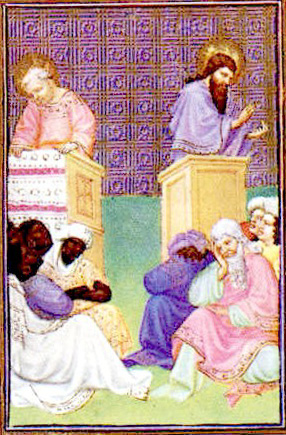
True and False Evangelization |
|
|
True and False Evangelization |
Epiphanius. Panarion (Adversus haereses) , ed. Holl, K; Bände 1-3: Ancoratus und Panarion, Hinrichs Leipzig 1933 ser Die griechischen christlichen Schriftsteller , Haereses 65-80: vol. 3,
|
Against the Hierakites - §67 |
1Κατὰ Ἱερακιτῶν μζ͵ τῆς δὲ ἀκολουθίας ξζ. |
|
67.1.1. After this most wicked and venomous of all sects and the savage attack, like a snake’s, of Mani’s teaching, came a man named Hierakas, the founder of the Hierakites. |
1 1. Μετὰ τὴν μοχθηρὰν ταύτην καὶ ἰοβόλον ὑπὲρ πᾶσαν αἵρεσιν καὶ ἑρπετώδη τοῦ Μάνη βαρβαρικὴν θηριοβολίαν τῆς διδασκαλίας ἀνέστη τις 3.133 Ἱερακᾶς ὀνόματι͵ ἀφ΄ οὗπερ Ἱερακῖται. |
|
2. He lived in Leontopolis in Egypt, had a sound elementary education, was well versed in all the pagan subjects, and mastered as well medicine and the other sciences of the Egyptians and Greeks, to which he doubtless added astrology and magic. |
οὗτος ἐν τῇ Λεοντῷ τῇ κατ΄ Αἴγυπτον ὑπῆρχεν͵ ἐν προπαιδείᾳ οὐ μικρᾷ ὑπάρξας͵ Ἑλληνικῶν τε πάντων λόγων ἐπιτηδεύμασιν ἀσκηθείς͵ ἰατροσοφιστικῇ τε καὶ τοῖς ἄλλοις τοῖς τῶν Αἰγυπτίων καὶ Ἑλλήνων μαθήμασιν ἀκριβῶς ἐπιστάς· τάχα δὲ καὶ ἀστρονομίας καὶ μαγείας ὁ ἀνὴρ παρήψατο. |
|
3. For he was quite skilled in many disciplines, including exegesis, as his writings show. He had a perfect mastery of the Egyptian (i.e Coptic) language - for the man was Egyptian - but also knew Greek well enough, being of a most keen intelligence. |
ἐμπειρότατος γὰρ ὑπῆρχε πολλῶν λόγων καὶ ἐν ἐξηγήσει͵ ὡς ὑποφαίνουσιν οἱ αὐτοῦ λόγοι ͵ πάνυ δὲ τὴν τῶν Αἰγυπτίων ἐπιστάμενος γλῶσσαν (Αἰγύπτιος γὰρ ὁ ἀνὴρ ἦν)͵ ἀλλὰ καὶ τῇ τῶν Ἑλλήνων τετρανωμένος οὐ μικρῶς͵ ὀξὺς κατὰ πάντα τρόπον. |
|
4. He was in fact a Christian, but he did not persevere in the Christian way of life; he slipped, fell, and ran aground. To put it plainly, he memorized the Old and New Testament, and in commenting on them he taught doctrines which he got from his own empty ideas, things which he considered true and which suggested themselves to him. |
ὑπῆρχε δῆθεν Χριστιανός͵ ἀλλ΄ οὐκ ἐνέ μεινε τῇ τοῦ Χριστοῦ πολιτείᾳ· παρέπεσε γὰρ καὶ ὀλισθήσας ἐξώκειλεν. οὗτος μὲν γὰρ παλαιὰν καὶ καινὴν διαθήκην σαφῶς εἰπεῖν ἀποστη θίζων καὶ εἰς αὐτὰ ἐξηγησάμενος͵ ἐδογμάτισε παρ΄ ἑαυτῷ ἀπὸ κενο φωνίας ἑαυτοῦ͵ ὅπερ αὐτῷ ἔδοξε καὶ ὃ ὑπεισῆλθεν αὐτῷ. |
|
5. He too teaches that there is no resurrection of the flesh at all, but only of the soul. He says that the resurrection is spiritual. Collecting from the sacred scriptures whatever may <be found> to support his views, he contrived some absurd and evil fabrications in support of his heresy. |
Βούλεται γὰρ καὶ οὗτος τὴν σάρκα μὴ ἀνίστασθαι τὸ παράπαν͵ ἀλλὰ τὴν ψυχὴν μονωτάτην. πνευματικὴν δὲ τὴν ἀνάστασιν φάσκει. καὶ ὅσα ἔστιν εὑρεῖν ἀπὸ τῶν θείων γραφῶν εἰς ἑαυτοῦ νοῦν ἀναλεξάμενος͵ οὕτως ἑαυτῷ ἐπεσώρευσεν͵ ἀτόπως πλάσματα ἄττα φαῦλα ἑαυτῷ μηχα νησάμενος πρὸς σύστασιν τῆς αὐτοῦ αἱρέσεως. |
|
6. He was impressive in his asceticism and able to persuade souls; many of the Egyptian ascetics were drawn away at once to join him. For I believe that in regard to the resurrection of the dead he denied the resurrection of the flesh because he was influenced by Origen; or perhaps he disgorged the doctrine from his own mind. |
ἦν δὲ ὁ ἀνὴρ ἔκπληκτος τῇ αὐτοῦ ἀσκήσει καὶ δυνάμενος πεῖσαι ψυχάς· αὐτίκα πολλοὶ τῶν ἀσ κητῶν τῶν Αἰγυπτίων αὐτῷ συναπήχθησαν. οἶμαι γὰρ ὅτι περὶ ἀναστάσεως νεκρῶν [ὡς] ἠρνήσατο τὴν τῆς σαρκὸς ἀνάστασιν͵ ἀπὸ Ὠριγένους τὰς προφάσεις εἰληφὼς ἢ ἀφ΄ ἑαυτοῦ τῆς διανοίας τοῦτο ἐξεμέσας. |
|
7. He does not accept marriage, saying that it is of the Old Testament. Those associated with Abraham, Isaac, Jacob, Moses, Aaron, and all the holy ones, Isaiah and Jeremiah, he accepts equally and considers prophets, 8. and says that in the Old Testament it was allowed to marry, but since the incarnation of Christ one <should> no longer accept marriage, nor can it inherit the kingdom of heaven. |
οὐ παραδέχεται οὗτος γάμον͵ φάσκων εἶναι τοῦτο παλαιᾶς διαθήκης. τοὺς μὲν γὰρ περὶ τὸν Ἀβραὰμ καὶ Ἰσαὰκ καὶ Ἰακὼβ καὶ Μωυσέα καὶ Ἀαρὼν καὶ πάντας τοὺς ἁγίους͵ Ἠσαΐαν καὶ Ἰερεμίαν͵ ὁμοίως δέχεται καὶ προφήτας ἡγεῖται͵ καὶ συγκεχωρῆσθαί φησιν ἐν τῇ παλαιᾷ διαθήκῃ 3.134 τῷ γάμῳ συνάπτεσθαι͵ ἀπὸ δὲ τῆς ἐνδημίας τοῦ Χριστοῦ μηκέτι δεῖν τὸν γάμον παραδέχεσθαι͵ μήτε δύνασθαι αὐτὸν κληρονομεῖν βασιλείαν οὐρανῶν. |
|
9. For what, he asks, did the Word corne to make that was new? Or what new thing was it that the Only Begotten came to announce or to establish? If it was about the fear of God, the law had that. If it was about marnage, the scriptures preached about that. If it was about envy, greed, and injustice, the Old Testament contained teachings about all of these. But this one thing he came to establish: to preach continence in the world and to gather to himself chastity and continence; now without this <one> cannot live. |
τί γάρ͵ φησίν͵ ἦλθε ποιεῖν καινὸν ὁ λόγος; ἢ τί καινὸν ἦλθε κηρῦξαι ὁ μονο γενὴς καὶ κατορθῶσαι; εἰ μὲν γὰρ περὶ φόβου θεοῦ͵ τοῦτο εἶχεν ὁ νόμος· εἰ δὲ περὶ τοῦ γάμου͵ κεκηρύχασιν αἱ γραφαί· εἰ δὲ περὶ φθόνου καὶ πλεονεξίας καὶ ἀδικίας͵ ταῦτα πάντα περιεῖχεν ἡ παλαιὰ διαθήκη. ἓν δὲ μόνον τοῦτο κατορθῶσαι ἦλθε͵ τὸ τὴν ἐγκράτειαν κηρῦξαι ἐν τῷ κόσμῳ καὶ ἑαυτῷ ἀναλέξασθαι ἁγνείαν καὶ ἐγκράτειαν· ἄνευ δὲ τούτου μὴ δύνασθαί τινα ζῆν. |
|
2.1. He gathers texts to prove his teaching from every place, <as> when he quotes: “And your sanctification, without which no one will see God. (Heb. 12:14) |
2. Τὰς δὲ προφάσεις τούτων πανταχόθεν ἀναλέγεται͵ ὡς ὅταν εἴπῃ ὅτι καὶ τὸν ἁγιασμὸν ὑμῶν͵ οὗ χωρὶς τὸν θεὸν οὐδεὶς ὄψεται. |
|
2.2. But if they say to him: How is it that the apostle says, “Marnage is honorable and the marriage-bed undefiled, but God will judge fornicators and adulterers”? (Heb. 13:4.) <he replies: But the apostle says further: “It is well for a man not to touch a woman”?>, (1 Cor. 7:1.) 2.3. and he immediately continues, <“It is well for a man to be this way”?>. (1 Cor. 7:26.) Then skipping a few lines, he quotes, “The unmarried woman is concerned about how to please the Lord, and so is the virgin; but the married woman is concerned about pleasing her husband, and she is divided.” (1 Cor. 7:34, 33.)6 |
ἐὰν δὲ εἴπωσιν αὐτῷ· πῶς ὁ ἀπόστολος ἔφη τίμιος ὁ γάμος καὶ ἡ κοίτη ἀμίαν τος͵ πόρνους δὲ καὶ μοιχοὺς κρινεῖ ὁ θεός͵ καὶ εὐθὺς ἐπιφέρει αὖθις λέγων ͵ ὑπερβὰς δὲ ὀλίγον λέγει ὅτι ἡ ἄγαμος μεριμνᾷ τὰ τοῦ κυρίου πῶς ἀρέσει τῷ κυρίῳ καὶ ἡ παρθένος· ἡ δὲ γαμήσασα μεριμνᾷ πῶς ἀρέσει τῷ ἀνδρί͵ καὶ μεμέρισται. |
|
2.4. But if there is division, how can there be sharing in common where division is? And if she does not please God, but her husband, how can she receive the inheritance from God? 2.5. He says that <the apostle says>, “On account of fornication, each one should have his own wife” (1 Cor. 7:2.) not in the sense of praising marriage after the advent of Christ, but in the sense of tolerating it, lest they fall into greater ruin. “For there are eunuchs who make themselves such for the sake of the kingdom of heaven,” (Matt. 19:12.) and “I wish,” he says, “everyone to be as I am”, (1 Cor. 7:7.) 2.6. and “The kingdom of heaven is like ten virgins, five foolish and five sensible (Matt. 25:lf.): sensible virgins, foolish virgins, nonetheless virgins they are who are compared to the kingdom of heaven; he did not speak of married people. He collects many such passages in order to reject marriage. |
εἰ τοίνυν ἔστι μερισμός͵ πῶς δύναται ὅπου μερισμὸς ἐπὶ τὸ αὐτὸ κοινωνῆσαι; καὶ εἰ θεῷ οὐκ ἀρέσκει͵ ἀλλὰ τῷ ἀνδρί͵ πῶς δύναται παρὰ θεῷ κεκτῆσθαι τὴν κληρονομίαν; διὰ γὰρ τὰς πορνείας ἕκαστος τὴν ἑαυτοῦ γυναῖκα ἐχέτω͵ φησὶν ὁ ἀπόστο λος οὐκ ἐπαινῶν͵ φησί͵ γάμον μετὰ τὴν παρουσίαν͵ ἀλλὰ συμβαστάζων͵ ἵνα μὴ εἰς περιττὸν ὄλεθρον ἐμπέσωσιν. εἰσὶ γὰρ εὐνοῦχοι οἱ ἑαυτοὺς εὐνουχίσαντες διὰ τὴν βασιλείαν τῶν οὐρανῶν͵ καὶ θέλω͵ φησί͵ πάντας εἶναι ὡς ἐμαυτόν͵ καὶ ὡμοιώθη ἡ βασιλεία τῶν οὐρανῶν δέκαπαρ θένοις͵ πέντε μωραῖς καὶ πέντε φρονίμοις· φρόνιμοι παρθένοι͵ μωραὶ παρθένοι͵ πλὴν παρθένοι͵ βασιλείᾳ οὐρανῶν ἀπεικάζονται͵ καὶ οὐκ εἶπεν ἔγγαμοι. πολλὰ δὲ τοιαῦτα ἑαυτῷ ἐπισωρεύει͵ ἵνα δῆθεν παρεκβάλῃ γάμον. |
|
2.7. He does not accept children who die before reaching the age of reason, but rejects them from the hope which he thinks he has. He says they do not inherit the kingdom of heaven because they have not taken part in the contest. For “if one competes in a contest, one is not crowned unless one competes according to the rules.” (2 Tim. 2:5) If even the one who takes part in the contest is not crowned unless he has kept the rules, all the more those who have not yet been called to the contest. |
Οὐ δέχεται δὲ τοὺς παῖδας τοὺς τελευτῶντας πρὸ γνώσεως͵ ἀλλ΄ ἀπο βάλλει αὐτοὺς τῆς νομιζομένης ἐλπίδος. φάσκει γὰρ τούτους μὴ κλη 3.135 ρονομεῖν βασιλείαν οὐρανῶν͵ ἐπειδή͵ φησίν͵ οὐκ ἠγωνίσαντο. ἐὰν γὰρ ἀθλῇ τις͵ οὐ στεφανοῦται͵ ἐὰν μὴ νομίμως ἀθλήσῃ· εἰ γὰρ καὶ ὁ ἀθλῶν οὐ στεφανοῦται͵ ἐὰν μὴ νομίμως͵ πόσῳ γε μᾶλλον οἱ μηδέπω εἰς ἀγῶνα κεκλημένοι; |
|
2.8. He does not, moreover, believe that paradise is something of the sensible order, as Origen also certainly did not, nor, as I said, does he believe in the resurrection by way of the flesh, although he speaks of a resurrection of the dead, but a resurrection of souls, about which he spins some spiritual fable. 2.9. No one worships with them except one who is a virgin, a monk, a continent person, or a widow. |
οὐ πιστεύει δὲ πάλιν οὗτος παράδεισον εἶναι αἰσθητόν͵ ὥσπερ ἀμέλει καὶ Ὠριγένης͵ οὐδέ͵ ὡς ἔφην͵ νεκρῶν ἀνάστασιν τὴν διὰ σαρκός͵ ἀλλ΄ ἀνάστασιν μὲν νεκρῶν λέγει͵ ἀνάστασιν δὲ τὴν τῶν ψυχῶν καὶ πνευματικήν τινα φάσκων μυθολογίαν. οὐδεὶς δὲ μετ΄ αὐτῶν συνάγεται͵ ἀλλὰ εἰ εἴη παρθένος ἢ μονάζων ἢ ἐγκρατὴς ἢ χήρα. |
|
3.1. He does not talk about the Father, the Son, and the Holy Spirit as Origen does, but believes that the Son was really begotten by the Father, |
περὶ δὲ τοῦ πατρὸς καὶ υἱοῦ καὶ ἁγίου πνεύματος οὐ φάσκει κατὰ τὸν Ὠριγένην͵ ἀλλὰ πιστεύει ὄντως τὸν υἱὸν ἐκ πατρὸς γεγεννημένον͵ |
|
and concerning the Holy Spirit, <he accepts> that he is from the Father. |
( 3. ) καὶ περὶ τοῦ πνεύματος τοῦ ἁγίου ἐκ πατρὸς εἶναι δέχεται. |
|
3.2. But he says, as I explained in the chapter about the Melchizedekian sect, concerning the Holy Spirit that he is Melchizedek, because of what <the apostle> says: “He intercedes for us with inarticulate groans.” (Rom. 8:26) Who does this refer to but <the one “who has been made like the Son of God, who> remains a priest forever”? (Heb 7:3) But the words “a priest forever” refer to his interceding. |
φάσκει δὲ οὗτος͵ ὡς ἄνω μοι ἐν τῇ τῶν Μελχισεδεκιανῶν αἱρέσει δεδήλωται͵ περὶ τοῦ ἁγίου πνεύματος ὅτι αὐτός ἐστιν ὁ Μελχισεδέκ͵ διὰ τό͵ φησίν͵ εἰρηκέναι τὸν ἀπόστολον ὅτι ὑπερεντυγχάνει στεναγμοῖς ἀλαλήτοις ὑπὲρ ἡμῶν. καὶ τίς ἐστιν οὗτος͵ ἀλλὰ ὁ ἀφωμοιωμένος τῷ υἱῷ τοῦ θεοῦ͵ ὃς μένει ἱερεὺς εἰς τὸ διηνεκές; τὸ δὲ ἱερεὺς εἰς τὸ διηνεκές διὰ τὸ ὑπερεν τυγχάνειν. |
|
3.3. This spirit met Abraham on that occasion (Gen. 18:1 ff) because he is like the Son. For this reason, he says, the apostle <uses the words> “without father, without mother, without genealogy.” (Heb. 7:3 “Without mother” because he has no mother. “Without father” because he has no father on earth, “but having been made like the Son of God, he remains a priest forever.” And he babbles on at great length about the Holy Spirit, developing his topic in detail. |
τοῦτο δὲ τὸ πνεῦμα συνηντηκέναι τῷ Ἀβραὰμ κατ΄ ἐκεῖνο καιροῦ͵ ἐπειδὴ γὰρ ὅμοιόν ἐστι τῷ υἱῷ. καὶ διὰ τοῦτο͵ φησίν͵ λέγει ὁ ἀπόστολος ἀπάτωρ ἀμήτωρ ἀγενεαλόγητος· ἀμήτωρ͵ φησίν͵ ὅτι οὐκ ἔχει μητέρα· ἀπάτωρ͵ φησίν͵ ὅτι ἐπὶ γῆς οὐκ ἔσχε πατέρα͵ ἀφωμοιω μένος δὲ τῷ υἱῷ τοῦ θεοῦ μένει ἱερεὺς εἰς τὸ διηνεκές. καὶ πολλὰ φλυαρῶν περὶ τοῦ ἁγίου πνεύματος διεξῆλθε περὶ τούτου πολλὴν πραγματείαν. |
|
4. Now he seeks complete confirmation of his doctrine in the Ascension of Isaiah, where in the so-called Ascension the speaker says, “The angel who walked before me showed me, and he showed me and said, `Who is the one on the right hand of God?’ And I said, You know, Lord.’ He said, ‘That is the Beloved. S. And who is the other like him who has corne from the left?’ I said, You know.’ <He said, > ‘That is the Holy Spirit who speaks in you and in the prophets.’ And he was like the Beloved.” From this passage he seeks confirmation of the words “made like the Son of God, he remains a priest forever.” . . . |
βούλεται δὲ τὴν τελείαν αὐτοῦ σύστασιν ποιεῖσθαι ἀπὸ τοῦ Ἀνα βατικοῦ Ἠσαΐου͵ δῆθεν ὡς ἐν τῷ Ἀναβατικῷ λεγομένῳ ἔλεγεν ἐκεῖσε ὅτι ἔδειξέ μοι ὁ ἄγγελος περιπατῶν ἔμπροσθέν μου͵ καὶ ἔδειξέ μοι καὶ 3.136 εἶπε· τίς ἐστιν ὁ ἐν δεξιᾷ τοῦ θεοῦ; καὶ εἶπα· σὺ οἶδας͵ κύριε· λέγει· οὗτός ἐστιν ὁ ἀγαπητός. καὶ τίς ἐστιν ὁ ἄλλος ὁ ὅμοιος αὐτῷ ἐξ ἀριστερῶν ἐλθών; καὶ εἶπα· σὺ γινώσκεις. λέγει· τοῦτό ἐστιν τὸ ἅγιον πνεῦμα τὸ λαλοῦν ἐν σοὶ καὶ ἐν τοῖς προφήταις. καὶ ἦν͵ φησίν͵ ὅμοιον τῷ ἀγαπητῷ. ἐκ τούτου βούλεται συνιστᾶν τὸ εἰρημένον ἀφω μοιωμένος τῷ υἱῷ τοῦ θεοῦ μένει ἱερεὺς εἰς τὸ διηνεκές. |
|
|
Πόσα τοίνυν δυνήσεται ὁ ἡμέτερος νοῦς καὶ περὶ τούτου διαλαμβάνειν πρὸς ἀντίθεσιν τῆς αὐτοῦ πολλῆς παραπεποιημένης διανοίας; |
|
7. He died after he had reached old age. |
οὗτος δὲ γηραλέος ἐτελεύτα. |
|
. He composed writings in Greek and Egyptian which included a commentary on the Hexaemeron, and he fabricated some fables and pretentious allegories. He wrote commentaries on other parts of scripture, and fabricated many new psalms. 8. Many of those <who believe his teachings?> do not partake of animal flesh. Now Hieracas himself really practiced a deep asceticism, but his disciples who came after him only pretended to. He himself abstained from all meat, and his asceticism excluded even wine. 9. Now some say of him that he lived for over ninety years and that until the day of his death he practiced the copyist’s art (for he was a copyist), for he retained his eyesight... . |
συνεγράψατο δὲ Ἑλληνικῶς τε καὶ Αἰγυπτιακῶς͵ ἐξηγησάμενος καὶ συντάξας περὶ τῆς ἑξαημέρου͵ μύθους τινὰς πλασά μενος καὶ κομπώδεις ἀλληγορίας. εἰς ἄλλα δὲ πόσα ἀπὸ τῆς γραφῆς συνέταξε͵ ψαλμούς τε πολλοὺς νεωτερικοὺς ἐπλάσατο. ἐμψύχων τε πολλοὶ ἐξ αὐτῶν οὐ μετέχουσι τῶν ἀληθινῶν αὐτῶν τοῦ δόγματος. ὁ δὲ Ἱε ρακᾶς αὐτὸς τῷ μὲν ὄντι πολλὴν εἶχε τὴν ἄσκησιν͵ οἱ δὲ μετ΄ αὐτὸν αὐτοῦ μαθηταὶ καθ΄ ὑπόκρισιν· ἐκεῖνος μὲν ἀπείχετο πάντων βρωμάτων καὶ ἠσκεῖτο καὶ ἀπὸ οἴνου· φασὶ δέ τινες περὶ αὐτοῦ ὅτι ὑπὲρ ἐνενήκοντα ἔτη βιώσας ἕως τῆς ἡμέρας ἧς ἐτελεύτα ἐκαλλιγράφει (καλλιγράφος γὰρ ἦν)· ἔμενε γὰρ αὐτοῦ συνεστὼς ὁ ὀφθαλμός. |
|
4,1 All right, let’s investigate this one’s tares too. Which of sacred scripture’s ideas shall we get hold of, to scotch this poisonous snake that strikes fore and aft like a scorpion? For he heaped up harmful material from two Testaments, not as the sacred words stand, but as his false thinking formed obscure notions of clear things. |
4. Φέρε δὲ διασκοπήσωμεν καὶ τὰ τούτου ζιζάνια· ποίᾳ διανοίᾳ λόγου θεϊκοῦ συνάψωμεν καὶ ἐξαφανίσωμεν τὸ ἰοβόλον τοῦτο ἑρπετόν͵ σκορπίου δίκην ἔμπροσθεν καὶ κατόπιν παῖον͵ ἀπὸ δύο διαθηκῶν ἑαυτῷ ἐπισωρεῦον τὰ πρὸς βλάβην͵ οὐχ ὡς ἔχουσιν οἱ θεῖοι λόγοι͵ ἀλλ΄ ὡς ἡ παραπεποιημένη αὐτοῦ ἔννοια τὰ φωτεινὰ σκοτεινῶς διενοεῖτο; |
|
(2) Honey is not nasty or bitter, and neither are the nicer foods God has created. But if they are given to a fever patient they seem bitter in his mouth, not because the sweet things have turned bitter, but because the patient’s taste imparts bitterness to the things he is given. (3) In the sanie way, no one who has fallen away from the truth has been deceived by the truth; he tasted the truth with bitter thoughts and it became bitter to him. |
οὐ μεμ πτὸν γὰρ τὸ μέλι οὔτε πικρότατον͵ οὐδὲ αἱ ἐδωδαὶ ἐκ θεοῦ ἐκτισμέναι αἱ καλλίους͵ διδόμεναι δέ τινι πυρέττοντι πικραὶ ἐν τῷ στόματι αὐτοῦ φαίνονται͵ οὐ τῶν ἡδέων πεπικραμμένων͵ ἀλλὰ τοῦ γεύματος τοῦ πυρέτ τοντος πικράναντος τὰ αὐτῷ διδόμενα. οὕτω καὶ πᾶς τις ἀπὸ τῆς ἀλη θείας πεσὼν οὐκ ἀπὸ τῆς ἀληθείας ἠπάτηται͵ ἀλλὰ τὴν ἀλήθειαν πικροῖς διανοήμασιν ἐγεύσατο͵ καὶ εἰς πικρίαν αὐτῷ μετεβλήθη. |
|
[. . .] (Epiphanius contradicts Hierakas teaching with extensive citations from the Scriptures) |
|
|
8,1 But here too, I believe enough has been said about them. We have broken the scorpion’s wings and drawn its powers off. For Hieracas is a winged snake and scorpion which has all sorts of wings, which flies, and which mimics the church’s virginity but without a clear conscience. |
3.140 8. Ἀλλὰ περὶ τούτων καὶ αὐτόθι ἀρκεῖσθαι ἡγοῦμαι. συνετρίψαμεν γὰρ τοῦ σκορπίου τὰς πτέρυγας͵ καὶ κατεσπάσαμεν αὐτοῦ τὰς δυνάμεις. ὄφις γὰρ πτερωτὸς οὗτος καὶ σκορπίος͵ πτέρυγας ἔχων κατὰ πολλοὺς τρόπους καὶ πετόμενος͵ καὶ μιμούμενος μὲν τῆς ἐκκλησίας τὴν παρ θενίαν͵ οὐκ ἔχων δὲ καθαρὰν τὴν συνείδησιν. |
|
(2) For he and people like him exemplify the words, “Having their conscience seared with an hot iron; and forbidding to marry, and to ahstain from meats which God kath made to be received. For they are sanctified by the word of the living God and praver, since all things are good and wholesorne, and nothing is abominable with God.’ |
ἐπὶ γὰρ τούτῳ καὶ τοῖς ὁμοίοις αὐτοῦ πληροῦται τὸ κεκαυτηριασμένων τὴν συνείδησιν͵ καὶ κωλυόντων γαμεῖν͵ ἀπέχεσθαι βρωμάτων͵ ἃ ὁ θεὸς εἰς μετάληψιν ἐποίησεν· ἁγιάζεται γὰρ διὰ λόγου θεοῦ ζῶντος καὶ ἐντεύξεως͵ ὅτι πάντα καλὰ καὶ ἡδέα͵ καὶ οὐδὲν ἀπόβλητον παρὰ θεῷ. |
|
8,3 However, they are a complete laughing-stock because of their adoptive wives, whom they are at pains to have as domestic servants. |
χλευάζονται δὲ τελειό τατα δι΄ ἃς κέκτηνται ἕκαστος συνεισάκτους γυναῖκας͵ [δι΄] ἃς εἴωθαν φιλοτιμεῖσθαι ἔχειν εἰς ὑπηρεσίαν. |
|
(4) But as I said, we have pulled his wings off too, and broken his head with the wood of life, the cross of our Lord Jesus Christ. Let us go on to die rest, calling on God himself to aid us, so that we may reply to the remaining sects, and refute the heresies they fruitlessly palm off on the world. |
ἀλλὰ καὶ τούτου͵ ὡς ἔφην͵ τὰς πτέρυ γας κατασπάσαντες καὶ τὴν κεφαλὴν καταθλάσαντες τῷ ξύλῳ τῆς ζωῆς͵ τουτέστι τῷ σταυρῷ τοῦ κυρίου ἡμῶν Ἰησοῦ Χριστοῦ͵ ἐπὶ τὰς ἑξῆς ἴωμεν͵ ἐπικαλούμενοι αὐτὸν τὸν θεὸν βοηθόν͵ πρὸς τὴν τῶν λοιπῶν αἱρέσεων ἀντίρρησίν τε καὶ ἀνατροπὴν τῶν παρ΄ αὐτοῖς ματαίως τῷ κόσμῳ ὑποβαλλομένων. |
|
|
|
Panarion (Adversus haereses). Epiphanius, Vol.s 1-3: Ancoratus und Panarion ed. K. Holl, (Hinrichs, Leipzig: 1:1915; 2:1922; 3:1933), 1: 153-161, 169-233, 238-464; 2: 5-210, 215-523; 3: 2-229, 232-414, 416-526, Die griechischen christlichen Schriftsteller 25, 31, 37. Haereses 1-33: vol. 1, pp. 169-233, 238-464; Haereses 34-64: vol. 2, pp. 5-210, 215-523. Haereses 65-80: vol. 3, pp. 2-229, 232-414, 416- De fide: vol. 3, pp. 496-526.
|
|
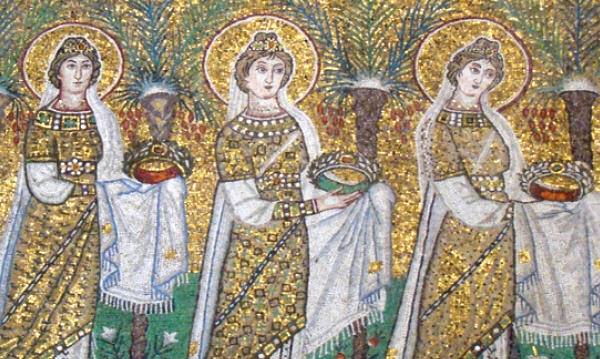
Virgins Bearing Gifts, Ravenna |
Epiphanius. Panarion (Adversus haereses) , ed. Holl, K; Bände 1-3: Ancoratus und Panarion, Hinrichs Leipzig 1933 ser Die griechischen christlichen Schriftsteller , Haereses 65-80: vol. 3, 3.476.25 - 3.484.21
|
|
|
|
Against
Collyridians,l
who make offerings to Mary. |
Κατὰ Κολλυριδιανῶν τῶν τῇ Μαρίᾳ προσφερόντων νθ͵ τῆς δὲ ἀκολουθίας οθ.ῃ |
|
[79] 1,1 < Another > sect has come to public notice after this, and I have already mentioned a few things about it in the Sect preceding, in the letter about Mary which I wrote to Arabia. (2) This one, again, was also brought to Arabia from Thrace and upper Scythia, and word of it has reached me; |
Ἑξῆς δὲ ταύτῃ ἄλλη εἰς φήμην πέφηνεν αἵρεσις͵ περὶ ἧς ἤδη ὑπεμνήσαμεν ὀλίγα ἐν τῇ πρὸ ταύτης͵ διὰ τῆς εἰς Ἀραβίαν γραφείσης ἐπιστολῆς τῆς περὶ τῆς Μαρίας ἐχούσης. καὶ αὐτὴ δὲ ἡ αἵρεσις πάλιν ἐν τῇ Ἀραβίᾳ ἀπὸ τῆς Θρᾴκης καὶ τῶν ἄνω μερῶν τῆς Σκυθίας ἀνεδείχθη 3.476 καὶ εἰς ἡμῶν ἀκοὰς ἀνηνέχθη· |
| it too is ridiculous and, in the opinion of the wise, wholly absurd. (3) < So > let’s begin the discussion and description of it; as others like it were, it too will be adjudged silly rather than wise. | ἥτις ἐστὶ καὶ αὐτὴ γελοῖος καὶ χλεύης ἔμπλεως παρὰ τοῖς συνετοῖς εὑρισκομένη. ἀρξώμεθα γοῦν περὶ αὐτῆς φρᾶσαι καὶ τὰ κατ΄ αὐτὴν διηγήσασθαι· εὐηθείας γὰρ μᾶλλον κριθήσεται ἤπερ συνέσεως αὕτη͵ καθὼς καὶ ἄλλαι ὅμοιαι ταύτῃ ἦσαν. |
|
1,4 For as, long ago, those who, from an insolent attitude towards Mary, have seen fit to suspect these things were sowing damaging suspicions in people’s minds, so these persons who lean in the other direction are guilty of doing the worst sort of harm. In them too the maxim of certain pagan philosophers, “Extremes are equal,” will be exemplified. (5) For the harm done by both of these sects is equal, since one belittles the holy Virgin while the other, in its turn, glorifies her to excess. |
ὡς γὰρ ἄνω πολὺ διὰ τῆς πρὸς Μαρίαν ὕβρεως οἱ δόξαντες ταῦτα ὑπονοεῖν βλαβερὰς ὑπονοίας ἐνσπείρουσι λογισμοῖς ἀνθρώπων͵ οὕτω καὶ οὗτοι ἐπὶ τὸ ἕτερον μέρος κλίναντες ἐν ἀκρότητι βλάβης καταλαμβάνονται͵ ὅπως κἀκεῖνο τὸ παρά τισι τῶν ἔξωθεν φιλοσόφων ᾀδόμενον καὶ ἐν αὐτοῖς πληρωθήσεται ἐν τῷ λέγειν͵ αἱ ἀκρότητες ἰσότητες. ἴση γὰρ ἐπ΄ ἀμφοτέ ραις ταύταις ταῖς αἱρέσεσιν ἡ βλάβη͵ τῶν μὲν κατευτελιζόντων τὴν ἁγίαν παρθένον͵ τῶν δὲ πάλιν ὑπὲρ τὸ δέον δοξαζόντων. |
|
1,6 And who but women are the teachers of this? Women are unstable, prone to error, and mean-spirited. (7) As in our earlier chapter on Quintilla, Maximilla and Priscilla, so here the devil has seen fit to disgorge ridiculous teachings from the mouths of women. |
οὗτοι γὰρ οἱ τοῦτο διδάσκοντες τίνες εἰσὶν ἀλλ΄ ἢ γυναῖκες; γυναικῶν γὰρ τὸ γένος εὐόλι σθον͵ σφαλερὸν δὲ καὶ ταπεινὸν τῷ φρονήματι. καὶ αὐτόθι γὰρ ἔδοξεν ἀπὸ γυναικῶν ὁ διάβολος ἐξεμεῖν͵ ὡς καὶ ἄνω παρὰ Κυϊντίλλῃ καὶ Μαξιμίλλῃ καὶ Πρισκίλλῃ περιγέλαστα [τὰ] διδάγματα͵ οὕτω καὶ ἐνταῦθα. |
|
For certain women decorate a barber’s chair or a square seat, spread a cloth on it, set out bread and offer it in Mary’s name on a certain day of the year, and all partake of the bread—as I partially discussed in my same letter to Arabia. |
τινὲς γὰρ γυναῖκες κουρικόν τινα κοσμοῦσαι ἤτοι δίφρον τετράγωνον͵ ἁπλώσασαι ἐπ΄ αὐτὸν ὀθόνην͵ ἐν ἡμέρᾳ τινὶ φανερᾷ τοῦ ἔτους [ἐν ἡμέραις τισὶν] ἄρτον προτιθέασι καὶ ἀναφέρουσιν εἰς ὄνομα τῆς Μαρίας͵ αἱ πᾶσαι δὲ ἀπὸ τοῦ ἄρτου μεταλαμβάνουσιν͵ ὡς ἐν αὐτῇ τῇ εἰς τὴν Ἀραβίαν ἐπιστολῇ γράφοντες ἐκ μέρους περὶ τούτου διελέχθημεν. |
|
Now, however, I shall speak plainly of it and, with prayer to God, give the best refutations of it that I can, so as to grub out the roots of this idolatrous sect and with God’s help, be able to cure certain people of this madness. |
νῦν δὲ σαφῶς τὰ περὶ αὐτῆς λέξομεν͵ καὶ τὰς κατ΄ αὐτῆς ἀνατροπὰς θεὸν αἰτησάμενοι κατὰ τὸ δυνατὸν παραθησόμεθα͵ ὅπως τῆς εἰδωλοποιοῦ ταύτης αἱρέσεως τὰς ῥίζας ἐκτεμόντες ἀπό τινων τὴν τοιαύτην λύσσαν καταλῦσαι ἐν θεῷ δυνηθῶμεν. |
|
2,1. Now then, servants of God, let us adopt a manly frame of mind and dispel the madness of these women. |
2. ῎αγε τοίνυν͵ θεοῦ δοῦλοι͵ ἀνδρικὸν φρόνημα ἐνδυσώμεθα͵ γυναι κῶν δὲ τούτων τὴν μανίαν διασκεδάσωμεν. |
|
The speculation is entirely feminine, and the malady of the deluded Eve all over again. Or rather, it is still the malady of the snake, the seducing beast, and the false promise of the one who spoke in it. This promise made no < sound > suggestion and did not make its undertaking good, but only caused death by calling the untrue true, and encouraging disobedience by the sight of the tree, and aversion to the truth itself by attraction to many things. |
τὸ πᾶν γὰρ θήλεος ἡ ὑπόνοια καὶ Εὔας πάλιν τῆς ἀπατωμένης τὸ νόσημα͵ μᾶλλον δ΄ ἔτι τοῦ ὄφεως τοῦ ἐρεθιστικοῦ θηρὸς καὶ τοῦ λαλήσαντος ἐν αὐτῇ ἡ τῆς πλάνης ὑπόσχεσις͵ μηδὲν ὑγιὲς εἰς μέσον φέρουσα οὐδὲ τὰ ὑπισχνούμενα τελειοῦσα ἀλλ΄ ἢ μόνον θάνατον ἀπεργαζομένη͵ τὰ μὴ ὄντα ὡς ὄντα καλοῦσα καὶ διὰ τῆς ὁράσεως τοῦ ξύλου παρακοὴν ἐργαζομένη καὶ ἀποστροφὴν ἀπ΄ αὐτῆς τῆς ἀληθείας διὰ τοῦ ἐπὶ πολλὰ τρέπεσθαι. |
|
2,2. But we shall have reason to suppose that, as the ideas the deceiver sowed by saying, `Ye shall be as gods,” 2 so are the minds of these women which have been ensnared by the pride of that snake. Once again he is bringing death on that sex, as I have often said. |
νομίζειν δὲ ἔσται ὁποῖα 3.477 ὁ ἀπατεὼν ἔσπειρε λέγων ἔσεσθε ὡς θεοί͵ οὕτω καὶ τούτων τὸ φρόνημα κεπφούμενον τῇ τοῦ προειρημένου θηρὸς ἐπάρσει͵ ἐφ΄ ᾗ φύσει πάλιν τὸν θάνατον ἐργάζεται͵ ὡς καὶ πολλάκις εἶπον. |
|
2,3. For to begin with, to whom is it not immediately obvious, < if he will > investigate the whole scope of the past, that their teaching and behavior are devilish, and their undertaking a deviation? Never at any time has a woman offered sacrifice to God—(4) Eve herself, though she had fallen into transgression, still did not dare to undertake such a further impiety. |
πρῶτον μὲν γὰρ εὐθὺς διασκοπεῖν μέλλοντι ἀπ΄ αἰῶνος καὶ δεῦρο͵ τίνι οὐ σαφές ἐστιν ὅτι δαιμόνων ἐστὶ τὸ δίδαγμα καὶ σχῆμα καὶ ἠλλοιωμένον τὸ ἐπιχείρημα; θεῷ μὲν ἀπ΄ αἰῶνος οὐδαμῶς γυνὴ ἱεράτευσεν͵ οὐκ αὐτὴ Εὔα͵ καίτοι γε ἐν παρεκβάσει γενομένη͵ ἀλλ΄ οὐκ ἐτόλμησεν ἔτι ἀσεβὲς τοιοῦτον ἀποτελέσαι ἐπιχείρημα· |
|
Not one of her daughters did, though Abel sacrificed to God at once, and, even though they were not accepted, Cain offered sacrifices before the Lord. Enoch pleased God and was translated. Noah made thank offerings to the Lord, as a token of gratitude, with the extra animals in the ark, in thanksgiving to the One who had preserved him. () The righteous |
οὐ μία τῶν ταύτης θυγατέρων͵ καίτοι γε τοῦ ῎αβελ εὐθὺς ἱερουργήσαντος θεῷ καὶ τοῦ Κάϊν θύσαντος ἐνώπιον κυρίου θυσίας͵ ἀλλ΄ οὐ προσδεδεγμένας͵ Ἐνώχ τε εὐαρεστήσαντος καὶ μετατεθέντος͵ Νῶε δὲ προσενέγκαντος ἐκ τῶν τῆς κιβωτοῦ περισσευμάτων εὐχαριστη ρίους προσφορὰς κυρίῳ͵ εὐγνώμονος διαθέσεως ὑποδεικνύοντος τεκμήριον͵ ὁμολογοῦντος τὴν χάριν τῷ σεσωκότι. |
|
Abraham offered God sacrifice, and Melchizedek the priest of God Most High. Isaac was pleasing to God, and Jacob made the best offering he could on the stone, by pouring oil from his flask. |
Ἀβραὰμ δὲ ὁ δίκαιος ἱερουργεῖ θεῷ͵ καὶ Μελχισεδὲκ ὁ ἱερεὺς τοῦ θεοῦ τοῦ ὑψίστου͵ καὶ Ἰσαὰκ θεῷ εὐάρεστος εὑρίσκεται͵ καὶ Ἰακὼβ κατὰ δύναμιν προσήνεγκεν ἐπὶ τοῦ λίθου͵ ἀπὸ τοῦ φακοῦ ἐπιχέας ἔλαιον. |
|
And the children of Jacob. We find that Levi was the next to receive the priesthood, but that those who received the priestly order came from his stock—I mean Moses the prophet and expositor, Aaron and his sons Eleazar and Phinehas, and his grandson Ithamar. (6) |
οἱ τούτου δὲ υἱεῖς· Λευὶς μὲν εὑρίσκεται καθεξῆς ἱερωσύνην ἀναδεδεγμένος· ἐξ αὐτοῦ δὲ τοῦ γένους οἱ τὸ ἱερατικὸν τάγμα ἀναδεδεγμένοι͵ φημὶ δὲ Μωυσῆς ὁ προφήτης καὶ ἱεροφάντωρ͵ Ἀαρών τε καὶ οἱ τούτου παῖδες͵ Ἐλεάζαρ τε καὶ Φινεὲς καὶ Ἰθάμαρ ὁ τούτου ἔκγονος. |
|
And why name the throngs of those who sacrificed to God in the Old Testament? We find Ahitub sacrificing, and the sons of Korah, and the Gershonites and the Merarites, to whom the levitical order was entrusted. And the house of Eli, and his kinsmen after him in the household of Abimelech and Abiathar, Helkiah and Buzi, down to the high priest Joshua, and Ezra the priest, and the rest And nowhere did a woman offer sacrifice. |
καὶ τί μοι τὰ πλήθη λέγειν τῶν ἱερουργη σάντων θεῷ ἐν παλαιᾷ διαθήκῃ; ὡς Ἀχιτὼβ εὑρίσκεται ἱερουργῶν͵ οἵ τε Κορῖται καὶ οἱ Γερσωνῖται καὶ Μεραρῖται͵ τὴν Λευιτικὴν πεπι στευμένοι τάξιν͵ ὅ τε οἶκος Ἠλεὶ καὶ οἱ μετ΄ αὐτὸν οἱ ἀπὸ τῆς συγγενείας αὐτοῦ ἐν τῷ οἴκῳ Ἀβιμέλεχ καὶ Ἀβιάθαρ͵ Χελκίας τε καὶ Βουζεί͵ ἄχρι Ἰησοῦ τοῦ ἱερέως τοῦ μεγάλου͵ ῎εσδρα τε τοῦ ἱερέως καὶ τῶν ἄλλων. καὶ οὐδαμοῦ γυνὴ ἱεράτευσεν. |
|
3,1 But I shall also go on to the New Testament as well. If it were ordained by God that women should offer sacrifice or have any canonical function in the church, Mary herself, if anyone, should have functioned as a priest in the New Testament. |
3. Ἐλεύσομαι δὲ καὶ εἰς τὴν καινὴν διαθήκην. εἰ ἱερατεύειν γυναῖκες θεῷ προσετάσσοντο ἢ κανονικόν τι ἐργάζεσθαι ἐν ἐκκλησίᾳ͵ ἔδει μᾶλλον αὐτὴν τὴν Μαρίαν ἱερατείαν ἐπιτελέσαι ἐν καινῇ διαθήκῃ͵ |
| She was counted worthy to bear the king of all in her own womb, the heavenly God, the Son of God. Her womb became a temple, and by God’s kindness and an awesome mystery was prepared to be the dwelling place of the Lord’s human nature. (2) | τὴν καταξιω θεῖσαν ἐν κόλποις ἰδίοις ὑποδέξασθαι τὸν παμβασιλέα͵ θεὸν ἐπουράνιον͵ υἱὸν τοῦ θεοῦ͵ ἧς ἡ μήτρα ναὸς γενομένη καὶ κατοικητήριον εἰς τὴν τοῦ κυρίου ἔνσαρκον οἰκονομίαν κατὰ φιλανθρωπίαν θεοῦ καὶ ἔκπληκτον μυστήριον ἡτοιμάσθη. |
|
But it was not God’s pleasure [that she be a priest]. |
ἀλλ΄ οὐκ εὐδόκησεν. |
|
She was not even entrusted with the administration of baptism—for Christ could have been baptized by her rather than by John. |
ἀλλ΄ οὐδὲ βάπτισμα διδόναι πεπίστευται͵ ἐπεὶ ἠδύνατο ὁ Χριστὸς μᾶλλον παρ΄ αὐτῆς βαπτισθῆναι ἤπερ παρὰ Ἰωάννου. |
|
But John the son of Zacharias dwelt in the wilderness entrusted with baptism for the remission of sins, while his father offered sacrifice to God and saw a vision at the time of the offering of incense. |
ἀλλὰ Ἰωάννης μὲν παῖς Ζαχαρίου ἐν τῇ ἐρήμῳ 3.478 διετέλεσε βάπτισμα ἀφέσεως ἁμαρτιῶν πεπιστευμένος͵ ὁ δὲ τούτου πατὴρ θεῷ ἱεράτευσε καὶ τῇ ὥρᾳ τοῦ θυμιάματος ὀπτασίαν εἶδε. |
|
3,3 Peter and Andrew, James and John, Philip and Bartholomew, Thomas, Thaddaeus, James the son of Alphaeus, Judas the son of James and Simon the Zealot, and Matthias who was chosen to make up the number of the Twelve—all these were chosen to be apostles and “offer the Gospel”3 < throughout > the world, together with Paul, Barnabas and the rest, and with James, the Lord’s brother and the bishop of Jerusalem, [they were chosen] to preside over mysteries. |
Πέτρος τε καὶ Ἀνδρέας͵ Ἰάκωβος καὶ Ἰωάννης͵ Φίλιππος καὶ Βαρθολομαῖος͵ Θωμᾶς͵ Θαδδαῖος͵ καὶ Ἰάκωβος Ἀλφαίου͵ καὶ Ἰούδας Ἰακώβου καὶ Σίμων ὁ Καναναῖος͵ καὶ Ματθίας ὁ εἰς πλήρωσιν τῶν δώδεκα ἐκλελεγ μένος͵ οὗτοι πάντες ἐξελέγησαν ἀπόστολοι κατὰ τὴν γῆν ἱερουργοῦντες τὸ εὐαγγέλιον ἅμα Παύλῳ καὶ Βαρνάβᾳ καὶ λοιποῖς͵ καὶ μυστηρίων ἀρχηγέται σὺν Ἰακώβῳ τῷ ἀδελφῷ τοῦ κυρίου καὶ πρώτῳ ἐπισκόπῳ Ἱεροσολύμων. |
|
3,4 Successors to the episcopate and presbyterate in the household of God were appointed by this bishop and these apostles, and nowhere was a woman appointed. (5) Scripture says, `Philip the evangelist had four daughters which did prophesy,”4 but they were certainly not priests. And “Anna the daughter of Phanuel was a prophetess,”5 but not entrusted with the priesthood. For the words, “Your sons shall prophesy, and your daughters shall dream dreams, and your young men shall see visions,”6 required fulfillment. |
ἐξ οὗπερ ἐπισκόπου καὶ τῶν προειρημένων ἀποστόλων κατεστάθησαν διαδοχαὶ ἐπισκόπων καὶ πρεσβυτέρων ἐν οἴκῳ θεοῦ͵ καὶ οὐδαμοῦ γυνὴ ἐν τούτοις κατεστάθη. ἦσαν δέ͵ φησί͵ τέσσαρες θυ γατέρες Φιλίππῳ τῷ εὐαγγελιστῇ προφητεύουσαι͵ οὐ μὴν ἱερουργοῦσαι͵ καὶ ἦν ῎αννα προφῆτις θυγάτηρ Φανουήλ͵ ἀλλ΄ οὐχ ἱερατείαν πεπι στευμένη. ἔδει γὰρ πληροῦσθαι τὸ προφητεύσουσιν οἱ υἱοὶ ὑμῶν καὶ αἱ θυγατέρες ὑμῶν ἐνυπνίοις ἐνυπνιασθήσονται͵ καὶ οἱ νεανίσκοι ὑμῶν ὁράσεις ὄψονται. |
|
3,6. < It is plain > too that there is an order of deaconesses in the church. But this is not allowed for the practice of priesthood or any liturgical function, but for the sake of female modesty, at either the time of baptism or of the examination of some condition or trouble, and when a woman’s body may be bared, so that she will be seen not by the male priests but by the assisting female who is appointed by the priest for the occasion, to take temporary care of the woman who needs it at the time when her body is uncovered. |
καὶ ὅτι μὲν διακονισσῶν τάγμα ἐστὶν εἰς τὴν ἐκκλησίαν δῆλον· ἀλλ΄ οὐχὶ εἰς τὸ ἱερατεύειν οὐδέ τι ἐπιχειρεῖν ἐπιτρέπεται͵ ἕνεκεν δὲ σεμνότητος τοῦ γυναικείου γένους ἢ δι΄ ὥραν λουτροῦ ἢ ἐπισκέψεως πάθους ἢ πόνου καὶ ὅτε γυμνωθείη σῶμα γυναίου͵ ἵνα μὴ ὑπὸ ἀνδρῶν ἱερουργούντων θεαθείη͵ ἀλλ΄ ὑπὸ τῆς διακονούσης͵ ἣ ἐπιτάσσεται ἀπὸ τοῦ ἱερέως ἐπιμελεῖσθαι πρὸς τὴν ὥραν τῆς ἐπιδεομένης γυναικὸς ἐν τῇ ὥρᾳ τῆς τοῦ σώματος αὐτῆς γυμνώσεως͵ |
|
For the ordinance of discipline and good order in the church has been well protected with understanding, by the standard of our rule. |
τοῦ τάγματος τῆς εὐταξίας καὶ ἐκκλησιαστικῆς εὐνομίας ἐπιστημόνως ἐν μέτρῳ κανόνος σφόδρα ἠσφαλισμένου. |
|
For the same reason the word of God does not allow a woman “to speak” 7 in church either, or “bear rule over a man.”8 And there is a great deal that can be said about this. |
διὸ οὔτε ἐπιτρέπει ὁ θεῖος λόγος γυναικὶ ἐν ἐκκλησίᾳ λαλεῖν οὔτε αὐθεντεῖν ἀνδρός. καὶ πολλὰ ἔστι περὶ τούτου λέγειν. |
|
4,1. But it must be observed that the ordinance of the church required not only deaconesses. It mentioned widows too, and called those of them who were still older, “elder,” but nowhere did it prescribe “elderesses” or “priestesses.” |
4. Παρατηρητέον δὲ ὅτι ἄχρι διακονισσῶν μόνον τὸ ἐκκλησιαστικὸν ἐπεδεήθη τάγμα͵ χήρας τε ὠνόμασε καὶ τούτων τὰς ἔτι γραοτέρας πρεσ βύτιδας͵ οὐδαμοῦ δὲ πρεσβυτερίδας ἢ ἱερίσσας προσέταξε. |
|
Indeed, not even the deacons in the hierarchy of the church have been commissioned to celebrate any mystery, but only to administer mysteries already celebrated. |
καὶ γὰρ οὔτε διάκονοι ἐν τῇ ἐκκλησιαστικῇ τάξει ἐπιστεύθησάν τι μυστήριον ἐπιτελεῖν͵ ἀλλὰ μόνον διακονεῖν τὰ ἐπιτελούμενα. |
|
4,2. But, once more, from whence has this new story arisen for us? Whence women’s pride and female madness? What has nourished the wickedness that—through the female, once morej9— pours the feminine habit of speculation into our minds < and >, by encouraging its characteristic luxury, tries to compel the wretched human race to overstep its proper bounds? |
πόθεν δὲ πάλιν ἡμῖν ὁ καινὸς μῦθος οὗτος ἐγήγερται; πόθεν γυναικῶν τῦφος καὶ μανία γυναικω νῖτις; πόθεν τρεφομένη ἡ κακία͵ διὰ τῆς πάλιν θήλεος ἡμῖν τὸ θῆλυ 3.479 τῆς ὑπονοίας τοῖς φρονήμασιν ἐπιχέουσα τὸ σφέτερόν τε ἡδυπα θείας ἐργαζομένη͵ ἀπὸ τοῦ προκειμένου ἔξω βαίνειν τὴν τάλαιναν τῶν ἀνθρώπων φύσιν ἐπιχειρεῖ ἀναγκάζειν; |
|
4,3 But let us adopt the firm resolve of the champion Job, prepare ourselves with the righteous answer on our lips, and ourselves say, “You have spoken as one of the foolish women.”10 |
ἀλλὰ μὴν τοῦ Ἰὼβ δεξώμεθα τὸ φρόνημα τὸ στερεὸν τοῦ ἀθλητοῦ͵ ἐξοπλισώμεθα τὴν δικαίαν ἀπό κρισιν ἐπὶ τοῖς χείλεσιν ἀναλαβόντες͵ εἴπωμεν καὶ αὐτοί ὥσπερ μία τῶν ἀφρόνων γυναικῶν ἐλάλησας. |
|
4,4. For how can such a thing not appear insane to every wise man whose <mind is sound* > in God? How can the practice not seem idolatrous and the undertaking the devil’s? But the devil has always slipped into the human mind in the guise of someone righteous and, to deify mortal human nature in human eyes, made human images with a great variety of arts. |
πόθεν γὰρ οὐκ ἐμβρόντητον τὸ τοιοῦ τον φανήσεται παντὶ τῷ σύνεσιν ἔχοντι καὶ ἐν θεῷ κεκτημένῳ; πόθεν οὐκ εἰδωλοποιὸν τὸ ἐπιτήδευμα καὶ τὸ ἐγχείρημα διαβολικόν; προφάσει γὰρ δικαίου ἀεὶ ὑπεισδύνων τὴν διάνοιαν ὁ διάβολος τῶν ἀνθρώπων τὴν θνητὴν φύσιν θεοποιῶν εἰς ὀφθαλμοὺς ἀνθρώπων ἀνδροείκελα ἀγάλ ματα διὰ ποικιλίας τεχνῶν διέγραψε. |
|
4,5. And yet the men who are worshiped have died, and their images, which have never lived, are introduced for worship—and since they’ve never lived they can’t be called dead either! And with adulterous intent < they have rebelled > against the one and only God, like a common whore who has been excited to the wickedness of many relations and rejected the temperate course of lawful marriage to one husband. |
καὶ τεθνήκασι μὲν οἱ προσκυνού μενοι͵ τὰ δὲ τούτων ἀγάλματα μηδέποτε ζήσαντα (οὔτε γὰρ νεκρὰ δύναται λέγεσθαι τὰ μηδέποτε ζήσαντα) προσκυνητὰ παρεισάγουσι͵ διὰ μοι χευσάσης διανοίας ἀπὸ τοῦ ἑνὸς καὶ μόνου θεοῦ͵ ὡς ἡ πολύκοινος πόρνη ἐπὶ πολλὴν ἀτοπίαν πολυμιξίας ἐρεθισθεῖσα καὶ τὸ σῶφρον ἀπο τριψαμένη τῆς τοῦ ἑνὸς ἀνδρὸς εὐνομίας.
|
|
4,6. Yes, of course Mary’s body was holy, but she was not God. Yes, the Virgin was indeed a virgin and honored as such, but she was not given us to worship; she worships Him who, though born of her flesh, has come from heaven, from the bosom of his Father. |
ναὶ μὴν ἅγιον ἦν τὸ σῶμα τῆς Μαρίας͵ οὐ μὴν θεός͵ ναὶ δὴ παρθένος ἦν ἡ παρθένος καὶ τετιμημένη͵ ἀλλ΄ οὐκ εἰς προσκύνησιν ἡμῖν δοθεῖσα͵ ἀλλὰ προσκυνοῦσα τὸν ἐξ αὐτῆς σαρκὶ γεγεννημένον͵ ἀπὸ οὐρανῶν δὲ ἐκ κόλπων πατρῴων παραγενόμενον. |
|
4,7. And the Gospel therefore protects us by telling us so on the occasion when the Lord himself said, “Woman, what is between me and you? My hour is not yet come.”11 < For > to make sure that no one would suppose, because of the words, “What is between me and you?” that the holy Virgin is anything more [than a woman], he called her “Woman” as if by prophecy, because of the schisms and sects that were to appear on earth. Otherwise some might stumble into the nonsense of the sect from excessive awe of the saint. |
καὶ διὰ τοῦτο τὸ εὐαγγέλιον ἐπασφαλίζεται ἡμᾶς λέγον͵ αὐτοῦ τοῦ κυρίου φήσαντος ὅτι τί ἐμοὶ καὶ σοί͵ γύναι; οὔπω ἥκει ἡ ὥρα μου· ἵνα γὰρ ἀπὸ τοῦ γύναι͵ τί ἐμοὶ καὶ σοί μή τινες νομίσωσι περισσότερόν τι εἶναι τὴν ἁγίαν παρθένον͵ γυναῖκα ταύτην κέκληκεν͵ ὡς προφητεύων͵ τῶν μελλόντων ἔσεσθαι ἐπὶ τῆς γῆς σχισμάτων τε καὶ αἱρέσεων χάριν͵ ἵνα μή τινες ὑπερβολῇ θαυμάσαντες τὴν ἁγίαν εἰς τοῦτο ὑποπέσωσι τῆς αἱρέσεως τὸ ληρολόγημα. |
|
5,1. For what this sect has to say is complete nonsense and, as it were, an old wives’ tale. Which scripture has spoken of it? Which prophet permitted the worship of a man, let alone a woman? |
5. Χλεύης γάρ ἐστι τὸ πᾶν καὶ γραῶν [ὁ] μῦθος ὡς εἰπεῖν τῆς αἱρέ σεως τὸ διήγημα. ποία δέ τις γραφὴ διηγήσατο περὶ τούτου; |
|
5,2. The vessel is choice but a woman, and by nature no different [from others]. Like the bodies of the saints, however, she has been held in honor for her character and understanding. And if I should say anything more in her praise, [she is] like Elijah, who was virgin from his mother’s womb, always remained so, and was taken up and has not seen death. She is like John who leaned on the Lord’s breast, “the disciple whom Jesus loved.” 12 She is like St. The-cla; and Mary is still more honored than she, because of the providence vouchsafed her. |
ποῖος προφητῶν ἐπέτρεψεν ἄνθρωπον προσκυνεῖσθαι͵ οὐ μὴν γυναῖκα λέγειν; ἐξαίρετον μὲν γάρ ἐστι τὸ σκεῦος͵ ἀλλὰ γυνή͵ καὶ οὐδὲν τὴν φύσιν παρ ηλλαγμένη͵ τὴν δὲ γνώμην καὶ τὴν αἴσθησιν ἐν τιμῇ τετιμημένη͵ ὥσπερ τὰ σώματα τῶν ἁγίων· καὶ εἴ τι περισσότερον πρὸς δοξολογίαν εἴποιμι͵ ὡς Ἠλίας ἐκ μητρὸς παρθένος καὶ οὕτω μένων εἰς τὸ διηνεκὲς καὶ ἀνα λαμβανόμενος͵ θάνατον δὲ οὐχ ἑωρακώς· ὡς ὁ Ἰωάννης ὁ ἐπὶ τὸ στῆθος 3. 480 τοῦ κυρίου ἀναπεσών͵ ὃν ἠγάπα ὁ Ἰησοῦς· ὡς Θέκλα ἡ ἁγία͵ καὶ Μαρία ἡ ἔτι ταύτης τιμιωτέρα δι΄ ἣν κατηξίωται οἰκονομίαν. |
|
5,3. But Elijah is not to be worshiped, even though he is alive. And John is not to be worshiped, even though by his own prayer—or rather, by receiving the grace from God—he made an awesome thing of his falling asleep.13 But neither is Thecla worshiped, nor any of the saints. |
ἀλλ΄ οὔτε Ἠλίας προσκυνητός͵ καίπερ ἐν ζῶσιν ὤν͵ οὔτε Ἰωάννης προσκυνητός͵ καίτοι γε διὰ ἰδίας εὐχῆς τὴν κοίμησιν αὑτοῦ ἔκπληκτον ἀπεργασάμενος͵ μᾶλλον δὲ ἐκ θεοῦ λαβὼν τὴν χάριν͵ ἀλλ΄ οὔτε ἡ Θέκλα οὔτε τις τῶν ἁγίων προσκυνεῖται. |
|
For the age-old error of forgetting the living God and worshiping his creatures will not get the better of me. |
οὐ γὰρ κυριεύσει ἡμῶν ἡ ἀρχαία πλάνη τοῦ καταλιμπάνειν τὸν ζῶντα καὶ προσκυνεῖν τὰ ὑπ΄ αὐτοῦ γεγονότα. |
|
5,4. They served and worshiped the creature more than the creator,” and “were made fools.”14 If it is not his will that angels be worshiped, how much more the woman born of Ann,15 who was given to Ann by Joachim16 and granted to her father and mother by promise, after prayer and all diligence? She was surely not born other than normally, but of a man’s seed and a woman’s womb like everyone else. |
ἐλάτρευσαν γὰρ καὶ ἐσεβάσθησαν τῇ κτίσει παρὰ τὸν κτίσαντα καὶ ἐμωράνθησαν. εἰ γὰρ ἀγγέλους προσκυνεῖσθαι οὐ θέλει͵ πόσῳ μᾶλλον τὴν ἀπὸ ῎αννης γεγεννη μένην͵ τὴν ἐκ τοῦ Ἰωακεὶμ τῇ ῎αννᾳ δεδωρημένην͵ τὴν δι΄ εὐχῆς καὶ πάσης ἐπιμελείας κατὰ ἐπαγγελίαν πατρὶ καὶ μητρὶ δοθεῖσαν͵ οὐ μὴν ἑτέρως γεγεννημένην παρὰ τὴν τῶν ἀνθρώπων φύσιν͵
|
|
5,5. For even though the story and traditions of Mary say that her father Joachim was told in the wilderness, “Your wife has conceived,”17 it was not because this had come about without conjugal intercourse or a man’s seed. The angel who was sent to him predicted the coming event, so that there would be no doubt. The thing had truly happened, had already been decreed by God, and had been promised to the righteous. |
ἀλλὰ καθὼς πάντες ἐκ σπέρματος ἀνδρὸς καὶ μήτρας γυναικός; εἰ γὰρ καὶ ἡ τῆς Μαρίας ἱστορία καὶ παραδόσεις ἔχουσιν ὅτι ἐρρέθη τῷ πατρὶ αὐτῆς Ἰωακεὶμ ἐν τῇ ἐρήμῳ ὅτι ἡ γυνή σου συνειληφυῖα͵ ἀλλ΄ οὐχ ὅτι ἄνευ συζυγίας τοῦτο ἐγένετο͵ οὐδὲ ὅτι ἄνευ σπέρματος ἀνδρός͵ ἀλλὰ τὸ μέλλον ἔσεσθαι προεθέσπιζεν ὁ ἄγγελος ἀποσταλείς͵ ἵνα μή τις γένηται δισταγμὸς διὰ τὸ ἐν ἀληθείᾳ γεγενημένον καὶ τὸ ἐκ θεοῦ ἤδη τεταγμένον καὶ τῷ δικαίῳ ἐπηγγελμένον. |
|
6,1. And everywhere we see the scriptures saying < the same >. |
6. Καὶ πάντη τὰς γραφὰς ὁρῶμεν ὡσαύτως διηγουμένας. |
|
Isaiah predicted the things that would be realized in the Son of God and said, “Behold, the virgin shall be with child and shall bear a son and shall call his name Immanuel.”18 |
Ἠσαΐας γὰρ προκηρύττει περὶ τῶν μελλόντων εἰς τὸν υἱὸν τοῦ θεοῦ πληροῦσθαι͵ λέγων ἰδού͵ ἡ παρθένος ἐν γαστρὶ ἕξει καὶ τέξεται υἱὸν καὶ καλέσουσι τὸ ὄνομα αὐτοῦ Ἐμμανουήλ. |
|
6,2.And as the woman who bore him was a virgin, and the name of < the > child the woman had conceived meant, “God is with us,” the prophet saw them in a vision and was compelled by the Holy Spirit to describe them, so that he would not doubt the meaning of the truth. He said, “And he went in unto the prophetess.” He was describing Gabriel’s entrance in the Gospel, who was sent by God to announce the entrance into the world of God’s only-begotten Son, and his birth of Mary. |
καὶ ἐπειδὴ παρθένος ἦν ἡ γεννήσασα καὶ θεὸς [ὁ] μεθ΄ ἡμῶν ἑρμηνευόμενος ὁ ἐν γυναικὶ κυϊσκόμενος͵ ἵνα μὴ ἐν δισταγμῷ ὑπονοίας τῷ προφήτῃ γένηται ἡ ἀλήθεια͵ ὁρᾷ ἐν ὁράσει καὶ διηγεῖται ἐκ πνεύματος ἁγίου ἀναγκαζόμενος ὁ προφήτης͵ καὶ φησί καὶ εἰσῆλθε πρὸς τὴν προφῆτιν͵ διηγούμενος περὶ τῆς τοῦ Γαβριὴλ εὐαγγελικῆς εἰσόδου͵ ὃς ἀπεστάλη ὑπὸ θεοῦ διηγήσασθαι τὴν τοῦ μονογενοῦς υἱοῦ τοῦ θεοῦ εἴσοδον εἰς τὸν κόσμον καὶ γέννησιν ἀπὸ Μαρίας. |
|
And Isaiah said, “And she conceived and bare a son. |
|
|
6,3. And the Lord said unto me, Call his name Spoil Speedily, Ravage Fiercely. For before the child shall know how to cry Father, or Mother, he shall take the power of Damascus and the spoil of Samaria,”19 and so on. |
καὶ ἐν γαστρὶ ἔλαβε φησί καὶ ἔτεκεν υἱόν. καὶ εἶπε κύριος πρός με· κάλεσον τὸ ὄνομα αὐτοῦ Ταχέως σκύλευσον͵ ὀξέως προνόμευσον· πρὶν ἢ γνῶναι τὸ παιδίον καλεῖν πατέρα ἢ μητέρα͵ λήψεται δύναμιν Δαμασκοῦ καὶ τὰ σκῦλα Σαμαρείας καὶ τὰ ἑξῆς. |
|
And all of these things were still unfulfilled. But this would be realized in the Son of God, and fulfilled about 1600 years later. (sic |
καὶ πάντα ταῦτα οὔπω ἦν τετελεσμένα· 3.481 ἤμελλε δὲ τοῦτο γίνεσθαι ἐν τῷ υἱῷ τοῦ θεοῦ καὶ πληροῦσθαι μετὰ χίλια ἔτη καὶ ἑξακόσια͵ πλείω ἐλάσσω. |
|
6,4. And the prophet was seeing what would < happen > after so many generations as though it had already happened. |
καὶ τὰ μετὰ τοσαύτας γενεὰς μέλλοντα γίνεσθαι ὡς ἤδη γενόμενα ἑώρα ὁ προφήτης. |
|
Was it a lie, then? Never! God’s providence was announced with confidence as though it had already taken place, so that the truth would not be disbelieved, and the arrival of such an astounding, awesome event would not come to seem uncertain in the prophet’s estimation. |
ἆρα ψεῦσμα ἦν; μὴ γένοιτο. ἀλλὰ ἀσφαλῶς τὸ παρὰ τοῦ θεοῦ οἰκονομηθὲν ὡς ἤδη τετελειωμένον ἐκηρύττετο͵ ἵνα μὴ ἀπιστηθῇ ἡ ἀλήθεια͵ ἵνα μὴ εἰς δισταγμὸν ἔλθῃ ἐν ὑπονοίᾳ τοῦ προφήτου τὸ τοιοῦτον ἔκθαμβον καὶ ἔκπληκτον μυστήριον μέλλον ἔσεσθαι. |
|
6,5. Or don’t you see the very next declaration, as the holy Isaiah himself says, “He was led as a sheep to the slaughter, and as a lamb before its shearer is dumb, so opens he not his mouth. |
ἢ οὐχ ὁρᾷς αὐτὸ τὸ κήρυγμα τὸ ἐπιφερόμενον͵ ὡς λέγει αὐτὸς ὁ ἅγιος Ἠσαΐας ὡς πρόβατον ἐπὶ σφαγὴν ἤχθη καὶ ὡς ἀμνὸς ἐναντίον τοῦ κείροντος αὐτὸν ἄφωνος͵ οὕτως οὐκ ἀνοίγει τὸ στόμα αὐτοῦ. |
|
But who can tell his generation? For his life is taken from the earth, and I shall give the evil for his grave,”20 and so on. |
τὴν δὲ γενεὰν αὐτοῦ τίς διηγήσεται; ὅτι αἴρεται ἐκ τῆς γῆς ἡ ζωὴ αὐτοῦ͵ καὶ δώσω τοὺς πονηροὺς ἀντὶ τῆς ταφῆς αὐτοῦ καὶ τὰ ἑξῆς. |
|
And see how he describes the earlier events as though they came later, and explains the later ones as though they had already taken place, by saying, “He was led as a sheep to the slaughter.” |
καὶ βλέπε πῶς τὰ πρῶτα ὕστερα διηγεῖται καὶ τὰ ὕστερα ὡς γεγονότα ἑρμηνεύει͵ φήσας ὡς πρόβατον ἐπὶ σφαγὴν ἤχθη. |
|
6,6. For this is said to be a past event; he didn’t say, “is led,” and the subject of Isaiah’s pronouncement had yet to be led. |
παρῳχημένον γὰρ λέγεται εἶναι· οὐ γὰρ εἶπεν͵ ἄγεται͵ καὶ οὔπω ἦν ἀχθεὶς ὁ ὑπὸ Ἠσαΐου κηρυττόμενος. |
|
But this was said to the prophet as though it had already happened. |
ἐλέγετο δὲ τῷ προφήτῃ ὡς ἤδη γεγενη μένον τὸ ἔργον |
|
God’s revelation was unalterable. |
ἀπαράβατος γὰρ ἦν ἡ θεοῦ μυσταγωγία. |
|
But when he went on he no longer spoke as of past events, so as not to cause an error in his own turn, but said, “His life is taken from the earth.” |
ἐξ αὐτῆς δὲ ὑποβαίνων οὐκέτι ὡς γενόμενα ἔλεγεν͵ ἵνα μὴ πλάνην πάλιν ἀπεργάσηται͵ ἀλλὰ φησίν αἴρεται ἐκ τῆς γῆς ἡ ζωὴ αὐτοῦ.
|
|
He is giving the truth in the two ways, because “was led” was already done, and “is taken” was done later. Thus from its pastness you will know the truth and the sureness of God’s promise, and from its futurity you will imagine the time of the mysteries’ revelation. |
ἐκ δὲ τῶν δύο προφάσεων δείκνυσι τὴν ἀλήθειαν͵ ὅτι τὸ ἤχθη ἤδη ἐτελειοῦτο καὶ τὸ αἴρεται μετέπειτα ἐπληροῦτο͵ ἵνα ἀπὸ τοῦ γεγονέναι νοήσῃς τὸ ἀληθὲς καὶ τὸ πάγιον τῆς τοῦ θεοῦ ἐπαγγελίας͵ ἀπὸ δὲ τοῦ μέλλοντος ἔσεσθαι τὸν χρόνον ἀπεικάσῃς τῶν ἀποκαλυπτομένων μυστηρίων. |
|
7,1. And so in Mary’s case. The angel foretold what her father would receive from God on his return home—the favor her father and mother had asked in prayer, “Lo, thy wife hath conceived in her womb,”21 as a sure fulfillment, by the promise, of the faithful man’s purpose. But for some this became an occasion of error. No one in the world can be born in any but the normal human way. Only < the Son* > was fit < for this* >; nature allowed it to him alone. 7,2. As Maker and Master of the thing [to be made] he formed himself from a virgin as though from earth—God come from heaven, the Word who had assumed flesh from a holy Virgin. |
7. Οὕτω καὶ ἐπὶ τῇ Μαρίᾳ ὁ ἄγγελος προέλεγεν ὅπερ ἔμελλεν εἰσερ χόμενος ὁ πατὴρ ταύτης εἰς τὸν οἶκον τὸν ἴδιον παρὰ θεοῦ κομίζεσθαι͵ τὸ δι΄ εὐχῆς αἰτηθὲν διὰ τῆς τοῦ πατρὸς καὶ τῆς μητρὸς αἰτήσεως͵ ὅτι ἰδού͵ ἡ γυνή σου συνειληφυῖα ἐν γαστρί͵ ἵνα βεβαίως περαιώσῃ τὴν διάνοιαν τοῦ πιστοῦ ἐν τῇ ἐπαγγελίᾳ. τοῦτο δὲ γέγονέ τισιν εἰς πλάνην. ἀδύνατον γάρ τινα παρὰ τὴν τῶν ἀνθρώπων φύσιν ἐπὶ τῆς γῆς γεννᾶσθαι. μόνος γὰρ διέπρεψεν αὐτῷ μόνῳ παρεχώρησεν ἡ φύσις. οὗτος ὡς πλάστης καὶ ἐξουσιαστὴς τοῦ πράγματος ἑαυτὸν ἀπὸ παρθένου ὥσπερ ἀπὸ τῆς 3.482 γῆς ἀνεπλάσατο͵ θεὸς ἀπ΄ οὐρανῶν ἐλθών͵ σάρκα ἐνδυσάμενος ὁ λόγος ἐξ ἁγίας παρθένου· |
|
But certainly not from a virgin who is worshiped, or to make her God, or to have us make offerings in her name, or, again, to make women priestesses after so many generations. 7,3. t was not God’s pleasure that this be done with Salome, or with Mary herself. He did not permit her to administer baptism or bless disciples, or tell her to rule on earth, but only to be a sacred shrine and be deemed worthy of his kingdom. 7,4. He did not order the woman called the mother of Rufus to advance < to* > this rank22 or the women who followed Christ from Galilee, or Martha the sister of Lazarus and [her sister] Mary, or any of the holy women who were privileged to be saved by his advent < and > who assisted him with their own possessions—or the woman of Canaan, or the woman who was healed of the issue of blood, or any woman on earth. |
οὐ μὴν δὲ προσκυνουμένης τῆς παρθένου͵ οὐδὲ ἵνα θεὸν ταύτην ἀπεργάσηται͵ οὐχ ἵνα εἰς ὄνομα αὐτῆς προσενέγκωμεν͵ οὐχ ἵνα γυναῖκας πάλιν ἱερείας μετὰ τοσαύτας γενεὰς ἀποδείξῃ. οὐκ εὐδόκησεν ὁ θεὸς τοῦτο ἐν Σαλώμῃ γενέσθαι͵ οὐκ ἐν αὐτῇ τῇ Μαρίᾳ. οὐκ ἐπέτρεψεν αὐτῇ δοῦναι βάπτισμα͵ οὐκ εὐλογῆσαι μαθητάς͵ οὐ τὸ ἄρχειν ἐπὶ τῆς γῆς ἐκέλευσεν͵ ἢ μόνον ἁγίασμα αὐτὴν εἶναι καὶ κατα ξιωθῆναι τῆς αὐτοῦ βασιλείας. οὐ τὴν καλουμένην μητέρα Ρούφου͵ οὐ τὰς ἀκολουθησάσας ἀπὸ Γαλιλαίας͵ οὐ τὴν Μάρθαν τὴν ἀδελφὴν Λαζάρου καὶ Μαρίαν͵ οὔτινα τῶν ἁγίων γυναικῶν τῶν καταξιωθεισῶν ὑπὸ τῆς αὐτοῦ παρουσίας σωθῆναι͵ ἐξυπηρετησαμένων τε αὐτῷ ἐκ τῶν ἰδίων ὑπαρχόντων͵ οὐ τὴν γυναῖκα τὴν Χανανῖτιν͵ οὐ τὴν αἱμορροοῦσαν καὶ σεσωσμένην͵ οὔτινα τῶν ἐπὶ τῆς γῆς γυναικῶν τοῦτο ποιεῖν προσέταξε τὸ ἀξίωμα.
|
|
7,5. Again, where has this coiled serpent come from? How are its crooked counsels renewed? Mary should be honored, but the Father, the Son and the Holy Spirit should be worshiped; no one should worship Mary. There is no commandment to < offer > the Eucharist even to a man, < as though > to God, let alone to a woman; not even angels are allowed such glory. (6) The bad writing on the hearts of the deluded should be erased, the sliver removed from their eyes. The creature must return to its Master; Eve, with Adam, must take care to honor only God, and not be influenced by the voice of the serpent but abide by God’s commandment, |
πόθεν τοίνυν πάλιν ἡμῖν κυκλοδράκων͵ πόθεν ἀνακαινί ζεται τὰ σκολιὰ βουλεύματα; ἐν τιμῇ ἔστω Μαρία͵ ὁ δὲ πατὴρ καὶ υἱὸς καὶ ἅγιον πνεῦμα προσκυνείσθω͵ τὴν Μαρίαν μηδεὶς προσκυνείτω. οὐ λέγω γυναικί͵ ἀλλ΄ οὐδὲ ἀνδρὶ ὡς θεῷ προστέτακται προσφέρειν τὸ μυστήριον͵ οὐδὲ ἄγγελοι χωροῦσι δοξολογίαν τοιαύτην. ἐξαλειφέσθω τὰ κακῶς γραφέντα ἐν καρδίᾳ τῶν ἠπατημένων͵ ἀμαυρούσθω ἐξ ὀφθαλμῶν τὸ ἐγκίσσημα τοῦ ξύλου· ἐπιστρέψῃ πάλιν τὸ πλάσμα πρὸς τὸν δεσπότην͵ ἐντρεπέσθω Εὔα μετὰ τοῦ Ἀδὰμ θεὸν τιμᾶν μόνον͵ μὴ ἀγέσθω τῇ τοῦ ὄφεως φωνῇ͵ |
|
“Thou shalt not eat of the tree.”23 (7) And yet the tree was not error; the disobedience of error came by the tree. Let no one eat of the error which has arisen on St. Mary’s account. Even though the tree is “lovely”24 it is not for food; and even though Mary is all fair, and is holy and held in honor, she is not to be worshiped. |
ἀλλ΄ ἐμμενέτω τῇ τοῦ θεοῦ προστάξει μὴ φάγῃς ἀπὸ τοῦ ξύλου. καὶ ἦν τὸ ξύλον οὐ πλάνη͵ ἀλλὰ διὰ τοῦ ξύλου γέγονεν ἡ παρακοὴ τῆς πλάνης. μὴ φαγέτω τις ἀπὸ τῆς πλάνης τῆς διὰ Μαρίαν τὴν ἁγίαν· καὶ γὰρ εἰ καὶ ὡραῖον τὸ ξύλον͵ ἀλλ΄ οὐκ εἰς βρῶμα͵ καὶ εἰ καλλίστη ἡ Μαρία καὶ ἁγία καὶ τετιμημένη͵ ἀλλ΄ οὐκ εἰς τὸ προσκυνεῖσθαι.
|
|
8,i But again, these women are “renewing the potion for Fortune and preparing the table for the demon25 and not for God, as the scripture says. And they drink impious drinks as the word of God says, “And the women grind flour, and their sons gather wood to make cakes for the host of heaven.”26 (2) Such women should be silenced by Jeremiah, and not frighten the world. They must not say, “We honor the queen of heaven.”27 Taphnes knows how they must be punished; the places in Magdula know how to receive their bodies for the moth. Do not obey a woman, Israel; rise above a woman’s evil counsel. “A woman snares men’s precious souls.”28 “Her feet bring those who use her with death to hades.”29 (3) “Heed not a worthless woman. Honey drops from the lips of an harlot, who anointeth thy throat for a time; but afterwards shall thou find her more bitter than gall, and sharper than a two-edged sword.”30 |
8. Αὗται δὲ πάλιν ἀνακαινίζουσι τῇ Τύχῃ τὸ κέρασμα καὶ ἑτοιμά ζουσι τῷ δαίμονι καὶ οὐ θεῷ τὴν τράπεζαν͵ κατὰ τὸ γεγραμμένον͵ καὶ σιτοῦνται σῖτα ἀσεβείας͵ ὥς φησιν ὁ θεῖος λόγος καὶ αἱ γυναῖκες τρίβουσι σταῖς͵ καὶ οἱ υἱοὶ συλλέγουσι ξύλα ποιῆσαι χαυῶνας τῇ στρατιᾷ 3. 483 τοῦ οὐρανοῦ. φιμούσθωσαν ὑπὸ Ἰερεμίου αἱ τοιαῦται γυναῖκες͵ καὶ μὴ θροείτωσαν τὴν οἰκουμένην. μὴ λεγέτωσαν· τιμῶμεν τὴν βασίλισσαν τοῦ οὐρανοῦ. οἶδε γὰρ Ταφνὰς ταύτας τιμωρεῖσθαι͵ οἴδασιν οἱ τόποι Μαγδούλων τούτων τὰ σώματα ὑποδέχεσθαι εἰς σῆψιν. μὴ πείθου͵ Ἰσραήλ͵ γυναικί͵ ἀνάκυπτε ἀπὸ κακῆς γυναικὸς συμβουλίας. γυνὴ γὰρ τιμίας ψυχὰς ἀνδρῶν ἀγρεύει. ταύτης γὰρ οἱ πόδες τοὺς χρωμένους μετὰ τοῦ θανάτου ἄγουσιν εἰς τὸν ῞αιδην. μὴ πρόσεχε φαύλῃ γυναικί. μέλι γὰρ ἀποστάζει ἀπὸ χειλέων γυναικὸς πόρνης͵ ἣ πρὸς καιρὸν λιπαίνει σὸν φάρυγγα͵ ὕστερον μέντοι πικρότερον χολῆς εὑρήσεις καὶ ἠκονη μένον μᾶλλον μαχαίρας διστόμου.
|
|
Do not obey this worthless woman. Every sect is a worthless woman, but this sect more so, which is composed of women and belongs to him who was the deceiver of the first woman. (4) Our mother Eve should be honored because formed by God, but not be obeyed, or she may convince her children to eat of the tree and transgress the commandment. She herself must repent of her folly, must turn in shame and clad with fig leaves. And Adam should look to himself, and no longer obey her. () Error’s persuasion, and the contrary counsels of a woman, are the cause of her spouse’s death—and not only his, but her children’s. By her transgression Eve has overthrown creation, for she was incited by the voice and promise of the snake, strayed from God’s injunction, and went on to another notion. |
μὴ πείθου ταύτῃ τῇ γυναικὶ τῇ φαύλῃ. πᾶσα γὰρ αἵρεσις φαύλη γυνή͵ πλέον δὲ ἡ τῶν γυναικῶν αἵρεσις αὐτὴ καὶ ἡ τοῦ ἀπατήσαντος τὴν πρώτην γυναῖκα. τιμάσθω ἡ μήτηρ ἡμῶν Εὔα ὡς ἐκ θεοῦ πεπλασμένη͵ μὴ ἀκουέσθω δέ͵ ἵνα μὴ πείσῃ τὰ τέκνα φαγεῖν ἀπὸ τοῦ ξύλου καὶ ἐντολὴν παραβῆναι. μετανοείτω δὲ καὶ αὐτὴ ἀπὸ κενοφωνίας͵ ἐπιστρεφέτω αἰσχυνομένη καὶ φύλλα συκῆς ἐνδυομένη. κατανοείτω δὲ ἑαυτὸν καὶ ὁ Ἀδάμ͵ καὶ μηκέτι αὐτῇ πειθέσθω. ἡ γὰρ τῆς πλάνης πειθὼ καὶ γυναικὸς εἰς τὸ ἐναντίον συμβουλία θάνατον τῷ ἰδίῳ συζύγῳ ἐργάζεται͵ οὐ μόνον δέ͵ ἀλλὰ καὶ τοῖς τέκνοις. κατέ στρεψε τὸ πλάσμα Εὔα διὰ τῆς παραβάσεως͵ ἐρεθισθεῖσα διὰ τῆς τοῦ ὄφεως φωνῆς καὶ ἐπαγγελίας͵ πλανηθεῖσα ἀπὸ τοῦ κηρύγματος καὶ ἐφ΄ ἑτέραν βαδίσασα διάνοιαν.
|
|
9,1 And so, since “death < had entered into > the world”31 through a woman, the Master and Savior of all, whose desire was to heal the hurt, rebuild the ruins, and repair what was defective, came down and was himself born of a virgin woman to bar death out, complete what was missing, and perfect what was lacking. But evil returns to us, to perpetuate the defect in the world. Thanks to their God-given prudence, however, neither young men nor old obey the woman. (2) The Egyptian woman could not persuade or pervert the chaste Joseph, though she engineered her dire scheme against the boy with great ingenuity. But a man who had received prudence from the Holy Spirit was not persuaded, and so as not to cheapen his nobility did not lose his chastity; he left his garments behind and did not ruin his body. To avoid the snare, he fled the place. He was punished for a while, but he reigns forever. He was thrown into prison, but better to remain under guard and “in the corner of a courtyard”32 than with “a contentious and brawling woman.”33 (3) And how much is there to say? Whether these worthless women offer Mary the loaf as though in worship of her, or whether they mean to offer this rotten fruit on her behalf, it is altogether silly and heretical, and demon-inspired insolence and imposture. |
9. Διὰ τοῦτο ὁ πάντων δεσπότης καὶ σωτὴρ βουλόμενος θεραπεῦσαι τὸ ἄλγος καὶ οἰκοδομῆσαι τὸ κατεστραμμένον καὶ διορθώσασθαι τὸ ἠλαττωμένον͵ ἐπειδὴ ἀπὸ γυναικὸς ὁ θάνατος εἰς τὸν κόσμον εἰσῆλθεν κατελθὼν ἐκ γυναικὸς παρθένου αὐτὸς ἐγεννήθη͵ ἵνα τὸν θάνατον ἐκκλείσῃ καὶ τὸ ἐλλεῖπον πληρώσῃ καὶ τὸ ἠλαττωμένον τελειώσῃ. στρέ φεται δὲ ἡμῖν πάλιν ἡ κακία͵ ἵνα τὸ ἐλάττωμα εἰς τὸν κόσμον προαγάγῃ. ἀλλ΄ οὔτε νέοι οὔτε γέροντες πείθονται τῇ γυναικὶ διὰ τὴν ἄνωθεν σωφρο σύνην. οὐ πείθει ἡ Αἰγυπτία τὸν σώφρονα Ἰωσὴφ οὐδὲ παρεκτρέπει͵ καίτοι γε διὰ πολλῆς μηχανίας ἐργασαμένη τὸ δεινὸν πρὸς τὸν παῖδα τῆς συμβουλίας. ἀλλ΄ οὐ πείθεται ἄνθρωπος ἐκ πνεύματος ἁγίου λαβὼν τὴν φρόνησιν͵ οὐ τὸ σῶφρον ἀφανίζει͵ ἵνα μὴ τὴν εὐγένειαν κατευτελίσῃ. καταλιμπάνει τὰ ἱμάτια καὶ τὸ σῶμα οὐκ ἀπόλλυσιν. ἀποδιδράσκει 3.484 τὸν τόπον͵ ἵνα μὴ πέσῃ τῇ παγίδι· πρὸς καιρὸν τιμωρεῖται͵ ἀλλ΄ εἰς τὸν αἰῶνα βασιλεύει· ἐν δεσμωτηρίῳ βάλλεται͵ ἀλλ΄ αἱρετὸν ἐν φυλακῇ καταμένειν καὶ ἐν γωνίᾳ ὑπαίθρου͵ ἢ μετὰ γυναικὸς μαχίμου καὶ γλωσσώδους. καὶ πόσα ἔστι λέγειν; ἤτοι γὰρ ὡς αὐτὴν προσκυνοῦντες τὴν Μαρίαν αὐτῇ προσφέρουσι τὴν κολλυρίδα αἱ ἀργαὶ αὗται γυναῖκες ἤτοι ὑπὲρ αὐτῆς προσφέρειν ἐπιχειροῦσι τὴν προειρημένην ταύτην σα θρὰν κάρπωσιν͵ τὸ πᾶν ἐστιν ἠλίθιον καὶ ἀλλότριον καὶ ἐκ δαιμόνων κινήσεως φρύαγμά τε καὶ ἀπάτη. |
|
9,4 But what I have said will do me, so as not to prolong the work. Mary is to be held in honor, but the Lord is to be worshiped! For the righteous deceive no one. “God cannot be tempted with evil, neither tempteth he any man”34 to deceive him, and neither do his servants. “But every man is tempted of his own lust, and enticed and caught. Then lust conceiveth sin, and sin, when it is perfected, bringeth forth death.”35 |
Ἵνα δὲ μὴ παρεκτείνωμεν τὸν λόγον͵ ἀρκέσει τὰ εἰρημένα ἡμῖν. ἡ Μαρία ἐν τιμῇ͵ ὁ κύριος προσκυνείσθω. οὐδενὶ γὰρ ἐργάζονται οἱ δίκαιοι πλάνην. ἀπείραστος γάρ ἐστιν ὁ θεὸς κακῶν͵ πειράζει δὲ αὐτὸς οὐδένα͵ οὐδὲ οἱ αὐτοῦ δοῦλοι͵ πρὸς ἀπάτην. ἕκαστος δὲ πειράζεται ἐκ τῆς ἰδίας ἐπιθυμίας ἐξελκόμενος καὶ δελεαζόμενος. εἶτα ἡ ἐπιθυμία τίκτει ἁμαρτίαν͵ ἡ δὲ ἁμαρτία ἀποτελεσθεῖσα ἀποκυεῖ θάνατον. |
|
9,5 I believe I have said enough about all this, beloved. Now that we have squashed this blister-beetle too, as it were, with the speech of the truth—it looks golden, has something like wings, and flies, but it is poisonous and contains deadly venom—let us go on to the one sect still remaining. Once more let us call on God’s support, so that we may find our way to the realm of the truth, and complete the refutation of our opponents. |
Ἱκανῶς δὲ ἔχειν περὶ πάντων τούτων νομίσαντες͵ ἀγαπητοί͵ καὶ ταύτην ὡς εἰπεῖν τὴν κανθαρίδα͵ τὴν τῷ εἴδει μὲν χρυσίζουσαν͵ πτερω τὴν δὲ ὡς εἰπεῖν καὶ πετομένην͵ ἰοβόλον οὖσαν καὶ δηλητήριον ἐν ἑαυτῇ κεκτημένην͵ τῷ λόγῳ τῆς ἀληθείας συντρίψαντες͵ ἐπὶ τὴν ἔτι μίαν περι λειφθεῖσαν ἴωμεν͵ πάλιν θεὸν ἐπικαλούμενοι παραστῆναι εἰς τὸ τὰ τῆς ἀληθείας ἰχνηλατεῖν μέρη καὶ κατὰ τῆς ἐναντιότητος τὴν ἀνατροπὴν τελείαν ἐργάσασθαι. |
Panarion (Adversus haereses). Epiphanius, Vol.s 1-3: Ancoratus und Panarion ed. K. Holl, (Hinrichs, Leipzig: 1:1915; 2:1922; 3:1933), 1: 153-161, 169-233, 238-464; 2: 5-210, 215-523; 3: 2-229, 232-414, 416-526, Die griechischen christlichen Schriftsteller 25, 31, 37. Haereses 1-33: vol. 1, pp. 169-233, 238-464; Haereses 34-64: vol. 2, pp. 5-210, 215-523. Haereses 65-80: vol. 3, pp. 2-229, 232-414, 416- De fide: vol. 3, pp. 496-526.
FOOTNOTES
for 79 Against the Kolluridians
‘ The sources of this Sect are oral; see 1,2.
2 (Gen 3:ς)
3 (Rom 15:16)
4 (Acts 21:9)
5 (Luke 2:35)
s (Joel 3:1; Acts 2:17)
7 (ι Tim 2:12)
8 (1 Tim 2:12)
9 (πόλίν θήλεος. Eltester suggests that this is corrupt)
10 (Job 2:10)
11 (John a:4)
12 (John 13:23)
13 (cf. Act. John 108-115)
14 (Rom 1:25; 22)
1s (cf. Protevangelium of James 4.1-3)
16 (Cf. Protevangelium of James 4.1-3)
17 (Cf. Protevangelium of James 4.2)
18 (Isa 7:14)
ι9 (Isa 8:3-4)
20 (Isa 53:7; 8; 9)
21 (protevaugelium of James Codex B 4.2)
22 (Hill <εϊς τοΰτο> nροάΥειν, MSS TiUTi ΠΟΙΕΤΙ)
23 (Gen 2:17)
24 (Gen 2:9)
25 (Isa 65:11)
26 (Jer 7:18)
27 (Jer 51:18)
28 (Prov 6:26)
2ο (Prov 5:5)
3ο (Prov 5:3-4)
31 (Rom 5:12)
32 (Prov 21:9)
33 (Prov 21:19)
34 (James 1:13)
35 (James 1:14-15)
)
This Webpage was created for a workshop held at Saint Andrew's Abbey, Valyermo, California in 1990