|
|
|
|
|
|
The following is adapted from the Oxford Dictionary of the Christian Church
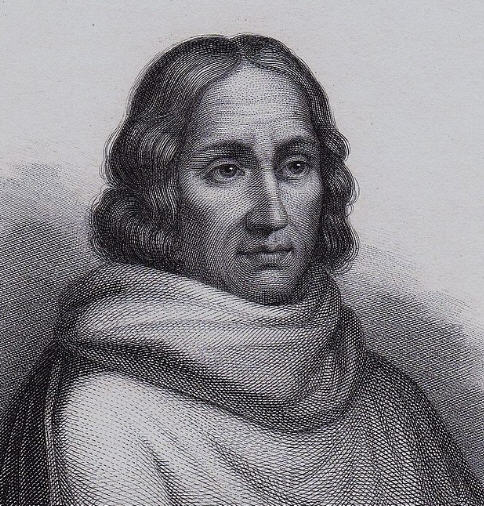
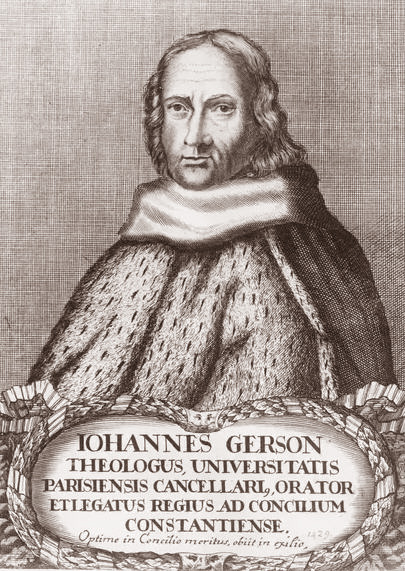
GERSON, Jean le Charlier de (1363–1429), French Churchman and spiritual writer, the ‘doctor christianissimus’. He was born nr. Rethel in the Ardennes. In 1377 he entered the College of Navarre at Paris, then the centre of Nominalism, where he studied under Pierre d’Ailly, who remained his lifelong friend. He was made doctor of theology c.1394, and to 1395 succeeded d’Ailly as Chancellor of Notre-Dame and of the University of Paris.
From the beginning of his career he worked for the reform of the Church from within, which he endeavoured to bring about chiefly by a renewal of the spirit of prayer and sacrifice, and for the abolition of the Great (Western) Schism. In 1397 he fled from the strain of the life in Paris to Bruges, where he held the benefice of Dean of the Church of St Donatian.
While there he wrote his famous treatise ‘On the Manner of Conducting oneself in a Time of Schism’ (Sententia De modo se habendi tempore schismatis 6.29–34.), exhorting clergy and laity of both obediences to recognize each other’s Sacraments and urging charity in their judgements.[See Connolly, John Gerson: Reformer and Mystic, 72–74; Posthumus Meyjes, Jean Gerson—Apostle of Unity, 74–76.]
“In a Schism as doubtful as the present one, it is rash, dangerous and scandalous to say that all who are attached to one or other party, or those who wish to remain neutral are outside the way of salvation, excommunicated or suspect of schism. It is licit, more than that, it is a matter of caution to make the obedience to one or other Pope conditional. It is rash, and smacking of heresy to say that the Sacraments of the Church have not their effect when administered by the priests of the other Obedience, that priests of the opposing party are not consecrated, infants not baptized, and the Sacrament of the Altar not consecrated. Similarly it is scandalous to say that one may not hear a Mass offered by a priest of the other Obedience, nor receive the Sacraments from his hands. It would be more useful to seek to accomplish the return of the Church to unity by urging both Popes to resort to the way of Cession rather than to trouble souls by placing them under the ban of Excommunication.”
In 1398 he did not vote for the refusal of obedience to the Avignon Pope, and the later return of France to the obedience of Benedict XIII was largely his work, due esp. to his treatise ‘De Restitutione Obedientiae’. After his return to Paris (1401) he resumed his office as Chancellor and was instrumental in bringing back the Dominicans (1403), who had been expelled from the University for their teaching on the Immaculate Conception.
He approved the decisions of the Councils of Pisa (1409) and Rome (1412–13), though not taking part in them himself. In 1415 he attended the Council of Constance, which he encouraged to continue its sessions after the flight of John XXIII. He asserted the superiority of a General Council over the Pope and demanded that the doctors of theology should have a deliberative and definitive voice in it together with the bishops. He also took an important part in the drawing-up of the famous Four Articles of Constance, the future charter of Gallicanism.
He had a share in the condemnation of J. Huss, and denounced the propositions advanced by Jean Petit in favour of tyrannicide. This earned him the hostility of the Duke of Burgundy, Jean sans Peur, who had had the Duke of Orléans assassinated, and in whose defence Jean Petit had drawn up his theses. The hatred of Burgundy prevented Gerson from returning to Paris after the conclusion of the Council, and he went to the Benedictine abbey of Melk, nr. Vienna, where he wrote his treatise ‘De Consolatione Theologiae’, modelled on Boethius. After the death of Jean sans Peur he returned to France (1419), where he spent the last ten years of his life in seclusion at Lyons, devoting himself entirely to the practice of the spiritual life and pastoral work.
Among his writings dealing with the position of the Church are ‘De Unitate Ecclesiae’, ‘De Auferibilitate Papae ab Ecclesia’, and ‘De Potestate Ecclesiae’ (1417), in which he developed the Conciliar theory but without rejecting the primacy of the Pope. In moral theology he accepted the extreme Nominalist doctrine, then generally taught in the schools, acc. to which nothing was sinful in itself but the sinfulness or goodness of an act depended solely on the Will of God.
Among the large number of his treatises devoted to the spiritual life are ‘The Mountain of Contemplation’ (1397, his principal work), ‘Mystical Theology’, ‘Perfection of the Heart’, and Commentaries on the Magnificat and on the Song of Solomon. His mystical teaching, which has marked Augustinian tendencies, is a synthesis of much that is best in Catholic mysticism from Dionysius the Pseudo-Areopagite to J. Ruysbroeck, his particular sympathies being with St Bernard, the Victorines, and St Bonaventure. He consciously opposed this spiritual teaching of the ‘antiqui’ to the dry intellectualist activities of the Nominalist ‘moderni’, who threatened to convert theology into mere dialectics. Gerson was also a zealous advocate of frequent Communion and was deeply concerned over the religious education of children.
Gerson’s influence has been deep and lasting mainly in two directions:
his Conciliar views found an echo in Gallicanism, of which he is sometimes called the father,
and his mystical teaching was admired by Nicholas of Cusa and by the Brethren of the Common Life, as well as by St Ignatius Loyola, St Robert Bellarmine, and St Francis de Sales.
His writings were also greatly valued by M. Luther in his early years. The ‘Imitation of Christ’ has sometimes been ascribed to him, esp. by French scholars, but it is now generally admitted that both internal and external evidence are against this attribution.
Editio princeps of his collected works, 4 vols., Cologne, 1483–4; the best complete edn. is that of L. E. Dupin (5 vols., Antwerp, 1706, with Life); modern edn. by [P.] Glorieux (10 vols., Paris, 1960–73), with useful introd. in vol. 1. Notulae super quaedam verba Dionysii de Caelesti Hierarchia, ed. A. Combes (Études de philosophie médiévale, 30; 1940); six sermons in the vernacular, ed. L. Mourin (Études de théologie et d’histoire de la spiritualité, 8; 1946). Eng. tr. of Early Works by B. P. McGuire (Classics of Western Spirituality; New York [1998]). J. B. Schwab, Johannes Gerson (Würzburg, 1858). A. Combes, Jean de Montreuil et le Chancelier Gerson (Études de philosophic médiévale, 32; 1942); id., Essai sur la critique de Ruysbroeck par Gerson (Études de théologie et d’histoire de la spiritualité, 4 and 5 (1); 1945–8); id., La Théologie mystique de Gerson: Profil de son évolution (2 vols., 1963–5), with refs. to other studies by this author. L. Mourin, Jean Gerson, prédicateur français (Rijksuniversiteit te Gent, Werken uitgegeven door de Faculteit van de Wijsbegeerte en Letteren, 113; 1952). L. B. Pascoe, SJ, Jean Gerson: Principles of Church Reform (Studies in Medieval and Reformation Thought, 7; Leiden, 1973). G. H. M. Posthumus Meyjes, Jean Gerson et l’assemblée de Vincennes (1392): Ses conceptions de la juridiction temporelle de I’Église (ibid. 26; 1978), with text of ‘De jurisdictione spirituali et temporali’, pp. 121–31; id., Jean Gerson, Apostle of Unity: His Church Politics and Ecclesiology (Studies in the History of Christian Thought, 94; Leiden, 1999 [rev. Eng. tr. of work first pub. in Dutch in 1963]). C. Burger, Aedificatio, Fructus, Utilitas: Johannes Gerson als Professor der Theologie und Kanzler der Universität Paris (Beiträge zur historischen Theologie, 70; Tübingen, 1986). D. C. Brown, Pastor and Laity in the Theology of Jean Gerson (Cambridge, 1987). M. S. Burrows, Jean Gerson and De Consolatione Theologiae (1418) (Beiträge zur historischen Theologie, 78; Tübingen, 1991). S. Grosse, Heilsungewissheit und Scrupulositas im späten Mittelalter: Studien zu Johannes Gerson und Gattungen der Frömmigkeitstheologie seiner Zeit (ibid. 85; 1994). L. Salembier in DTC 6 (1920), cols. 1312–30; P. Glorieux in Dict. Sp. 6 (1967), cols. 314–31; additional bibl. in DHGE 20 (1984), cols. 1056 f.; C. Burger in TRE 12 (1984), pp. 532–8; all s.v.Mann H. K. Mann, The Lives of the Popes in the (Early) Middle Ages (18 vols., bound in 19, 1902–32).
|
|
|
Jean Gerson Early Works, Translated and Introduced by Brian Patrick
McGuire Paulist 1998
Jean Gerson, Oeuvres Completes, Glorieux, vol 5, L’Oeuvre Oratoire, 207-253,
Desclee, 1963 In Festo S. Bernardi, [Sermon Fulcite Me] no. 230, pp. 325-339.
Available at: https://archive.org/details/uvrescompltes0005gers_l3h0/page/n7/mode/2up
|
I WISH then to exhort all of you in common to strive for this step, going from the school of contrition and penance to the school of meditation and sanctity, then finally into the school of intimate solitude. Frequently you must ask God and all the saints who have been wounded through the words of the soul in this love: “Sustain me with flowers, refresh me with apples, for I languish with love.” |
Ego igitur vos omnes in commune admonitos velim ut ad hunc gradum nitamini, ambulantes de schola contritionis et poenitentiae in scholam meditationis et sanctimoniae et tandem in scholam solitudinis intimae, flagitantes crebro Deum et sanctos sanctasque omnes per verba animae hoc amore vulneratae : fulcite me floribus, stipate me malis quia amore langueo. |
|
What I have said here, reverend fathers and most learned men, concerns the good love that creates the city of God in us. I have done so in the person of our loving and devout Bernard, both for our encouragement and to his praise. |
Haec tanta dicta sint, reverendi patres et viri doctissimi, de amore bono faciente civitatem Dei in nobis; et hoc sub persona amorosi nostri devoti Bernardi tum ad commonitionem nostram tum ad sui praeconium. |
|
LAMENT ON THE STATE OF CHRISTENDOM |
|
|
The second part then was supposed to introduce a Christianity that weeps in its melancholy. The madness of its sons who, instead of living in love live in lunacy or insanity, has created and increases this depression. I fear, nevertheless, that after the words and taste of the sweetest love, the harshness of such an ungentle subject will throw you into confusion. What is the use of complaining when so much infighting resounds, when there is such a clatter in all of Christianity, with everyone crying out that they are languishing with love? It is a harsh and perverse love in their members, a love that does not in any way at all resemble the previous love we described. |
Debebat subinde pars altera christianitatem introducere de suo languore lugentem, quem furor filiorum non tam amantium quam amentium seu dementium suscitavit adaugetque. Vereor tamen ne post verba et gustum suavissimi amoris vos tam insuavis materiae conturbaret acerbitas. Querulis quippe verbis quid opus est ubi tantus factorum strepitus, tantus fragor auditur conclamante christianitate tota quia amore langueo, amore quidem saevo et perverso in membris suis, cujus amoris ad praecedentem tanta est quanta esse potest disparilitas |
|
The first love unites those who are divided, while this love divides those who are intimately joined. The first love does not seek what is its own, while this love takes what belongs to others. Contrition and meditation follow each love, but contrition and misfortune, that is, a fruitless contrition, are in its paths, and a meditation on iniquity in its bed. This meditation does not make us stand on the right path and does not make us hate evil. It does not lead into contemplation but turns into total confusion, in the horrible schism that has torn Christianity apart. |
. Primus unit divisos; iste conjunctissimos dividit; primus non quaerit quae sua sunt, iste etiam aliena diripit. Utrumque concomitatur contritio et meditatio; sed contritio et infelicitas, hoc est infelix contritio, in viis istius, meditatio quoque iniquitatis in cubili suo, quae astare facit omni viae non bonae et malitiam non odire ac perinde non in contemplationem cadit haec meditatio sed tota in confusione versatur, horrendo schismate quod christianitatem laceravit. |
|
This self-love leads to the result that people who love only themselves have no bonds with each other. The person who is limited to himself, how can he ever enlarge himself for others? In this way come anger, rivalries, quarrels, animosity, insults, and all the confusions of a Babylon. Seek no other cause for them than self-love, since it does not restrain but inflames the basest passions. If the passions take control, what hope can we have that evil will be absent and good present? Add that self-love, because it knows how to meditate not on the law of God but only on money, whether it is that of Ceres, Bacchus, or Venus, has no way of repelling these evils. Almost all things are hidden in darkness. |
[Latin p. 337] Amor iste ad seipsum, quoniam homines seipsos amantes ut sine foedere sint consequens . est, qui quoniam ad seipsum contrahitur se vel alios quomodo dilataret? Unde praeterea irae, contentiones, rixae, animositates, contumeliae, unde confusiones babylonicae? Noli quaerere causam alteram praeter amorem sui, quoniam passiones improbissimas non modo re non reprimit amor sui sed accendit; dominantibus autem passionibus quid mali deesse, quid adesse boni sperabitur? Adde quod amor sui, quia meditari nescitlegem Dei sed nummi, vel Cereris et Bacchi vel Veneris, nullus ad haec mala peltenda patet exitus. Convolvuntur fere omnia tenebris. |
|
Many people, since they do not understand their own voices or those of others in this confused and blinding business of the wretched schism, are reduced to pandemonium. They inflict harm. They do not distinguish their enemies from their allies, as usually happens with those who fight in darkness. An illustration of this development is a huge letter recently published that mixes up and makes sordid all matters by its accusations and insults and with the crudest form of argument. |
Multi quoque quia nec propriam nec aliorum vocem intelligunt in hoc negotio turbido et coeco luctuosissimi schismatis tumultuantur, injuriis agunt, hostcs a domesticis non secernunt, quod evenire solet pugnantibus in tenebris. Cujus rei praebet argumentum epistola quaedam grandis nuper edita quae tota probris, tota contumeliis scatet, tota vitiosissimo prorsus confutationis genere confundit. |
|
Now then, amid these heavy duties and the chains of this love you are to hope in God’s love. Trust that there will be room for contemplation. Hope that the people who have acted in such a way will instead think in the way of the devout Bernard, so that they will consider old times and everlasting ages. The whole land has been laid waste in its desolation because there has been no one to think with his heart (Jer 12:11). |
Nunc igitur inter haec negotiorum pondera, inter amoris hujus vincula, speres amori Dei, speres contemplationi locum esse, speres quod recogitent curn devoto Bemardo, illi qui tales sunt, dies antiquos ct annos aeternos in mente habeant? Propterea desolatione desolata est omnis terra quia nemo est qui recogitet corde a. |
|
But now I lament this accumulation of all kinds of evils, now that the seeds of error are sown, and so it is to be feared that a very unfortunate crop of heresies will flourish from these roots and so invisibly occupy the fields of the church. She now rightly entreats: “Sustain me with the flowers of holy eloquence, which has not lost its bloom; sustain me with the apples of stable and orderly assertions for which I am languishing in love.” And do not ask what languishes. The head languishes, as do the breast and the stomach. Why should I name the bodily parts? From the base of the foot to the crown of the head there is hardly any part of the church that is healthy. And even though what it suffers is very bad, even worse things will come, I am afraid, unless its groom and lover has mercy from on high. |
Postremo, heu matorum omnium cumulus, jam erroris 3 seminaria jacta sunt; et hinc verendum est ne seges infelicissima haeresum radici-tus pultulet et invisibiliter occupet agros Ecclesiae ut ipsa jure nunc obsecret : fulcite me floribus sacrorum eloquiorum non defloratomm ; stipate me malis solidarum ordinatarumque assertionum quia amore langueo. Et ne quaesiveritis quid languet. Caput languet; pectus languet; venter languet. Quid partes enumero : a planta pedis usque ad verticem vix est in ea sanitas. Et quamquam pessima sint quae patitur, deteriora tamen, nisi misereatur sponsus ex alto et amator suus, expavesco. |
|
AN EXPLANATION FOR BERNARD’S SUCCESS |
|
|
But let us not dwell on these matters. Perhaps it is the finger of God, and it is necessary that scandals come (cf. Mt 18:7). Therefore the advice is most salubrious that each save his own soul. And if we can return a moment to what was said before, the love of God is what can save us. It can provide us with consolation in all matters |
Verumtamen omittamus talia; forsan digitus Dei est hic, et necesse est ut veniant scandala b. Propterea saluberrimum est consilium ut salvet unusquisque animam suam. Et ut paulisper ad priora redeamus, amor Dei ille est qui nos salvare potest, qui nos in omnibus valeat consolari. |
|
. Saint Bernard provides a clear proof of this point because, being strengthened by the company of this love, he walked secure in the midst of schisms. But such a bird is rarely found on earth nowadays. There are indeed few who have shown such vitality in God’s love. |
Beatus Bernardus rei hujus manifestum est argumentum qui comite hoc amore vallatus, inter media schismata securus incessit. Sed profecto rara est nunc talis avis in terris; pauci sunt admodum qui amorem istum Dei ad tale robur perduxerunt. |
|
If we now consider what accidental or extrinsic factors helped our saint to obtain this love, I find there to be four elements among others: the dedication of his mother, his apt character, his good education, and his attachment to solitude. |
Consideranti autem mihi modo ea quae per accidens et velut ab extrinseco juverint sanctum nostrum ad amorem istum capescendum, reperio et illa esse quatuor inter cetera quae sunt : matris devotio, apta complexio, debita educatio et solitudinis affectio. |
|
[Latin p. 338] According to the story, we know that Bernard’s mother was dedicated to her children with great devotion.62 If because of a mother’s sin, good was restored to the son, how much the more will this happen because of merit (cf. Sir 3:16)? Here I employ a moral teaching: Those who preach to the people ought especially to encourage mothers to take care of their children from boyhood and train them in the love and practice of religion.63 |
Matrem scimus ex legenda fuisse erga liberos suos miro religionis affectu deditam. Et si pro peccato matris restituitur filio bonum a, quanto amplitis pro merito. Et hic sumo doctrinam moralem quod praedicatores ad populum maxime debent admonere matres ut liberos suos a puero per se nutriant et instituant ad religionis amorem et cultum; |
|
In our times, alas, there is a terrible inadequacy in the upbringing of infants and children. For it is as if with their very milk, they drink in the filth of all kinds of sin, through word and example. Also those who run schools ought to act toward them as mothers, after the example of the Apostle (1 Thes 2:7): “We are made infants in your midst and like a nurse who nourishes her own children.” Those in charge should show the greatest concern that their pupils be clothed in good habits. If they are negligent, or, the greatest of all crimes, if they are responsible for the depravation of those under their care, then such schoolteachers are worthy of as many deaths as the number of youths and scholars whom they have made perish.64 |
quoniam temporibus nostris, proh dolor, horribilis est defectus in regimine infantium et puerorum; nam quasi cum ipso lacte bibunt saniem omnium peccatorum, verbis et exemplis. Et quia rectores scholarum debent similiter eis esse pro matribus, exemplo Apostoli, I Thess. ii a: facti sumus parvuli in medio vestrum et quasi si nutrix foveat filios suos i, debet esse maxima sollicitudo apud eos ut sui pueri bonis moribus adornentur; quod si non curent, aut, quod omne flagitium superat, si eos depravant, ipsi tot mortibus digni sunt quot eorum pueri et 2 scholares depereunt. |
|
A second external factor in helping Bernard was his apt character. For he was delicate and soft and pleasing in his gentleness. In the first place this quality made him prone to meditation, as is read in his hagiography. Thus he was inclined to rapture and ecstasies because his soul was less immersed in his body.65 In the second place this tendency made it easier for him to experience devotion and compunction. In the opposite situation it is said of the person with a hard heart that he will come to a bad end, since he imitates the obstinacy of the demon. On this basis the feminine sex is said to be devout.66 |
Secundum juvamentum ab extrinseco fuit in Bernardo apta cornplexio; nam et delicata erat et suavitate quadam mollis et pia. Ex primo habuit quod esset meditativus ut ex vita sua legitur 3 ac proinde aptus fuit ad raptus et extases propter minorem immersionem animae in corpus. Ex secundo habuit faciliorein devotionem et compunctionem; sicut e contra de corde duro dicitur quod male habet in novissimo e, quia scilicet diabolicam obstinationem imitatur. Ex hac radice dicitur sexus femineus devotus. |
|
The third support for Bernard was a good education, first from his mother, and then in the austerity of a religious order. It is clear that abstinence, fasting, and a sober way of life prepare the soul for more easily contemplating spiritual matters, as we have in the example of the three youths in the furnace (Dn 1:17). Here we might attack excessive eating and drinking.67 |
Tertium juvamentum fuit s debita educatio prima s a matre, dehinc in religionis austeritate. Constat enim quod abstinentia et jejunium et sobrietas praeparant animam ad spiritualia facilius contemplanda, exemplo trium puerorum, etc. Et hic invehere contra crapulam et ebrietatem locum haberemus |
|
The fourth support for Bernard was his love of solitude. For it is unbelievable how much harm is done by conversations among people, even when they are not thought to be damaging. As someone said very truthfully, friends are the robbers of time.68 The first indication of a mind that is composed is the ability to stay in one place and to be with oneself, as Bernard and before him Seneca taught.69 |
Quartum juvamen fuit solitudinis affectio; itaque 7 credi non potest quantum nocent confabulationes inter homines dum etiam nocivae non putantur, ita ut verissime dixerit quidam 8 quod amici sunt fures temporis. Primum autem argumentum mentis compositae est posse in uno loco consistere et secum morari, ut Bernardus et ante eum Seneca docuerunt. |
|
Finally, it can be said that these four qualities disposed Bernard, through their accidental quality, to be a prophet and a worker of miracles. Among the latter I especially consider those actions he performed in converting those who totally refused the religious life and fled it.70 |
Denique dici potest ista eadem quatuor juvisse dispositive, de per accidens, Bernardum ut propheta et miraculorum esset operator; inter quae ego praecipua illa deputo quae egit in conversione illorum qui etiam converti toto renisu fugiebant. |
|
But the hour requires that I finish. And let us insist that we can obtain a happy end by languishing here in the divine love that we will enjoy with Bernard in secure calm, thanks to the gift of our Lord Jesus Christ who is God, blessed forever. Amen. |
Sed hora finem flagitat. Et nos flagitemus ut finem beatum obtinere sic languendo 1 hic per amorem divinum possimus quod in futuro secura tranquillitate in illo collocemur, praestante Domino nostro Jesu Christo qui est Deus benedictus in saecula. Amen |
|
|
|
Jean Gerson, Oeuvres Completes, Glorieux, vol 6, L’Oeuvre Ecclesiologique,
253-291, Desclee, 1963 In Festo S. Bernardi, [Sententia] De modo se habendi tempore schismatis 6.29–34.,
pp. 29-34.
Available at: https://archive.org/details/uvrescompltes0000gers_k0f5/mode/2up
|
IN order to remove the stubbornness and excessive dishonesty of some in the present schism, who, for their own merits or false assertions, form the most certain and pernicious schisms and violate fraternal charity, while they withdraw men from the due obedience of their immediate and certain superiors, while they turn them away from the ecclesiastical and sacred sacraments, while finally, for their unstable opinion and human tradition, they compel them to abandon, destroy, and violate the holy and stable law of God, I have deemed it worthy to propose certain other points that I laid out fundamentally in my first lecture, always preserving the judgment of wiser people in all things, now under the auspices of some conclusions. |
Ad tollendam quorumdam in praesenti schismate pertinaciam improbitatemque nimiam, qui pro meritis aut falsis assPrtionibus suis certissima et perniciosissima schismata formant et fraternam violant caritatem, dum homines ab obedientia debita superiorum suorum immediatorum et certorum retrahunt, dum a sacramentis ecclesiasticis et sacrosanctis eosdem avertunt, dum postremo pro instabili sua opinione et humana traditione legem Dei sanctam et stabilem deserere, conteranere violareque compellunt, dignum existimavi quaedam alias in prima lectione mea fundamentaliter per me posita, salvo semper in omnibus sapientiorum judicio, nunc sub aliquarum conclusionum compendio proponere. |
|
1. Whatever is demonstrated about the papacy of the contenders, it is not heretical to say: A is not pope. |
1. Quocumque de papatu contendentium demonstrato non est haereticum dicere : A non est papa. |
|
2. In the aforementioned case, it is clear that there are some among whom to stubbornly assert: A is not pope would amount to heresy. |
2. In casu praedicto stat aliquos esse apud quos istud pertinaciter asserere : A non est papa, saperet haeresim. |
|
3. In the present schism, so doubtful, rash, injurious and scandalous, it is to assert that all those holding this side or all those holding the other or all neutrals, even adults, are universally outside the state of salvation or excommunicated or reasonably suspected of schism. |
3. In schismate praesenti tam dubio, temerarium, injuriosum et scandalosum est asserere omnes tenentes istam partem vel omnes tenentes alteram vel omnes neutrales, etiam adultos • esse universaliter extra statum salutis vel excommunicatos vel rationabiliter de schismate suspectos. |
|
4. In the present schism, it is licit, nay, provided that those who offer obedience to this or that, grant it tacitly or expressly under a condition.. |
4. In schismate praesenti licitum est, immo cautum praestantibus obedientiam isti vel illi, eam sub conditione tacite vel expressa tribuere. |
|
5. Whatever is demonstrated, it is rash, scandalous and scandalous heresy to assert that the sacraments of the Church do not have their efficacy, such as that priests are not consecrated, children are not baptized, the sacrament of the altar is not performed, and the like |
5. Quacumque parte demonstrata, temerarium et scandalosum et sapiens haeresim est asserere sacramenta Ecclesiae suam efficaciam non habere, ut sacerdotes non esse consecratos, pueros non esse baptizatos, sacramentum altaris non esse confectum, et similia. |
|
6. In the present schism it is rash and scandalous to assert, no matter what side is demonstrated, that it is not permissible to hear their masses or to receive the sacraments, especially considering the diversity of places, times and persons. |
6. In praesenti schismate temerarium et scandalosum est asserere, quacumque parte demonstrata, quod non liceat audire missas eorum vel sacramentis communicare, praesertim attenta diversitate locorum, temporum atque personarum. |
|
7. It is possible that some who agree with the true party are truly schismatic, and that some who agree with the false party in the aforesaid way do not exist as schismatics. |
7. Possibile est aliquos verae parti assentientes esse veraciter schismaticos, et aliquos falsae parti modo praedicto assentientes schismaticos non existere. |
|
8. It is more wholesome, just and safe to seek the union of the Church by insisting against the contenders for the papacy, and this by way of the cession of both or the withdrawal of obedience or other lawful coercion, than that the subjects be harassed or disturbed by excommunications or otherwise, or that one part of Christianity be stubbornly separated from the communion of another. |
8. Salubrius, justius et tutius est quaerere unionem Ecclesiae insistendo contra contendentes de papatu, et hoc per viam cessionis utriusque vel subtractionis obedientiae vel alterius licitae coactionis quam subditos per excommunicationes aut aliter vexari seu turbari, aut quod una pars christianitatis ab alterius communione pertinaciter separetur. |
|
THE reason for the first conclusion is this, since no proposition for the verification of which the truth of a single contingent proposition and irrelevant to faith is required is of the necessity or integrity of faith; for just as a compound proposition of which one part is contingent is entirely contingent, and of which one part is false or impossible is entirely false or impossible, so in the proposition. Now it is clear that for the verification of this: A is pope, not only one but many purely contingent propositions are required, equally true, such as that the election was duly celebrated and by those who had power, and many similar ones; and by the same reason it is concluded that, if any priest is shown, this is not heretical: A is not a priest, and consequently it follows that neither is this: here is the body of Christ on the altar, and many similar ones |
Ratio primae conclusionis est haec quoniam nulla propositio ad cujus verificationem exigitur veritas unius propositionis contingentis et ad fidem impertinentis, est de necessitate aut integritate fidei; nam sicut propositio copulativa cujus una pars est contingens est tota contingens, et cujus una pars est falsa aut impossibilis est tota falsa aut impossibilis, sic in proposito. Constat autem quod ad verifi-cationem istius : A est papa, exigitur non solum unam sed multas propositiones pure contingentes eqse veras, ut quod electio fuit rite celebrata et ab illis qui habebant potestatem, et similes multae; et pari ratione colligitur quod quocumque sacerdote demonstrato ista non est haeretica : A non est sacerdos, et consequenter sequitur quod nec ista : hic non est corpus Christi in altari, et similes multae. |
|
The reason for the second conclusion is this: since a proposition is said to be a heresy when, from it, some truths which cannot be reasonably denied are assumed, an error in faith follows. But it is possible that some men are so certified by revelation or otherwise that everything was duly done in the election and consecration of A as pope that they cannot reasonably doubt this. Then if they deny that A is or was pope, they fall into this error that he is not duly elected and consecrated as pope and never was pope, and that he does not succeed Peter, and similar things, which are heretical. |
Ratio secundae conclusionis haec est : quoniam propositio dicitur sapere haeresim quando ex ipsa coassumptis aliquibus veris quae rationabiliter negari non possunt, sequitur error in fide. Sed possibile est aliquos homines per revelationem vel aliter sic certificatos esse quod ornnia rite facta sunt in electione et consecratione ipsius A in papam, quod hoc rationabiliter dubitare non possunt. Tunc si negent A esse vel fuisse papam, incidunt in errorem istum quod rite electus et consecratus in papam non est nec unquarn fuit papa, et quod non succedit Petro, et similia, quae sunt haeretica. |
|
The reason for the third conclusion is that there are many on both sides and neutrals to whom this matter is not so clarified that they cannot reasonably deny or doubt this proposition, no matter what the arguments are: A is or was duly elected; A is not a schismatic or heretic, and the like; to which it follows that A is not assumed to be pope, as experience teaches and the diverse and opposing opinions of so many doctors. And it is clear that there are many simple people who are not bound to investigate such doubts; others who, neither moved by favor or hatred or gain to assent to this or that party, and are ready to obey the truth sufficiently acknowledged, are neither obstinate; therefore neither excommunicated nor reasonably suspected of schism. This whole reason is founded on the fact that there has never been so reasonable and vehement a cause of doubt in any schism as in this one. An evident sign of which is the variety of opinions among the most learned and most approved on both sides. For even supposing and conceding what has been done, there would still remain questions of law that are debatable on either side. All of which generate reasonable uncertainty in this schism, and excuse many from pernicious error. Therefore, that can be said to be reasonably doubtful in such a moral matter which the greatest number and the most wise consider and declare doubtful. |
Ratio tertiae conclusionis est quia multi sunt ex utraque parte et neutrales quibus non est materia ista sic clarificata quin rationabiliter point negare vel dubitare istam propositionem, quocumque conten-dentium demonstrato : A est vel fuit rite electus; A non est schismaticus aut haereticus, et similes; ad quas sequitur A non esse papam assuinptum docet experientia et tot doctorum diversae adversaeque sententiae. Et constat multos esse simplices qui ad talia dubia investi-ganda non tenentur; alios qui, nec moventur favore aut odio vel quaestu ad assentiendum huic parti vel illi, et parati sunt obedire veritati sufficienter agnitae, nec sunt pertinaces; igitur nec excommu-nicati, nec de schismate rationabiliter suspecti. Tota ista ratio fundatur in hoc quod nunquam fuit tam rationabilis et vehemens causa dubi-tationis in aliquo schismate sicut in isto. Cujus signum evidens est varietas opinionum inter doctissimos et probatissimos ex utraque parte. Nam et suppositis eis quae facti sunt et concessis, adhuc restarent quaestiones juris ad utrumlibet disputabiles. Quae omnia incertitudinem rationabilem generant in hoc schismate, et ab errore pernicioso plures excusant. Potest itaque illud dici rationabiliter dubitabile in tali materia morali quod plurimi et maxime sapientes dubitabile reputant et praedicant. |
|
The reason for the fourth conclusion is gathered from the preceding; and by a similar one about the adoration of the host on the altar when there is some doubt that the celebrating priest has not duly completed all the requirements for consecration. For it is sufficient to adore under an implicit condition; indeed, an implicit condition is always understood, namely this or a similar one: if everything has been done properly according to the institution of Christ and the Church. Why, then, in the case of the present schism, so doubtful and which does not so closely touch the state of salvation and faith, cannot or should this or a similar condition be added: if such a one has been canonically elected and consecrated in all respects, and is not a heretic or schismatically depraved? |
Ratio quartae conclusionis colligitur ex praecedenti; et per simile de adoratione hostiae in altari dum occurrit aliqua dubitatio quod presbyter celebrans non compleverit omnia rite ad consecrationem requisita. Sufficit enim adorare sub conditione implicita; immo semper intelligitur implicita conditio, ista scilicet aut sibi similis : si omnia facta sunt rite secundum institutionem Christi et Ecclesiae. Cur igitur in casu praesentis schismatis tam dubio et quod non ita de prope tangit statum salutis et fidei, non poterit aut debebit apponi conditio ista vel similis : si talis fuerit in omnibus canonice electus atque consecratus, et non sit haereticus vel schismatice depravatus. |
|
The reason for the fifth conclusion is clear to the observer, since neither schism nor heresy nor any other vice prevents the conferral of the sacraments from having its efficacy, provided, however, that the conferors intend to do what Christ and the Church have instituted, and that the recipients intend to receive it, as must be reasonably presumed of all; otherwise the hierarchical state of the Church would by no means be certain. |
Ratio quintae conclusionis manifesta est advertenti quoniam neque srhisma neque haeresis neque aliud quodcumque vitium impedit quin sacramentorum collatio habeat suam efficaciam dum tamen conferentes intendant facere quod Christus et Ecclesia instituerunt, et recipientes intendant illud recipere, sicut rationabiliter praesumi debet de omnibus; alioquin status ecclesiae hierarchicus nequaquam esset certus. |
|
The reason for the sixth conclusion is made clear from the preceding; since nothing should reasonably prevent such people except excommunication on the grounds of stubbornness. For excommunication is never intended to be imposed except on stubborn people who are not prepared to listen to the Church; otherwise, not only would excommunication be imposed in vain, but also damnably for the destruction of the Church. But power was not given to any ministers of the Church for destruction but for edification, according to the Apostle, 2 Cor. xtrr. Just as the end of medicine is healing, so the end of excommunication etc. is the amendment of subjects. But if it is clearly seen or should be seen that no amendment or fruit follows through excommunication, it is attempted with damnable impiety itself, according to Augustine and the parable of the tares. Matt. xiii with notes there. |
Ratio sextae conclusionis manifestatur ex praecedentibus; quoniam nihil debet rationabiliter a talibus impedire nisi excommunicatio lata causa pertinaciae Nunquam enim excommunicatio intenditur ferri nisi in pertinaces qui non sunt parati audire Ecclesiam; alioquin non solum frustra ferretur excommunicatio, immo damnabiliter et in Ecclesiae destructionem. Non autem data est potestas ministris Ecclesiae quibuslibet ad destructionem sed ad aedificationem, secundum Apostolum, II Cor. xtrr. Quemadmodum itaque finis medicinae est sanatio, sic finis excommunicationis ect subditorum emendatio. Quod si clare videatur aut videri debeat quod per excom-municationem non sequitur emendatio vel fructus, ipsa damnabili impietate ferri attentatur, secundum Augustinum et parabolam de zizaniis. Matth. xiii cum ibidem notatis. |
|
Again, this conclusion is clearly drawn from the third and fourth conclusions. For if many on both sides are in a state of salvation and not obstinate, but are ready to stand, nay, to die in the truth sufficiently known, or who consent even to a false part under a condition, which condition makes them excused from damnable error, it is clear that such should not and could not reasonably be excommunicated, and consequently neither should their communication be prohibited. If it is said that an excommunication is to be feared even if it is unjustly pronounced, this proposition is misunderstood by most and raises various, nay, pernicious, scruples in many. However, as far as the present is concerned, it is sufficient to answer that if the excommunicator is not considered a judge, excommunication can consequently not be feared by the same excuse by which this is done; and because many holding one side ought reasonably to hold that many others are in a state of salvation, not obstinate, and ready to stand by the acknowledged right. Indeed, those who perhaps assent to their own Pope under a condition can from this grant them communication; For they should not impose such a crime on the Pope that he wishes to excommunicate non-persistent men or to segregate from canonical communion those who hold him pope, under a condition, however, reasonably added: if and insofar as he has been duly elected and not otherwise. |
Rursus ista conclusio aperte trahitur ex tertia et quarta conclusio-nibus. Si enim multi ex utraque parte sunt in statu salutis et non pertinaces, sed parati stare immo et mori in veritate sufficienter cognita, aut qui sub conditione falsae etiam parti consentiunt, quae conditio eosdem ab errore damnabili reddit excusatos, constat quod tales non debuerunt nec potuerunt rationabiliter excommunicari, et per consequens nec eorum communicatio prohiberi. Si dicatur quod excom-municatio etiam injuste lata timenda est, haec propositio male intelligitur a plerisque et scrupulos varios, immo perniciosos multis ingerit. Tamen quantum ad praesens sufficit, respondetur quod si lator non reputetur judex, eadem excusatione qua hoc fit potest consequenter excommunicatio non timeri; et quia multi tenentes unam partem debent rationabiliter tenere quod alii multi sint in statu salutis, non pertinaces et parati stare juri agnito. Immo qui forte suo papae assentiunt sub conditione, possunt ex hoc communicationem eis impendere; non enim debent tale crimen suo papae imponere quod voluerit homines non pertinaces excommunicare vel eos qui eum tenent papam sub conditione tamen rationabiliter apposita: si et inquantum fuerit rite electus et non aliter, a communione canonica segregare. |
|
The reason for the seventh conclusion is that it is established that someone who assents to the true party is so stubborn that, either for the sake of gain or vain glory or some other reason, he does not have a mind prepared to obey the acknowledged truth if it were shown to be in error either by the Church or otherwise, or if, in order to sustain his assertion, he were to separate himself from the true and living members of the Church itself in such a shroud of doubts; of which there are many on the opposite side, as has been said; for schism is not only in the separation of members from the head, but also in the stubborn separation of members from one another. From which reason it is concluded that it is rash and dangerous to attack one party or the other stubbornly and generally and to decline from communion with it by detesting it. The second part of the conclusion is clear from the third conclusion. |
Ratio septimae conclusionis est quia stat aliquem verae parti assentientem sic pertinacem esse quod vel propter quaestum vel vanam gloriam vel aliam causam non habet animum paratum ad obediendum veritati agnitae si vel per Ecclesiam vel aliter ostenderetur errare, vel si etiam in tanto dubiorum involucro pro sua assertione sustinenda separaret se a membris veris et vivis ipsius Ecclesiae; cujusmodi sunt multi de parte opposita ut dictum est; non est enim schisma tantum in separatione membrorum a capite, sed etiam in separatione pertinaci membrorum ab invicem. Ex qua ratione habetur quod temerarium est et periculosum unam partem vel alteram perti-naciter et generaliter impugnare et ab ejusdem communione eam detestando declinare. Altera pars conclusionis patet ex tertia conclusione. |
|
The reason for the eighth conclusion is clear from the preceding; since where the root and origin of the total or principal schism lies, there its eradication must be made and the antidote taken for the attainment of unity. For they are the ones who sinned, but what have the others who are sheep deserved? They are the ones for whom the storm arose at sea. They have given and continue to give scandal; for which reason they are obliged to remove it out of necessity for salvation. However, it is not to be denied that each one is obliged for his part, according to the gift God has given him, to seek the things that lead to peace, one by praying, another by admonishing, another by teaching. |
Ratio octavae conclusionis est perspicua ex praecedentibus; quoniam ubi radix et origo totalis vel principalis istius schismatis consistit, ibi eradicatio ejusdem fieri debet et antidotum assumi pro unitatis adeptione. Ipsi enim sunt qui peccaverunt, alii autem qui oves sunt quid meruerunt? Ipsi sunt propter quos tempestas orta est in mari. Dederunt denique et dant scandalum; propter quod ad illud remo-vendum de necessitate salutis obligantur. Non negandum tamen est quod quilibet pro parte sua obligetur secundum donum a Deo sibi praestitutum quaerere qtiae ad pacem sunt, hic orando, ille monendo, alter docendo. |
|
The last part, namely, that it is not expedient for one party to generally avoid the other and to create a schism in the more important acts of the Christian religion and to violate fraternal charity, is clear from the preceding and principally from the fifth and sixth conclusions. For it is true that singularity, in its own opinion, stubbornly condemning others, seems to be incomparably more dangerous and worse than fraternal communication through charity, which is the framework of the members of the Church, under the always correct and firm intention of obeying the Church and the pastor if and how the truth will shine through the Church or otherwise sufficiently. For whoever acts otherwise for the sake of uncertain truth exposes himself to the violation of certain fraternal charity. Nor is it necessary here to allege the rights over the dangers and curses of those who do not obey the precepts and institutions or sentences of the Supreme Pontiff; for the allegation of such has a place among those who cannot be excused for any reasonable reason from knowing or being required to know such or such an Eate of their superior; but where there is probable ignorance, as there is in the present schism among many of both obediences and among those of neither, they are not considered to be accused of such opinions. |
Ultima pars scilicet quod non expediat unam partem generaliter vitare alteram et facere scissuram in principalioribus actibus religionis christianae et fraternam caritatem violare, patet ex praecedentibus et principaliter ex quinta conclusione et sexta . Verum est enim quod singularitas in opinione propria contumaciter alios condemnans, incomparabiliter videtur esse periculosior et deterior quam commu-nicatio fraternalis per caritatem, quae est compago membrorum Ecclesiae, sub intentione semper recta et firma de obediendo Ecclesiae et pastori si et qualiter veritas per Ecclesiam aut aliter sufficienter elucescet. Etenim qui aliter agit pro incerto vero ille se exponit viola-tioni certae fraternae caritatis. Nec oportet hic allegare jura super periculis et maledictionibus eorum qui non obediunt praeceptis et institutionibus vel sententiis Summi Pontificis; habet enim locum talium allegatio apud illos qui nulla possunt rationabili causa excusari quin sciant seu scire teneantur talem vel talem eAte suum superiorem; sed ubi est ignorantia probabilis, sicut est in praesenti schismate apud multos de utraque obedientia et apud neutros, ipsi non reputantur talibus sententiis allegati. |
|
From all the above, it seems that certain evidence can be extracted. |
Ex omnibus praedictis videntur elici posse quaedam documenta. |
|
First, that in the present schism, the teaching of Ambrose to Augustine on fasting or not fasting according to the diversity of times, places and persons can be reasonably applied to many, so that the same monk, or a different one for the diversity of times or places or persons, can, without risk of schism or damnation, now obey this or that party in the ways mentioned, and now give communion with these or those. However, this is said because of probable ignorance of the law of this or that party. And supposing that from the beginning of the present schism perhaps another way had to be tried to know whether all could have been drawn to one obedience by excommunications or preachings or otherwise; nevertheless, knowing by experience that such things have not benefited anything, but rather harmed, and that from day to day greater involution results, it seems necessary to do as has been said. |
Primum quod in praesenti schismate potest apud plurimos rationa-biliter applicari documentum Ambrosii ad Augustinum de jejunando vel non jejunando secundum diversitatem temporum, locorum et personarum, ita quod idem bomo vel diversus pro diversitate temporum vel locorum sive personarum potest sine periculo schismatis aut damnationis nunc illi nunc isti parti modis dictis obedire, et nunc cum istis nunc cum illis communionem praestare. Hoc tamen dicitur propter probabilem ignorantiam juris istius partis vel illius. Et suppo-sito quod ab initio schismatis praesentis forte tentanda fuisset alia via ad sciendum si per excommunicationes vel praedicationes aut aliter omnes ad unam obedientiam trahi potuissent; attamen cognito per experientiam quod talia nihil profuerunt immo nocuerunt, et quod de die in diem major involutio consequitur, videtur faciendum ut dictum est. |
|
The second teaching is that among all of the same obedience it is expedient to adhere to the fraternal sentences issued by their trusted superior, otherwise there would be no bond of charity between them. |
Secundum documentum est quod inter omnes ejusdem obedientiae expedit adhaerere sententiis fraternis latis a suo superiore credito, alioquin non esset vinculum caritatis inter eos. |
|
The third document, concerning cases reserved to the Pope, and dispensations and others in the forum of conscience or public. Men can, according to the credulity of their party and their own, rest in peace, holding as a fact what their superior has done. But neutrals seem to have sufficient recourse to the ordinaries, to whom, according to their opinion, power is generally devolved in many. |
Tertium documentum, de casibus reservatis papae, et dispensatio-nibus et aliis in foro conscientiae vel publico. Possunt homines secundum credulitatem suae partis et suam seipsos quietare, tenendo pro facto id quod eorum superior creditus fecerit. Neutrales autem videntur habere sufficientem recursum ad ordinarios apud quos secundum eorum opinionem communiter loquendo est potestas devoluta in multis. |
|
The fourth document: where a man feels nothing carnal or dark in himself drawing him to hold this or that part, he should not lightly form scruples for himself; for that of Christ is most true: if your eye is single, your whole body will be bright. However, I do not wish to say from this or the preceding that in every case he should be silent about obedience to the Pope and his sentences and judge variously, but only where there is a reasonable and probable reason for doubting, as in the adoration of the sacrament, as in the reception of an inferior prelate, and others could be exemplified. For I think that there is a possible case where the same man will be able to adore in one place a host shown by one who acts as a priest, and in another place or before others he will not adore, not that there is doubt or variation on this account in those things of faith concerning that sacrament, as there should not reasonably be, but there is a variation in the contingent things concerning the making of the same sacrament, which are not so bad in themselves that they cannot in any way be done well, nor so good that they cannot be omitted. Nor does this diversity generate a split or confusion in faith or brotherly love; rather, it preserves it, because the intention is straight and simple, tending to the same center, namely to God and his honor and love and brotherly love. Therefore, from whatever side such a variety of intentions may come, like the example of straight lines drawn to the same center, they do not mutually hinder, intersect, or confuse one another. |
Quartum documentum : ubi homo nihil in se sentit carnale vel tenebrosum trahens eum ad istam partem vel illam tenendam, non leviter sibi formare scrupulos; verissimum est enim illud Christi : si oculus tuus fuerit simplex, totum corpus tuum lucidum erit. Nolo tamen ex isto vel praecedentibus dicere quod in omni casu ticeat de obedientia papae et ejus sententiis sentire et varie judicare, sed tantummodo ubi rationabilis et probabilis habetur ratio de jure dubitandi, sicut in adoratione sacramenti, sicut in receptione inferioris praelati, et aliis posset exemplificari. Puto enim ca,sum esse dabilem ubi idem homo poterit adorare in uno loco hostiam ab uno qui se gerit pro sacerdote ostensam, et in alio loco vel coram aliis non adorabit, non quod dubitatio sit aut variatio propter hoc in hiis quae sunt fidei circa istud sacramentum, sicut nec rationabiliter esse debet, sed est variatio in contingentibus circa confectionem ejusdem sacramenti, quae non sunt sic de se mala ut nullo modo possint bene fieri nec sic bona quin valeant praetermitti. Nec ob hoc ista diversitas generat scissuram seu confusionem in fide vel fratema caritate; immo potius conservat, quia intentio recta est et simplex tendens ad idem centrum, videlicet ad Deum et honorem ejus atque dilectionem et fraternam caritatem. Idcirco a quacumque parte veniat talis varietas intentionum, ad exemplum linearum rectarum ad idem centrum ductarum, non se mutuo impediunt, intersecant vel confundunt . |
This Webpage was created for a workshop held at Saint Andrew's Abbey, Valyermo, California in 1990