|
|
|
|
|
|
The following is adapted from the Oxford Dictionary of the Christian Church
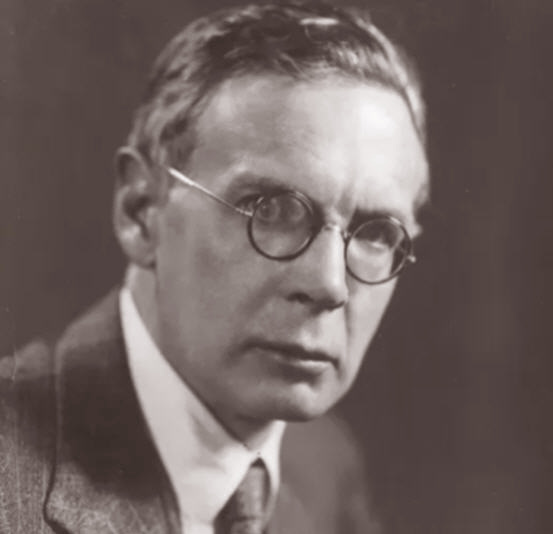
WILLIAMS, Charles Walter Stansby (1886–1945), student and practitioner of esoteric spirituality, poet and theological writer. Educated at St Albans and at University College, London, he worked from 1908 until his death in the London publishing business of the Oxford University Press. In 1917 Williams was initiated into the Fellowship of the Rosy Cross at the Savator Mundi Temple as a “Neophyte,” the first order or level in this secret occult (esoteric) society founded by A. E. Waite in 1915 as one of several offshoots of the disintegrating Hermetic Order of the Golden Dawn, itself a syncretistic amalgam of Masonic and Rosicrucian mythology and ritual. Waite’s Fellowship encouraged openness to Christian spirituality and a shift from ritual magic to mystical psychology, employing especially meditation on concepts and symbols drawn from Jewish Kabala. The influence of Waite’s The Hidden Church of the Holy Graal (1909) and The Pictorial Key to the Tarot, (1911) is evident in Williams’ novels, War in Heaven (1930) and The Greater Trumps (1932). At his initiation Williams received the name Frater Qui Sitit, Veniat (the brother who thirsts - let him come), and he ascended through the levels of the Fellowship during the next eight years, receiving in 1925 the grade of “Adeptus Exemptus,” the highest level of initiation available at the Temple. He remained an active member of the Fellowship until 1927.
In 1939 the war forced Oxford University Press to relocate from London to Oxford where Williams met regularly with C.S. Lewis and J.R.R. Tolkien as a member of the “Inklings” group. In April,1939, he established the “Order of the Co-Inherence,” which his followers came to call the “Companions of the Co-Inherence,” or “the Household.” Williams took the patristic term, coinherence (perichoresis) which describes the mutual indwelling of the three Persons of the Trinity, and used it to describe an existential unity that exists between human beings:
He believed that this existential unity made possible the practice of “substitution,” in which one person aware of their coinherence with another could offer healing or support via their correspondent connection. Any form of pain, suffering and hardship could be transferred, effecting healing in the suffering party while only temporarily hurting the healer. This “substituted love” could take place across time and space, and did not necessarily require the participation of the beneficiary.
Roukema, Esotericism and Narrative, p. 41
Both in London and Oxford, Williams by his life and writings did much, like his fellow-Anglicans T.S. Eliot and C.S. Lewis, to commend Christianity in a Catholic and sacramental form to many who would have been unmoved by conventional apologetic.
After some early poetry and plays, of which he later came to think poorly, Williams began to publish novels, largely devoted to supernatural themes, among them War in Heaven (1930), The Greater Trumps (1932) Descent into Hell (1937) and All Hallows’ Eve (1944); and also a play, Thomas Cranmer of Canterbury, written for the Canterbury festival of 1936.
Of his theological writings probably the most significant was The Descent of the Dove (1939), an unconventional and penetrating study of the Church as governed by the activity of the Holy Spirit in history. His leading theological ideas were his concept of romantic love in which the image of God in the beloved is revealed to the lover (an idea most fully expounded in The Figure of Beatrice, 1943), and his quite literal understanding of substitution, of which the Atonement was the culminating example. His poetic achievement culminated in his two volumes on the Arthurian theme, Taliessin through Logres (1938) and The Region of the Summer Stars (1944).
William’s esoteric affiliations and practice were largely ignored or discounted by his admirers and biographers until relatively recently. More balanced biographies and assessments include: Charles Williams, The Third Inkling, Grevel Lindop (OUP, 2015); Esotericism and Narrative, The Occult Fiction of Charles Williams, Aren Roukema (Brill, 2018). Williams’s unfinished prose work ‘The Figure of Arthur’ ed., with comm. on his Arthurian poems, by C. S. Lewis and pub. as Arthurian Torso (1948). Further poems, ed. D. L. Dodds (Arthurian Studies, 24; Cambridge, 1991). Collected Plays, with introd. by J. Heath-Stubbs (1963). Selected essays ed., with biog. and crit. introd., by A. Ridler (London, 1958). Essays Presented to Charles Williams, by D. [L.] Sayers and others, with preface by C. S. Lewis (1947). M. McD. Shideler, The Theology of Romantic Love: A Study in the Writings of Charles Williams (New York [1962]); G. [T.] Cavaliero, Charles Williams: Poet of Theology (1983); A. M. Hadfield, Charles Williams: An Exploration of his Life and Work (New York and Oxford, 1983); B. Horne (ed.), Charles Williams: A Celebration (Leominster, 1995). G. W. S. Hopkins in DNB, 1941–1950, pp. 958 f., s.v.
From War in Heaven, Chapter 18, “Castra Parvulorum”
“Go to church? Yes, if you like. I’m afraid”, she added, blushing rather more deeply as she looked at the stranger again, “that we don’t go as regularly as we should.”
“It is a means,” [Prester John] answered, “one of the means. But perhaps the best for most, and for some almost the only one. I do not say that it matters greatly, but the means cannot both be and not be. If you do not use it, it is a pity to bother about it; if you do, it is a pity not to use it.”
[...]
[Prester John answered] “But you are afraid of losing yourself in the fantasies of daily life, and you think that these pains will save you. But I bring the desire of all men, and what will you ask of me?”
“Annihilation,” Lionel answered. “I have not asked for life, and I should be content now to know that soon I should not be. Do you think I desire the heaven they talk of?”
“Death you shall have at least,” the other said. “But God only gives, and He has only Himself to give, and He, even He, can give it only in those conditions which are Himself. Wait but a few years, and He shall give you the death you desire. But do not grudge too much if you find that death and heaven are one.”
This Webpage was created for a workshop held at Saint Andrew's Abbey, Valyermo, California in 1990