|
|
|
|
|
|
|
|
|
Charlemagne, Admonitio generalis of March 789
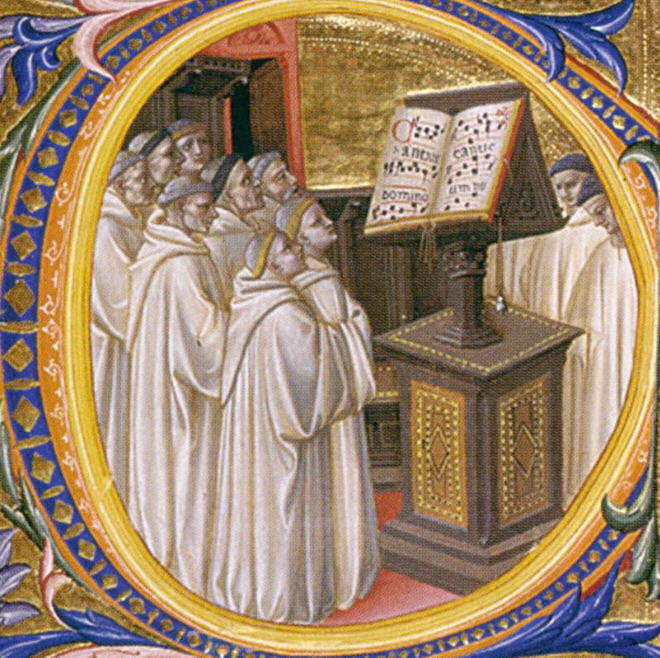
IN 789 a uniform Gregorian chant for all liturgical celebrations was standardized throughout the Carolingian empire by the introduction of neumic chant-notation in Charlemagne's chancery.
|
|
|
Antiphon: Veni Sponsa Christi (II Vesp. Com.Virg). c.890, codex SGall 391, p189 |
Charlemagne explained his intention:
|
That they should learn the Roman chant in full, and that it should be performed ordinarily at nocturnal or daytime offices: This is what our father King Pippin of blessed memory ordered to be done be done when he took the Gallican for the unanimity of the apostolic see and the pacific concord of the holy Church of God |
Ut cantum Romanum pleniter discant, et ordinabiliter per nocturnale vel gradale officium peragatur, secundum quod beatae memoriae genitor noster Pippinus rex decertavit ut fieret quando Gallicanum tulit ob unanimitatem apostolicae sedis et sanctae Dei aeclesiae pacificam concordiam. |
|
in the celebration of the offices of the venerable memory of our most illustrious father and the care and energy of the most excellent men of King Pippin, or the arrival of the most reverend into Gaul, and of the most holy man, Stephen, of the city of Rome, was joined to him also in the order of chanting, |
n officiorum celebratiorie, venerandae memoriae genitoris nostri inlustrissimi atque excellentissimi viri Pippini regis cura et industria sive adventu in Gallias reverentissimi et sanctissimi viri Stephani Romanae urbis anrestitis est ei etiam in psallendi ordine copulata, |
|
so that
there was no disparate order
of chanting, |
iut non esset dispar ordo psallendi, quibus erat conpar ordo credendi, |
|
and which were united by the sacred reading of one sacred law, they would also be united by the venerable tradition of one melody, and the various celebrations of the offices which had been united by the pious devotion of a single faith would not be united. |
et quae unitae erant unius sacrae legis sacra lectione, essent etiam unitae unius modulaminis veneranda traditione nec se iungeret officiorum varia celebratio quas coniunxerat unicae fidei pia devotio. |
|
And we, having been granted to us by God the kingdom of Italy, have made the holy Roman church desiring to sublimate the pinnacle, and by the salutary exhortations of the most venerable Pope Adrian endeavoring to obey, that is to say, that the majority of that part of the church, which once refused to accept the tradition of the apostolic see in psalming, now embrace it with all diligence, and to whom they had adhered in the office of faith, let them also adhere to the order of singing. That not only the provinces of all the Gauls and Germany or Italy, but also the Saxons and certain nations of the northern quarter, are known to be converted by us to the rudiments of the true faith, bowing before God |
Quod quidem et nos conlato nobis a Deo Italiae regno fecimus sanctae Romanae ecclesiac fastigium sublimare cupientes et reverentissimi papae Adriani salutaribus exhortationibus parere nitentes, scilicet ut plures illius partis ecclesiae, quae quondam apostolicae sedis traditionem in psallendo suscipere recusabant, nunc earn cum omni diligentia amplectantur, et cui adhaeserant fidei munere, adhaereant quoque psallendi ordine. Quod non solum omnium Galharum provinciae et Germania sive Italia, sed etiam Saxoncs et quaedam aquilonalis plagae gentes per nos Deo annuente ad verae fidei |
|
Admonitio generalis of March 789; Capitularia, vol. 1. MGH, Legum Sectio 2, ed., Alfred Boretius (Hanover, 1883) 61 |
|
|
|
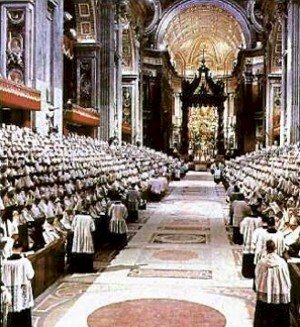
SOLEMNLY PROMULGATED BY HIS HOLINESS POPE PAUL VI
ON DECEMBER 4, 1963
|
|
|
|
116. The Church acknowledges Gregorian chant as specially suited to the Roman liturgy: therefore, other things being equal, it should be given pride of place in liturgical services. |
116. Ecclesia cantum gregorianum agnoscit ut liturgiae romanae proprium: qui ideo in actionibus liturgicis, ceteris paribus, principem locum obtineat. |
|
But other kinds of sacred music, especially polyphony, are by no means excluded from liturgical celebrations, so long as they accord with the spirit of the liturgical action, as laid down in Art. 30. |
Alia genera Musicae sacrae, praesertim vero polyphonia, in celebrandis divinis Officiis minime excluduntur, dummodo spiritui actionis liturgicae respondeant, ad normam art. 30. |
|
|
|
|
117. The typical edition of the books of Gregorian chant is to be completed; and a more critical edition is to be prepared of those books already published since the restoration by St. Pius X. |
117. Compleatur editio typica librorum cantus gregoriani; immo paretur editio magis critica librorum iam editorum post instaurationem sancti Pii X. |
|
It is desirable also that an edition be prepared containing simpler melodies, for use in small churches. |
Expedit quoque ut paretur editio simpliciores modos continens, in usum minorum ecclesiarum. |
|
|
|
|
118. Religious singing by the people is to be intelligently fostered so that in devotions and sacred exercises, as also during liturgical services, the voices of the faithful may ring out according to the norms and requirements of the rubrics. |
118. Cantus popularis religiosus sollerter foveatur, ita ut in piis sacrisque exercitiis et in ipsis liturgicis actionibus, iuxta normas et praecepta rubricarum, fidelium voces resonare possint. |
|
|
|
|
119. In certain parts of the world, especially mission lands, there are peoples who have their own musical traditions, and these play a great part in their religious and social life. For this reason due importance is to be attached to their music, and a suitable place is to be given to it, not only in forming their attitude toward religion, but also in adapting worship to their native genius, as indicated in Art. 39 and 40. |
119. Cum in regionibus quibusdam, praesertim Missionum, gentes inveniantur quibus propria est traditio musica, magnum momentum in earum vita religiosa ac sociali habens, huic musicae aestimatio debita necnon locus congruus praebeatur, tam in fingendo earum sensu religioso, quam in cultu ad earum indolem accommodando, ad mentem art. 39 et 40. |
|
Therefore, when missionaries are being given training in music, every effort should be made to see that they become competent in promoting the traditional music of these peoples, both in schools and in sacred services, as far as may be practicable. |
Quapropter in institutione musica missionariorum diligenter curetur, ut, quantum fieri potest, traditionalem earum gentium musicam tam in scholis quam in actionibus sacris promovere valeant. |
|
|
|
|
|
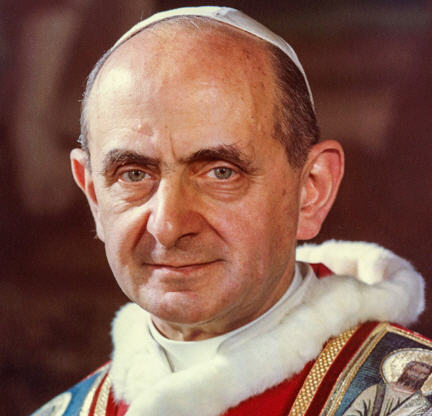
Pope Paul VI |
5 March, 1967
|
Preface |
|
|
1. Sacred music, in those aspects which concern the liturgical renewal, was carefully considered by the Second Vatican Ecumenical Council. It explained its role in divine services, issued a number of principles and laws on this subject in the Constitution on the Liturgy, and devoted to it an entire chapter of the same Constitution. |
1. Musicam sacram, in iis quae ad liturgicam instaurationem spectant, Sacrosanctum Oecumenicum Concilium Vaticanum secundum attente consideravit, eiusque munus in divinis officiis illustravit, plura principia pluresque leges hac de re in Constitutione de sacra Liturgia edicens, eique tribuens integrum caput eiusdem Constitutionis. |
|
2. The decisions of the Council have already begun to be put into effect in the recently undertaken liturgical renewal. But the new norms concerning the arrangement of the sacred rites and the active participation of the faithful have given rise to several problems regarding sacred music and its ministerial role. These problems appear to be able to be solved by expounding more fully certain relevant principles of the Constitution on the Liturgy. |
2. Quae autem Sacrosanctum Concilium statuit, in instauratione liturgica nuper inchoata ad usum adduci iam coepta sunt. Sed e novis normis ad sacrorum rituum ordinationem et fidelium actuosam participationem pertinentibus, quaestiones aliquae de musica sacra eiusque ministeriali munere ortae sunt, quae solvendae videntur ad nonnulla principia Constitutionis de sacra Liturgia hac in re melius declaranda. |
|
3. Therefore the Consilium set up to implement the Constitution on the Liturgy, on the instructions of the Holy Father, has carefully considered these questions and prepared the present Instruction. This does not, however, gather together all the legislation on sacred music; it only establishes the principal norms which seem to be more necessary for our own day. It is, as it were, a continuation and complement of the preceding Instruction of this Sacred Congregation, prepared by this same Consilium on 26 September 1964, for the correct implementation of the Liturgy Constitution. |
3. Consilium, proinde, ad exsequendam Constitutionem de sacra Liturgia constitutum, de mandato Summi Pontificis, has quaestiones accurate perpendit atque praesentem Instructionem confecit, quae non universam quidem legislationem de musica sacra colligit, sed praecipuas tantum normas statuit, quae magis necessariae hac aetate videntur; quaeque veluti continuatio et complementum efficitur prioris Instructionis huius Sacrae Congregationis, ab eodem « Consilio » praeparatae, et ad exsecutionem spectat Constitutionis de sacra Liturgia recte ordinandam, die 26 septembris 1964 evulgatae. |
|
4. It is to be hoped that pastors of souls, musicians and the faithful will gladly accept these norms and put them into practice, uniting their efforts to attain the true purpose of sacred music, “which is the glory of God and the sanctification of the faithful.” 1 |
4. Sperare licet fore ut, has normas libenti animo accipientes et in usum adducentes, animorum pastores, musici artifices, fidelesque concordi animo.contendant ad verum finem musicae sacrae attingendum, (( qui gloria Dei est atque sanctificatio fidelium w.1 |
|
1 Second Vatican Council, Const. on the Sacred Liturgy Sacrosanctum Concilium, nn. 1, 14, 21, 33; cf. Council of Trent, Sess. XXII, 17 September 1562, Doctr. De ss. Missae sacrif., c. 8 : Denz.-Schönm. n. 1749. |
|
|
(a) By sacred music is understood that which, being created for the celebration of divine worship, is endowed with a certain holy sincerity of form. |
a) Ideo illa dicitur musica sacra quae, ad cultum divinum celebrandum creata, sanctitate et bonitate formarum praedita est. |
|
(b) The following come under the title of sacred music here: Gregorian chant, sacred polyphony in its various forms both ancient and modern, sacred music for the organ and other approved instruments, and sacred popular music, be it liturgical or simply religious. |
b) Sub nomine musicae sacrae hic veniunt : cantus gregorianum, polyphonia sacra antiqua et moderna in suis diversis generibus, musica sacra pro organo et aliis admissis instrumentis, et cantus popularis sacer seu liturgicus et religiosus. |
|
[… ] |
|
|
IV. The Language To Be Used In
Sung Liturgical Celebrations, |
VI. De lingua in actionibus liturgicis in cantu celebratis adhibenda? et de thesauro musicae sacrae servando. |
|
47. According to the Constitution on the Liturgy, “the use of the Latin language, with due respect to particular law, is to be preserved in the Latin rites.” 30 |
47. Iuxta Constitutionem de sacra Liturgia, « linguae latinae usus, salvo particulari iure, in Ritibus latinis servetur )).30 |
|
30 Cf., Second Vatican Council, Decr. on Ecumenism, Unitatis redintegratio; Decl. on the Relationship of the Church to Non-Christian Religions, Nostra aetate. |
|
|
However, since “the use of the vernacular may frequently be of great advantage to the people” 31 “it is for the competent territorial ecclesiastical authority to decide whether, and to what extent, the vernacular language is to be used. Its decrees have to be approved, that is, confirmed by the Apostolic See.” 32 |
Cum tamen, «haud raro linguae vernaculae usurpano valde utilis apud populum existere possit,31 « est competentis auctoritatis ecclesiasticae territorialis de usu et modo linguae vernaculae statuere, actis ab Apostolica Sede probatis seu confirmatis ».32 |
|
31 Cf. Pope Paul VI, Apost. Const. Laudis canticum, 1 November 1970. n. 8: AAS 63 (1971) 532-533; Officium Divinum, Liturgia Horarum iuxta Ritum romanum, editio typica altera 1985: Institutio Generalis de Liturgia Horarum, n. 100; Pope John Paul II, Apost. Letter Vicesimus quintus annus, n. 8 : AAS 81 (1989)904-905. 32 Cf. Council of Trent, Session IV, 8 April 1546, De libris sacris et de traditionibus recipiendis, and De vulgata editione Bibliorum et de modo interpretandi s. Scripturarum : Denz.–Schönm., nn. 1501-1508 ; Pope John Paul II, Apost. Const. Scripturarum thesaurus, 25 April 1979: AAS 71 (1979) 558-559. |
|
|
In observing these norms exactly, one will therefore employ that form of participation which best matches the capabilities of each congregation. |
Proinde his normis adamussim servatis, congrua participationis forma pro cuiusque coetus facultatibus opportune adhibeatur. |
|
Pastors of souls should take care that besides the vernacular “the faithful may also be able to say or sing together in Latin those parts of the Ordinary of the Mass which pertain to them.” 33 |
Curent animarum pastores, ut, praeterquam lingua vernacula (( christifideles etiam lingua latina partes Ordinarii Missae, quae ad ipsos spectant, simul dicere vel cantare sciant ».33 |
|
33 Cf. Pope Paul VI, Address to the Cardinals and Prelates of the Roman Curia, 23 December 1966, n. 11: AAS 59 (1967) 53-54; cf. Address to the Cardinals and Prelates of the Roman Curia, 22 December 1977: AAS 70 (1978) 43; cf. Pope John Paul II, Apost. Const. Scripturarum thesaurus, 25 April 1979: AAS 71 (1979) 558; Nova Vulgata Bibliorum Sacrorum, editio typica altera 1986, Praefatio ad Lectorem. |
|
|
48. Where the vernacular has been introduced into the celebration of Mass, the local Ordinaries will judge whether it may be opportune to preserve one or more Masses celebrated in Latin—especially sung Masses (Missae in cantu)—in certain churches, above all in large cities, where many come together with faithful of different languages. |
48. Videant locorum Ordinarii utrum, inducto usu linguae vernaculae in celebrationem Missae, opportunum evadat ut, in aliquibus ecclesiis, praecipue vero in magnis urbibus, quo fideles diversi sermonis frequentius conveniunt, unam aut plures Missas lingua latina celebrandas servent, praesertim in cantu. |
|
49. As regards the use of Latin or the mother tongue in the sacred celebrations carried out in seminaries, the norms of the Sacred Congregation of Seminaries and Universities concerning the liturgical formation of the students should be observed. |
49. Ad usum linguae latinae vel vulgaris quod attinet in sacris celebrationibus peragendis in Seminariis, serventur normae S. Congregationis de Seminariis et studiorum Universitatibus* de institutione liturgica alumnorum. |
|
The members of Institutes professing the evangelical virtues should observe, in this matter, the norms contained in the Apostolic Letter Sacrificium Laudis of 15 August 1966 besides the Instruction on the language to be used by religious in celebrating the Divine Office and conventual or community Mass, given by this Sacred Congregation of Rites on 23 November 1965. |
Sodales autem Institutorum consilia evangelica profitentium in eadem re eas servent normas, quae exstant in Litteris Apostolicis Sacrificium laudis diei 15 augusti 1966, necnon in Instructione de lingua in celebrandis Officio Divino et Missa conventuali aut communitatis ^pud Religiosos adhibenda, data ab hac S. Rituum Congregatione die 23 novembris 1965. |
|
50. In sung liturgical services celebrated in Latin: |
50. In actionibus liturgicis in cantu lingua latina celebrandis : |
|
(a) Gregorian chant, as proper to the Roman liturgy, should be given pride of place, other things being equal. 34 Its melodies, contained in the “typical” editions, should be used, to the extent that this is possible. |
a) Cantus gregorianus, utpote liturgiae romanae proprius, principem locum, ceteris paribus, obtineat.34 Eius melodiae in typicis editionibus exstantes opportune adhibeantur. |
|
34 Cf. Officium Divinum, Liturgia Horarum iuxta Ritum romanum, editio typica altera 1985: Institutio Generalis de Liturgia Horarum, nn. 100-109. |
|
|
(b) “It is also desirable that an edition be prepared containing simpler melodies, for use in smaller churches.” 35 |
b) (( Expedit quoque ut paretur editio simpliciores modos continens, in usum minorum ecclesiarum ». |
|
35 Second Vatican Council, Const. Dei Verbum, n. 22. |
|
|
(c) Other musical settings, written for one or more voices, be they taken from the traditional heritage or from new works, should be held in honor, encouraged and used as the occasion demands. 36 |
c) Alii modi musici, una vel pluribus vocibus conscripti et sive ex thesauro tradito sive ex novis operibus desumpti, in honore habeantur, foveantur et pro opportunitate adhibeantur.36 |
|
36 Cf. Pope Paul VI, Apost. Exhortation Marialis cultus, 11 February 1974, n. 30: AAS 66 (1974) 141-142. |
|
|
51. Pastors of souls, having taken into consideration pastoral usefulness and the character of their own language, should see whether parts of the heritage of sacred music, written in previous centuries for Latin texts, could also be conveniently used, not only in liturgical celebrations in Latin but also in those performed in the vernacular. There is nothing to prevent different parts in one and the same celebration being sung in different languages. |
51. Videant insuper animorum pastores, prae oculis habitis locorum condicionibus, fidelium utilitate pastorali et cuiusque sermonis ingenio, utrum partes thesauri musicae sacrae, quae pro textibus lingua latina exaratis superioribus saeculis conscriptae sunt, praeterquam in actionibus liturgicis lingua latina celebratis, etiam in iis adhiberi conveniat, quae lingua vernacula peraguntur. Nihil enim impedit quominus in una eademque celebratione aliquae partes alia lingua canantur. |
|
52. In order to preserve the heritage of sacred music and genuinely promote the new forms of sacred singing, “great importance is to be attached to the teaching and practice of music in seminaries, in the novitiates and houses of study of religious of both sexes, and also in other Catholic institutes and schools,” especially in those higher institutes intended specially for this. 37 Above all, the study and practice of Gregorian chant is to be promoted, because, with its special characteristics, it is a basis of great importance for the development of sacred music. |
52. Ad thesaurum musicae sacrae servandum, et ad novas formas cantus sacri promovendas, « magni habeatur institutio et praxis musica in Seminariis, in Religiosorum utriusque sexus novitiatibus et studiorum domibus, necnon in ceteris institutis et scholis catholicis », praesertim autem apud Instituta Superiora ad hoc specialiter destinata.37 Studium imprimis et usus promoveatur cantus gregoriani, quia, ob peculiares eius notas, fundamentum magni momenti est cultus musicae sacrae. |
|
37 Cf. Congr. for Divine Worship and the Discipline of the Sacraments, Instr. Varietates legitimae, n. 53: AAS 87 (1995) 308. |
|
|
53. New works of sacred music should conform faithfully to the principles and norms set out above. In this way they will have “the qualities proper to genuine sacred music, being within the capacities not merely of large choirs but of smaller choirs, facilitating the participation of all the faithful.” 38 |
53. Novae musicae sacrae opera principiis atque normis expositis fideliter conformentur. Ideo « notas verae musicae sacrae prae se ferant atque non solum a maioribus scholis cantorum cani possint, sed minoribus quoque scholis conveniant et actuosam participationem totius coetus fidelium foveant ».38 |
|
38 Cf. ibid.; cf. Missale Romanum, editio typica tertia: Institutio Generalis, n. 392. |
|
|
As regards the heritage that has been handed down those parts which correspond to the needs of the renewed liturgy should first be brought to light. Competent experts in this field must then carefully consider whether other parts can be adapted to the same needs. As for those pieces which do not correspond to the nature of the liturgy or cannot be harmonized with the pastoral celebration of the liturgy—they may be profitably transferred to popular devotions, especially to celebrations of the word of God. 39 |
Ad thesaurum autem traditum quod attinet, primo in luce ponantur eae partes, quae sacrae Liturgiae instauratae exigentiis respondeant; attente deinde considerent viri in hac re apprime periti num aliae partes iisdem exigentiis aptari possint; reliquae tandem, quae cum natura aut congrua actionis liturgicae celebratione pastorali conformari nequeunt, ad pia exercitia, praesertim vero ad sacras verbi Dei celebrationes, opportune transferantur.39 |
|
|
|
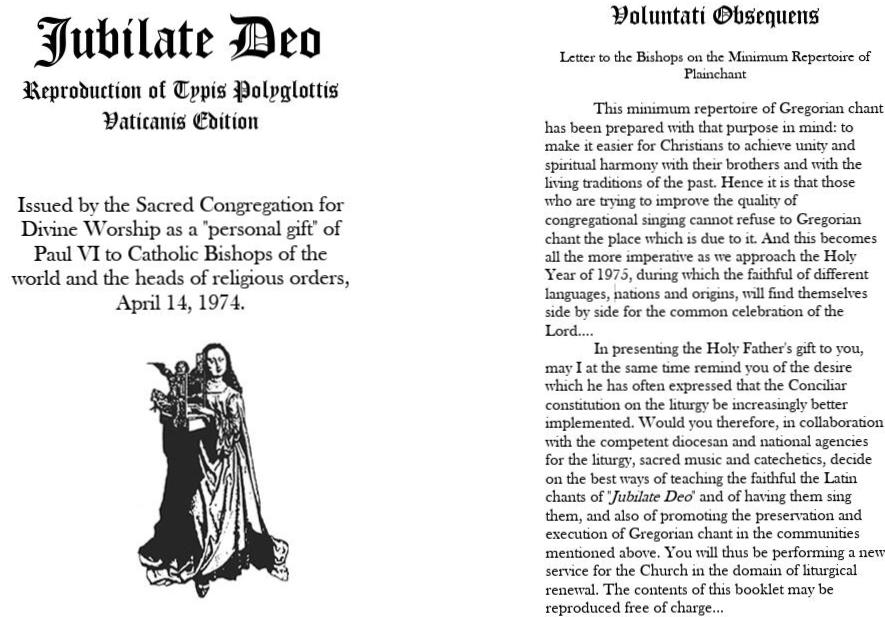
1974: JUBILATE
DEO
“THE
MINIMUM
REPERTOIRE
of GREGORIAN
CHANT”
 |
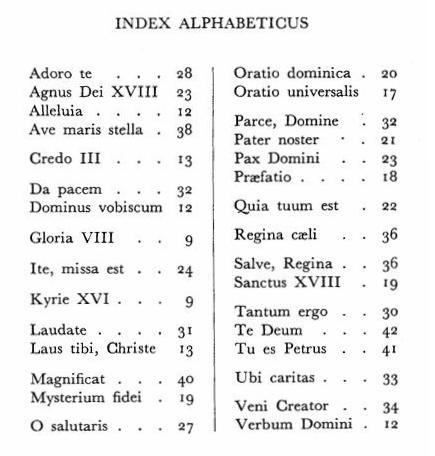 |
IN 1974 Pope Paul VI sent to all bishops and heads of religious orders the booklet, Jubilate Deo, [JUBILATE DEO (pdf)], containing the “minimum repertoire of Gregorian Chant” with which all Catholics should be familiar:
|
2003
|
|
|
The Importance of Singing |
De momento cantus |
|
39. The Christian faithful who gather together as one to await the Lord’s coming are instructed by the Apostle Paul to sing together psalms, hymns, and spiritual songs (cf. Col 3:16). Singing is the sign of the heart’s joy (cf. Acts 2:46). Thus St. Augustine says rightly, “Singing is for one who loves.” 48 There is also the ancient proverb: “One who sings well prays twice.” |
39. Ab Apostolo monentur christifideles qui in unum conveniunt exspectantes adventum Domini sui, ut una simul cantent psalmis, hymnis et canticis spiritualibus (cf. Col 3, 16). Cantus enim est signum exsultationis cordis (cf. Act 2, 46). Unde S. Augustinus recte dicit: « cantare amantis est »,48 et iam antiquitus in proverbium venit: « bis orat qui bene cantat ». |
|
48 St. Augustine of Hippo, Sermo 336, 1: Patrologiae cursus completus: Series latina, J. P. Migne, editor, Paris, 1844-1855 (hereafter, PL), 38, 1472. |
|
|
40. Great importance should therefore be attached to the use of singing in the celebration of the Mass, with due consideration for the culture of the people and abilities of each liturgical assembly. Although it is not always necessary (e.g., in weekday Masses) to sing all the texts that are of themselves meant to be sung, every care should be taken that singing by the ministers and the people is not absent in celebrations that occur on Sundays and on holy days of obligation. |
40. Magni ergo fiat usus cantus in Missæ celebratione, attentis ingenio populorum et facultatibus cuiuslibet coetus liturgici. Quamvis non semper necessarium sit, v. gr. in Missis ferialibus, omnes textus cantu proferre qui per se cantui destinantur, curandum omnino est ne desit cantus ministrorum et populi in celebrationibus, quæ diebus dominicis et festis de præcepto peraguntur. |
|
In the choosing of the parts actually to be sung, however, preference should be given to those that are of greater importance and especially to those to be sung by the priest or the deacon or the lector, with the people responding, or by the priest and people together. 49 |
In seligendis tamen partibus quæ revera canantur, eæ præferendæ sunt quæ maioris sunt momenti, et præsertim, quæ a sacerdote vel a diacono aut lectore, populo respondente, canendæ sunt, aut a sacerdote et populo simul proferendæ.49 |
|
49 Cf. Sacred Congregation of Rites, Instruction Musicam sacram, On music in the Liturgy, 5 March 1967, nos. 7, 16: AAS 59 (1967), pp. 302, 305. |
|
|
41. All other things being equal, Gregorian chant holds pride of place because it is proper to the Roman Liturgy. Other types of sacred music, in particular polyphony, are in no way excluded, provided that they correspond to the spirit of the liturgical action and that they foster the participation of all the faithful. 50 |
41. Principem locum obtineat, ceteris paribus, cantus gregorianus, utpote Liturgiæ romanæ proprius. Alia genera musicæ sacræ, præsertim vero polyphonia, minime excluduntur, dummodo spiritui actionis liturgicæ respondeant et participationem omnium fidelium foveant.50 |
|
50 Cf. Second Vatican Ecumenical Council, Constitution on the Sacred Liturgy, Sacrosanctum Concilium, no. 116; cf. also Sacred Congregation of Rites, Instruction Musicam sacram, On music in the Liturgy, 5 March 1967, no. 30. |
|
|
Since faithful from different countries come together ever more frequently, it is fitting that they know how to sing together at least some parts of the Ordinary of the Mass in Latin, especially the Creed and the Lord’s Prayer, set to the simpler melodies. 51 |
Cum frequentius in dies fideles ex diversis nationibus inter se conveniant, expedit ut iidem fideles aliquas saltem partes Ordinarii Missæ, præsertim vero symbolum fidei et Orationem dominicam, modulis adhibitis facilioribus, lingua latina simul cantare sciant.51 |
|
51 Cf. Second Vatican Ecumenical Council, Constitution on the Sacred Liturgy, Sacrosanctum Concilium, no. 54; Sacred Congregation of Rites, Instruction Inter Oecumenici, On the orderly carrying out of the Constitution on the Sacred Liturgy, 26 September 1964, no. 59: AAS 56 (1964), p. 891; Sacred Congregation of Rites, Instruction Musicam sacram, On music in the Liturgy, 5 March 1967, no. 47: AAS 59 (1967), p. 314. |
|
|
|
2003
|
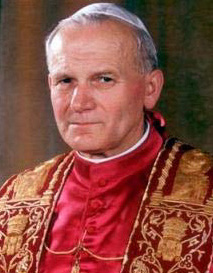
CHIROGRAPH of
THE
SUPREME
PONTIFF
JOHN
PAUL II for
THE
CENTENARY
of THE
MOTU PROPRIO “TRA
LE
SOLLECITUDINI”
ON SACRED MUSIC
6. The music and song requested by the liturgical reform - it is right to stress this point - must comply with the legitimate demands of adaptation and inculturation. It is clear, however, that any innovation in this sensitive matter must respect specific criteria such as the search for musical expressions which respond to the necessary involvement of the entire assembly in the celebration and which, at the same time, avoid any concessions to frivolity or superficiality. Likewise, on the whole, those elitist forms of “inculturation” which introduce into the Liturgy ancient or contemporary compositions of possible artistic value, but that indulge in a language that is incomprehensible to the majority, should be avoided.
In this regard St Pius X pointed out - using the term universal - a further prerequisite of music destined for worship: “...while every nation”, he noted, “is permitted to admit into its ecclesiastical compositions those special forms which may be said to constitute its native music, still these forms must be subordinate in such a manner to the general character of sacred music, that nobody of any nation may receive an impression other than good on hearing them” 16. In other words, the sacred context of the celebration must never become a laboratory for experimentation or permit forms of composition and performance to be introduced without careful review.
7. Among the musical expressions that correspond best with the qualities demanded by the notion of sacred music, especially liturgical music, Gregorian chant has a special place. The Second Vatican Council recognized that “being specially suited to the Roman Liturgy” 17 it should be given, other things being equal, pride of place in liturgical services sung in Latin 18. St Pius X pointed out that the Church had “inherited it from the Fathers of the Church”, that she has “jealously guarded [it] for centuries in her liturgical codices” and still “proposes it to the faithful” as her own, considering it “the supreme model of sacred music” 19. Thus, Gregorian chant continues also today to be an element of unity in the Roman Liturgy.
Like St Pius X, the Second Vatican Council also recognized that “other kinds of sacred music, especially polyphony, are by no means excluded from liturgical celebrations” 20. It is therefore necessary to pay special attention to the new musical expressions to ascertain whether they too can express the inexhaustible riches of the Mystery proposed in the Liturgy and thereby encourage the active participation of the faithful in celebrations 21.
|
|
2012
|
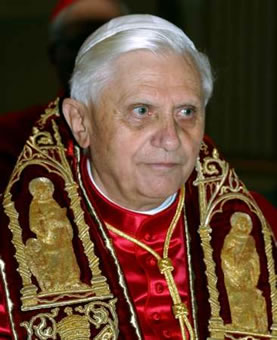
ADDRESS OF HIS HOLINESS BENEDICT XVI
TO PARTICIPANTS IN THE NATIONAL CONGRESS
OF "SCHOLAE CANTORUM" ORGANIZED BY THE ITALIAN ASSOCIATION OF SAINT CECILIA
Paul VI Hall
Saturday, 10 November 2012
Dear Brothers and Sisters,
I welcome you with great joy on the occasion of your pilgrimage, organized by the Associazione Santa Cecilia, which I praise first of all with a warm greeting to the President, whom I thank for his courteous words, and to all the collaborators. I greet you with affection, members of the numerous Scholae Cantorum in every part of Italy! I am very glad to meet you, and to know — as was announced — that tomorrow you will be taking part in the Eucharistic Celebration in St Peter’s Basilica, at which the Cardinal Archpriest Angelo Comastri will preside, offering, of course, the service of praise in song.
Your Congress fits intentionally into the 50th anniversary of the opening of the Second Vatican Council. And I saw with pleasure that the Associazione Santa Cecilia has intended in this way to draw your attention once again to the teaching of the Council’s Constitution on the Sacred Liturgy, in particular where — in chapter six — it addresses sacred music. On this anniversary, as you well know, I wanted a special Year of Faith for the entire Church so as to encourage a deepening in the faith of all the baptized and a common commitment to the New Evangelization. In meeting you I would thus like to emphasize briefly how sacred music can first and foremost foster faith and, in addition, can cooperate in the new evangelization.
Concerning faith, the personal life of St Augustine — one of the great Fathers of the Church who lived between the fourth and fifth centuries after Christ — springs to mind. It is certain that listening to the singing of the Psalms and hymns during the liturgies at which St Ambrose presided made an important contribution to his conversion. Indeed, if faith is always born from listening to the word of God — a form of listening, naturally, not only of the senses but that also passes from the senses to the mind and heart — there is no doubt that music, and especially song, can give the recitation of the Psalms and Canticles of the Bible greater communicative force. Among his charisms St Ambrose had in particular an outstanding musical sensitivity and talent. Once he had been ordained Bishop of Milan, he put his gift at the service of faith and evangelization.
In this regard the witness of Augustine, who was then a teacher in Milan and was in search of God, in search of faith, is highly significant. In Book Ten of his Confessions, his autobiography, he writes: “when I call to mind the tears I shed at the songs of your Church at the outset of my recovered faith, and how even now I am moved, not by the singing but by what is sung (when they are sung with a clear and skillfully modulated voice), I then come to acknowledge the great utility of this custom” once again (33, 50).
Augustine’s experience of the Ambrosian hymns was so strong that they were impressed in his mind and he often cited them in his works; indeed, he wrote a commentary of his own on music, De Musica. He says that he does not approve of the search for mere tangible pleasure during the sung liturgies, but recognizes that good music and good singing can help one receive the word of God and feel a salutary emotion. May this testimony of St Augustine help us to understand that the Sacred Constitution Sacrosanctum Concilium, in line with the Tradition of the Church, teaches that “as a combination of sacred music and words, it [the musical tradition of the universal Church] forms a necessary or integral part of the solemn liturgy” (n. 112). Why “necessary and integral”? Certainly not for purely aesthetic reasons, in a superficial sense, but because, due to its beauty, it cooperates in nourishing and expressing faith and hence is to the glory of God and the sanctification of the faithful, which is the purpose of sacred music (cf ibid.).
For this very reason I would like to thank you for your precious service: the music you perform is neither an accessory nor merely an external embellishment of the liturgy; it is the liturgy itself. You help the entire Assembly to praise God, to draws his Word into the depths of hearts; by singing you pray and enable others to pray, and take part in the singing and prayers of the liturgy that in glorifying the Creator embrace the entire creation.
The second aspect I would suggest to you for your reflection is the relationship between sacred song and the new evangelization. The conciliar Constitution on the Liturgy recalls the importance of sacred music in the mission ad gentes and urges the faithful to esteem the traditional music of peoples (cf. n. 119). However, even in countries of ancient evangelization, such as Italy, sacred music — with its own great tradition, which is our Western culture — can have and indeed has an important task: to encourage the rediscovery of God, as well as a renewed approach to the Christian message and to the mysteries of the faith.
Let us think of the famous experience of Paul Claudel, a French poet, who was converted while listening to the singing of the Magnificat at Vespers of Christmas in the Cathedral of Notre-Dame in Paris. “At that moment”, he wrote, “I understood the event that dominates my entire life. In an instant my heart was moved and I believed. I believed with such a strong force of adherence, with such an uplifting of my whole being, with such powerful conviction, in a certainty that left no room for any kind of doubt, that since then no reasoning, no circumstance of my turbulent life has been able to shake or touch my faith”. Yet, without turning to distinguished figures, let us think of all the people who have been moved in the depths of their heart while listening to sacred music; and even more, of those who have felt once again drawn to God by the beauty of liturgical music — as was Claudel.
And here, dear friends, you have an important role: strive to improve the quality of liturgical song without fearing to recover and to enhance the great musical tradition of the Church, which in Gregorian chant and polyphony has two of its loftiest expressions, as the Second Vatican Council itself says (cf. Sacrosanctum Concilium, n. 116).
And I would like to emphasize that the active participation of the whole People of God in the liturgy does not consist solely in speaking, but also in listening to and welcoming the Word with one’s senses and mind, and this is also true for sacred music. In liturgical celebrations you, who have the gift of singing, can make so many hearts sing.
Dear friends, I hope that in Italy liturgical music may reach greater heights, to praise the Lord as he deserves and to show that the Church is the place in which beauty is at home. My thanks again to everyone for this meeting! Thank you.
|
|
2019
|
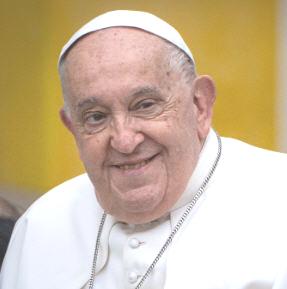
Address of the Holy Father Francis to the Scholae Cantorum of the Italian Saint Cecilia Association
Saturday, September 28, 2019
Dear brothers and sisters,
I welcome all of you, the president Monsignor Tarcisio Cola, whom I thank for his words; the Board of Directors, and you, cantors, choir directors, organists, who have come from the various parts of Italy.
You are part of the meritorious Italian Saint Cecilia Association, 140 years old from its foundation and still alive and working and desiring to serve the Church. The affection and esteem of the Pope for this Association are well known, in particular St. Pius X, who gave the people of God a synthesis of teaching on sacred music (cf. Motu Proprio Tra le sollecitudini, November 22, 1903). St. Paul VI wanted you to be renewed and active for a music that is integrated with the liturgy and draws its fundamental characteristics from it. Not just any music, but a holy music, because the rites are holy; adorned with nobility of art, because for God we must give the best; universal, so that everyone can understand and celebrate. Especially, it should be well distinct and different from the music used for other purposes. And he recommended that you cultivate the sensus ecclesiae, discernment of music for the liturgy. He said, “Not everything is valid, not everything is lawful, not everything is good.
Here the sacred music must be joined with the beautiful in a harmonious and devout synthesis.” (Discourse to religious women dedicated to liturgical chant, April 15, 1971). Benedict XVI exhorted you to not forget the musical heritage of the past, to renew it and increase it with new compositions.
Dear friends, I too encourage you to continue on this road. To be an Association is a resource: it helps you to generate movement, interest, commitment to better serve the liturgy. An Association that is not the originator or owner of any music, but has love and fidelity to the Church as its program.
Together you can devote yourselves better to song as an integral part of the Liturgy, with Gregorian chant inspiring you as the first model. Take care together for artistic and liturgical preparation, and promote the presence of the schola cantorum in every parish community. In fact, the choir guides the assembly, and with its own specific repertoire, is a skilled voice of spirituality, of community, of tradition, and of liturgical culture. I recommend that you help the whole people of God to sing, with conscious and active participation and in the Liturgy. This is important: closeness to the people of God.
The fields of your apostolate are various: the composition of new melodies, promoting chant in seminaries and houses of religious formation; supporting parish choirs, organists, schools of sacred music, and youth. To sing, to play, to compose, to direct, to make music in the Church are among the most things for the glory of God. It is a privilege, a gift of God, to express musical art and aid participation in the divine mysteries. A beautiful and good music is a privileged instrument for approaching the transcendent, and often helps even distracted people understand a message.
I know that your preparation involves sacrifices connected with finding time to devote to practice, with getting people involved, with carrying out feast days when perhaps your friends invite you to come and have fun. So many times! But your dedication to the liturgy and to its music represent a way of evangelization at all levels, from children to adults. The Liturgy is in fact the first “teacher” of catechism. Don’t forget this: the Liturgy is the first “teacher” of catechism.
Sacred music also reveals another duty, that of joining Christian history together: in the Liturgy resound Gregorian chant, polyphony, congregational song, and music of the present day. It is as though all the generations, past and present, were there to praise God, each with its own sensibility. What is more, sacred music and music in general builds bridges, brings people closer, even those far away; it knows no barriers of nationality, ethnicity, skin color, but draws in everyone, in a higher language, and always succeeds in bringing into harmony people and groups, even of very different origins.
Sacred music brings people closer, even with brothers to whom we sometimes do not feel close. For this reason, the singing group in every parish is a group where there is an atmosphere of availability and mutual help.
For all of this, dear brothers, I thank you and encourage you. The Lord help you to be constant in your commitment. The Church esteems the service that you present in the community: you help it to feel the attraction of the beautiful, which detoxifies us from mediocrity, lifts us higher, toward God, and unites hearts in praise and in tenderness. I bless you and all the members of the Saint Cecilia Association. May our Lady protect you. And since he who sings prays twice, I trust that you will also pray for me. Thank you!
This Webpage was created for a workshop held at Saint Andrew's Abbey, Valyermo, California in 2020