|
|
|
|
|
|
1. IN 1992 the SCDF declared that “Sexual orientation does not constitute a quality comparable to race, ethnic background, etc. in respect to non-discrimination. Unlike these, homosexual orientation is an objective disorder [...] and evokes moral concern”. [Cardinal Ratzinger]
2. IN 2003 the SCDF officially opposed Civil Unions of Same-Sex Couples [Cardinal Ratzinger]
3. IN 2020 Pope Francis described his earlier support of legal recognition of Civil Unions.
4. IN 2021 the SCDF declared: “the Church does not have, and cannot have, the power to bless unions of persons of the same sex” [Cardinal Ladaria]
5. IN 2022 the Flemish bishops of Belgium published a liturgy for the blessing of same-sex unions
6. IN 2023 (March 10) The German Synodal Way calls for "Blessing ceremonies for couples who love each other"
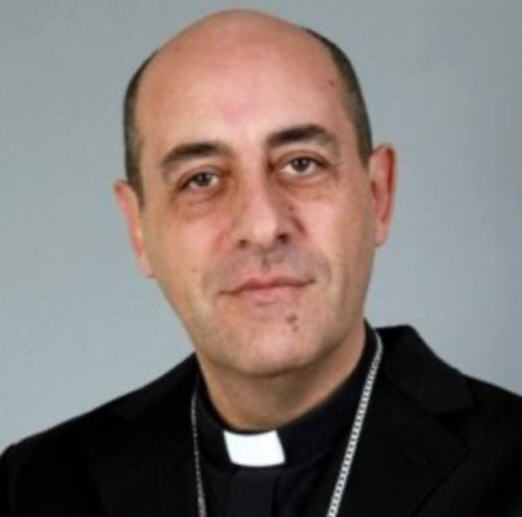
7. IN 2023 (July 25) The new Head of DCF,Cardinal-elect Víctor Manuel Fernández, states that he is open to consideration of a blessing if it is designed in such a way that it does not create confusion regarding the essential difference with the marriage of man and woman.”
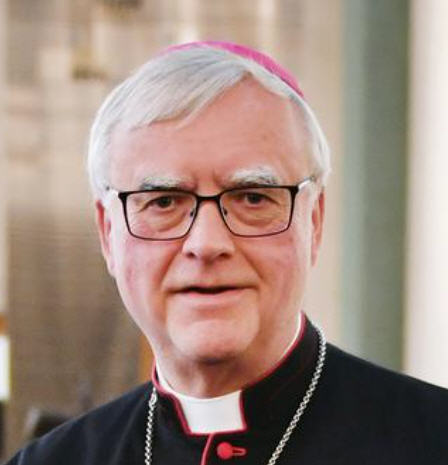
8. IN 2023 (Aug. 21) the Archbishop of Berlin leaves to parish ministers the decision whether to offer blessings to same-sex couples
9. IN 2023 (publ. Oct. 3, orig. signed July 11) Pope Francis personally (!) responded to a series of dubia, principally on the meaning and significance of “synodality”, and including one on same-sex blessings.
10. IN 2023 (Dec. 23) Cardinal Fernandez published IDF document Fiducia Supplicans, authorizing blessings for individuals and couples in irregular unions.
Two weeks later (Jan 11, 2024) the African Bishops declared (with ICF approval) they would not confer such blessings.
Two weeks later (Jan 26, 2024) Pope Francis, during a public audience and then in a subsequent magazine interview (Jan 29, 2024) attempted a clarification: “it is not the union that is blessed, but the persons...” He went on to describe those who dissent from this practice “belong to small ideological groups”
In the Archdiocese of Los Angeles Fr. Chris Ponnet, Chaplain to the Archdiocesan Ministry to gay and lesbian persons, gave an interview (Feb 14, 2024) to NPR, describing the practicalities of blessing same-sex couples and those in irregular unions.
|
|
Heiner Koch, Archbishop of Berlin |
ON July 5, 2023, during an interview with the Spanish Magazine Infovaticana then Cardinal-elect Víctor Manuel Fernández made the following observations:
|
Q- In 2021 this Dicastery affirmed that homosexual couples cannot be blessed, do you agree? |
P- En 2021 este Dicasterio afirmó que no se puede bendecir a las parejas homosexuales, ¿está usted de acuerdo? |
|
[…] I also understand that “marriage” in the strict sense is only one thing: that stable union of two beings as different as male and female, who in that difference are capable of generating new life. There is nothing that can be compared to that and using that name to express something else is not good or correct. At the same time, I believe that gestures or actions that may express something different should be avoided. That is why I think that the greatest care that must be taken is to avoid rites or blessings that could feed this confusion. |
[…] también entiendo que «matrimonio» en sentido estricto es sólo una cosa: esa unión estable de dos seres tan diferentes como son el varón y la mujer, que en esa diferencia son capaces de engendrar nueva vida. No hay nada que pueda compararse con eso y usar ese nombre para expresar otra cosa no es bueno ni correcto. Al mismo tiempo creo que hay que evitar gestos o acciones que puedan expresar algo diferente. Por eso pienso que el mayor cuidado que hay que poner es en evitar ritos o bendiciones que puedan alimentar esa confusión. |
| Now, if a blessing is given in such a way that it does not cause that confusion, it will have to be analyzed and confirmed. | Ahora, si una bendición se da de tal manera que no provoque esa confusión, habrá que analizarlo y confirmarlo. |
| As you will see, there is a point at which a properly theological discussion is left and one passes to a question that is more prudential or disciplinary. | Como verá, hay un punto en que se sale de una discusión propiamente teológica y se pasa a una cuestión que es más bien prudencial o disciplinar. |
ON July 8, 2023, Papal biographer Austen Ivereigh cited a statement on X/Twitter by Archbishop Fernandez, noting "Asked about the CDF dubium response condemning same-sex blessings @Tuchofernandez tells @cristinacg74 that "it wouldn't be a bad idea to rethink this in the light of everything Francis has taught us." It "doesn't smell of Francis", and doesn't reflect his teaching.
Austen Ivereigh @austeni • Jul 8 [https://twitter.com/austeni/status/1677797103400099840 ]
The full comment by Archbishop Fernandez reads:
| I think that without contradicting what that document says, it would not be wrong to rethink it in the light of everything that Francis has taught us. | Creo que sin contradecir lo que dice ese documento no estaría mal repensarlo a la luz de todo lo que nos ha enseñado Francisco. |
| Many say that just as it is written, with some expressions that it uses, it does not have the smell of Francis. | Muchos dicen que así como está escrito, con algunas expresiones que utiliza, no tiene olor a Francisco. |
| In this matter as in others it will be necessary to include what the Pope asks of me at the end of his letter, and that is that the documents of the dicastery accept the recent Magisterium |
En este tema como en otros habrá que recoger lo que me pide el papa al
final de su carta, y es que los documentos del dicasterio acojan el
Magisterio reciente. |
While Fernández’s task is to “safeguard the faith”, he should do so by allowing the “harmonious growth” of different schools of thought. This, the Pope explained, is more effective in helping to “preserve Christian doctrine” than “any mechanism of control”. Attention, he added, must also be given to the “recent magisterium”. I asked Fernández if he is planning to change the way the doctrine office responds to questions (known as dubia) submitted to it. The 2021 ruling on same-sex blessings was a response to the question, “Does the Church have the power to give the blessing to unions of persons of the same sex?” The doctrine office gave the answer “No”, and then set out its reasons.
“I think I will have to take very seriously what Francis asks of me at the end of his letter: that the documents take into account ‘the recent Magisterium’,” Fernández told me. “It will certainly not be possible to respond to dubia or doctrinal accusations without taking into account the criteria and the insights that Pope Francis has given us, and which we still find difficult to take on board clearly.”
I said that it would not be bad to “rethink it,” nothing more. But an interview is not the most appropriate place to do that.
I will have to talk to many people, and listen to the dicastery itself, pay attention to what comes up in the synod [on synodality], etc.
But — not necessarily to contradict what that document says, but perhaps to enrich and expand it.
On the other hand, there are expressions that are theologically correct but that can easily be misunderstood. For example, the expression “God does not bless sin” is certainly a phrase that Francis would not use so easily without making sure that respect is clear for what specific people might be experiencing.
https://www.laciviltacattolica.com/the-water-has-been-agitated/
On August 5, 2023, during his apostolic journey to Portugal for World Youth Day, Pope Francis met with Jesuits at the Colégio de São João de Brito, a school run by the Society of Jesus.
[…]
Holy Father, I am João, I hugged you in Rome a few years ago, but I didn’t tell you my name then because I was too excited. I work in the university center in Coimbra. I want to ask you a difficult question. In your speech at last Thursday’s welcoming ceremony here in Lisbon, you said that we are all called as we are, and that there is room for everyone in the Church. I do pastoral work every day with young university students, and among them there are many really good ones, very committed to the Church, to the center, very friendly with the Jesuits, and who identify as homosexuals. They feel that they are an active part of the Church, but they often do not see in doctrine their way of living affectivity, and they do not see the call to chastity as a personal call to celibacy, but rather as an imposition. Since they are virtuous in other areas of their lives, and know the doctrine, can we say that they are all in error, because they do not feel, in conscience, that their relationships are sinful? And how can we act pastorally so that these people feel, in their way of life, called by God to a healthy affective life that produces fruit? Should we recognize that their relationships can open up and give seeds of true Christian love, such as the good they can accomplish, the response they can give to the Lord?
I believe there is no discussion about the call being addressed to everyone. Jesus is very clear about this: everyone. The invited guests did not want to come to the banquet. So he sent out to the streets to call in everyone, everyone, everyone. So that it remains clear, Jesus says “healthy and sick,” “righteous and sinners,” everyone, everyone, everyone. In other words, the door is open to everyone, everyone has their own space in the Church. How will each person live it out? We help people live so that they can occupy that place with maturity, and this applies to all kinds of people.
In Rome I know a priest who works with young homosexuals. It is clear that today the issue of homosexuality is very strong, and the sensitivity in this regard changes according to historical circumstances. But what I don’t like at all, in general, is that we look at the so-called “sin of the flesh” with a magnifying glass, just as we have done for so long for the sixth commandment. If you exploited workers, if you lied or cheated, it didn’t matter, and instead sins below the waist were relevant.
So, everyone is invited. This is the point. And the most appropriate pastoral attitude for each person must be applied. We must not be superficial and naive, forcing people into things and behaviors for which they are not yet mature, or are not capable. It takes a lot of sensitivity and creativity to accompany people spiritually and pastorally. But everyone, everyone, everyone is called to live in the Church: never forget that.
I take a cue from your question and want to add something else that concerns transgender people. The Wednesday general audiences are attended by a Charles de Foucauld sister, Sister Geneviève, who is in her eighties and is a chaplain at the Circus in Rome with two other sisters. They live in a mobile home next to the Circus. One day I went to visit them. They have a little chapel, a kitchen, sleeping area, everything well organized. And that nun also works a lot with people who are transgender. One day she said, “Can I bring them to the audience?” “Sure!” I answered her, “why not?” And groups of trans come all the time. The first time they came, they were crying. I was asking them why. One of them told me, “I didn’t think the pope would receive me!” Then, after the first surprise, they made a habit of coming. Some write to me, and I email them back. Everyone is invited! I realized that these people feel rejected, and it is really hard.
|
|
Heiner Koch, Archbishop of Berlin |
|
DR. HEINER KOCH |
|
|
ARCHBISHOP of BERLIN |
ERZBISCHOF VON BERLIN |
|
To the priests, deacons, and all employees in the pastoral service of the Archdiocese of Berlin Berlin, August 21, 2023 |
An die Priester,
Diakone |
|
Dear Confreres, |
Liebe Mitbrüder, |
|
Dear Sisters and Brothers, |
liebe Schwestern und Brüder, |
|
ON March 11, 2023, the 5th and last synodal assembly of the synodal path in Frankfurt am Main came to an end. However, the call of the Holy Father to perceive and shape the church as a community along the path of synodality is far from being fulfilled. In the Archdiocese of Berlin, we are considering in various circles, communities and committees how we can responsibly realize synodality for the benefit of the people in the church and in connection with the entire church. |
am 11. März 2023 ist die 5. und letzte Synodalversammlung des Synodalen Weges in Frankfurt am Main zu Ende gegangen. Die Aufforderung des Heiligen Vaters, Kirche als Gemeinschaft auf dem Weg der Synodalität wahrzunehmen und zu gestalten, ist damit aber noch lange nicht erfüllt. Wir überlegen im Erzbistum Berlin in verschiedenen Kreisen, Gemeinschaften und Gremien, wie wir zum Wohl der Menschen in der Kirche und in Verbundenheit mit der gesamten Kirche Synodalität verantwortlich verwirklichen können. |
|
Against this background, we want to consider in the synodal bodies of our diocese already provided for by ecclesiastical law, the council of priests and the diocesan pastoral council, but also in other circles, which concrete proposals from the votes of the synodal path we consider in our diocese and how and to what extent we they can and want to implement. The agreed texts of the synodal path do not in themselves have a binding character for the dioceses, the committees and councils, associations and communities. Due to the concern of the synodal path, however, we are obliged to conscientiously consider the impulses and suggestions given on this path and to transparently advise on their further use in respectful and constructive communication. I already said at the beginning of the path that I would like to introduce all the resolutions of the synodal path to our synodal diocesan committees and incorporate the directions resulting from the consultations there and my decision into the life of our diocese by implementing the synodal resolutions in whole or in part or by refraining from implementing them becomes. |
Vor diesem Hintergrund wollen wir in den vom kirchlichen Recht schon jetzt vorgesehenen synodalen Gremien unserer Diözese, dem Priesterrat und dem Diözesanpastoralrat, aber auch in anderen Kreisen überlegen, welche konkreten Vorschläge aus den Voten des Synodalen Weges wir in unserem Bistum bedenken und wie und inwiefern wir sie umsetzen können und wollen. Die beschlossenen Texte des Synodalen Weges haben aus sich selbst heraus keinen verpflichtenden Charakter für die Diözesen, die Gremien und Räte, Verbände und Gemeinschaften. Aus dem Anliegen des Synodalen Weges heraus aber sind wir verpflichtet, die auf diesem Weg gegebenen Impulse und Anregungen gewissenhaft zu erwägen und ihre weitere Verwendung in einer respektvollen und konstruktiven Kommunikation transparent zu beraten. Ich habe bereits am Anfang des Weges gesagt, dass ich alle Beschlüsse des Synodalen Weges in unsere synodalen Diözesangremien einbringen und die aus den dortigen Beratungen und meiner Entscheidung resultierenden Wegweisungen in das Leben unseres Bistums einfügen möchte, indem die Synodalbeschlüsse ganz oder in Teilen umgesetzt werden oder indem auf ihre Umsetzung verzichtet wird. |
|
|
|
|
I have also stated from the outset that I will not implement any resolutions that go against the intentions and instructions of the Holy Father. As bishop, it is very important to me to maintain unity with the whole church, but also to include our inquiries in this unity. |
Ebenso habe ich von vornherein erklärt, dass ich keine Beschlüsse umsetzen werde, die gegen die Absichten und Weisungen des Heiligen Vaters verstoßen. Als Bischof ist es mir ein hohes Anliegen, die Einheit mit der Gesamtkirche zu wahren, in diese Einheit aber auch unsere Anfragen mit hineinzugeben. |
|
In our archdiocese, the text of the synodal path "Blessing Celebration For Couples Who Love Each Other" was brought up for discussion very quickly. The proposal to also have blessing celebrations for couples who love each other and who cannot or do not want to marry sacramentally in our diocese introduced controversy and discussions, some of which were conducted with great severity and strong emotions: For example, at the conference of pastors of our diocese on April 26th, at the meeting of the Council of Priests on April 27th, at the meeting of the Diocesan Pastoral Council on May 13 and at an open digital conference on May 24 used by many believers. |
Sehr schnell ist in unserem Erzbistum insbesondere der Handlungstext des Synodalen Weges „Segensfeier für Paare, die sich lieben" in die Diskussion gebracht worden. Der Vorschlag, Segensfeiern für Paare, die sich lieben und die nicht sakramental heiraten können oder wollen, auch in unserem Bistum einzuführen, hat Kontroversen und Diskussionen ausgelöst, die zum Teil mit großer Härte und starken Emotionen geführt wurden: So etwa bei der Konferenz der Seelsorgerinnen und Seelsorger unseres Bistums am 26. April, bei der Sitzung des Priesterrats am 27. April, bei der Zusammenkunft des Diözesanpastoralrats am 13. Mai und bei einer offenen digitalen Konferenz am 24. Mai, die von vielen Gläubigen genutzt wurde. |
|
Representatives with different theological approaches and church-political perspectives faced each other with their respective arguments. In the serious discussions, a great love for the Church and a great passion for the proclamation were shown on all sides. But not infrequently the conviction emerged that only one's own point of view was suitable to protect the church from dire consequences. |
Mit ihren jeweiligen Argumentationen standen sich Vertreterinnen und Vertreter mit unterschiedlichen theologischen Ansätzen und kirchenpolitischen Perspektiven gegenüber. In den ernsthaften Diskussionen zeigte sich auf allen Seiten eine große Liebe zur Kirche und eine große Leidenschaft für die Verkündigung. Aber nicht selten trat die Überzeugung zutage, dass nur der eigene Standpunkt geeignet sei, um die Kirche vor schlimmen Konsequenzen zu bewahren. |
|
Using the example of same-sex partnerships, I would like to identify some of the reasons put forward by those who are opposed to blessing couples who love each other and who cannot or do not want to marry sacramentally. They say: |
Ich möchte am Beispiel von gleichgeschlechtlichen Partnerschaften einige Gründe benennen, die von denen vorgetragen werden, die gegen eine Segnung von Paaren sind, die sich lieben und die nicht sakramental heiraten können oder wollen. Sie sagen: |
|
We are convinced that same-sex unions are not ordered according to "God's plans" as "written in creation and fully revealed by Christ the Lord." But if "the reality to be blessed" is not "objectively and positively" geared towards this, then this reality, this concrete connection, cannot be blessed either: "God does not bless sin and he cannot bless it. He blesses the sinful man so that he acknowledges that he is part of His plan of love and to be transformed by it." |
Wir sind überzeugt, dass Verbindungen von Personen gleichen Geschlechts nicht auf die „Pläne Gottes" hingeordnet sind, so wie sie „in die Schöpfung eingeschrieben und von Christus dem Herrn vollständig offenbart" wurden. Wenn aber „die zu segnende Wirklichkeit" nicht „objektiv und positiv" darauf hingeordnet ist, dann kann diese Wirklichkeit, diese konkrete Verbindung, auch nicht gesegnet werden: „Gott segnet nicht die Sünde und er kann sie nicht segnen. Er segnet den sündigen Menschen, damit er erkennt, dass er Teil seines Liebesplans ist, und sich von ihm verändern lässt". |
|
We want to protect and promote the sacrament of marriage and marriage as understood by the Catholic Church. But the value of marriage would be diminished if the blessing of same-sex unions "represented in some way an imitation or analogous reference to the bridal blessing invoked upon the man and woman who unite in the sacrament of marriage." |
Wir möchten das Sakrament der Ehe und die Ehe nach dem Verständnis der katholischen Kirche schützen und fördern. Der Wert der Ehe würde aber abgeschwächt werden, wenn die Segnung gleichgeschlechtlicher Verbindungen „in gewisser Weise eine Nachahmung oder einen analogen Hinweis auf den Brautsegen darstellen würde, der auf den Mann und die Frau herabgerufen wird, die sich im Sakrament der Ehe vereinigen". |
|
It cannot be ruled out that after the blessing has been permitted, the demand for the facilitation of the sacramental marriage will also be made even more forcefully. |
Es ist nicht auszuschließen, dass nach einer Zulassung der Segnung auch die Forderung nach der Ermöglichung der sakramentalen Eheschließung offensiver gestellt wird. |
|
We believe that it is "not lawful" to "give blessings to relationships or even stable partnerships that involve sexual practice outside of marriage [...]".1 |
Wir glauben, dass es „nicht erlaubt" ist, „Beziehungen oder selbst stabilen Partnerschaften einen Segen zu erteilen, die eine sexuelle Praxis außerhalb der Ehe [...] einschließen ".1 |
|
1Responsum ad dubium of the Congregation for the Doctrine of the Faith on the blessing of same-sex unions of 22 February 2021 |
1Responsum ad dubium der Kongregation für die Glaubenslehre über die Segnung von Verbindungen von Personen gleichen Geschlechts vom 22. Februar 2021 |
|
But also those who are in favor of blessing couples who love each other and who cannot or do not want to marry sacramentally present well thought-out reasons, again using the example of same-sex partnerships. They say: |
Aber auch die, die für eine Segnung von Paaren sind, die sich lieben und die nicht sakramental heiraten können oder wollen, tragen, wiederum am Beispiel der gleichgeschlechtlichen Partnerschaften, durchdachte Gründe vor. Sie sagen: |
|
We are convinced that the Church is constantly developing and advancing in the knowledge of God and thus also in the knowledge of the order that the Creator has placed in his creation. |
Wir sind überzeugt, dass die Kirche in der Erkenntnis Gottes und damit auch in der Erkenntnis der Ordnung, die der Schöpfer in seine Schöpfung hineingelegt hat, sich immer weiter entwickelt und voranschreitet. |
|
Great progress has also been made in science in the last few decades in understanding human sexuality, which also has an impact on the theological understanding of homosexuality. |
Auch in den Wissenschaften sind in den letzten Jahrzehnten große Fortschritte im Verständnis der menschlichen Sexualität erzielt worden, die auch Auswirkungen haben auf das theologische Verständnis von Homosexualität. |
|
The church should recognize when good things happen in a partnership, especially when love and fidelity, mutual support "in good times and bad", the willingness to accept the weaknesses and mistakes of the other are lived in it The Church is entitled to speak of this objective goodness as a gift from God through the blessing. Acknowledging the goodness in a relationship is a way of speaking well of God to these people. |
Die Kirche sollte anerkennen, wenn in einer Partnerschaft Gutes geschieht, vor allem wenn in ihr die Liebe und die Treue, die gegenseitige Unterstützung „in guten und in schlechten Zeiten", die Bereitschaft, Schwächen und Fehler des anderen anzunehmen, gelebt werden. Die Kirche ist berechtigt, dieses objektiv Gute durch den Segen als Gabe Gottes zuzusprechen. Das Anerkennen des Guten in einer Beziehung ist eine Form, zu diesen Menschen auch gut von Gott zu sprechen. |
|
We therefore wish that people who want to live as a committed couple are promised God's protection. |
Wir wünschen daher, dass den Menschen, die verbindlich als Paar leben möchten, der Schutz Gottes zugesagt wird. |
|
We trust that these people want to align their lives with the message of God and want to grow in life based on faith. |
Wir trauen diesen Menschen zu, dass sie ihr Leben an der Botschaft Gottes ausrichten wollen und wachsen möchten im Leben aus dem Glauben. |
|
The Holy Father, too, has repeatedly addressed these different contexts of justification and their backgrounds, especially in the post-synodal apostolic exhortation Amoris laetitia on love in the family (2016). Pope Francis emphatically calls for pastoral discernment: |
Auch der Heilige Vater ist immer wieder auf diese unterschiedlichen Begründungszusammenhänge und ihre Hintergründe eingegangen, vor allem im Nachsynodalen Apostolischen Schreiben Amoris laetitia über die Liebe in der Familie (2016). Mit großem Nachdruck ruft Papst Franziskus darin zur pastoralen Unterscheidung auf: |
|
“Therefore it is no longer possible to say that all who live in any so-called 'irregular' situation are in a state of mortal sin and have lost sanctifying grace. [...] A person, although well acquainted with the norm, may have great difficulty in understanding the values that the moral norm is about, or he may find himself in a concrete situation that does not allow him to do act otherwise and to make different decisions without incurring new guilt.” (Amoris laetitia No. 301) |
„Daher ist es nicht mehr möglich zu behaupten, dass alle, die in irgendeiner sogenannten ‚irregulären' Situation leben, sich in einem Zustand der Todsünde befinden und die heiligma-chende Gnade verloren haben. [...] Ein Mensch kann, obwohl er die Norm genau kennt, große Schwierigkeiten haben im Verstehen der Werte, um die es in der sittlichen Norm geht, oder er kann sich in einer konkreten Lage befinden, die ihm nicht erlaubt, anders zu handeln und andere Entscheidungen zu treffen, ohne eine neue Schuld auf sich zu laden." (Amoris laetitia Nr. 301) |
|
In Amoris laetitia the Holy Father also rejects the legal equality of same-sex partnerships with marriage. But he gives the local churches, the pastors, a gereat deal of leeway in dealing with people in so-called “irregular” situations: “It concerns integrating everyone; you must help each individual to find their own way, of taking part in the ecclesial community so that they may feel themsellves the recipient of undeserved, unconditional, and unrequited compassion.” (Amoris laetitia No. 297) |
Zwar lehnt der Heilige Vater auch in Amoris laetitia die rechtliche Gleichstellung gleichgeschlechtlicher Partnerschaften mit der Ehe ab. Aber er räumt den Ortskirchen, den Seelsorgerinnen und Seelsorgern einen großen Spielraum für den Umgang mit Menschen in so genannten „irregulären" Situationen ein: „Es geht darum, alle einzugliedern; man muss jedem einzelnen helfen, seinen eigenen Weg zu finden, an der kirchlichen Gemeinschaft teilzuhaben, damit er sich als Empfänger einer unverdienten, bedingungslosen und gegenleistungsfreien Barmherzigkeit empfindet." (Amoris laetitia Nr. 297) |
|
“It is true that the general norms are a good that must never be lost sight of or neglected, but in their formulations they cannot possibly embrace all particular situations.” (Amoris laetitia n. 304) Therefore: “We are called to form consciences, but not to claim to replace them.” (Amoris laetitia No. 37) ” |
„Es ist wahr, dass die allgemeinen Normen ein Gut darstellen, das man niemals außer Acht lassen oder vernachlässigen darf, doch in ihren Formulierungen können sie unmöglich alle Sondersituationen umfassen." (Amoris laetitia Nr. 304) Deshalb gilt: „Wir sind berufen, die Gewissen zu bilden, nicht aber dazu, den Anspruch zu erheben, sie zu ersetzen." (Amoris laetitia Nr. 37) |
|
What Pope Francis says about the sacrament of the Eucharist in his Apostolic Exhortation Evangelii Gaudium (2013) applies to all sacraments, including marriage, and even more so to a sacramental such as blessing: It is “not a reward for perfect ones, but a generous remedy and food for the weak" (Evangelii gaudiumNo. 47). Every blessing promises God's grace and help to us people who are and remain weak. To bless does not, therefore, have the meaning of 'legitimate, sanction'. All of us, as the blessed, remain guilty people who need the edifying grace of God for our path in life. This basic statement connects all people, including those who ask for the blessing of their relationships that have not been sacramentally formed or cannot be sacramentally formed. |
Was Papst Franziskus in seinem Apostolischen Schreiben Evangelii gaudium (2013) über das Sakrament der Eucharistie sagt, das gilt für alle Sakramente, auch für die Ehe, und umso mehr doch auch für eine Sakramentalie wie den Segen: Sie ist „nicht eine Belohnung für die Vollkommenen, sondern ein großzügiges Heilmittel und eine Nahrung für die Schwachen" (Evan-gelii gaudium Nr. 47). Jeder Segen spricht uns Menschen, die wir schwach sind und bleiben, Gottes Gnade und Hilfe zu. Segnen hat daher nicht die Bedeutung von „legitimieren, gutheißen, absegnen'. Wir alle bleiben als Gesegnete doch schuldige Menschen, die die aufbauende Gnade Gottes für unseren Lebensweg brauchen. Diese Grundaussage verbindet alle Menschen, auch diejenigen, die um den Segen für ihre Beziehungen bitten, die nicht sakramental geschlossen worden sind bzw. nicht sakramental geschlossen werden können. |
|
Against this background, I ask you to follow the path that I have decided to follow in our diocese after intensive deliberations on this issue: |
Vor diesem Hintergrund bitte ich Sie, folgenden Weg, für den ich mich nach intensiven Beratungen in dieser Frage entschieden habe, in unserem Bistum mitzugehen: |
|
1. Because of the different positions and arguments for and against the blessing of couples, I expect full-time ministers to make a carefully considered decision for themselves. |
1. Von den hauptamtlichen Seelsorgerinnen und Seelsorgern erwarte ich aufgrund der unterschiedlichen Positionen und Argumente, die für und gegen die Segnung von Paaren sprechen, dass sie für sich selbst eine sorgsam abgewogene Entscheidung treffen. |
|
2 For myself as Archbishop, I have decided that as long as no other decision is made by the Holy Father other than that presented by the Congregation for the Doctrine of the Faith of March 2022on the blessing of couples who cannot or will not receive the sacrament of marriage, I will not bless these couples. As the German Bishops' Conference, we are doing everything we can to intensify talks with the Pope and those responsible for further clarification. |
2. Für mich als Erzbischof habe ich entschieden: Solange über den Segen für Paare, die sich das Sakrament der Ehe nicht spenden können oder wollen, vom Heiligen Vater keine andere Entscheidung als die der Glaubenskongregation vom März 2022 vorgelegte getroffen wird, werde ich diese Paare nicht segnen. Als Deutsche Bischofskonferenz tun wir alles, um mit dem Papst und seinen Verantwortlichen die Gespräche zur weiteren Klärung zu intensivieren. |
|
For example, the future prefect of the Dicastery for the Doctrine of the Faith, Archbishop Victor Manuel Fernandez, has shown himself open to consider a Blessing, if it is designed so as not to create confusion as to its essential difference from marriage between a man and a woman, since there is nothing comparable to a marriage between a woman and a man, which, because of the difference in the sexes, is capable of generating new life. |
Der zukünftige Präfekt des Dikasteriums für die Glaubenslehre, Erzbischof Victor Manuel Fernändez, hat sich beispielsweise offen für Überlegungen zu einer Segnung gezeigt, wenn diese so gestaltet sei, dass sie keine Verwirrung bezüglich des wesentlichen Unterschieds zur Ehe von Mann und Frau stifte, da es nichts Vergleichbares zu einer Ehe von Frau und Mann gebe, die wegen der Differenz der Geschlechter in der Lage sei, neues Leben hervorzubringen. |
|
3. As long as the status quo exists on the question of blessing couples who cannot or do not want to marry sacramentally, I will oppose pastoral workers who, in their special personal situations, will counsel couples after a pastoral conversation that serves to form and decide their conscience bless for pastoral reasons, not disciplinary. |
3. Solange über die Frage des Segens für Paare, die nicht sakramental heiraten können oder wollen, der Status Quo besteht, werde ich gegen Seelsorgerinnen und Seelsorger, die die Paare in ihren besonderen persönlichen Situationen nach einem der Gewissensbildung und -entscheidung dienenden pastoralen Gespräch aus seelsorglichen Gründen segnen, nicht disziplinarisch vorgehen. |
|
4. I expect that the minister's decision for or against a blessing to be respected. |
4. Ich erwarte, dass die Entscheidung der Seelsorgerinnen und Seelsorger für oder gegen eine Segnung respektiert wird. |
|
5. This respectful acceptance of the differing position of others includes not using blessings either politically or in the media. This means in particular not using [the decision] to blesses or not bless as demonstrating that one is supposedly better in the congregation, in church committees, in the press etc. These blessings are concerned with an Act that has its place in the trust-protected framework of personal pastoral care. |
5. Zu dieser respektvollen Annahme der jeweils anderen Position gehört es, Segnungen weder politisch noch medial zu nutzen. Das meint insbesondere, sie nicht dafür zu gebrauchen, um sich als Segnende bzw. Segnender oder Nicht-Segnende bzw. Nicht-Segnender vermeintlich besser darzustellen in der Gemeinde, in kirchlichen Gremien, in der Presse etc. Es handelt sich bei diesen Segnungen um einen Akt, der seinen Ort im vertrauensgeschützten Rahmen der persönlichen Seelsorge hat. |
|
6. Where there are different positions and practices regarding the blessing of couples at the level of a parish, within a pastoral team, or an ecclesiasial institution, I expect you - especially the pastors as leaders of a parish - to implement and respect this in the described spirit and within the described limits. If you cannot find a common solution, I would ask you to include me in the discussion. |
6. Wo es auf Ebene einer Pfarrei innerhalb eines Pastoralteams oder einer kirchlichen Einrichtung zur Segnung von Paaren unterschiedliche Positionen und Praktiken gibt, erwarte ich von Ihnen - insbesondere von den Pfarrern als Leitern einer Pfarrei -, diese aus dem beschriebenen Geist und in den geschilderten Grenzen zu achten. Sollten Sie keine gemeinsame Lösung finden können, bitte ich Sie, mich in das Gespräch einzubeziehen. |
|
The path I have described is a pastoral one, not an administrative or legal one, which I have chosen against the background of the statements made in the Post-Synodal Apostolic Exhortation Amoris Laetitia . |
Der von mir beschriebene Weg ist ein pastoraler, kein verwaltungsmäßiger oder rechtlicher Weg, zu dem ich mich vor dem Hintergrund der Äußerungen des Nachsynodalen Apostolischen Schreibens Amoris laetitia entschieden habe. |
|
Because there are reasons for and against blessing couples who love each other but do not want to or cannot marry sacramentally, I would like to encourage you to weigh up this question in a differentiated manner and make responsible decisions. |
Weil es für und gegen eine Segnung von Paaren, die sich lieben, aber nicht sakramental heiraten wollen oder können, Gründe gibt, möchte ich Sie darin bestärken, in dieser Frage differenziert abzuwägen und verantwortlich zu entscheiden. |
|
In the hope that in this way we will succeed in preserving the unity in diversity in our Archdiocese, I greet you with heartfelt blessings. |
In der Hoffnung, dass es uns auf diesem Weg gelingt, die Einheit in der Verschiedenheit in unserem Erzbistum zu wahren, grüße ich Sie mit herzlichen Segenswünschen. |
|
Your Heiner Koch Archbishop of Berlin |
Ihr Heiner Koch, Erzbischof von Berlin |
FEBRUARY 14, 20245:01 AM ET
HEARD ON ALL THINGS CONSIDERED
https://www.npr.org/2024/02/14/1231026522/pope-francis-same-sex-blessings-catholic-church-lgbtq
A few years ago, Javier López and his partner of 14 years, Sergio Guzmán, were visiting family in Mexico. While there, a priest — who's a longtime friend — surprised the couple.
“I just want to make sure that you guys take care of each other,” López recalls the priest saying. “And at that point he actually asked us to kneel in front of him and gave us a blessing.”
It was something López says they never expected: “We were shocked and surprised and really, like, 'I guess this is official now.'“
The moment was poignant for both López and Guzmán.
The blessing wasn't planned or even asked for, but López says that was part of the priest's gift to them. “He can probably see that we're in a very committed relationship and that we were Catholics and always went to Mass.”
Essentially, Pope Francis' declaration in December allowing for such blessings officially OK'd a practice that some priests have been doing for a long time but more or less as an open secret.
López and Guzmán live in suburban LA and regularly attend Saturday evening Mass with the LGBTQ+ Catholic group Dignity. About a dozen or so people gather for hymns, Scripture, prayer and communion.
Chris Cappiello, president of Dignity's San Fernando Valley chapter, says the announcement about the blessings came as a welcome surprise.
“Maybe not everything we're hoping for and working for,” he says, “but huge progress.”
Progress, Cappiello says, not just for Catholics in same-sex relationships themselves, “but for family members, particularly parents who may be experiencing this terrible tension and conflict between what their church is teaching them and what their heart is telling them about their child who is in a loving partnership.”
Cappiello says there is still much work to do within Catholicism — work that includes eliminating the church's official teaching that homosexuality is intrinsically disordered and that sexual activity between people of the same sex is a grave sin.
“I'm not seeking the blessing of a church that is oppressive to LGBTQ people,” he says. “I'm seeking to change the church in which I was born and raised.”
Cappiello thinks allowing these blessings is the beginning of that change.
Official, doctrinal changes are not what the blessings are about. And the job of Father Chris Ponnet in the Archdiocese of Los Angeles is to help both priests and parishioners understand them.
Fr. Ponnet: [We need to stop judging and do more blessing ... include blessing of couples] U-Tube on blessing same-sex couples]
“The church continues to maintain that the sacrament of marriage is between a man and a woman for the rest of their life,” he says.
Ponnet, who is the archdiocese's chaplain to its gay and lesbian ministry, says he always declines to attend the civil weddings of same-sex couples he knows because he doesn't want there to be any confusion. He says the church is clear that it does not condone or recognize such marriages and that his presence could lead people to think “it's all OK.”
What the pope is allowing, he adds, is similar to how priests bless all sorts of things, such as homes, a new school year and pets.
“It's simply saying that we who believe in blessings,” Ponnet says, “should be instruments of blessings to others.”
And he says it's important to be clear and precise about exactly what priests are blessing and what they are not blessing. “We're not blessing the relationship,” he says. “We're blessing the individuals in front of us. And I appreciate the pain that that causes, and I don't know how to get around that.”
Any priest can decline to do one of these blessings, but Ponnet advises those in the Archdiocese of Los Angeles who are unwilling to do them to refer couples to him so he can help them find a priest who will.
The pope's declaration from December also makes it clear that these blessings are not to be part of a Mass or even necessarily to be scheduled or formally planned. A couple might simply ask for one while visiting the priest in his office or elsewhere.
Francis' announcement also makes allowances for similar blessings of straight couples in what the church considers “irregular” relationships. That might include a couple in which one of the partners is divorced but did not get a formal church annulment before entering into another civil marriage.
Despite these blessings for same-sex couples being far short of marriage, lifelong Catholic Sergio Guzmán says what he and his partner Javier López received from the priest in Mexico a few years ago — even before it was officially allowed — was important and meaningful.
“The church is able to bless us,” he says, which is an invitation to all LGBTQ+ Catholics to live in hope for what lies ahead. “And we are able to bless the church with our presence, with our gifts.”
This Webpage was created for a workshop held at Saint Andrew's Abbey, Valyermo, California in 2021