|
|
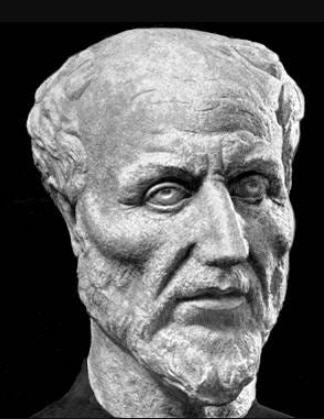
Plotinus |
|
|
Plotinus |
The following is adapted from the Oxf.Dict. of The Christian Church [TIMELINE-4th cent.]
|
PHILO (427-327 BC) [Armstrong 137-157] PLOTINUS (205-270) [Armstrong 195-211/264] PORPHYRY (c.232–c.303) Disciple of Plotinus; sceptical of theurgy [and pagan ritual] in Letter to Anebo [Armstrong 283-301] IAMBLICHUS: (c.250-c.330) advocate of Theurgy, respondent to Porphyry (as Anebo/ Abammon) and influence on Julian [Armstrong 283-301] |
CALCIDIUS: (? c.321) transl into Latin of Plato’s Timaeus [Gersh vol 2, 421-490] JULIAN the APOSTATE (332-363): attempts to rehab. paganism, esp. Mithraism & Magna Mater MARTIANUS Minneus Felix CAPELLA ( fl.c.410–420) De Nuptiis on Educ. & Lib.arts [Gersh vol 2 597-646] MACROBIUS: (? fl.? 419-430 ?) tr. & Comm. on Cicero’s Dream of Scipio [Gersh vol 2 493-557-?593] |
Jn.Scot.ERIUGENA (c.800-c.877), Periphyseon BERNARDUS Silvestris, (c.1080-c.1173) NICHOLAS of Cusa (1401-1464: |
NEOPLATONISM, The philosophical system of Plotinus (c. 205–70) and his successors. The Neoplatonists thought of themselves simply as Platonists, but their thought owes its distinctiveness to the genius of Plotinus and inherits from the Platonists of the early Christian cents. deep religious interests. It was originally centred in Alexandria, later spread to Rome, where Plotinus taught from 244, and thence to the rest of the Roman world. Towards the end of the 4th cent. the Academy in Athens became a centre of Neoplatonism and remained so until it was closed by the Emp. Justinian in 529. The most outstanding representatives of Neoplatonism after Plotinus included Porphyry (c. 232–c. 303; q.v.), Iamblichus (c. 250–330; q.v.), Proclus (410 or 412–85; q.v.), and Damascius (b. c. 480; head of the Academy in 529).
The main formative influences on Neoplatonism are somewhat obscure. Plotinus expresses his special indebtedness to Ammonius Saccas, of whom, however, very little is known. While a sympathetic interest in Platonic doctrines had long existed among religious philosophers, both Jewish (Philo) and Christian (Pantaenus, Clement of Alexandria, Origen), at Alexandria, it is not clear that Plotinus himself drew directly on any of these thinkers. He has closer affinities with some of the later pagan philosophers, esp. Atticus and Albinus (2nd cent. AD) and Numenius of Apamea (c.150–200), a Neo-Pythagorean, for whom Plato was ‘Moses writing Attic Greek’ (Μωυσῆς Ἀττικίζων).
Characteristic of Neoplatonism is[:] [the forms (εἴδη)]
[1] the doctrine of the THREE HYPOSTASES:
the One (τὸ Ἕν), the ultimate unknowable source from which everything that exists emanates;
Intelligence (νοῦς), the realm of perfect intuitive knowledge; (? λόγος)
and Soul (ψυχή), the realm of discursive thought and activity. [world-soul, ψυχὴ τοῦ κόσμου]
[2] EMANATION and RETURN: everything that exists is a balance between these two forces.
The outward movement of emanation (πρόοδος) is met by
the ascending movement of return (ἐπιστροφή), which manifests itself as contemplation:
The contemplative movement of return seeks the One by purification (κάθαρσις),
which for the intellect means a method of abstraction (ἀφαίρεσις),
and finds union with the One in a mystical experience of ecstasy.
The more ardent and thoroughgoing Neoplatonists were necessarily hostile to Christianity, esp. its doctrine of an Incarnation in history and its rejection of the ancient philosophies. On the other hand, Neoplatonist influences gradually made themselves felt on Christian theology. They came in partly from their diffusive impact on the whole of the later Roman world; for outside the circle of its professed adherents it was scarcely possible to distinguish the Neoplatonist elements from those which were Platonist and idealistic in a broader sense. [For the influence of the latter see the entry platonism]. Instances of more specifically Neoplatonist influences in Christianity may be seen in the writings of St Augustine, Synesius, Bp. of Ptolemais, in those of Dionysius the Pseudo-Areopagite (who was esp. dependent on Proclus) and in the medieval thinkers who drew on the ‘Liber de Causis’ (q.v.).
E. R. Dodds, Select Passages Illustrating Neoplatonism (text, 1924; Eng. tr., 1923). T. Whittaker, The Neo-Platonists (1901); P. Merlan, From Platonism to Neoplatonism (The Hague, 1953; 2nd edn., 1960); W. Theiler, Forschungen zum Neuplatonismus (Quellen und Studien zur Geschichte der philosophie, 10; 1966); Le Néoplatonisme: Colloques internationaux du Centre National de la Recherche Scientifique. Sciences humaines (1971); R. T. Wallis, Neo-Platonism (1972). H. J. Blumenthal and R. A. Markus (eds), Neoplatonism and Early Christian Thought: Essays in honour of A. H. Armstrong (1981); Néoplatonisme: Mélanges offerts à Jean Trouillard (Les Cahiers de Fontenay, nos. 19–22; 1981); W. Beierwaltes, Denken des Einen: Studien zur neuplatonischen Philiosophie und ihrer Wirkungsgeschichte (Frankfurt am Main, 1985); A. C. Lloyd, The Anatomy of Neoplatonism (Oxford, 1990). H. D. Saffrey, Recherches sur le Néoplatonisme après Plotin (Histoire des Doctrines de l’Antiquité Classique, 14; 1990 [collection of previously pub. essays]). J. J. Cleary (ed.), The Perennial Tradition of Neoplatonism (Ancient and Medieval Philosophy de Wulf-Mansion Centre, Series I, 24; Leuven, 1997). S. Rappe, Reading Neoplatonism: Non-discursive Thinking in the Texts of Plotinus, Proclus and Damascius (Cambridge, 2000). A. H. Armstrong (ed.), The Cambridge History of Later Greek and Early Medieval Philisophy (Cambridge, 1967), with bibl. P. Hadot in NCE 10 (1967), pp. 334–6, s.v.; S. Lilla in DPAC 2 (1984), cols. 2356–88, s.v.; Eng. tr. in Encyclopedia of the Early Church, 2 (Cambridge, 1992), pp. 585–93.MIDDLE- and NEO-PLATONIST INFLUENCES on CHRISTIANITY :v
PHILO (427-327 BC) [Armstrong 137-157]
PLOTINUS (205-270) [Armstrong 195-211/264]
PORPHYRY (c. 232–c. 303) Disciple of Plotinus; sceptical of theurgy [and pagan ritual] in Letter to Anebo [Armstrong 283-301]
IAMBLICHUS: (c.250-c.330) advocate of Theurgy, respondent to Porphyry (as "Anebo") and influence on Julian [Armstrong 283-301]
CALCIDIUS: (? c.321) transl into Latin of Plato's Timaeus [Gersh vol 2, 421-490]
JULIAN the APOSTATE (332-363): attempts to rehabilitate paganism, esp. Mithraism and Magna Mater
MARTIANUS Minneus Felix CAPELLA ( fl. c. 410–420) De Nuptiis on Education and Liberal arts [Gersh vol 2 597-646]
MACROBIUS: (? fl.? 419-430 ?) transl. and Comm. on Cicero's Dream of Scipio [Gersh vol 2 493-557-?593]
PROCLUS: (410-485) Theurgist and admirer of Julian [Armstrong 302-322]
DIONYSIUS Aer. (c. 500) [Armstrong 457-472]
BERNARDUS Silvestris [1153
MEISTER ECKHART [1320
CLOUD of UNKNOWING [1380
NICHOLAS of Cusa [1401-1464:
|
PHILO (427-327 BC) [Armstrong 137-157] PLOTINUS (205-270) [Armstrong 195-211/264] PORPHYRY (c. 232–c. 303) Disciple of Plotinus; sceptical of theurgy [and pagan ritual] in Letter to Anebo [Armstrong 283-301] IAMBLICHUS: (c.250-c.330) advocate of Theurgy, respondent to Porphyry (as "Anebo") and influence on Julian [Armstrong 283-301] |
CALCIDIUS: (? c.321) transl into Latin of Plato's Timaeus [Gersh vol 2, 421-490] JULIAN the APOSTATE (332-363): attempts to rehabilitate paganism, esp. Mithraism and Magna Mater MARTIANUS Minneus Felix CAPELLA ( fl. c. 410–420) De Nuptiis on Education and Liberal arts [Gersh vol 2 597-646] MACROBIUS: (? fl.? 419-430 ?) transl. and Comm. on Cicero's Dream of Scipio [Gersh vol 2 493-557-?593] |
PROCLUS: (410-485) Theurgist and admirer of Julian [Armstrong 302-322] |
ἀφαίρεσις
apheresis in Plotinus
ἀφαιρ-έω , Ion. ἀπαιρέω , fut. -ήσω: pf. ἀφῄρηκα, Ion. ἀπαραίρηκα: aor. ἀφεῖλον, later inf.
ἀφαίρ-εσις , εως, ἡ,
A.taking away, carrying off, remoual, Pl.Cri.46c (pl.); putting off, “τοῦ θνητοῦ” Hierocl.in CA27p.483M.; opp. πρόσθεσις, Plu.Lyc.13 (pl.).
2. as law-term, assertion of freedom of a reputed slave, Hyp.Fr.23.
3. amputation, Archig. ap. Orib.47.13.4.
II. in Logic, abstraction, ἐξ, δι᾽ ἀφαιρέσεως, Arist.Cael.299a16, EN1142a18; esp. “τὰ ἐξ ἀ.” mathe-matics, Id.AP0.81b3, Metaph.1061a29, al.; opp. ἐκ προσθέσεως, ib. 1077b9; also “τὰ ἐν ἀ. ὄντα” Id.de An.429b18, al.:—Cicero jokes on this term, Att.6.1.2.
2. Gramm., remoual of initial letters, as in σῦς ὗς, Choerob. in Theod.1p.148H., cf. A.D.Pron.55.13, al.; also of medial letters, ib.93.13; of feet in verse, opp. πρόσθεσις, POxy. 220 iii 3.
LAMPE – Patristic Greek Lexicon
ἀφαίρεσις, ἡ, 1. taking away, removal; theol., in negative or ‘apophatic’ theology τὰ μὲν οὖν ἡνωμένα τῆς ὅλης θεότητός ἐστιν τὸ ὑπεράγαθον, κτλ., καὶ ὅσα τῆς ὑπεροχικῆς ἐστιν ἀ. Dion.Ar.d.n.2.3(M.3.640b); τὸν ὑπερούσιον ὑπερουσίως ὑμνῆσαι διὰ τῆς πάντων τῶν ὄντων ἀ. id.myst.2(M.3.1025a); explained ἐνταῦθα δέ, ἀπὸ τῶν ἐσχάτων ἐπὶ τὰ ἀρχικώτατα τὰς ἐπαναβάσεις ποιούμενοι, τὰ πάντα ἀφαιροῦμεν ib.(1025b);
Jo.D.f.o.1.4(M.94.800b); Christol., ref. kenosis τῆς κατὰ ἀ. λαμβανομένης φύσεως ἐκ τοῦ κοινοῦ τῶν ἀνθρώπων Leont.H.monoph.58(M.86.1801b); ref. eternal Logos, ‡Proc.G.Pr.23:5(M.87.1452a) cit. s. ἀποφατικῶς (A); 2. logical negation in gen., species definitionis, quam Graeci κατὰ ἀ. τοῦ ἐναντίου Latini per privantiam contrarii ejus, quod definitur, dicunt, Isid.H.etym.2.29.9; Thal.cent.4.83(M.91.1468a); 3. removal, remission; of sins, Hom.Clem.15.9; 4. of obscuration of moon, Meth.arbitr.2(p.149.16; M.18.244c); 5. loss, Chrys.hom.49.3 in Mt.(7.508e); Gel.Cyz.h.e.2.32.11(M.85.1330).
ἀφαίρεσις. (1961). In G. W. H. Lampe (Ed.), A Patristic Greek Lexicon (p. 273). At The Clarendon Press.
dromena / legomena /deikoumena
In Neoplatonism, the dromenon (Greek for "thing done") refers to the sacred, symbolic actions performed in mystery rituals, distinct from legomena (things said) and deiknumena (things shown). These rituals—often part of theurgic practices—were designed to mimic cosmic movements, purify the soul, and facilitate union (henosis) with the divine, rather than just provide intellectual understanding.
(Greek: δρώμενον, "thing done" or "ritual enactment") appears in the context of late antique, Neoplatonic-influenced, and early Byzantine studies,
In Late Antique Neoplatonism (e.g., Iamblichus), the drōmena are the symbolic and magical acts performed to evoke the presence of the divine, as opposed to legomena (the things said) or deiknumena (the things shown).
Neoplatonic ethics recognizes the
social importance and value of the so-called cardinal virtues (justice,
prudence, temperance, and courage), but the virtues’ main function lies in
purifying and preparing us for a much more momentous individual relationship,
that with divine Consciousness and, ultimately, the first principle itself.
Necessarily, then, the moral precepts of the Neoplatonists concern the
individual person, the goal being not the mundane fulfillment of life within the
bounds of what is humanly possible, but nothing less than eudaimonia in
its most expansive sense, deification. Unsurprisingly, the route to salvation
turned out to be the philosophic life, a sincere and arduous effort of the mind
to return to the One and forever abrogate any concerns for the body. It was on
this basis that the Neoplatonists would most vehemently protest against the
latter-day Christian dogma that human salvation has already been accomplished
vicariously through the life and death of a man revered as the son of god.
https://plato.stanford.edu/archives/win2016/entries/neoplatonism/#:~:text=Neoplatonic%20ethics%20recognizes%20the%20social,as%20the%20son%20of%20god.
This Webpage was created for a workshop held at Saint Andrew's Abbey, Valyermo, California in 1998