|
Evagrius, The Kaffa Lives of the Desert Fathers |
|
|
Evagrius, The Kaffa Lives of the Desert Fathers |
|
|
SAINT NERSESS ARMENIAN SEMINARY: June 4-6, 2026 |
SITTING as A STRANGER: EVAGRIUS in THE DESERT and BEYOND
Second International Conference at St.
Nersess Armenian Seminary
June 4-6, 2026
Fr. Luke’s email: ldysinger@stjohnsem.edu
INTRODUCTION
|
**
[1]
EVAGRIUS
PONTICUS
-
CONTEMPLATIVE
EXEGETE
Biblical Exegesis in the Evagrian Corpus
[1a] Introduction – significance of exegesis – scholia – quantity and incorporation into other Evagrian genres – gnomai (sentences) and kephalaia (chapters);
[1.b] General exegetical orientation - threefold - from Origen (3 wisdom books) and Clement - 4-fold becomes 3-fold [literal sense = ethical esp. in Antirrhetikos]
When the name of Saint Evagrius Ponticus is spoken, one does not immediately think of the practice - or as we might like to think of it today, the “science” - of biblical exegesis. And this is true not only for us, but also for Evagrius’ contemporaries and his spiritual successors, admirers – and enemies. It is his treatises on spiritual guidance that first come to mind, both in antiquity and today. His Praktikos, on Prayer, the treatises on thoughts or temptations, and the sentences for monks and nuns all survive more-or-less in tact in the original Greek – albeit transmitted under various pseudonyms
** COMPARE [briefly or at all?] with CLEMENT citation
[1a.2]
Scholion 15 on Psalm 76:21, SC 615, pp. 66-67
Fourfold-Threefold Exegesis
|
PSALM 76.21: You guided your people like sheep, by the hand of Moses and Aaron. |
76·21 ὡδήγησας ὡς πρόβατα τὸν λαόν σου |
|
Scholion 15. According to Moses, philosophy is divided into four [parts]: |
15. ἡ κατὰ Μωσέα φιλοσοφία τετραχῆ τέμνεται, |
|
[first,] into the historical; |
εἰς τὸ ἱστορικὸν, |
|
and [second,] that properly called the legislative, [“instructive”] (cf. Ex.24:12), which [both] may be [concerned] with specific ethical matters; |
καὶ τὸ κυρίως λεγόμενον νομοθετικὸν, ἅπερ ἂν εἴη τῆς ἠθικῆς πραγματείας ἴδια, |
|
the third is the liturgical, which is the contemplation of nature; |
τὸ τρίτον τε εἰς τὸ ἱερουργικὸν, ὅ ἐστιν ἤδη τῆς φυσικῆς θεωρίας, |
|
and the fourth is [concerned] with the whole expression of theologike. |
καὶ τέταρτον ἐπὶ πᾶσι τὸ θεολογικὸν εἶδος. |
|
We are then to take the law in a certain fourfold sense: [1] as a type of something evident; [2] or as a revealed [visible] sign; [3] or as a commandment instituted for proper living; [4] or fortelling, like a prophecy. By this system, then, did Moses and Aaron lead the people, the people journeying from vice to virtue. |
τετραχῶς δὲ ἡμῖν ἐκληπτέον καὶ τοῦ νόμου τὴν βουλὴν ὡς τύπον τι δηλοῦσαν, ἢ ὡς σημεῖον ἐμφαίνουσαν, ἢ ὡς ἐντολὴν κυροῦσαν εἰς πολιτείαν ὀρθὴν ἢ θεσπίζουσαν ὡς προφητείαν. ταύτῃ τῇ μεθόδῳ Μωϋσῆς καὶ Ἀαρὼν ὁδηγοῦσι τὸν ἀπὸ κακίας ἐπ' ἀρετὴν ὁδεύοντα λαόν. |
|
= CLem. Alex. Strom., 1.28.176, 1-4, Stählin, Früchtel, and Treu (1960), vol. 2, p. 108 |
OVERALL ORIENTATION of PROVERBS and ECCLESIASTES
[1a.1] Scholion 247 On Proverbs 22:40, SC 340, p. 342
|
PROVERBS 22.20 And you are to inscribe them for yourself thrice for counsel and knowledge upon the wideness of your heart. |
22, 20 < καὶ σὺ δὲ ἀπόγραψαι αὐτὰ σεαυτῷ τρισσῶς εἰς βουλὴν καὶ γνῶσιν ἐπὶ τὸ πλάτος τῆς καρδίας σου. > |
| Scholion 247. The one who has widened his heart through purity will understand the logoi of God - those connected with | 247. Ὁ πλατύνας διὰ τῆς καθαρότητος τὴν καρδίαν αὐτοῦ νοήσει τοὺς τοῦ θεοῦ λόγους τούς τε |
|
praktiké, physiké, and theologiké. |
πρακτικοὺς καὶ τοὺς φυσικοὺς καὶ τοὺς θεολογικούς. |
| For all matters which concern the Scriptures, are divided into three parts: | Πᾶσα γὰρ ἡ κατὰ τὴν γραφὴν πραγματεία τέμνεται τριχῶς |
|
ethics, physics, and theology. |
εἰς ἠθικὴν καὶ φυσικὴν καὶ θεολογικήν. |
| And to the first correspond the Proverbs, | Καὶ ἀκολουθεῖ τῇ μὲν πρώτῃ αἱ Παροιμίαι, |
|
to the second Ecclesiastes, |
τῇ δὲ δευτέρᾳ ὁ Ἐκκλησιαστής, |
|
and to the third the Song of Songs. |
τῇ δὲ τρίτῃ τά ῎Ἄσματα τῶν ᾀσμάτων. |
|
|
|
[2]
CONTEMPLATIVE
EXEGESIS
and THE
MICROCOSM
of THE
NOUS
The Ascetical Practice of Virtue
** GNOSTIKOS 18 on EXEGESIS of SELF - look inward Praktike - thumos, epithumia, nous
[2.1] GNOSTIKOS
18 SC 356 (1989), 116-18
Frankenberg Greek
retroversion from Syriac.
Three Levels of Contemplative
Exegesis
|
Gnostikos 18. It is therefore necessary to delve into allegorical and literal passages [of the Scriptures, and understand] whether they pertain to praktiké, physiké, or theologiké. |
<Frb 549> ρκ.̈ δει ημας συνιεναι και τας αλληγοριας των μυστηριων και τα αισθητα ει περι της πρακτικης εισιν η περι της φυσεως η της θεου γνωσεως· |
|
[1] If it pertains to praktiké it is necessary to examine whether it treats |
και ει περι της πρακτικης εννοωμεν |
|
[1a] of thumos and what comes from it, |
ει περι θυμου η περι των εξ αυτου συμφορων |
|
[1b] or rather of epithumia and what follows it, |
η περι επιθυμιων και των αυταις επακολουθουντων |
|
[1c] or of the nous and its movements. |
η περι του νοος και των αυτου κινησεων· |
|
[2] If it is pertains to the physiké, it is necessary to note whether it makes known one of the doctrines concerning nature, and which one. |
ει δε περι των φυσεως δει ημας βλεπειν ειποτε περι των ταξεων {αξιωματων} των φυσεων και περι των τοιουτων σημαινει· |
|
[3] And if it is an allegorical passage concerning theologiké it is necessary to examine as far as possible whether it provides information on the Trinity and whether it is seen [in its] simplicity or as The Unity. |
ει δε περι θεοτητος εστιν αλληγρουμενον ποσως κατα δυναμιν εραυναν· ει δε ͅ περι της αγιας τριαδος γνωριζει και τουτο απλως τροπικως {κατα μετανομασιαν} |
| But if it is none of these, then perhaps it is a simple contemplation or makes known a prophecy. (cf. Prak.89) | ει δε ουδεν τουτων οραμα εστι ψιλον η προφητειαν γνωριζον. |
[3]
CONTEMPLATIVE
EXEGESIS
and THE
MACROCOSM
of THE
UNIVERSE
Exegetical Cosmology
and Eschatology
[3] CONTEMPLATIVE EXEGESIS and the MACROCOSM of the
UNIVERSE
(Cosmology and Eschatology/Cosmic Reunion)
Quote in own text: “looks up from …” to self and world
** READING THE BOOK of GOD -
[3.1]
Scholion 8 on Psalm 138.16. SC 615,
pp. 552-553.
Reading the Book of God
|
PSALM 138.16 (2). And in your book all shall be written |
16[2]. καὶ ἐπὶ τὸ βιβλίον σου πάντες γραφήσονται |
|
Scholion 8. The book of God is the contemplation of bodies and incorporeal [beings] in which the pur[ified] nous comes to be written through knowledge. |
8. Βιβλίον θεοῦ ἐστιν ἡ θεωρία σωμάτων καὶ ἀσωμάτων, ἐν ᾧ πέφυκε διὰ τῆς γνώσεως γράφεσθαι νοῦς καθαρός· |
|
For in this book are written the logoi of providence and judgment, |
ἐν δὲ τούτῳ τῷ βιβλίῳ εἰσὶ γεγραμμένοι καὶ οἱ περὶ προνοίας καὶ κρίσεως λόγοι, |
|
through which book God is known as [:] |
δι' οὗ βιβλίου γινώσκεται ὁ θεὸς |
|
creator, wise, provident, and judging: |
ὡς δημιουργὸς καὶ σοφὸς καὶ προνοητὴς καὶ κριτής· |
|
creator through the things that have come from non-being into being; |
καὶ δημιουργὸς μὲν διὰ τὰ γεγονότα ἀπὸ τοῦ μὴ ὄντος εἰς τὸ εἶναι· |
|
wise through his concealed logoi; |
σοφὸς δὲ διὰ τοὺς ἀποκειμένους λόγους αὐτοῖς· |
|
provident, through what is accomplished for our virtue and knowledge; and furthermore |
προνοητὴς δὲ διὰ τὰ συντελοῦντα πρὸς ἀρετὴν ἡμῖν καὶ γνῶσιν· |
|
judge, through the variety of bodies of the reasoning beings, and through the multiform worlds and the ages they contain.
|
κριτὴς δὲ πάλιν διὰ τὰ διάφορα σώματα τῶν λογικῶν καὶ τοὺς ποικίλους κόσμους καὶ τούς περιέχοντας τούτους αἰῶνας. |
|
|
|
|
|
** MEANING of PROVIDENCE and JUDGMENT:
Providence: ; Judgment
PROVIDENCE
[3.2a] Scholion 7 on Psalm 16:13. SC 614, pp 376-368.
|
PSALM
16:
13
2-3.
deliver
my soul from the ungodly; |
13(2-3)
ῥῦσαι τὴν ψυχήν μου ἀπὸ ἀσεβοῦς, |
|
Scholion 7. [...] And the holy angels are the beneficent hand of God, through whom God providentially cares for the sensible world, which [angels] are opposed by the demons who do not wish all men to be saved and come to knowledge of the truth. (1Tim 2:4) |
7. [..] χεὶρ δὲ εὐεργετικὴ Θεου οἱ ἅγιοι ἄγγελοί εἰσι, δι' ὧν προνοεῖ τοῦ κόσμου τοῦ αἰσθητοῦ, οἷς ἀντίκεινται δαίμονες, βουλόμενοι « πάντας ἄνθρώπους σωθῆναι καὶ εἰς ἐπίγνωσιν ἀληθείας ἐλθεῖν ». |
|
|
[3.2b]
Scholion 38 on Ecclesiastes 5.7. SC 397, p. 128
Angels as Ministers of
Providence
|
ECCLESIASTES 5.7 If you should see the oppression of the poor, and the wresting of judgment and of justice in the land, wonder not at the matter: for [there is] a high one to watch over him that is high, and high ones over them |
5.7 < Ἐὰν συκοφαντίαν πένητος καὶ ἁρπαγὴν κρίματος καὶ δικαιοσύνης ἴδῃς ἐν χώρᾳ, μὴ θαυμάσῃς ἐπὶ τῷ πράγματι· ὅτι ὑψηλὸς ἐπάνω ὑψηλοῦ φυλάσσει καὶ ὑψηλοὶ ἐπ○ αὐτούς. |
|
Scholion 38. [...] Know, rather, that God watches over all through Christ, and the former exerts his providence over all through the holy angels, who have abundant knowledge of those things [which are] on earth. (cf. 2Sam 14:20) |
38. [...] Γίνωσκε γὰρ ὅτι ὁ θεὸς διὰ τοῦ Χριστοῦ φυλάσσει τὰ πάντα καὶ οὗτος πάλιν προνοεῖ πάντων διὰ τῶν ἁγίων ἀγγέλων περισσευομένων ἐν γνώσει τῶν ἐπὶ γῆς. |
|
|
JUDGMENT
[3.3a] Scholion
10 on Psalm 1:5.
SC 614, pp. 279-280
Angelic Judgment versus Darkened
Judgment
|
PSALM 1:5 (1). Therefore the ungodly shall not rise in judgment, nor sinners in the counsel of the just. |
5(1) διὰ τοῦτο οὐκ ἀναστήσονται ἀσεβεῖς ἐν κρίσει [οὐδὲ ἁμαρτωλοὶ ἐν βουλῇ δικαίων·] |
|
Scholion 10. Judgment is for the just the passage from a body for asceticism to an angelic one: but for the ungodly it is the change from a body for asceticism to a darkened and gloomy body. For the ungodly will not be raised in the first judgment, but rather in the second. (formerly sch 8) |
10.Κρίσις ἐστὶ δικαίων μὲν ἡ ἀπὸ πρακτικοῦ σώματος ἐπὶ ἀγγελικὰ μετάβασις, ἀσεβῶν δὲ ἀπὸ πρακτικοῦ σώματος ἐπὶ σκοτεινὰ καὶ ζοφερὰ μετάθεσις σώματα. Ἐγερθήσονται γὰρ οἱ ἀσεβεῖς οὐκ ἐν τῇ προτέρᾳ κρίσει, ἀλλ' ἐν τῇ δευτέρᾳ. [SC 280; cf. PG 12.1097-1100.] Cf. KG 3.48. 2.1097-1100.] |
|
See also: Sch. 275 on Prov. 24.22; KG 2.48; 3.48; 3.50; 3.51. also cf KG 1.11] |
[3.3b]
Scholion 275 on Proverbs 24.22. SC 340, p. 370
Punishment versus Judgment
|
PROVERBS 24, 22 For they will suddenly bring suffering on the impious; and who can know the punishment of them both? |
24,22 < ἐξαίφνης γὰρ τείσονται τοὺς ἀσεβεῖς· τὰς δὲ τιμωρίας ἀμφοτέρων τίς γνώσεται; > |
|
Scholion 275. How, then, can the Savior say in the Gospel: “The Father judges no one, but he has given all judgment to the Son”? (Jn 5:22) [Only] if punishment is one thing and judgment another. |
275. Πῶς οὖν ὁ σωτὴρ ἐν τοῖς εὐαγγελίοις φησίν· < ὁ πατὴρ κρίνει οὐδένα, ἀλλὰ πᾶσαν τὴν κρίσιν δέδωκεν τῷ υἱῳ >; Ἢ ἄλλο μέν ἐστι τιμωρία, ἄλλο δὲ κρίσις. |
|
Punishment is deprivation of [both] apatheia and the knowledge of God together with physical pain; but judgment is the creation of an age which distributes to each of the reasoning beings a body corresponding to its state. |
Καὶ τιμωρία μέν ἐστι στέρησις ἀπαθείας καὶ γνώσεως θεοῦ μετ' ὀδύνης σωματικῆς· κρίσις δέ ἐστιν γένεσις αἰῶνος κατ' ἀναλογίαν ἑκάστῳ τῶν λογικῶν σώματα διανέμοντος. |
|
See also: Sch 10 on Ps 1.5. On Jn 5.22: cf scholia 1 on Ps 16.2; 5 on Ps 49.4; 4 & 4b on Ps 49.6; 8 on Ps 93.15. KG 2.48; 3.48; 3.50; 3.51. also cf KG 1.11;1.65 |
[4]
THE
ALTERNATING
RHYTHM
of
PSALMODY
and
PRAYER
An Ascetical Practice that Encourages Contemplative Exegesis
[4] ALTERNATING RHYTHM of PSALMODY and PRAYER Experiential matrix from which contemplative exegesis arises
Asceticism and Contemplation come together in LITURGICAL RHYTHM
Four of these texts, De oratione 82, 83, 85, and 87 comprise most of a chain consisting of chapters 82-87:
[4.1] On PRAYER, 153 CHAPTERS: §82-85
ΠΕΡΙ ΠΡΟΣΕΥΧΗΣ ΡΝΓ´ ΚΕΦΑΛΛΙΩΝ. SC 589, pp. 298-301
|
|
|
|
82. PRAY: [1] gently and [2] undisturbed, |
ΠΒ´. Προσεύχου ἐπιεικῶς καὶ ἀταράχως |
|
SING PSALMS:
[1]
with understanding
(Ps.46:8) then you will be like the young eagle borne aloft in the heights. |
και <ψάλλε συνετῶς> καὶ εὐρύθμως,
καὶ ἔσῃ ὡς νεοσσὸς ἀετοῦ ἐν ὕψει αἰρόμενος. |
|
|
|
|
83. PSALMODY calms the passions and puts to rest the body’s disharmony; PRAYER arouses the nous to activate its own proper activity. |
ΠΓ´. Ἡ μὲν ψαλμῳδία τὰ πάθη κατευνάζει καὶ τὴν ἀκρασίαν τοῦ σώματος ἠρεμεῖν ἀπεργάζεται· ἡ δὲ προσευχὴ ἐνεργεῖν παρασκευάζει τὸν νοῦν τὴν ἰδίαν ἐνέργειαν. |
|
|
|
|
84. PRAYER is the power befitting the dignity of the nous; it is the nous’ highest and purest power and function. |
ΠΔ´. Προσευχὴ ἐστὶ πρέπουσα ἐνέργεια τῇ ἀξίᾳ τοῦ νου,̂ ἤτοι ἡ κρείττων καὶ εἰλικρινὴς ἐνέργεια αὐτου καὶ χρῆσις. |
|
|
|
|
85. PSALMODY pertains to multiform wisdom; (Eph 3:10) PRAYER is the prelude to immaterial and uniform knowledge. |
ΠΕ´.Ἡ μὲν ψαλμῳδία <τῆς ποικίλης σοφίας> ἐστὶν· ἡ δὲ προσευχὴ προοίμιόν ἐστι τῆς ἀΰλου καὶ αποικίλου γνώσεως. |
|
|
|
[perhaps do not include this text on “undistracted” prayer and psalmody]
The fifth text in which Evagrius contrasts psalmody and prayer is from the Praktikos:
ζθ´. Μέγα μὲν τὸ ἀπερισπάστως προσεύχεσθαι, μεῖζον δὲ τὸ καὶ ψάλλειν ἀπερισπάστως.[10]
69. A great thing - to pray without distraction; a greater thing still - to sing psalms without distraction. [Evagrius, Praktikos 69, SC 171, p. 652.]
POSSIBLE LINK with Neoplatonic notion:
Evagrius has contrast/movement
between ATTENTION (prosoché) [to richly-diverse wisdom] of creation (and
self)
and [PURE] PRAYER / ABSTRACTION
[[NEOPLATONIC
notion of “ABSTRACTION”
Simplification and creation of shorter forms – from scholia to gnomai
search for ἀφαιρ έω ἀφαίρεσις; lemma includes ἀφεῖλ - εν
(Luk 22:50 BGT)
ἀφέλ -
-ωμαι
(Rom 11:27 BGT)
[Clement uses as “abstraction” in Strom 5.11-12 in apophatic spir exercise]
[2] EMANATION and RETURN: everything that exists is a balance between these two forces.
The outward movement of emanation (πρόοδος) is met by
the ascending movement of return (ἐπιστροφή), which manifests itself as contemplation:
The contemplative movement of return seeks the One by purification (κάθαρσις),
which for the intellect means a method of abstraction (ἀφαίρεσις),
and finds union with the One in a mystical experience of ecstasy.
[1] Evagrius, Gnostikos 18; SC 356 (1989), 116-18.
[2] Evagrius, scholion 247 On Proverbs 22:40, SC 340, p. 342.
[3] Evagrius, scholion 247 On Proverbs 22:40, SC 340, p. 342.
[4] Evagrius, scholion 15 on Psalm 76:21 (cf. Pitra 76:21, vol. 3, p. 109).
[5] Evagrius, scholion 8 on Psalm 138.16 (cf. PG 12.1662).
[6] Evagrius, scholion 7 on Psalm 16:13, (= Pitra 16:13, vol. 2, p. 470; cf. PG 12.1221).
[7] Evagrius, scholion 38 on Ecclesiastes 5:7-11, SC 397, p. 128.
[8] Evagrius, scholion 8 on Psalm 1:5(1) (cf. PG 12.1097-1100).
[9] Evagrius, Scholion 275 on Proverbs 24:22, SC 340, p. 370.
[10] Evagrius, Praktikos 69, SC 171, p. 652.
RHYTHMS
of
EXEGESIS
and
SPIRITUAL
PROGRESS
|
SPIRITUAL PROGRESS |
EXEGESIS |
EXEGESIS |
| PURIFICATION | ETHICS | MORAL |
| ILLUMINATION | PHYSICS | ALLEGORICAL |
| UNION | ENOPTICS | ANAGOGICAL |
EVAGRIUS’ MODEL of SPIRITUAL ASCENT
|
ἡ πρακτική Praktiké ASCETICAL PRACTICE |
ἡ γνωστική = ἡ θεωρητική Gnostiké (= Theoretiké) CONTEMPLATIVE KNOWLEDGE |
|
|
elimination
of vices |
ἡ
φυσική Contemplation |
ἡ
θεωλογική Theologiké Knowledge |
SEVERAL participants have asked about spiritual practices that may be undertaken between our conferences. For those who wish, these might include using the psalms in prayer in the Divine Office (Liturgy of the Hours) and/or praying the Sacred Scriptures in the monastic tradition of lectio divina.IF you would like to hear and see the form of the Divine Office we celebrate at Valyermo, Abbot Damien has made six of our offices available at the Recorded Prayers tab on the Abbey website, (https://www.saintandrewsabbey.com).
WITH
regard to the practice of lectio divina, please explore the articles
downloadable from the section on
lectio divina accessible from the
Bibliography link on the navigation panel to the left. Feel free,
also, to explore the Lectio Divina link on the navigation panel.
Biblical texts and patristic writings used at Mass and the Divine Office
(which are excellent matter for lectio divina) may be found at the
Universalis Website
(https://www.universalis.com/USA/0/mass.htm).
|
CONFERENCE
TOPICS
READING THE SOUL’S JOURNEY TO GOD With the Desert Fathers and Mothers
In this
RELATED
THEMES
RHYTHMS of LIFE and PRAYER
THE APOPHATIC and KATAPHATIC WAYS
CHRISTIAN SPIRITUAL PRACTICES
CONTEMPLATION and MEDITATION
MONOLOGISTIC PRAYER
MONASTIC PSALMODY and SUNG PRAYER
LECTIO DIVINA
SACRED IMAGES
TEMPERAMENT and SPIRITUAL PRACTICE
EXEGESIS of SACRED SCRIPTURE and of THE SELF
CONTEMPLATION and COMMUNITY in BASIL
|
|
Labor
During the Four Seasons |
|
|
|
|
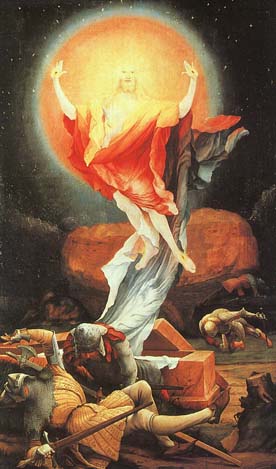
Resurrection, Grunewald |
|
|
AND yet the Incarnation requires us to embrace as well the kataphatic “Way of Affirmation” which proclaims the absolute necessity and value of images, words, and concepts in our relationship with the Word made flesh.-
|
|
Abbess Giving a Spiritual Conference |
|
|
|
|
THE KATAPHATIC TRADITION (The Way of Affirmation)
[COMPLEX
VARIETY; MULTIPLE
IMAGES; LIGHT; LITERATURE;
POETRY; HYMNODY]
PUBLIC WORSHIP Sacramental & Scriptural Focus Vernacular Psalmody Liturgy of the Hours Ritual Chant Taizé, Gregorian Chant
PRIVATE DEVOTION Icon-Meditation, Litanies, Stations of the Cross; The Rosary
DISCURSIVE MEDITATION Ignatian, Sulpician, Salesian
DISCERNMENT RETREAT Ignatian Spirituality
|
THE APOPHATIC TRADITION (The Way of Negation) [SIMPLICITY, ABSENCE of IMAGES; DARKNESS; WORDLESS INTUITION; HUMILITY]
MONOLOGISTIC (Private-) PRAYER
The
Jesus Prayer (Hesychasm)
The prayer of the Cloud of Unknowing
“Centering
Prayer”
“Christian Mantra”
“Christian Zen”
“ABANDONMENT
to
|
|
LECTIO DIVINA (Contemplative praying of the Scriptures) LITURGICAL PRAYER with SILENCES |
|
|
St. Benedict and Servandus contemplate the universe in a single ray of light |
|
NAVIGATION BAR LINKS: CONTEMPLATION; MEDITATION
CONTEMPLATION (Latin contemplatio/contemplare; Greek theōria/theōreō: θεωρία/θεωρέω). Literally, beholding, seeing. For Plato and the Christian authors from the third century onwards it describes a deep, mystical perception by the nous or deepest part of the soul (the image of God), a beholding of the underlying meanings or purposes of God hidden beneath surface appearance. In the New Testament the noun is used only once, together with the verb in Luke 23:49, of the crowds who have beheld (theōrountes/ θεωροῦντες) the spectacle (theōria/θεωρία) of the crucifixion of Christ.
MEDITATION (Latin meditatio/meditare, Greek melétē/meletáō: μελέτη/μελετάω). In the Septuagint (Greek version of the Old Testament) it is used frequently in the context of “meditating on the law” in the sense of study, practice, repeating to one’s self in order to memorize. In classical Greek it meant “care, attention”, practice, exercise, and repetition, rehearsal by an orator of his speech. See also the 1989 Document of the Congregation for the Doctrine of the Faith: On Some Aspects of Christian Meditation.
|
|
|
Hermit Monks at Prayer |
|
DURING the next eight hundred years this practice is only occasionally alluded to in the spiritual literature of East and West. It blossoms into prominence in the high middle ages in the West as the paternoster and rosary prayers, and in the East as the Jesus Prayer; and detailed descriptions and commentaries abound from the fourteenth century to the present. See also the 1989 document of the Congregation for the Doctrine of the Faith: On Some Aspects of Christian Meditation.
|
|
|
|
NAVIG.BAR: LITURG.CONTEMPL.; PSALMODY / SONG
CHRISTIAN poems and hymns are found in the New Testament. Together with the antiphons that precede and follow the psalms in Gregorian chant, these musical icons are the distilled contemplative experience of our Christian forbears, transformed into poetry and music.
|
|
|
|
|
|
|
|
|
|
Moses Receives The Law; Byzantine Icon |
|
|
|
|
The Four Qualities and Humors |
|
|
|
|
|
|
CHRISTIANITY
ADAPTED
THE
TRIPARTITE
MODEL
of THE
SOUL
SUGGESTED by
PLATO
|
3) VIRTUES AND VICES of the TRIPARTITE SOUL |
|
“All these kingdoms are mine [says the devil] … worship me and I will give them to you.” (Mt 4:9; Lk 4:6-7)
“You
shall worship the Lord your God, and him only shall you serve”. |
THE
LOGISTIKON
Reasoning, Contemplative Self
|
VIRTUES |
MIND (Reason) nous / logos / intellectus |
VICES |
|
understanding
|
|
vainglory
|
THE
PATHETIKON
Feeling Self, Subject to Emotions
|
DESIRE |
STRENGTH |
| VIRTUES |
VICES |
VIRTUES |
VICES |
|
abstinence temperance almsgiving |
gluttony |
courage endurance zeal enthusiasm |
cowardice |
|
“Command these stones to become bread.”(Mt 4:3; Lk 4:3) Man shall not live by bread alone, but by every word that proceeds from the mouth of God.(Mt 4:4; Lk. 4:4) |
“Throw yourself down from here.” (Mt 4:6; Lk 4:9) You shall not tempt the Lord your God. (Mt. 4:7; Lk 4:12) |
|
|
|
4) VIRTUE
AS BALANCE
(mean / midpoint) |
|
[vice of] EXCESS |
[virtuous] MEAN |
[vice
of] |
[A] With regard to feelings of Fear and Confidence:
|
Rashness |
Courage |
Cowardice |
|
|
▲ |
|
[B] With regard to Pleasures and Pains:
|
Self-Indulgence |
Temperance |
Insensibility |
|
|
▲ |
|
[C] With regard to Truth:
|
Boastfulness |
Truthfulness |
False Modesty |
|
|
▲ |
|
THE German-British psychologist Hans Jürgen Eysenck (1916 – 1997) proposed a theory of personality based on biological factors that has subsequently become influential. He believed that individuals inherit a type of nervous system that affects their ability to learn and adapt to the environment.
|
|
|
St. Jerome, Teaching |
|
|
SKILL in this textual art enables the practitioner to look up from the Sacred Text and apply this technique to the perception of and interaction with other human beings. Both the innermost self and the neighbor can thus increasingly bee seen as bearing the Divine Image.
|
|
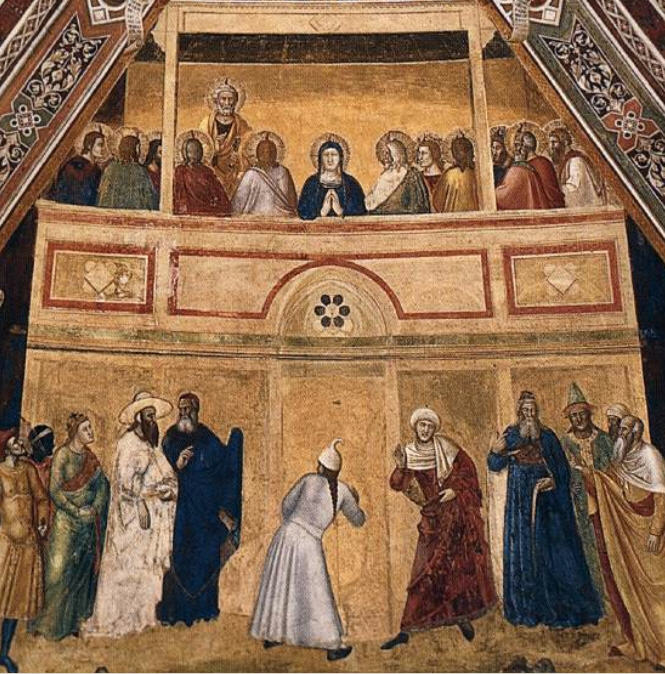
Pentecost, De Firenze, 1536 |
|
|
|
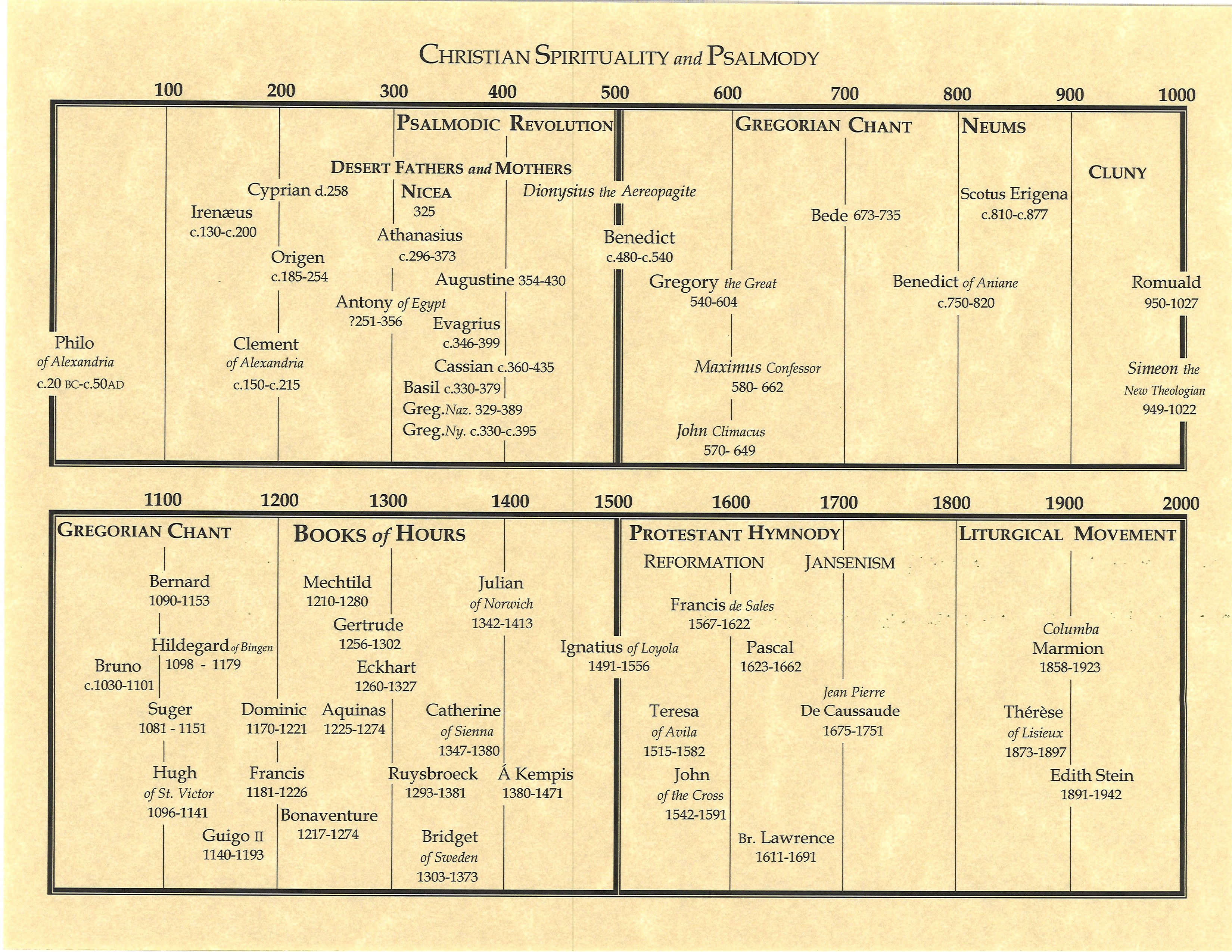
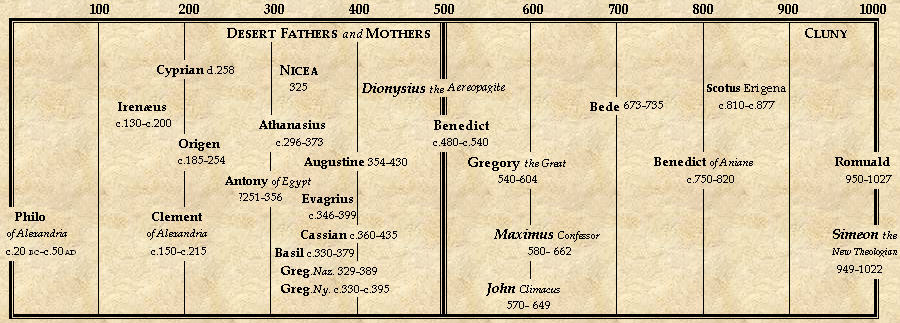
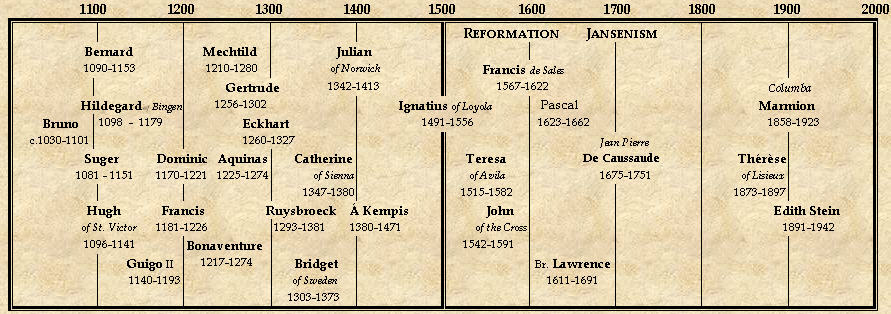
TIMELINES
CHRISTIAN SPIRITUALITY
|
|
|
|
This Webpage was created for a workshop held at Saint Andrew's Abbey, Valyermo, California in 2003