|
|
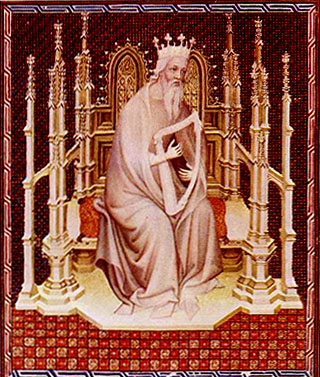
David, Med. illum MS. |
|
|
David, Med. illum MS. |
Translation
by Luke Dysinger,
O.S.B.
(translation in public domain)
MS-doc
Greek text based on Migne (PG), Pitra (AS),
and the collation of M.-J. Rondeau:
MS.
Vat.Gr.754.[1]
|
PSALM 13 |
[SC 354] |
|
1 They are corrupt, and have become abominable in their actions. 1. If they corrupt themselves in their actions, it is not the vile thought that corrupts someone, but the result of that thought. |
1. Διεφθάρησαν καὶ ἐβδελύχθησαν ἐν ἐπιτηδεύμασι, 1. Εἰ ἐν τοῖς ἐπιτηδεύμασι διαφθείρονται, οὐχ ἡ φαύλη ἔννοια τινὰ διαφθείρει , ἀλλὰ τὸ ταύτης ἀποτέλεσμα τῆς ἐννοίας . [SC 354] |
|
v.3. . and the way of peace they have not known: there is no fear of God before their eyes 2. “I am the way” (Jn.14:6) says the Savior, and He is our peace. (Eph 2.14) |
3 Καὶ ὁδὸν εἰρήνης οὐκ ἔγνωσαν, οὐκ ἔστι φόβος Θεοῦ ἀπέναντι τῶν ὀφθαλμῶν αὐτῶν. 2.Ἐγώ εἰμι ἡ ὁδὸς, φησὶν ὁ Σωτὴρ, καὶ αὐτός ἐστιν εἰρήνη ἡμῶν. [SC 356] |
|
3. Through the fear of the Lord all turn from vice (Pr 15.27). |
3. Τῷ γὰρ φόβῳ Κυρίου ἐκκλίνει πᾶς ἀπὸ κακοῦ. [SC 354] |
|
v.4 They eat up my people as though they eat bread. 4. In [the sense of] “evildoers draw near me to devour my flesh.”(Ps.26:2) |
4.2 Οἱ κατεσθίοντες τὸν λαόν μου βρώσει ἄρτου τὸν κύριον οὐκ ἐπεκαλέσαντο 4 Ἐν τῷ ἐγγίζειν ἐπ' ἐμὲ κακοῦντας τοῦ φαγεῖν τὰς σάρκας μου. [SC 356] |
|
6 You have confounded the counsel of the poor man, but the Lord is his hope. 5. For the Lord became poor for our sake, when he was rich, so that we, through his poverty, might become rich. (2Cor 8.9) |
6 Βουλὴν πτωχοῦ κατῃσχύνατε, ὅτι Κύριος ἐλπὶς αὐτοῦ ἐστι. 5 Δι' ἡμᾶς γὰρ ἐπτώχευσεν ὁ Κύριος, πλούσιος ὢν, ἵν' ἡμεῖς τῇ ἐκείνου πτωχείᾳ πλουτίσωμεν. [SC 356] |
|
v.7 Who shall give out of Zion the salvation of Israel? 6. ‘And the deliverer shall come for Zion's sake, and shall turn away ungodliness from Jacob.’ (Ro 11.26; Is 59:20) If the savior comes from Zion, and if he also comes forth and comes forth from the Father (Jn 8.42); then Zion is here a symbol of the Father. [Zion=Trinity KG 6.49] |
7(1). τίς δώσει ἐκ Σιὼν τὸ σωτήριον τοῦἸσραήλ; 6 «ἥξει ἐκ Σιὼν ὁ ῥυόμενος, ἀποστρέψει ἀσεβείας ἀπὸἸακώβ.» Εἰ δὲ ἐκ Σιὼν ἔρχεται ὁ Σωτὴρ, αὐτὸς δὲ ἐκ τοῦ Πατρὸς ἐξῆλθεν καὶ ἧκεν, ἡ Σιὼν νῦν σύμβολόν ἐστι τοῦ Πατρός. (SC 358; cf PG 12.1205) |
|
7.
When the Lord brings back his people from captivity 7. Captivity is the involuntary passage from knowledge and virtue to vice and ignorance. And just as the ascetical practitioner is glad when he has acquired apatheia, so the knower rejoices when he has been judged worthy of contemplation. |
7(2-3) ἐν τῷ ἐπιστρέψαι κύριον τὴν αἰχμαλωσίαν τοῦ λαοῦ αὐτοῦ ἀγαλλιάσθω Ἰακὼβ καὶ εὐφρανθήτω Ἰσραήλ 7 Αἰχμαλωσία ἐστὶν ἡ ἀπὸ γνώσεως καὶ ἀρετῆς ἐπὶ κακίαν καὶ ἀγνωσίαν ἀκούσιος μετάβασις· καὶ ἀγαλλιᾶται μὲν ὁ πρακτικὸς ἀπάθειαν κτησάμενος, εὐφραίνεται δὲ ὁ γνωστικὸς θεωρίας καταξιωθείς. [SC 358] |
|
PSALM 14 |
[SC 360] |
|
1. And who will pitch his tent on your holy mountain? 1. The holy mountain is the knowledge of Christ, that is to say the contemplation of beings. |
1. καὶ τίς κατασκηνώσει ἐν τῷ ὄρει τῷ ἁγίῳ σου, 1. Ὄρος ἅγιόν ἐστιν ἡ γνῶσις τοῦ Χριστοῦ, ἥτις ἐστὶ θεωρία τῶν γεγονότων. [SC 360] |
|
v. 2. He who walks blamelessly and works justice. 2. Insofar as he works justice, so he also [works] temperance and courage and love, and the other virtues. |
2(1). πορευόμενος ἄμωμος, καὶ ἐργαζόμενος δικαιοσύνην 2. ὥσπερ ἐργάζεται τις δικαιοσύνην, οὕτω και σωφροσύνην καὶ ἀνδρείαν καὶ ἀγάπην καὶ τὰς λοιπὰς ἀρετάς. [SC 360; cf PG 12.1208) |
|
3(3). And he did not consent to insult his relatives 3. The one who leads an irreproachable life does not consent to insult those dearest to him. |
3.3 καὶ ὀνειδισμὸν οὐκ ἔλαβεν ἐπὶ τοὺς ἔγγιστα αὐτοῦ 3. Ο ἀνεπιλήπτως βιοὺς ὀνειδισμὸν οὐ λαμβάνει ἐπὶ τοὺς ἔγγιστα αὐτοῦ. [SC 362] |
|
5(1). His money he has not given in usury. 4. This is to be said to the usurers as a constraint for those in the “dwelling place on the holy mountain.” (Ps. 14:1) |
5(1) τὸ ἀργύριον αὐτοῦ οὐκ ἔδωκεν ἐπὶ τόκῳ 4. Τοῦτο λεκτέον πρὸς τοὺς τοκιστὰς ὡς κωλυτικὸν τῆς ἐν τῷ ἁγίῳ ὄρει κατασκηνώσεως. [SC 362; =Pitra 14:5[1]] |
|
PSALM 15 |
[SC 362] |
|
[15.] 1-2 Keep me, O Lord, for I have hoped in you. I said to the Lord, “You are my Lord, for you have no need of my goodness.” 1. If all virtues are good things and knowledge requires virtues, then knowledge requires all good things. And perhaps he called good things the intermediate things whose proper use makes us good: us and not God, for Job says: If we have received good things from the hand of the Lord, why not endure the bad ones? (Jb 2.10) For in this passage he calls good the things we have that become good as a result of their beautiful (kalos) use. |
1-2 Εἶπα τῷ Κυρίῳ· Κύριός μου εἶ σὺ, ὅτι τῶν ἀγαθῶν μου οὐ χρείαν ἔχεις, 1. Εἰ ἀγαθὰ πᾶσαι αἱ ἀρεταὶ, τῶν δὲ ἀρετῶν χρῄζει ἡ γνῶσις, τῶν ἀγαθῶν ἄρα πάντων χρῄζει ἡ γνῶσις. Καὶ μήποτε ἀγαθὰ εἴρηκεν τὰ μέσα ὧν ἡ δικαία χρῆσις ἡμᾶς ἀγαθοὺς καὶ οὐ τὸν θεὸν ἀπεργάζεται. Εἰ γὰρ τὰ ἀγαθὰ , φησὶν Ἰὼβ, ἐδεξάμεθα ἐκ χειρὸς κυρίου, τὰ κακὰ οὐχ ὑποίσομεν; Ἐνταῦθα γὰρ ἀγαθὰ τὰ ὑπάρχοντα ὠνόμασεν, ἅπερ παρὰ τὴν χρῆσιν τὴν καλὴν γίνεται ἀγαθά. [SC 364] |
|
[15.] 5. The Lord is my inheritance and my portion 2. The inheritance of reasoning nature is the contemplation of the worlds/ages that have been and will be; the inheritance of Christ is the knowledge of God. |
5. Κύριος ἡ μερὶς τῆς κληρονομίας μου καὶ τοῦ ποτηρίου μου· 2. Κληρονομία ἐστὶ φύσεως λογικῆς ἡ θεωρία τῶν γεγονότων καὶ γενησομένων αἰώνων· κληρονομία δὲ Χριστοῦ ἐστιν ἡ γνῶσις ἡ τοῦ Θεοῦ. [SC 364] |
|
[15.] 6(1). The cords have fallen for me among the strongest 3. If the cord is a measure, how is it written in the Gospel according to John: God does not give the gift of the Spirit according to measure, (Jn 3.34) and also: I pour out my Spirit? (Ac 2.17) Unless the measure is not designated in relation to knowledge itself, but in relation to the one who receives it, because he is not capable of receiving more knowledge. And indeed rain is not measurable itself, but it is measured in the containers that collect it. |
6. Σχοινία ἐπέπεσάν μοι ἐν τοῖς κρατίστοις 3. Εἰ τὸ σχοινίον μέτρον ἐστί, πῶς γέγραπται ἐν τῷ κατὰ Ἰωάννην εὐαγγελίῳ τὸ οὐ γὰρ ἐκ μέτρου δίδωσιν ὁ θεὸς τὸ πνεῦμα καὶ τὸ ἐκχεῶ ἀπὸ τοῦ πνεύματός μου; Ἢ τάχα τὸ μέτρον οὐ πρὸς τὴν γνῶσιν αὐτὴν ὀνομάζεται, ἀλλ' πρὸς τὸν ὑποδεχόμενον αὐτὴν τῷ μὴ εἶναι αὐτὸν μείζονος γνώσεως δεκτικόν· καὶ γὰρ αὐτὸς ὁ ὑετὸς ἀμέτρητος μέν ἐστιν , μετρεῖται δὲ ἐν τοῖς ὑποδεχομένοις αὐτὸν ἀγγείοις. [SC 366] |
|
[15.] 9(1). That is why my heart rejoiced 4. Instead of, my nous, the Sacred Scripture has the habit of using the heart in place of the nous, as in this saying of the Apostle: Because one believes with the heart to obtain justice, we confess with the lips to obtain salvation (Rom 10.10). It is the nous that believes and which also discerns the words, according to Job (Jb 12.11). |
9. Διὰ τοῦτο ηὐφράνθη ἡ καρδία μου 4. Ἀντὶ τοῦ ὁ νοῦς μου· ἔθος γὰρ τῇ θείᾳ γραφῇ ἀντὶ τοῦ νοῦ τὴν καρδίαν λαμβάνειν κατὰ τὸ ὑπὸ τοῦ ἀποστόλου· Καρδίᾳ γὰρ πιστεύεται εἰς δικαιοσύνην, στόματι δὲ ὁμολογεῖται εἰς σωτηρίαν . Νοῦς δέ ἐστιν ὁ πιστεύων, ὅστις καὶ ῥήματα διακρίνει κατὰ τὸν Ἰώβ. [SC 366] |
|
[15.] 9(2). And my glory exulted 5. He now calls the gift of the Holy Spirit “glory”, for it is said: My glory and he who lifts my head up to the Lord (Ps 3.4); For the Lord is the Spirit, as the Apostle also says (2Cor 3.17). |
9(2). καὶ ἠγαλλιάσατο ἡ δόξα μου 5. Δόξαν νῦν λέγει τὸ χάρισμα τοῦ ἁγίου πνεύματος· Δόξα μου γάρ, φησί, καὶ ὑψῶν τὴν κεφαλήν μου πρὸς τὸν κύριον. Ὁ δὲ κύριος τὸ πνεῦμά ἐστι, ὡς καὶ ὁ ἀπόστολός φησιν. [SC 368] |
|
[15.] 9(3). And also my flesh, too, will rest in hope 6. Instead of my life-force [empsuchosis cf. Sch 4 on Ps 25.6]. For this is what Job also says: You have clothed me with flesh and made me fat (Jb 10.11). |
9(3). ἔτι δὲ καὶ ἡ σάρξ μου κατασκηνώσει ἐπ' ἐλπίδι 6. Ἀντὶ τοῦ ἐμψύχωσίς μου· τοῦτο γὰρ καὶ ὁ Ἰώβ φησι· Σάρκα με καὶ κρέας ἐνέδυσας . [SC 368] |
|
[15.] 10. Because you will not forsake my soul in Hades and you will not let your holy one see corruption. 7. Peter in the Acts of the Apostles applies this to our Savior (cf Ac 2.27). Investigate whether it is necessary to relate the whole psalm to Christ, because of the verse: But still until night, my kidneys instructed me (PS 15.7), and because of: The cords have fallen for me (Ps 15.6) and so on. |
10. ὅτι οὐκ ἐγκαταλείψεις τὴν ψυχήν μου εἰς ᾅδην Οὐδὲ δώσεις τὸν ὅσιόν σου ἰδεῖν διαφθορὰν, [SC 3 ] 7. Τοῦτο Πέτρος ἐν ταῖς Πράξεσιν τῶν ἀποστόλων ἐπὶ τοῦ σωτῆρος ἡμῶν λαμβάνει. Ζητήσεις δὲ εἰ ὅλον τὸν ψαλμὸν ἐφαρμόσαι δεῖ τῷ Χριστῷ, διὰ τὸ ἔτι δὲ καὶ ἕως νυκτὸς ἐπαίδευσάν με οἱ νεφροί μου καὶ διὰ τὸ σχοινία ἐπέπεσόν μοι καὶ τὰ ἑξῆς . [SC 370] |
|
PSALM 16 |
[SC 370-379] |
|
[16.] 2(1). From your face may my judgment come forth 1. If the Father has entrusted all the judgment to the Son (Jn 5.22) and if the judgment comes forth from His face, then judgment comes forth from His Son, for He is the image of the Father (cf 2Cor 4.4; Col 1.15). |
2.1. Ἐκ προσώπου σου τὸ κρῖμα μου ἐξέλθοι 1. Εἰ πᾶσαν τὴν κρίσιν ἔδωκεν ὁ πατὴρ τῷ υἱῷ, ἐκ δὲ τοῦ προσώπου αὐτοῦ τὸ κρίμα ἐξέρχεται, ἐκ τοῦ υἱοῦ αὐτοῦ ἄρα τὸ κρίμα ἐξέρχεται · εἰκὼν γάρ ἐστι τοῦ πατρὸς. [SC 370] |
|
[16.] 3(1). You tested my heart, you inspected the night 2. If tribulation produces patient endurance and patient endurance testing, (Rom 5.3-4) then tribulation produces testing. But if we are tested at night, night means tribulation, in which the oppressed reasoning soul is in darkness. |
3.1 Εδοκίμασας τὴν καρδίαν μου, ἐπεσκέψω νυκτός. 2. Εἰ ἡ θλῖψις ὑπομονὴν κατεργάζεται, ἡ δὲ ὑπομονὴ δοκιμήν , ἡ θλῖψις ἄρα δοκιμὴν κατεργάζεται. Εἰ δὲ τὴν δοκιμὴν ἐν νυκτὶ διδόαμεν , ἡ νὺξ ἐνταῦθα τὴν θλῖψιν σημαίνει, ἐν ᾗ σκοτοῦται πιεζομένη ψυχὴ λογική. [SC 372] |
|
[16.] 4(2) for the sake of the words of your lips, I have kept hard ways. 3. Enter by the narrow gate and the constricted way (Mt 7.14), that is through the praktike, which for the present seems to produce pain rather than joy, but later the fruits of righteousness to those who have been trained thereby (cf. Heb.12.11). |
4(2). διὰ τοὺς λόγους τῶν χειλέων σου ἐγὼ ἐφύλαξα ὁδοὺς σκληρὰς 3. «εἰσέλθετε διὰ τῆς στενῆς πύλης καὶ τεθλιμμένης ὁδοῦ,» τουτέστι διὰ τῆς πρακτικῆς, ἥτις δοκεῖ πρὸς τὸ παρὸν ὀδύνης καὶ οὐ χαρᾶς εἶναι πρόξενος, ὕστερον μέντοι καρποὺς δικαιοσύνης ἀποδίδωσι τοῖς δι' αὐτῆς γεγυμνασμένοις. (SC 372; cf. P16.3(2) |
|
[16.] 10(1) they have shut up their fat: 4. The intelligible fat is the coarseness which, on account of vices, descends upon the hegemonikon. [= KG 4.36] |
10(1) τὸ στέαρ αὐτῶν συνέκλεισαν 4. στέαρ ἐστὶ νοητὸν ἡ ἐκ τῆς κακίας τῷ ἡγεμονικῷ παχύτης ἐπισυμβαίνουσα. [SC 374; cf PG 12.1221] |
|
[16.] 11. chasing me, now they have surrounded me 5. Demons surround the one whose virtue they cast out. This is why the Scriptures properly say: If a spirit of him who has authority comes up against you, do not leave your place, and: Do not give way to evil'. It is as if to say: “If a spirit of lust rises against you, do not forsake your temperance” and “if it is a spirit of hatred that rises against you, do not forsake your charity”. But we must ask ourselves whether it is the one who has lost all the virtues who is surrounded, or the one who has lost several, or the one who has lost only one. And whether the vices are interdependent on each other, as are also the virtues; [whether] the one who has lost only one virtue is surrounded. But if the vices are not interdependent on each other, it is not the one out of whom a virtue has been driven out who is encircled, but the one who has been encircled by all. Or perhaps: whatever virtue one loses, one is surrounded by the vice which is opposed to it. |
11. Ἐκβαλόντες με νυνὶ περιεκύκλωσάν με 5. Τοῦτον κυκλοῦσιν οἱ δαίμονες ὃν ἐκβάλλουσι τῆς ἀρετῆς· διὸ καλῶς λέγεται τό ἐὰν πνεῦμα τοῦ ἐξουσιάζοντος ἀναβῇ ἐπὶ σὲ, τόπον σου μὴ ἀφῇς καὶ τό μὴ δότε τόπον τῷ πονηρῷ , ὡσεὶ ἔλεγεν· ἐὰν πνεῦμα πορνείας ἀναβῇ ἐπὶ σέ, σωφροσύνην σου μὴ ἀφῇς· καὶ πνεῦμα μίσους ἐὰν ἀναβῇ ἐπὶ σέ, ἀγάπην σου μὴ ἀφῇς. Πλὴν προσεκτέον πότερον ὁ ἀπὸ πασῶν τῶν ἀρετῶν ἐκπεσὼν κυκλοῦται ἢ ἀπὸ πολλῶν ἢ ἀπὸ μιᾶς. Καὶ ἐὰν μὲν ἀντακολουθῶσιν ἀλλήλαις αἱ κακίαι ὥσπερ καὶ αἱ ἀρεταί, ὁ ἀπὸ μιᾶς ἐκπεσὼν ἀρετῆς κυκλοῦται· ἐὰν δὲ μὴ ἀντακολουθῶσιν ἀλλήλαις αἱ κακίαι, οὐχ ὁ ἀπὸ μιᾶς ἐκβληθεὶς ἀρετῆς κυκλοῦται, ἀλλ' ὁ ἀπὸ πασῶν. Ἢ τάχα ἧστινός τις ἀρετῆς ἐκπίπτει ὑπὸ τῆς ἀντικειμένης ταύτῃ κακίας κυκλοῦται. [SC 374;] |
|
[16.] 12. They attracted me like a lion ready to hunt 6. It is by unclean thought that the lion opposed to us attracts our intellect. |
12. Ὑπέλαβόν με ὡσεὶ λέων ἕτοιμος εἰς θήραν 6. Διὰ τοῦ ἀκαθάρτου λογισμοῦ ὑπολαμβάνει τὸν νοῦν ἡμῶν ὁ ἀντικείμενος ἡμῖν λέων [SC 376] |
|
[16.]
13. deliver
my soul from the ungodly; 7.
Just as Job says to the
power of God’s hand striking him: Let your hand, it reads,
not distress me; (cf. Job 9:34 & 33:7)
so it is with the
enemies of the beneficent hand of God, which David calls
the sword of God. |
13(2-3)
ῥῦσαι τὴν ψυχήν μου ἀπὸ ἀσεβοῦς, 7. ὥσπερ τὴν πλήξασαν αὐτὸν δύναμιν ὁ Ἰὼβ χεῖρα λέγει Θεοῦ, « ἡ χείρ γὰρ σου,» φησὶν, « μή με στροβείτω », οὕτω καὶ τοὺς ἐχθροὺς τῆς εὐεργετικῆς χειρὸς τοῦ Θεοῦ καλεῖ ὁ Δαυὶδ ῥομφαίαν Θεου· χεὶρ δὲ εὐεργετικὴ Θεου οἱ ἅγιοι ἄγγελοί εἰσι, δι' ὧν προνοεῖ τοῦ κόσμου τοῦ αἰσθητοῦ, οἷς ἀντίκεινται δαίμονες, βουλόμενοι « πάντας ἄνθρώπους σωθῆναι καὶ εἰς ἐπίγνωσιν ἀληθείας ἐλθεῖν ». [SC 376-8; ;cf PG 12.1221] |
|
[16.] 14(5). And their belly was filled with your hidden things 8. Instead of: “with uncleanness.” |
14.5. καὶ ἀφῆκαν τὰ κατάλοιπα τοῖς νηπίοις αὐτῶν, 8. ἀντὶ τοῦ, ἀκαθαρσίας. |
|
[16.] 14(4-5). They were satisfied with sons and they left the remains for their little ones 9. For not only did they themselves become unclean, but they also passed on their uncleanness to their children. |
14.4-5 Εχορτάσθησαν υἱῶν, καὶ ἀφῆκαν τὰ κατάλοιπα τοῖς νηπίοις αὐτῶν, 9. Οὐ μόνον γὰρ αὑτοὶ ἀκάθαρτοι γεγόνασιν, ἀλλὰ γὰρ καὶ τοῖς τέκνοις αὐτῶν τῆς ἀκαθαρσίας μετέδωκαν. |
|
[SC 380-405] |
|
|
[17.] 2-3. I will love you, Lord my strength 1. Through loving we come to know Love and through what is just, Justice, for like is known by like. |
2-3. Ἀγαπήσω σε, κύριε, ἡ ἰσχύς μου 1. Διὰ τῆς ἀγάπης τὴν ἀγάπην ἐπιγινώσκομεν καὶ τοῦ δικαίου τὴν δικαιοσύνην· ἐκ γὰρ τοῦ ὁμοίου τὸ ὅμοιον ἐπιγινώσκεται. |
|
[17.] 5(1). The pains of death surrounded me 2. The pains of death are either those [pains] that give birth to death, or those that were conceived by death, which will be the last enemy to be destroyed, as Paul proclaimed (1 Cor 15.26). |
5(1). Περιέσχον με ὠδῖνες θανάτου 2. Ὠδῖνες θανάτου ἤτοι αἱ τὸν θάνατον τικτοῦσαι ἢ αἱ συνειλημμέναι ἐκ τοῦ θανάτου, ὅστις ἔσχατος ἐχθρὸς καταργηθησόμενος ὑπὸ Παύλου κεκήρυκται. |
|
[17.] 5(2). And the torrents of iniquity have troubled me. 3. The torrents of iniquity are criminal thoughts; but these are also themselves called “pains” when they persist in us, and again “traps” when they make us die through the action of sin. |
5(2). καὶ χείμαρροι ἀνομίας ἐξετάραξάν με 6 ὠδῖνες ᾅδου περιεκύκλωσάν με, προέφθασάν με παγίδες θανάτου 3. Χείμαρροι ἀνομίας εἰσιν οἱ παράνομοι λογισμοί· οὗτοι δὲ καὶ αὐτοὶ καὶ ὠδῖνες καλοῦνται χρονίζοντες ἐν ἡμῖν καὶ πάλιν παγίδες θανατοῦντες ἡμᾶς διὰ τῆς κατ' ἐνέργειαν ἁμαρτίας. |
|
7(3). he heard my voice from his holy temple 4. Temple of God is the Christ, while Temple of Christ are the noetic and holy powers. And Christ is therefore said to be seated on the throne of David His father. (Lk 1.32; cf. Ps 131.11) |
[17.v.] 7(3). ἤκουσεν ἐκ ναοῦ ἁγίου αὐτοῦ τῆς φωνῆς μου 4. Ναὸς μὲν θεοῦ ὁ Χριστός, ναὸς δὲ Χριστοῦ αἱ νοεραὶ καὶ ἅγιαι δυνάμεις. Διὸ καὶ ὁ Χριστὸς νῦν καθέζεσθαι λέγεται ἐπὶ θρόνου Δαυὶδ τοῦ πατρὸς αὐτοῦ . [PG12.1225-1228] |
|
9(2)1. And fire has been kindled from his face 5. Consuming wood, hay, straw (1Cor 3.12), that is to say consuming (Heb 12.29, Dt 4.24) the wicked states. Thus He he once completely consumed Matthew (cf.Mt.10.3), who was a tax collector, and Paul the persecutor and insultor (1Tim 1.13). |
9(2). καὶ πῦρ ἀπὸ προσώπου αὐτοῦ κατεφλόγισεν 5. Κατακαῖον ξύλα, χόρτον, καλάμην , τουτέστιν τὰς ἕξεις καταναλίσκον τὰς μοχθηράς . Οὕτω κατέκαυσέ ποτε τελώνην μὲν ὄντα τὸν Ματθαῖον, Παῦλον δὲ διώκτην καὶ ὑβριστήν |
|
[17.] 11(1). And He embarked upon the cherubim and took flight 6. God dwells and walks among holy men (2Cor 6.16), but he takes flight among the cherubim. |
11(1). καὶ ἐπέβη ἐπὶ Χερουβὶμ καὶ ἐπετάσθη 6. Ὁ θεὸς ἐν μὲν τοῖς ἁγίοις ἀνθρώποις ἐνοικεῖ καὶ ἐμπεριπατεῖ , ἵπταται δὲ ἐν τοῖς Χερουβίμ.. |
|
[17.] 12. And he made darkness his concealment: round about him was his tent, dark water in the clouds of the air 7. It is because He made darkness His concealment and round about him was his tent that the water is darkened that is in the clouds, that is to say among the prophets. For He has said: I will command the clouds not to bring down on them the rain (Is 5.6), and: There will be a famine, not a famine of bread, but a famine of hearing the word of the Lord (Amos 8.11). |
12. Καὶ ἔθετο σκότος ἀποκρυφὴν αὐτοῦ, κύκλῳ αὐτοῦ ἡ σκηνὴ αὐτοῦ· σκοτεινὸν ὕδωρ ἐν νεφέλαις ἀέρων 7. Ἐπειδὴ ἔθετο σκότος ἀποκρυφὴν αὐτοῦ καὶ ἔστη κύκλῳ αὐτοῦ ἡ σκηνὴ αὐτοῦ, διὰ τοῦτο σκοτεινόν ἐστι τὸ ὕδωρ τὸ ἐν ταῖς νεφέλαις , τουτέστι τὸ ἐν τοῖς προφήταις· Ἐντελοῦμαι γάρ, φησίν , ταῖς νεφέλαις τοῦ μὴ βρέξαι ἐπ' αὐτοὺς ὑετὸν καὶ ἔσται λιμός, οὐ λιμὸς ἄρτου, ἀλλὰ λιμὸς τοῦ ἀκοῦσαι λόγον κυρίου . |
| But if our God is light (1Jn 1.5), how is He hidden by darkness? I think he is hidden by darkness in the same way that an object of knowledge is hidden by ignorance, which is said in relation to the knowing subject and not in relation to the object of knowledge. He called the flesh in which Christ sat His tent (cf Jn 1.14). |
Εἰ δὲ ὁ θεὸς ἡμῶν φῶς ἐστι, πῶς καλύπτεται σκότει; Οἶμαι δὲ αὐτὸν οὕτω καλύπτεσθαι σκότει ὡς καὶ τῇ ἀγνοίᾳ τὸ γινωσκόμενον καλύπτεται , ἥτις ὡς πρὸς τὸν γινώσκοντα καὶ οὐ πρὸς τὸ γινωσκόμενον λέγεται. Σκηνὴν δὲ αὐτοῦ τὴν σάρκα ὠνόμασεν ἐν ᾗ Χριστὸς ἐκαθέζετο. |
|
He did well to speak of tent, because of the transitory nature of the incarnation: for it is said: If we have known Christ according to the flesh, we regard him thus no longer (2Cor 5.16). Or perhaps he called the body tent, because of the vine He brought from Egypt (Ps 79.9) in order to keep it until its cluster ripens and prevent it being ravaged by the boar of the forest (Ps 79.14). |
Εὖ δὲ καὶ τὸ φάναι σκηνὴν διὰ τὸ πρόσκαιρον τῆς σαρκώσεως· Εἰ γὰρ ἐγνώκαμεν , φησί, Χριστὸν κατὰ σάρκα, ἀλλὰ νῦν οὐκέτι γινώσκομεν . Ἢ τάχα σκηνὴν τὸ σῶμα ὠνόμασεν διὰ τὴν ἄμπελον ἣν ἐξ Αἰγύπτου μετῆρεν ἵνα φυλάξῃ αὐτὴν ἄχρις οὗ πεπανθῇ ὁ βότρυς αὐτῆς καὶ μὴ λυμήνηται αὐτὴν ὗς ἐκ δρυμοῦ . |
| It is possible that he also calls tent the corporeal nature in which God is seen by means of logoi, if it is true that it is from the beauty of creatures that one analogically contemplates the author of the work (PsSol 13.5), and that it is through his creatures that we see him noetically (cf Rom 1.20) |
Δύναται δὲ σκηνὴν λέγειν καὶ τὴν σωματικὴν φύσιν ἐν ᾗ θεὸς διὰ τῶν λόγων ὁρᾶται, εἴγε ἐκ καλλονῆς κτισμάτων ἀναλόγως ὁ γενεσιουργὸς θεωρεῖται καὶ διὰ τῶν ποιημάτων νοούμενος καθορᾶται. |
|
[17.] 15(2). And he multiplied the lightning-flashes and he cast them into confusion 8. When we compare spiritual things with spiritual (1Cor 2.13), we produce the lightning-flashes that reveal the knowledge that comes from them. |
15-2 καὶ ἀστραπὰς ἐπλήθυνε καὶ συνετάραξεν αὐτούς 8. Ὅτε πνευματικὰ πνευματικοῖς συγκρίνομεν , τότε ποιοῦμεν τὰς ἀστραπὰς τὴν ἀπ' αὐτῶν γνῶσιν ἐκφαίνοντες. |
|
[17.] 16(1). And the springs of the waters appeared 9. He calls virtues springs of water, for from them comes forth knowledge; for it is said, Blessed are the pure of heart, for they shall see God (Mt 5.8). |
16-1 καὶ ὤφθησαν αἱ πηγαὶ τῶν ὑδάτων 9. Πηγὰς ὑδάτων λέγει τὰς ἀρετὰς· ἐκ γὰρ τούτων ἐξέρχεται γνῶσις· Μακάριοι γὰρ, φησίν, οἱ καθαροὶ τῇ καρδίᾳ, ὅτι αὐτοὶ τὸν θεὸν ὄψονται . |
|
[17.] 16(2). And the foundations of the inhabited earth were unveiled 10. For no one can lay any foundation other than that which is found, that is to say, Christ (1Cor 3.11). |
17:16(2) καὶ ἀνεκαλύφθη τὰ θεμέλια τῆς οἰκουμένης 10. Θεμέλιον γὰρ ἄλλον οὐδεὶς δύναται θεῖναι παρὰ τὸν κείμενον ὅς ἐστι Χριστός. [VG 754] |
|
[17.] 18.1.1. He will deliver me from my mighty enemies 11. By this we learn that the demons were stronger than us before the coming of our Savior, but that now we have become stronger than them, for the Lord has given us to trample on serpents and scorpions and on all the power of the Enemies (Lk 10.19). |
18.1. 1 Ῥύσεταί με ἐξ ἐχθρῶν μου δυνατῶν 11. Ἐντεῦθεν γινώσκομεν ὅτι ἰσχυρότεροι ἡμῶν ἦσαν πρὸ τῆς ἐπιδημίας τοῦ σωτῆρος ἡμῶν οἱ δαίμονες, νυνὶ δὲ γεγόναμεν ἡμεῖς αὐτῶν ἰσχυρότεροι· ἔδωκεν γὰρ ἡμῖν ὁ κύριος πατεῖν ἐπάνω ὄφεων καὶ σκορπίων καὶ ἐπὶ πᾶσαν τὴν δύναμιν τοῦ ἐχθροῦ . |
|
[17.] 21.2. And according to the cleanliness of my hands, he will recompense me 12. The cleanliness of the hands is the impassibility of the soul which comes from the grace of God and the zeal of man. |
21.2. καὶ κατὰ τὴν καθαριότητα τῶν χειρῶν μου ἀνταποδώσει μοι 12. Καθαριότης χειρῶν ἐστιν ἀπάθεια ψυχῆς ἐκ χάριτος, προσγινομένη θεοῦ καὶ σπουδῆς τοῦ ἀνθρώπου. |
|
[17.] 24.1. And I will be blameless with him 13. He is blameless who has the way of God in him, that is to say Christ, for he said: I am the way (Jn 14.6). David also called this way “blameless”, saying: Lord, your way is blameless (Ps 17.31). |
24.1. καὶ ἔσομαι ἄμωμος μετ' αὐτοῦ 13 Ἄμωμός ἐστιν ὁ ἔχων ἐν ἑαυτῷ τὴν ὁδὸν τοῦ Θεοῦ, ἥτις ἐστὶν ὁ Χριστός· Ἐγὼ γὰρ εἰμι , φησίν, ἡ ὁδός . Ἄμωμον δὲ τὴν ὁδὸν ταύτην καὶ αὐτὸς ὁ Δαυὶδ ὠνόμασε λέγων· Κύριε , ἄμωμος ἡ ὁδός σου . |
|
13b.+ Only one who is with God can be blameless. |
13b. Μόνος ὁ μετὰ θεοῦ ὢν δύναται ἄμωμος εἶναι. |
|
[17.] 1. And the Lord will recompense me according to my righteousness 14. In the measure you measure, so in return will it be measured out to you (Lk 6.38). This word is characteristic of the saints who can say with full assurance: Reward your servant (Ps 118.17). |
25.1. Καὶ ἀνταποδώσει μοι Κύριος κατὰ τὴν δικαιοσύνην μου, 14«Ἐν ᾧ μέτρῳ μετρεῖτε ἀντιμετρηθήσεται ὑμῖν . Ἁγίων δὲ αὕτη ἡ φωνὴ τῶν διὰ πολλὴν παρρησίαν δυναμένων λέγειν· Ἀνταπόδος τῷ δούλῳ σου .» |
|
[17.] 26-27. With the saint you will be sanctified, with the innocent man you will be innocent, with the chosen one you will be chosen and with the crooked you will be devious 15. In the holy [ones] God is holy, in the innocent innocent, in the elect chosen, and with the crooked he is not crooked: but in a favorable sense it may be said that he is crooked with them, because [the text] is careful not to say that God was crooked. The simple often apply these verses to men. God becomes crooked in the same way he says in Deuteronomy: If you come to me perversely, I too will come in anger to you perversely (Lv 26.23-24.27-28). |
26-27. Μετὰ ὁσίου ὁσιωθήσῃ, καὶ μετὰ ἀνδρὸς ἀθώου ἀθῶος ἔσῃ, καὶ μετὰ ἐκλεκτοῦ ἐκλεκτὸς ἔσῃ, καὶ μετὰ στρεβλοῦ διαστρέψεις, 15. Ἐν μὲν τοῖς ὁσίοις ὅσιός ἐστιν ὁ θεὸς, ἐν δὲ τοῖς ἀθῴοις ἀθῷος , ἐν δὲ τοῖς ἐκλεκτοῖς ἐκλεκτός, ἐν δὲ τοῖς στρεβλοῖς οὐ στρεβλὸς ἀλλὰ συστρεβλούμενος αὐτοῖς διὰ τὸ εὔφημον· στρεβλὸν γὰρ εἰπεῖν τὸν θεὸν ἐφυλάξατο. Τούτους τοὺς στίχους οἱ ἁπλούστεροι ἐπὶ τῶν ἀνθρώπων πολλάκις λαμβάνουσιν. Οὕτω δὲ συστρεβλοῦται θεὸς ὡς ἐν τῷ Δευτερονομίῳ λέγει· Ἐὰν εἰσελεύσησθε πρός με πλάγιοι, εἰσελεύσομαι κἀγὼ πρὸς ὑμᾶς ἐν θυμῷ πλαγίῳ . |
|
[17.] 17.29. Because you will light my lamp, Lord; my God, you will enlighten my darkness 16. The lamp of the body is the eye. If therefore the light which is in you is darkness, how great is the darkness (Mt 6.22; Lk 11.34)! Now it calls the nous "lamp", because it is made to receive light, that is to say knowledge: for it is said, Enlighten them with the light of knowledge (Hos 10.12), and it calls "body" the irascible and concupiscible parts, which are not able to receive knowledge. [cf Sch 1 on Ps 25.2] |
17:29 ὅτι σὺ φωτιεῖς λύχνον μου, κύριε, ὁ θεός μου, φωτιεῖς τὸ σκότος μου
16.
ὁ λύχνος τοῦ σώματός ἐστιν ὁ ὀφθαλμός
· καὶ εἰ οὖν τὸ ἐν σοὶ φῶς σκότος ἐστί, τὸ σκότος πόσον. λύχνον
|
|
[17.] 34. (Him) who arranges my feet like those of a deer and that makes me stand on the heights 17. The deer destroys the snakes. One's feet are arranged like those of a deer in [ascetical] practice, but he is lifted high in contemplation. |
34. ὁ καταρτιζόμενος τοὺς πόδας μου ὡς ἐλάφου καὶ ἐπὶ τὰ ὑψηλὰ ἱστῶν με 17´. Ἡ ἔλαφος ἀναιρεῖ τοὺς ὄφεις . Καταρτίζονταί τινος οἱ πόδες ὡσεὶ ἐλάφου διὰ τῆς πρακτικῆς· ὑψοῦνται δὲ διὰ τῆς θεωρίας. |
|
[17.] 35.2. And you made my arms a bronze bow 18. Bronze is the symbol of [ascetical] practice, for Ezekiel said to Jerusalem: You have destroyed your bronze (Ex 16.36). |
35.2 καὶ ἔθου τόξον χαλκοῦν τοὺς βραχίονάς μου, 18. Ὁ χαλκὸς σύμβολόν ἐστι πρακτικῆς· Διέφθειρες γάρ, φησί, τὸν χαλκόν σου , Ἰεζεκιὴλ πρὸς τὴν Ἱερουσαλήμ. |
|
[17.]
v.36
(2-4). Your
right hand has helped me 19. The one seated at the right [hand] of the Father (Song 14.23) - this one is called right [hand]; and by the first training he corrects us, while by the second he teaches us. For proper conduct raises up the soul, while true knowledge widens it. [cf. KG 2.89] |
36 (2)-37(1). καὶ ἡ δεξιά σου ἀντελάβετό μου καὶ ἡ παιδεία σου ἀνώρθωσέ με εἰς τέλος καὶ ἡ παιδεία σου αὐτή με διδάξει Επλάτυνας τὰ διαβήματά μου ὑποκάτω μου, 19.ὁ ἐν δεξιᾷ καθήμενος τοῦ πατρὸς, οὗτος καλεῖται δεξιά. καὶ διὰ μὲν τῆς προτέρας παιδείας ἡμᾶς ἀνορθοῖ, διὰ δὲ τῆς δευτέρας διδάσκει. πολιτεία γὰρ ὀρθὴ ἀνίστησι ψυχὴν, γνῶσις δὲ ἀληθὴς πλατύνει αὐτήν. [PG 12.1237] |
|
20. The [text] your education - she will instruct me is from Theodοtiοn, instead of what is said in the Septuagint: And your education made me upright unto the end.] |
20. [τὸ καὶ ἡ παιδεία σου αὕτη με διδάξει Θεοδοτίωνός ἐστιν. Ἀντὶ τοῦ καὶ ἡ παιδεία σου ἀνώρθωσέν με εἰς τέλος εἰρημένου τοῖς ο´.] |
|
[17.] 38-39. I will pursue my enemies and dash them to pieces 21. He pursues his enemies who does not allow passionate thoughts to form in him, for sins come to us from them. |
38-39. Καταδιώξω τοὺς ἐχθρούς μου, καὶ καταλήψομαι αὐτοὺς 21. Οὗτος καταδιώκει τοὺς ἐχθροὺς, ὁ μὴ ἐῶν ἐμπαθεῖς ἐν ἀυτῷ γίνεσθαι λογισμούς· ἀπὸ γὰρ τούτων ἐπισυμβαίνουσιν ἡμῖν αἱ ἁμαρτίαι. |
|
[17.] 39(1). I will make an end of them and they will not be able to stand 22. The making an end of enemies is brought about by impassibility. |
39 1 ἐκθλίψω αὐτούς, καὶ οὐ μὴ δύνωνται στῆναι 22. Ἔκλειψιν τῶν ἐχθρῶν ἡ ἀπάθεια κατεργάζεται. |
|
[17.] 41.1. You made me see my enemies from behind 23. Enemies show their backs when they can no longer cast passionate thoughts into the soul. |
41.1. Καὶ τοὺς ἐχθρούς μου ἔδωκάς μοι νῶτον 23. Νῶτον [1240] διδόασιν οἱ ἐχθροὶ, μηκέτι λογισμοὺς ἐμπαθεῖς ἐμβαλεῖν δυνάμενοι τῇ ψυχῇ. |
|
[17.] 46. Foreign sons have grown old and they limped out of their way 24. How long will you stumble along on both your feet? (3Ki 18.21) Paths of men of action and contemplation. |
46. υἱοὶ ἀλλότριοι ἐπαλαιώθησαν καὶ ἐχώλαναν ἀπὸ τῶν τρίβων αὐτῶν 24. «Ἕως πότε ὑμεῖς χωλανεῖτε ἐπ' ἀμφοτέραις ταῖς ἰγνύαις ὑμῶν;» Τρίβοι δὲ ἀνθρώπων πρᾶξις καὶ θεωρία. |
|
24(2). And (you) who subdued the peoples under me 24.b. [Behold I have given you power to walk over snakes and scorpions and over all the power of the enemy] (Lk 10.19).] |
24.2(b) [ Ἰδοῦ δέδωκα ὑμῖν τὴν ἐξουσίαν πατεῖν ἐπάνω ὄφεων καὶ σκορπίων καὶ ἐπὶ πᾶσαν τὴν δύναμιν τοῦ ἐχθροῦ .] |
|
[17.] 49(1). The one who delivers me from my angry enemies 25. In those in whom thumos dominates, in them there is also anger (orgé). But if our enemies are angry, then our enemies have the character of thumos, for it is said: Their thumos is like that of the snake (Ps 57.5), and: When their irascibility becomes angry with us (Ps 123.3). |
49. ὁ ῥύστης μου ἐξ ἐχθρῶν μου ὀργίλων 25. Ἐν οἷς θυμὸς ἐπικρατεῖ, ἐν τούτοις καὶ ὀργιλότης. Εἰ δὲ ἐχθροὶ ἡμῶν ὀργίλοι εἰσίν , οἱ ἐχθροὶ ἡμῶν ἄρα θυμώδεις εἰσίν · Θυμὸς γὰρ αὐτοῖς , φησίν , κατὰ τὴν ὁμοίωσιν τοῦ ὄφεως καὶ ἐν τῷ ὀργισθῆναι τὸν θυμὸν αὐτῶν ἐφ' ἡμᾶς . |
|
[SC 406-411] |
|
|
2.1. The heavens proclaim the glory of God 1. If the heavens proclaim the glory of God and the heavens will pass away - for it is is written: The heavens will be pass away, but you will remain (Ps 101.27) - then those who proclaim the glory of God will pass away. And yet none of those who proclaim the glory of God will pass away - for God says, I will glorify those who glorify me (1Ki 2.30) - so the heavens will not pass away. But the heavens that proclaim the glory of God are the noetic natures, that are called “heavens” because they have the Sun of justice within them (Mal 3.30); while the heavens that disappear are those of corporeal essence. [cf KG 1.20; 3.52, 4.29] |
2.1. Οἱ οὐρανοὶ διηγοῦνται δόξαν Θεοῦ. 1. Εἰ οἱ οὐρανοὶ διηγοῦνται δόξαν θεοῦ, οἱ δὲ οὐρανοὶ ἀπολοῦνται — οἱ οὐρανοὶ γάρ, φησίν, ἀπολοῦνται, σὺ δὲ διαμένεις —, οἱ διηγούμενοι ἄρα τὴν δόξαν τοῦ θεοῦ ἀπολοῦνται. Ἀλλὰ μὴν οὐδεὶς διηγούμενος τὴν δόξαν τοῦ θεοῦ ἀπολεῖται — τοὺς γὰρ δοξάζοντάς με , φησὶν ὁ θεος, δοξάσω —, οὐκ ἄρα οἱ οὐρανοὶ ἀπολοῦνται. Ἀλλ' οἱ μὲν διηγούμενοι οὐρανοὶ τὴν δόξαν τοῦ θεοῦ τῆς νοερᾶς εἰσι φύσεως, οὐρανοὶ λεγόμενοι διὰ τὸ ἔχειν ἐν ἑαυτοῖς τὸν τῆς δικαιοσύνης ἥλιον , οἱ δὲ ἀπολλύμενοι οὐρανοὶ τῆς σωματικῆς εἰσιν οὐσίας. |
|
5-6. He has pitched his tent in the sun, and He is like the bridegroom coming forth from his bridal chamber 2. If our Lord is the Sun of justice (Mal 3.20) and the Father has dwelt in him, for he said: The Father who dwells in me performs the[se] works (Jn 14.10), the Apostle was right to say: God was in Christ reconciling the world to Himself (2Cor 15.19). But Christ is also the bridegroom , for He said: He who has the bride is the bridegroom (Jn 3.29) [cf KG 4.29]. |
5-6. Εν τῷ ἡλίῳ ἔθετο τὸ σκήνωμα αὐτου· [6] καὶ αὐτὸς ὡς νυμφίος ἐκπορευόμενος ἐκ παστοῦ αὐτου. 2. Εἰ ὁ Κύριος ἡμῶν ἥλιος τῆς δικαιοσύνης ἐστὶν, ἐν τούτῷ δὲ κατεσκήνωσεν ὁ Πατὴρ «̔Ο Πατὴρ γάρ, φησίν, ἐν ἐμοὶ μένων ποιεῖ τὰ ἔργα», καλῶς εἴρηκεν ὁ Ἀπόστολος ὅτι «Θεὸς ἦν ἐν Χριστῷ κόσμον καταλλάσσων ἑαυτῳ ». Ἀλλὰ καὶ νυμφίος ἐστὶν ὁ Χριστός· «̔Ο γὰρ ἔχων, φησὶν, τὴν νύμφην νυμφίος ἐστιν». |
|
7. And there is none who will escape its heat 3. For he said, I have come to cast fire upon the earth (Lk 12.49). [cf Sch.278 on Pr 24.22] |
7 . Καὶ οὐκ ἐστὶν ὃς ἀποκρυβήσεται τὴν θέρμην αὐτοῦ. 3. Πῦρ γὰρ φησίν, ἦλθον βαλεῖν ἐπὶ τὴν γῆν. [VG 754] |
|
8. The law of the Lord is blameless converting souls 4. It is necessary to investigate whether it converts from vices to virtue or from sensible [things] to intelligible [ones]. And it may be the second, for it is in the nature of a command to do the first. |
8. Ὁ νόμος τοῦ Κυρίου ἄμωμος, ἐπιστρέφων ψυχάς· 4. Ζητητέον πότερον ἀπὸ κακίας ἐπιστρέφων ἐπὶ τὴν ἀρετὴν, ἢ ἀπὸ τῶν αἰσθητῶν ἐπὶ τὰ νοητά· καὶ τάχα τὸ δεύτερον· τὸ γὰρ πρότερον, ἡ ἐντολὴ πέφυκεν ποιεῖν |
|
9. The fear of the Lord is pure, abiding from age to age 5. Purity is the abstention from faults. This is also why fear is said to be “pure”, since it makes [us] pure, for it is through the fear of the Lord that each one turns away from evil (Prov.15:27). But just as [this] fear is eternal, so it also makes eternal those to whom it comes. |
9. Ὁ φόβος Κυρίου ἁγνὸς, διαμένων εἰς αἰῶνα αἰῶνος. 5. Ἁγνεία ἐστὶν ἁμαρτημάτων ἀποχὴ. Διὸ καὶ ἁγνὸς εἴρηται ὁ φόβος, ὡς ἁγνοὺς ποιῶν· « τῷ γὰρ φόβῳ Κυρίου ἐκκλίνει πᾶς ἀπὸ κακοῦ. » Αἰώνιος δὲ ὢν ὁ φόβος, ἐν οἷς ἂν ἐγγένηται καὶ αὐτοὺς αἰωνίους ποιεῖ. |
|
[SC 412-415] |
|
|
4(1-2). May he remember all your sacrifice and your burned offering be fattened 1. Unreasoning animals are fattened to be sacrificed and offered as a burnt offering, but reasoning [beings] are fattened after having been offered as a burnt offering, if it is true that they are considered worthy of knowledge after the purification wrought by holy fire. |
4.1-2 Μνησθείη πάσης θυσίας σου, καὶ τὸ [1248] ὁλοκαυτωμά σου πιανάτω 1. Τὰ μὲν ἄλογα ζῶα πιαινόμενα θύεται καὶ ὁλοκαυτοῦται, τὰ δὲ λογικὰ μετὰ τὸ ὁλοκαυτωθῆναι πιαίνεται, εἴγε μετὰ τὴν ἐκ τοῦ ἁγίου πυρὸς κάθαρσιν καταξιοῦται γνώσεως |
|
6.1. We will rejoice in your salvation 2. Men rejoice in riches, glory, or good birth, but the saint [rejoices] in the salvation of God. |
6.1. Ἀγαλλιασόμεθα ἐν τῷ σωτηρίῳ σου, 2. Οἱ μὲν ἄνθρωποι ἐν πλούτῳ ἀγαλλιῶσιν ἢ ἐν δόξῃ ἢ ἐν εὐγενείᾳ, ὁ δὲ ἅγιος ἐν τῷ σωτηρίῳ τοῦ Θεοῦ. |
|
6-7. May the Lord fulfill all your requests 3. The Lord fulfills requests, but not bad requests. |
6-7. Πληρώσαι Κύριος πάντα τὰ αἰτήματά σου, 3. Πληροῖ κύριος τὰ αἰτήματα, οὐ τὰ κακὰ αἰτήματα.. |
|
8. Some glory in chariots, and some in horses: but we will glory in the name of the Lord our God. 4. The adversaries attack us with malice, but we confront them with the knowledge of Christ. |
8. οὗτοι ἐν ἅρμασιν καὶ οὗτοι ἐν ἵπποις, ἡμεῖς δὲ ἐν ὀνόματι κυρίου θεοῦ ἡμῶν μεγαλυνθησόμεθα 4. Οἱ μὲν ἀντικείμενοι μετὰ τῆς κακίας ἡμῖν ἐφορμῶσιν· ἡμεῖς δὲ μετὰ τῆς Χριστοῦ γνώσεως αὐτοῖς ἀπαντῶμεν |
|
|
|
|
4(2). You placed a crown of precious stone upon his head. 1. [The] crown of Christ [is] God; [the] crown of reasoning natures [is] Christ. |
4. Ἔθηκας ἐπὶ τὴν κεφαλὴν αὐτοῦ στέφανον ἐκ λίθου τιμίου, 1. Στέφανος μὲν Χριστοῦ ὁ θεὸς, στέφανος δὲ τῆς λογικῆς φύσεως ὁ Χριστός. |
|
9. Let your hand be found by all your enemies, let your right find all those who hate you 2. The enemies of God find him, but those who hate him are found by him. And by the Law we find God, but by the gospels we are found by Him. Or: by practice we find him, but by knowledge we are found by him - we who were formerly enemies, strangers to the covenants of God, having neither hope nor God in this world. (Eph 2.12) |
9. Εὑρεθείη ἡ χείρ σου πᾶσι τοῖς ἐχθροῖς σου, ἡ δεξιά σου εὕροι πάντας τοὺς μισοῦντάς σε. 2. Οἱ μὲν ἐχθροὶ τοῦ θεοῦ εὑρίσκουσιν αὐτὸν· οἱ δὲ μισοῦντες αὐτὸν εὑρίσκονται ὑπ ' αὐτοῦ. Καὶ διὰ μὲν τοῦ νόμου εὑρίσκομεν θεόν, διὰ δὲ τῶν εὐαγγελίων εὑρισκόμεθα ὑπ' αὐτοῦ. Ἢ διὰ πρακτικῆς μὲν εὑρίσκομεν αὐτόν, διὰ δὲ γνώσεως εὑρισκόμεθα ὑπ ' αὐτοῦ, ἐχθροὶ ὄντες τὸ πρότερον καὶ ξένοι τῶν διαθηκῶν τοῦ θεοῦ, ἐλπίδα μὴ ἔχοντες καὶ ἄθεοι ἐν τῷ κόσμῳ . |
|
10(3). And fire will devour them 3. Since they are wood, hay, straw. (1Cor 3.12) [cf Sch 5 on Ps 17.9] |
10.3. καὶ καταφάγεται αὐτοὺς πῦρ 3. ἐπειδή εἰσι ξύλα, χόρτος, καλάμη. |
|
11. You will destroy their fruit from the earth, and their seed from among the sons of men 4. It is beneficial to be deprived of sins and evil concepts, for the seed of sin is an evil [tempting-] thought. |
11. Τὸν καρπὸν αὐτῶν ἀπὸ γῆς ἀπολεῖς, καὶ τὸ σπέρμα αὐτῶν ἀπὸ υἱῶν ἀνθρώπων, 4. Εὐεργεσία ἐστὶν ἁμαρτιῶν ἐκπεσεῖν καὶ ἐννοιῶν πονηρῶν· σπέρμα γὰρ ἁμαρτίας λογισμὸς πονηρός. |
|
12. For they have bent down evils towards you 5. We bend down when we move against nature |
12. Ὅτι ἔκλιναν εἰς σὲ κακὰ 5. Τότε κλινόμεθα, ὅταν παρὰ φύσιν κινούμεθα. |
|
[SC 418] |
|
|
2(2). The words of my failings are far from my salvation, 1. It is as if to say, Sins take me away from salvation. |
2(2). μακρὰν ἀπὸ τῆς σωτηρίας μου οἱ λόγοι τῶν παραπτωμάτων μου 1. Ὡσανεὶ ἔλεγεν μακράν με ποιοῦσι τῆς σωτηρίας αἱ ἁμαρτίαι. [SC 418] |
|
4. You dwell among the saints, you praise Israel 2. One who is praised by Israel or one who himself being praised. |
4. Σὺ δὲ ἐν ἁγίῳ κατοικεῖς ὁ ἔπαινος τοῦἸσραὴλ̔. 2. Ὁ ἐπαινούμενος ὑπὸ τοῦ Ἰσραὴλ ἢ ὁ αὐτὸς ἔπαινος ὤν. [SC 418] |
|
7(1). But I am a worm and not a man 3. The worm does not arise from sexual intercourse, but from wood (cf. 1Cor 3.12). The worm devours the wood, perhaps also the hay and the straw, for our God is a consuming fire (Heb 12.29; Dt 4.24). But if the reasoning natures are also called wood - for it is said: All the woods of paradise envied you (Ez 31.9) - and if Christ is born naturally among them as wisdom and justice (cf. 1Cor 1.30), Christ is also called worm for being born in such woods. |
7(1). Ἐγὼ δέ εἰμι σκώληξ καὶ οὐκ ἄνθρωπος, 3. Ὁ σκώληξ οὐκ ἐκ συνδυασμοῦ γεννᾶται, ἀλλ' ἀπὸ ξύλου. Ὁ σκώληξ κατεσθίει ξύλα, τάχα δὲ καὶ χόρτον καὶ καλάμην· Ὁ θεὸς γὰρ ἡμῶν ἐστι πῦρ καταναλίσκον . Εἰ δὲ ξύλα καὶ αἱ λογικαὶ ὀνομάζονται φύσεις — σὲ γάρ, φησίν, ἐζήλωσαν πάντα τὰ ξύλα τοῦ παραδείσου —, ἐν δὲ ταύταις πέφυκε γεννᾶσθαι Χριστὸς ὡς σοφία καὶ δικαιοσύνη, καὶ σκώληξ ὁ Χριστὸς ὀνομάζεται ἐν τοῖς τοιούτοις ξύλοις γεννώμενος . [SC 420] |
|
10(1). Because it was you who drew me forth from my mother's womb, My hope is from my mother's breasts 4. Perhaps it is Christ alone whom God drew forth from Mary, while the other men are not drawn forth, but come out, for it is said: Esau came out hairy like an animal's skin (Gn 25.25). |
10(1). Ὅτι σὺ εἶ ὁ ἐκσπάσας με ἐκ γαστρὸς, ἡ ἐλπίς μου ἀπὸ μαστῶν τῆς μητρός μου, 4. Τάχα τὸν Χριστὸν μόνον ἐκ τῆς Μαρίας ἐξέσπασεν ὁ θεὸς, » τῶν ἄλλων ἀνθρώπων οὐκ ἐκσπασμένων, ἀλλ' ἐξερχομένων· «Ἐξῆλθε » γὰρ, φησὶν, « ὁἩσαῦ ὡσεὶ δορὰ δασύς. » . [SC 422] |
|
10(2). My hope is from my mother's breasts 5. Enoch hoped to invoke God (Gn 4.26); but not from his mother's breasts, because at birth all men first trust in evil. But our Lord, before knowing good or evil, chose good (Is 7.16), so that He is rightly said to have hoped from his mother's breasts : for there is no one, it is said, who can live without sinning (3Ki 8.46). |
10(2). Ἡ ἐλπίς μου ἀπὸ μαστῶν τῆς μητρός μου 5. Ἐνὼς μὲν ἤλπισεν ἐπικαλεῖσθαι τὸν θεόν , ἀλλ' οὐκ ἀπὸ μαστῶν τῆς μητρός· πάντες γὰρ ἄνθρωποι γεννώμενοι πρότερον τῇ κακίᾳ προσέρχονται, ὁ δὲ κύριος ἡμῶν πρὶν ἢ γνῶναι ἀγαθὸν ἢ κακὸν ἐξελέξατο τὸ ἀγαθόν , ὥστε καλῶς οὗτος λέγεται ἠλπικέναι ἀπὸ μαστῶν τῆς μητρός· «Οὐκ ἔστιν γάρ, φησίν, ἄνθρωπος ὃς ζήσεται καὶ οὐχ ἁμαρτήσεται . » . [SC 422-424] |
|
15(3). And all my bones were scattered 6. The bones of wisdom are the holy teachings of the Church, which the Law commanded the Jews not to break during the Passover, for it is said: You shall not break his bones (Ex 12, 10.46; Jn 19.36). |
15.(3) Ὡσεὶ ὕδωρ ἐξεχύθην, καὶ διεσκορπίσθη πάντα τὰ ὀστᾶ μου, 6. Τὰ ὀστᾶ τῆς σοφίας τὰ ἅγια δόγματα τῆς ἐκκλησίας ἐστίν, ἅπερ ἐν τῷ πάσχᾳ μὴ συντρίβειν τοῖς Ἰουδαίοις νενομοθέτηται· Ὀστοῦν γὰρ αὐτοῦ, φησίν, οὐ συντρίψετε. . [SC 424] |
|
16(3). And you brought me down to the dust of death 7. It was not into death, but into the dust of death that Christ was brought down, for his soul was not abandoned to Hades, and his flesh did not see corruption (Ac 2.31; Ps 15.10). |
16(3). Καὶ εἰς χοῦν θανάτου κατήγαγές με, 7. Οὐκ εἰς θάνατον, ἀλλ' εἰς χοῦν θανάτου κατήχθη ὁ Χριστός· Οὐκ ἐγκατελείφθη γὰρ ἡ ψυχὴ αὐτοῦ εἰς τὸν ᾅδην οὐδὲ ἡ σὰρξ αὐτοῦ οἶδεν διαφθοράν. . [SC 424] |
|
19. They shared my garments 8. The Jews who keep the written Law shared among themselves the sensible garments of the Word (cf. Mt 27.35; Jn 19.23-24), but we who keep the spirit of the Law shared among ourselves the intelligible garments of our Savior, being baptized into Christ and clothed in Christ (Gal 3.27) as wisdom, truth and righteousness (cf 1Cor 1.30 & Jn 14.6). |
19. Διεμερίσαντο τὰ ἱμάτιά μου ἑαυτοῖς, καὶ ἐπὶ τὸν ἱματισμόν μου ἔβαλον κλῆρον, 8. Ἰουδαῖοι μὲν τὸν γραπτὸν νόμον τηροῦντες τὰ αἰσθητὰ ἱμάτια τοῦ λόγου διαμερίζονται· ἡμεῖς δὲ τὸ πνεῦμα τοῦ νόμου φυλάσσοντες τὰ νοητὰ ἱμάτια τοῦ σωτῆρος ἡμῶν διαμεριζόμεθα, εἰς Χριστὸν βαπτιζόμενοι καὶ Χριστὸν ἐνδυόμενοι ὡς σοφίαν καὶ ἀλήθειαν καὶ δικαιοσύνην. [SC 424] |
|
21(1). Deliver my soul from the sword 9. And Simeon said to Mary, And you also - a sword shall pass through your soul (Lk 2.35). Therefore the blameworthy sword is the temptation which causes the soul not to believe in God or so-called but false knowledge (1Tm 6.20), or the impure thought that leads the soul to sin, which happens to those who wish to engage in ascetical practice. |
21.[1] Ῥῦσαι ἀπὸ ῥομφαίας τὴν ψυχήν μου, 9. Καὶ πρὸς τὴν Μαριὰμ ὁ Συμεών φησι· « Καὶ σοῦ δὲ αὐτῆς τὴν ψυχὴν διελεύσεται ῥομφαία. »Ῥομφαία τοίνυν ἐστὶ ψεκτὴ πειρασμὸς εἰς ἀπιστίαν Θεοῦ προσκαλούμενος τὴν ψυχὴν, ἢ γνῶσις ψευδώνυμος, ἢ λογισμὸς ἀκάθαρτος εἰς ἁμαρτίαν ἐφελκόμενος τὴν ψυχήν· ὅπερ συμβαίνει τοῖς τὴν πρακτικὴν κατορθοῦν βουλομένοις. [SC 424] |
|
21(2). And my only-begotten from the hand of the dog 10. The offspring of this dog are also called “puppies” because it is said: It is not good to take the children's bread and throw it to the puppies (Mt 15.26). |
21.[2] Καὶ ἐκ χειρὸς κυνὸς τὴν μονογενῆ μου, 10. Τὰ ἐκ τούτου τοῦ κυνὸς γεννώμενα καὶ αὐτὰ κυνάρια ὀνομάζεται· Οὐ καλὸν γάρ, φησίν, ἔστι λαβεῖν τὸν ἄρτον τῶν τέκνων καὶ βαλεῖν τοῖς κυναρίοις . [SC 428] |
|
26. From you my praise in the great assembly 11. My soul will be praised in the Lord (Ps 33.3), that is, not in good birth nor in wealth, but in wisdom and justice (cf 1Cor 1.30). |
26. Παρὰ σοῦ ὁ ἔπαινός μου ἐνἘκκλησίᾳ μεγάλῃ 11. «Ἐν τῷ Κυρίῳ ἐπαινεθήσεται ἡ ψυχή μου, » τουτέστιν οὐκ ἐν εὐγενείᾳ οὐδ' ἐν πλούτῳ, ἀλλ' ἐν σοφίᾳ καὶ δικαιοσύνῃ. [SC 428] |
|
27(1). The needy will eat and be satisfied 12. I am the bread that came down from the heavens (Jn 6.41). |
27(1). Φάγονται πένητες καὶ ἐμπλησθήσονται, καὶ [1260] αἰνέσουσι Κύριον οἱ ἐκζητοῦντες αὐτὸν, 12. «Ἐγώ εἰμι ὁ ἄρτος ὁ ἀπὸ τοῦ οὐρανοῦ καταβάς. » [SC 430] |
|
28(1). All the ends of the earth will remember and return to the Lord 13. After knowledge, forgetting; and after forgetting, remembering. |
28(1). Μνησθήσονται καὶ ἐπιστραφήσονται πρὸς Κύριον πάντα τὰ πέρατα τῆς γῆς, 13. Μετὰ τὴν γνῶσιν ἡ λήθη, καὶ μετὰ τὴν λήθην ἡ μνήμη. |
|
29. Because the kingdom belongs to the Lord, and he is the master of the nations 14. For he must reign until he has placed all enemies beneath his feet (1Cor 15.25). |
29. Ὅτι τοῦ Κυρίου ἡ βασιλεία, καὶ αὐτὸς δεσπόζει τῶν ἐθνῶν, 14. Δεῖ γὰρ αὐτὸν βασιλεύειν ἄχρις οὗ θῇ πάντας τοὺς ἐχθροὺς ὑπὸ τοὺς πόδας αὐτοῦ. [SC 430] |
|
30(1-2). All the fat of the earth ate and bowed down, all who descend to the earth will fall before him 15. It is as if he said: All the unjust will become righteous, by ceasing to be earthly and corruptible. |
30(1-2). ἔφαγον καὶ προσεκύνησαν πάντες οἱ πίονες τῆς γῆς ἐνώπιον αὐτοῦ προπεσοῦνται πάντες οἱ καταβαίνοντες εἰς τὴν γῆν 15. Ὡσεὶ ἔλεγεν, ὅτι πάντες ἄδικοι γενόμενοι δίκαιοι, παυσάμενοι τοῦ γίνεσθαι γήϊνοι καὶ φθαρτοί. [SC 432] |
|
30(3). And my soul lives for him 16. Only the soul of Christ lives for God, because He has not only the knowledge of beings, but also that of God Himself. |
30(3). Καὶ ἡ ψυχή μου αὐτῷ ζῇ, 16. Μόνη ἡ ψυχὴ τοῦ Χριστοῦ ζῇ τῷ θεῷ, τὴν γνῶσιν ἔχουσα οὐ μόνον τῶν γεγονότων, ἀλλὰ καὶ αὐτοῦ τοῦ θεοῦ. [SC 432] |
|
31(2). The coming generation will be announced to the Lord 17. A generation will go and a generation will come (Eccl 1.4), but the generation of wisdom, according to wise Solomon is, fear of the Lord, wealth, glory and life (Prov 22.4). |
31(2). ἀναγγελήσεται τῷ κυρίῳ γενεὰ ἡ ἐρχομένη ῾ 17. Γενεὰ πορεύεται καὶ γενεὰ ἔρχεται· Γενεὰ δὲ σοφίας ἐστί, κατὰ τὸν σοφὸν Σολομῶντα, φόβος κυρίου καὶ πλοῦτος καὶ δόξα καὶ ζωή [SC 434] |
|
PSALM 22 |
|
|
1. THE Lord shepherds me, and I shall want nothing. 2 In a place of green grass, there he has made me dwell: he has nourished me by the water of rest. 1. Just as sheep are nourished by grass and water, so also the human person is vivified by ascetical practice and knowledge. |
1. Κύριος ποιμαίνει με, καὶ οὐδέν με ὑστερήσει. ῄ εἰς τόπον χλόης, ἐκεῖ με κατεσκήνωσεν, ἐπὶ ὕδατος ἀναπαύσεως ἐξέθρεψέν με 1. Ὥσπερ τὸ πρόβατον τρέφεται χλόῃ καὶ ὕδατι, οὕτω καὶ ὁ ἄνθρωπος ζωοποιεῖται πρακτικῇ πράξει τε καὶ γνώσει. [SC 434; cf PG 12.1260] {Antir 1.1.1} |
|
3.2 He has guided me into paths of justice 2. If there is [the] path of justice, then there is also [the path] of prudence and love and self-control, through which one enters the kingdom of Heaven (cf. Mt 5:20). |
3.2 ὡδήγησέ με ἐπὶ τρίβους δικαιοσύνης 2. Εἴ ἐστιν τρίβος δικαιοσύνης, ἐστιν̀ καὶ σωφροσύνης καὶ ἀγάπης καὶ ἐγκρατείας, δι' ὧν εἰσέρχεταί τις εἰς τὴν βασιλείαν τῶν οὐρανῶν. [SC 434; cf PG 12.1260] |
|
4.3 Your rod and your staff – these have comforted me 3. Just as the rod educates, so the praktiké teaches moderation of the passions: and just as the staff rests, so knowledge rejoices. (cf. Clem Strom. 2.8.39.4.4) |
4.3 Ἡ ῥάβδος σου καὶ ἡ βακτηρία σου, αὗταί με παρεκάλεσαν 3.Ὥσπερ ῥάβδος παιδεύει, οὕτω καὶ πρακτικὴ μετριοπαθεῖν ἐκδιδάσκει· καὶ ὥσπερ βακτηρία ἀναπαύει, οὕτω καὶ γνῶσις εὐφραίνει. [SC 436; cf PG 12.1260-1261] |
|
v. 5(1). You have prepared before me a table in the presence of those who afflict me 4. [At] first as a shepherd Christ shepherds the sheep; but now henceforth as a friend he calls [his] friends to the table. “For I no longer call you servants,” says the savior, “but rather friends,” (Jn. 15:4). For the fear of God yields a servant; while the knowledge of mysteries [yields] a friend. |
22·51 ἡτοίμασας ἐνώπιόν μου τράπεζαν ἐξ ἐναντίας τῶν θλιβόντων με 4. πρότερον μὲν ὡς ποιμὴν ὁ Χριστὸς ποιμαίνει τὰ πρόβατας, νυνὶ δὲ λοιπὸν ὡς φίλος καλεῖ τοὺς φίλους ἐπὶ τὴν τράπεζαν. « Οὐκέτι γὰρ ὑμᾶς καλῶ δούλους,» φησὶν ὁ σωτήρ, « ἀλλὰ φίλους.» καὶ δοῦλον μὲν ποιεῖ φόβος θεοῦ, φίλον δὲ γνῶσις μυστηρίων. [SC 436; cf PG 12.1261-1264] |
|
PSALM 23 |
|
|
1.2. To the Lord the earth and that which fills it, the inhabited earth and all who inhabit it. 1. He speaks of this inhabited land at which He rejoiced at its completion. |
1(2-3). Τοῦ Κυρίου ἡ γῆ καὶ τὸ πλήρωμα αὐτῆς, ἡ οἰκουμένη καὶ πάντες οἱ κατοικοῦντες ἐν αὐτῇ. 1. Ταύτην λέγει τὴν οἰκουμένην , ἐφ' ᾗ εὐφραίνετο συντελεσθείσῃ . [SC 438] |
|
4.1 Who will go up to the mountain of the Lord, and who will stand in His holy place? (The man) with innocent hands and a pure heart 2. Judas went up to the mountain of the Lord, but he did not stand in His holy place, because he had neither innocent hands nor a pure heart; for, being a thief, he stole what was put into it [i.e. the common purse] (Jn 12.6). |
4(1). τίς ἀναβήσεται εἰς τὸ ὄρος τοῦ κυρίου καὶ τίς στήσεται ἐν τόπῳ ἁγίῳ αὐτοῦ;. Ἀθῶος χερσὶ καὶ καθαρὸς τῇ καρδίᾳ, 2. Ἰούδας μὲν ἀνέβη εἰς τὸ ὄρος τοῦ κυρίου· οὐκ ἔστη δὲ ἐν τόπῳ ἁγίῳ αὐτοῦ, διότι μηδὲ ἀθῷος ἦν ταῖς χερσὶ μηδὲ καθαρὸς τῇ καρδίᾳ· Κλέπτης γὰρ ὢν τὰ βαλλόμενα ἐβάσταζεν . [SC 438] |
|
6.
This
is the generation that is seeking Him 3. If it is [the privilege] of angels to constantly see the face of God (Mt 18.10) and [if] it is this very face that men also seek to see, then men, too, seek the knowledge [that is] the angels’; [if] men are, indeed, able to eat the bread of angels. (Ps 77.25) |
6(1-2).
Αὕτη ἡ γενεὰ ζητούντων αὐτὸν, 3. Εἰ ἀγγέλων ἐστὶ τὸ βλέπειν τὸ πρόσωπον τοῦ Θεοῦ διαπαντὸς, τοῦτο δὲ τὸ πρόσωπον καὶ οἱ ἄνθρωποι ζητοῦσιν ἰδεῖν, ἀγγέλων ἄρα καὶ οἱ ἄνθρωποι γνῶσιν ἐπιζητοῦσιν, εἴγε δυνατὸν ἄρτον ἀγγέλων φαγεῖν καὶ τὸν ἄνθρωπον. [SC 440] |
|
7(2) Lift up
your gates, O Princes, 4. The Princes lift up their gates: gates mean the virtues [KG 5.77]; For He says, Open to me the gates of justice (Ps 117.19). For just as the gates of justice are opened up, so too are those of temperance and courage and love and patient endurance, through which the knowledge of God naturally enters. [See also: sch 12 in Prov 1:20-21 The gates of the wise are the praktike virtues. Sch.1 in Ps 99:4; 4: Sch 4 in Ps 117:19; Sch 5 in Ps 117.20] |
7(1-2).
ἀρατε πύλας οἱ ἄρχοντες ὑμῶν, 4. ἀρατε πύλας ὑμῶν οἱ ἄρχοντες· πύλας δὲ λέγει τὰς ἀρετάς· « ἀνοίξατε γάρ μοι, » φησὶ, « πύλας δικαιοσύνης. » ὡς δὲ δικαιοσύνης ἀνοίγονται πύλαι, οὕτω καὶ σωφροσύνης καὶ ἀνδρείας καὶ ἀγάπης καὶ μακροθυμίας, δι' ὧν εἰσέρχεσθαι πέφυκε γνῶσις Θεοῦ. (SC 440; cf PG 12.1268) |
|
2. The Lord is strong and powerful. 5. Courage! [He] says, I have conquered the world, and I chased out his prince. |
[7-8] Κύριος κραταιὸς καὶ δυνατὸς 5. «Θαρσεῖτε », φησίν, «ἐγὼ νενίκηκα τὸν κόσμον καὶ τὸν ἄρχοντα αὐτοῦ ἐξέβαλον ἔξω .» [SC 442] |
|
PSALM 24 |
|
|
24.1. To you, O Lord, have I lifted up my soul. 1. At the time of matryrdom/bearing witness these words are to be said. |
1-3(1) Πρὸς σὲ, Κύριε, ἦρα τὴν ψυχήν μου, ὁ θεός μου. Ἐπὶ σοὶ πέποιθα· μὴ καταισχυνθείην, μηδὲ καταγελασάτωσάν μου οἱ ἐχθροί μου. 1. ἐν καιρῷ μαρτυρίου λεκτέον τούτους τοὺς λόγους [SC 442; cf PG 27.144] |
|
4(1). Let them be ashamed of all who are outside the law in vain 2. For it is possible to be outside the law but not in vain, because [Paul] became for those outside the law as if outside the law. (1Cor 9.21). This outside the law did not happen in vain. |
4[1]. Αἰσχυνθήτωσαν πάντες οἱ ἀνομοῦντες διακενῆς, 2. Ἔστι γὰρ ἀνομῆσαι μὴ διακενῆς· ἐγενήθη γὰρ τοῖς ἀνόμοις ὡς ἄνομος · αὕτη ἡ ἀνομία οὐ διακενῆς ἐγένετο. [SC 442] |
|
4 [2] Your ways, Lord, make known to me and teach me your paths 3. The one desiring to know the ways of the Lord must make himself gentle: for it is said, He will teach the gentle His ways. And the gentle are those who who rest from the treasonous battle within their souls of anger and desire and the kinds [of temptation] that arise from them. |
4[2]. Τὰς ὁδούς σου, Κύριε, γνώρισόν μοι 3. Εἴ τις βούλετο γνῶναι τὰς ὁδοὺς κυρίου, γενέσθω πραΰς· Διδάσκει γὰρ, φησί, πραεῖς ὁδοὺς αὐτοῦ. Πραεῖς δέ εἰσιν οἱ τὴν ἄπιστον μάχην τὴν ἐν τῇ ψυχῇ καταπεπαυκότες θυμοῦ καὶ ἐπιθυμίας καὶ τῶν τούτοις ὑποβεβλημένων εἰδῶν . [SC 444] |
|
v. 5.
Lead me in your truth and teach me, 4. This saying is useful in prayer. |
24:5(1-2) ὁδήγησόν με ἐπὶ τὴν ἀλήθειάν σου καὶ δίδαξόν με, ὅτι σὺ εἶ ὁ θεὸς ὁ σωτήρ μου, 4. χρήσιμον τοῦτο τὸ ῥητὸν ἐν προσευχῇ. [SC 444] |
|
6(1). Remember your mercies, Lord 5. Men, when they remember certain things, move within themselves the images of things known previously. But God, when He remembers reasoning nature, does not receive the images of it - for God is essential knowledge; - but it happens in Him, for the Lord is said to remember the one in whom he is established and not to remember the one in whom he is not established. And the Lord establishes himself in those in whom he is established, first by the contemplation of beings, then also by the knowledge of Himself. |
6(1). μνήσθητι τῶν οἰκτιρμῶν σου, κύριε 5. Ἄνθρωποι μὲν μνημονεύοντές τινων τὰς φαντασίας τῶν προεγνωσμένων ἀνακινοῦσιν ἐν ἑαυτοῖς· θεὸς δὲ μνημονεύων λογικῆς φύσεως οὐχὶ φαντασίας αὐτῆς λαμβάνει — γνῶσις γάρ ἐστιν ὁ θεὸς οὐσιώδης —, ἀλλὰ γίνεται ἐν αὐτῇ . τούτου γὰρ λέγεται μεμνῆσθαι τοῦ ἐν ᾧ οὐ χωρεῖ. Καὶ πρότερον μὲν διὰ τῆς θεωρίας τῶν γεγονότων ὁ κύριος χωρεῖ ἐν οἷς χωρεῖ , ἔπειτα δὲ καὶ διὰ τῆς γνώσεως τῆς ἑαυτοῦ. [SC 446] |
|
8-9.. That is why he will legislate for those who sin on the way 6. For the Law is not established for the just. |
8-9. διὰ τοῦτο νομοθετήσει ἁμαρτάνοντας ἐν ὁδῷ. " 6.« Δικαίῳ γὰρ νόμος οὐ κεῖται.» [SC 446] |
|
15(1). My eyes are always towards the Lord 7. He who does and says everything in view of the knowledge of God has the eyes of the soul towards the Lord without ceasing. |
15(1) οἱ ὀφθαλμοί μου διαπαντὸς πρὸς τὸν κύριον 7. ὁ πάντα πράττων καὶ λέγων τῆς τοῦ θεοῦ γνώσεως ἕνεκεν τοὺς ὀφθαλμοὺς τῆς ψυχῆς διαπαντὸς ἔχει πρὸς κύριον. [SC 448] |
|
16. Look at me and have mercy on me, because I am a poor and only child 8. Whoever has not received the hope of filiative adoptive and has not become the brother of the holy powers and of Christ himself - let him call himself a poor and only child, separated from the riches of knowledge. But I believe that David sings these words out of modesty, for God revealed to him the impenetrable secrets of His wisdom. |
16. Ἐπίβλεψον ἐπ' ἐμὲ καὶ ἐλέησόν με, ὅτι μονογενὴς καὶ πτωχός εἰμι ἐγὼ. 8. Εἴ τις υἱοθεσίας οὐκ ἔλαβε πνεῦμα οὐδὲ ἀδελφὸς γέγονε τῶν ἁγίων δυνάμεων καὶ αὐτοῦ τοῦ Χριστοῦ, λεγέτω μονογενῆ ἑαυτὸν καὶ πτωχὸν ἐστερημένον τοῦ πλούτου τῆς γνώσεως. Οἶμαι δὲ τὸν Δαυὶδ μετριάζοντα τούτους ᾄδειν τοὺς λόγους· Τὰ ἄδηλα γὰρ καὶ τὰ κρύφια τῆς σοφίας αὐτοῦ δεδήλωκεν ὁ θεός. [SC 448] |
|
18. See my humiliation and fatigue and remit all my sins 9. It is not just any fatigue that removes sins, but that which occurs because of the Lord in ascetical practice. |
18. Ἴδε τὴν ταπείνωσίν μου, καὶ τὸν κόπον μου, καὶ ἄφες πάσας τὰς ἁμαρτίας μου, 9. Οὐ πᾶς κόπος περιαιρεῖ ἁμαρτίας, ἀλλ' ὁ διὰ τὸν Κύριον τῇ πρακτικῇ προσγινόμενος. [SC 450] |
|
19(2). And they hated me with unjust hatred 10. Those who hate the righteous as righteous hate them with unjust hatred. |
19(2) Ἴδε τοὺς ἐχθρούς μου, ὅτι ἐπλη-θύνθησαν, καὶ μῖσος ἄδικον ἐμίσησάν με. 10. Οἱ τοὺς δικαίους ὡς δικαίους μισοῦντες, μῖσος ἄδικον μισοῦσιν αὐτούς. [SC 450] |
|
20 (2). May I not be disappointed by having hoped in you! 11. For hope does not disappoint, because it is the daughter of testing, while testing is the offspring of patient endurance, and patient endurance naturally arises from tribulations, arising from the virtues which are succeeded by the knowledge of God. |
20(2) μὴ καταισχυνθείην ὅτι ἤλπισα ἐπὶ σε 11. Ἡ γὰρ ἐλπὶς οὐ καταισχύνει · θυγάτηρ γάρ ἐστι δοκιμῆς· ἔκγονον δὲ ὑπομονῆς δοκιμή· ὑπομονὴ δὲ ἐκ θλίψεων πέφυκε γίνεσθαι, ὧν πρόξενοι γίνονται αἱ ἀρεταὶ αἷς ἕπεται γνῶσις θεοῦ. [SC 450; cf PG 12.1273A] |
|
[SC 452-459] |
|
|
[25.]2. Burn my kidneys and my heart 1. The kidneys are the symbol of the part of the soul subject to passion, that is to say of the irascible and the concupiscible; while the heart [is the symbol] of the rational part. [cf Sch 14 on Ps 72.21; Sch 16 on Ps 17.29] |
2. Πύρωσον τοὺς νεφρούς μου, καὶ τὴν καρδίαν μου 1. Νεφροὶ μὲν σύμβολόν εἰσι τοῦ παθητικοῦ μέρους τῆς ψυχῆς, τουτέστι θυμοῦ καὶ ἐπιθυμίας· καρδία δὲ τοῦ λογιστικοῦ. [SC 452] |
|
[25.]3. And I took pleasure in your truth 2. If our Christ is the truth - for he says: I am the truth (Jn 14.6) - and if David took pleasure in the truth that is God, then David took pleasure in the Christ of God. |
3. καὶ εὐηρέστησα ἐν τῇ ἀληθείᾳ σου, 2. Εἰ ἀλήθειά ἐστι Χριστὸς ἡμῶν — ἐγὼ γὰρ, φησίν, εἰμὶ ἡ ἀλήθεια —, ἐν δὲ τῇ ἀληθείᾳ εὐηρέστει ὁ Δαυὶδ τῷ θεῷ, ἐν τῷ Χριστῷ ἄρα εὐηρέστει ὁ Δαυὶδ τῷ θεῷ. [SC 452] |
|
[25.]5. I have hated the assembly of those who act wickedly; and with the impious I will not sit. 3. These [words] are to be said to those who view horse-racing and the theater; or again to those who participate in heresies. |
25:5 ἐμίσησα ἐκκλησίαν πονηρευομένων καὶ μετὰ ἀσεβῶν οὐ μὴ καθίσω. 3. Λεκτέον ταῦτα πρὸς τοὺς θεωροῦντας ἱπποδρόμια καὶ θέατρα· ἔτι δὲ καὶ πρὸς τοὺς κοινωνοὺς γενομένους τῶν αἱρέσεων. [SC 452; cf Pitra 25:4] |
|
[25.] 6(2) I will circle around your altar, O Lord. 4. Our nous is the reasoning altar of God upon which are burned all irrational [tempting-] thoughts, leaping from the master’s herd into the fire that Our Lord cast upon the earth (Lk 12.49). But concerning this altar we believe it refers to the life-force [empsuchosis: cf. Sch 6 on Ps 15.9]. When one does not look outwards, but instead turns [inward] towards his own center, he circles around the altar of God, without forming any angle/corner subject to corruption, for Solomon taught that destruction, “leads the fool to the angle” (Prov 7.7-8) It is [also] possible that “altar” means the contemplation of both corporeal and incorporeal [beings] by which the nous or one who has circled around it is purified, or rather what is known in describing all the marvels of God. [cf. Sch 5 on Ps 26.6] |
6[2]. καὶ κυκλώσω τὸ θυσιαστήριόν σου, Κύριε 4. Λογικὸν θυσιαστήριον θεοῦ ὁ νοῦς ἡμῶν ἐστιν, ἐφ' οὗ καίομεν πάντα λογισμὸν ἄλογον ἀποσκιρτῶντα τῆς ἀγέλης τῆς τοῦ δεσπότου τῷ πυρὶ τῷ βληθέντι ὑπὸ τοῦ σωτῆρος ἡμῶν εἰς τὴν γῆν· περὶ δὲ τοῦτο τὸ θυσιαστήριον τὴν ἐμψύχωσιν καλουμένην εἶναι φαμέν. Ὅταν τοίνυν αὕτη μὴ πρὸς τὰ ἔξω βλέπῃ, ἀλλὰ πρὸς τὸ ἴδιον κέντρον νεύῃ, κυκλοῖ τὸ θυσιαστήριον τοῦ θεοῦ, μηδεμίαν γωνίαν κατεργαζομένη φθορᾶς δεκτικήν· τὴν γὰρ ἀφροσύνην παρὰ γωνίαν παρεδρεύειν ὁ Σολομών ἡμᾶς ἐδίδαξεν. Δύναται δὲ θυσιαστήριον λέγειν καὶ τὴν θεωρίαν σωμάτων καὶ ἀσωμάτων, ἐφ' ἧς καθαίρεται νοῦς, ἣν ὁ κυκλώσας, τουτέστιν ἐγνωκὼς, διηγεῖται πάντα τὰ θαυμάσια τοῦ θεοῦ. [SC 454; cf PG 12.1273-1276) |
|
[25.] 8(1). Lord, I have loved the beauty of your house 5. He who wholeheartedly preserves the soul's apatheia - let him say these words |
8(1) κύριε, ἠγάπησα εὐπρέπειαν οἴκου σου 5. Ὁ τὴν τῆς ψυχῆς ἀπάθειαν προθύμως διαφυλάττων, ταῦτα λέγει τὰ ῥήματα. [SC 456]; |
|
[25.] 8(2). And the place where Your glory resides 6. Place of the Lord - peace of soul, for it is said: His place was established in peace. |
8(2) καὶ τόπον σκηνώματος δόξης σου. 6. Τόπος κυρίου εἰρήνη ψυχῆς· Ἐγενήθη γάρ, φησίν, ἐν εἰρήνῃ ὁ τόπος αὐτοῦ . [SC 456; =Pitra 25:8) |
|
[25.] 9. Do not destroy my soul together with the impious 7. These words are said because the the just can also be destroyed together [with] the impious. Thus Abraham also says to God, ‘Would you destroy together the just with the impious, and shall it be for the just as for the impious?’ (Gen. 18:23) Now this saying is to be directed towards pious men or women living together with wicked [persons]. |
25.9(1) μὴ συναπολέσῃς μετὰ ἀσεβῶν τὴν ψυχήν μου 7. Ὡς δυναμένου καὶ δικαίου συναπολέσθαι τοῖς ἀσεβέσι ταῦτά φησι· καὶ ὁ Ἀβραὰμ δὲ πρὸς τὸν θεὸν· Μὴ συναπολέσῃς , φησί, δίκαιον μετὰ ἀσεβοῦς καὶ ἔσται ὁ δίκαιος ὡς ἀσεβής . Χρηστέον δὲ τούτῳ τῷ ῥητῷ πρὸς εὐλαβεῖς ἄνδρας ἢ γυναῖκας, συζῶντας ἢ συζώσας κακοῖς. [SC 458; =PG 12.1276) |
|
[25.] 10(2). Their right [hand] was filled with gifts 8. It was because they did iniquity that they filled their right [hands] with gifts. |
10(2) ἡ δεξιὰ αὐτῶν ἐπλήσθη δώρων 8. Ἐπειδὴ εἰργάζοντο ἀνομίαν, διὰ τοῦτο τὴν δεξιὰν αὐτῶν ἐπλήρουν δώρων. [SC 458]; |
[1] Evagrius’ Scholia on Psalms are reconstructed according to the collation of M.-J. Rondeau, based on MS. Vaticanus Graecus 754 (10th cent., 395 ff., Psalmi et cantica cum catena, Karo-Lietzman Cat. pp. 39-41). A ‘key’ which facilitates extraction of over 95% of this collation from published sources is found in Rondeau’s article, ‘Le commentaire sur les Psaumes d’Évagre le Pontique’, Orientalia Christiana Periodica, 26 (1960), pp. 307-348, Except where otherwise indicated, Greek text is from Rondeau’s unpublished collation. In Rondeau's ket the following abbreviations are used: R = De La Rue, editor of Selecta in Psalmos , PG 12.1054 ff. ; P = Pitra, ed. Origenes in Psalmos pub. in Analecta Sacra v.2 p 444-483; v.3 p.1-364; M = Athanasius, Expositiones in Psalmos.
This Webpage was created for a workshop held at Saint Andrew's Abbey, Valyermo, California in 1997