|
|
|
|
|
|
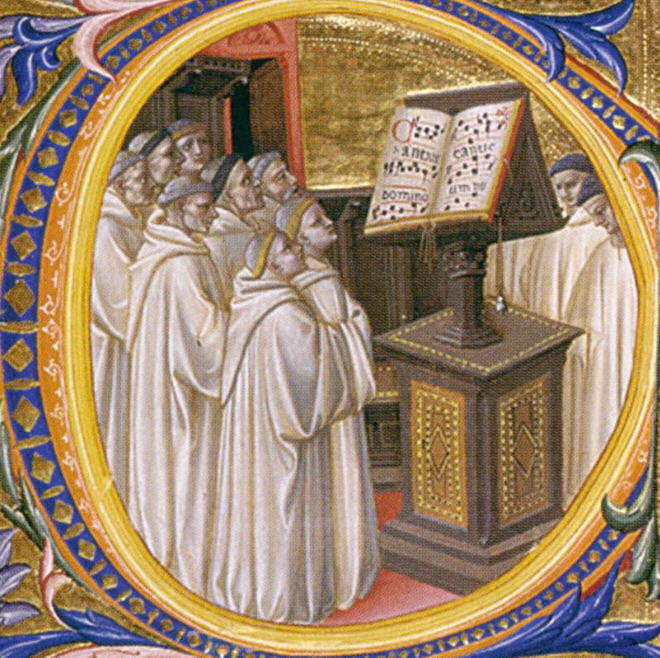
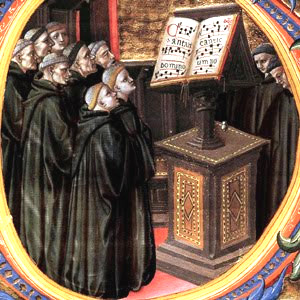
THE principal sources of contemplative prayer in the early Church were the Scriptures and the sacred liturgy, where the Scriptures are transformed into poetry and song.
BEGINNING in the Fourth Century the Psalter acquired special prominence, and chanted psalmody became the underlying framework of Christian liturgical prayer, supporting the proclamation of the Gospel at Mass and the celebration of the Eucharist.
THE early simple antiphons of the Divine Office served as the basis for the more developed, complex, and contemplative chants of the Mass.
SUGGESTED RESOURCES
Leclercq, J., The Love of Learning and the Desire for God, A Study of Monastic Culture, (New York, 1982)
Berry, M. (1979) Plainchant for Everyone, An Introduction to Plainsong, London
McKinnon, James, The Advent Project: The Later Seventh-Century Creation of the Roman Mass Proper, (Univ. of Calif, Press, 2000)
The Saint Meinrad Psalm Tones:
https://russellstutler.com/russ/st_meinrad_tones.html;
https://www.saintmeinrad.org/media/1485/modal-psalm-tones-mod.pdf
Useful Manuscript and Chant Websites:
Cantus Index Chant Texts and Melodies:
https://cantusindex.org/
GregoBase Gregorian Scores: (different image downloads)
https://gregobase.selapa.net/
Psalmody - Various Modes and Latin Texts:
https://gregorien.info/psalm/index/en
Antiphonale Monasticum, (Latin, 1934) psalms and music for all the monastic Liturgy of the Hours except Vigils in square-note notation : https://www.ccwatershed.org/pdfs/72448-antiphonale-monasticum-1934-father-brian-t-austin/download/
Graduale Romanum, (Latin, 1974) all the music for mass in square-note notation https://www.ccwatershed.org/pdfs/6455-graduale-romanum-solesmes-1974-roman-gradual/download/
Gregorian Missal (Graduale Romanum in Latin with English translation) https://archive.ccwatershed.org/pdfs/6248-gregorian-missal-solesmes-abbey-graduale-romanum-1990pdf/download/
Jubilate Deo. Pamphlet sent by Pope St. Paul VI in 1974 to the bishops and heads of all religious orders, containing the “minimum repertoire of Gregorian Chant” [JUBILATE DEO (pdf)]. [Orig. Documentation] [Engl Abbrev. version for Mass]
|
|
WHAT
IS
THE
CHANT
and WHERE
DID
IT
COME
FROM?
Mary Berry, PhD.,
Plainchant for Everyone,
(RSCM, 1970)
pp. 4-5
WHAT is this thing called ‘Plainsong’? One often also hears it called ‘Plainchant’, or `Gregorian Chant’, or simply ‘The Chant’. To put it in a nutshell, the chant is the unique music of Western Christianity and our closest living link with the Church of the first centuries. It has also been said, with truth, to lie ‘at the foundation of all our Western music.’
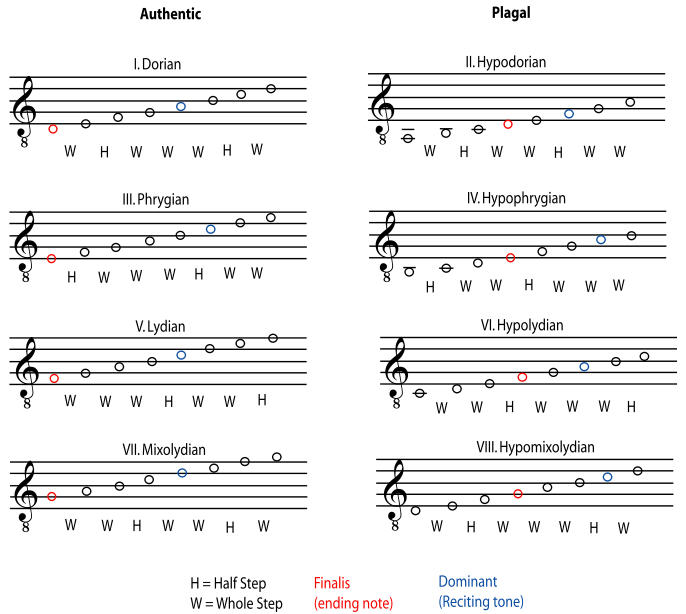
THE chant grew originally out of the music of the Jewish ritual. The first Christians were themselves Jews and they brought into their worship the ancient Jewish custom of chanting aloud the books of the Bible. The melodies they used brought out the meaning of the words, made the text audible to a large gathering of people, and added beauty and dignity to the reading. In particular, the chanting of the psalms was to become the firm basis for all future Christian worship. Even today, the melodies used for chanting the psalms — the eight Gregorian Tones (or `tunes’) — have their recognisable counterparts in Jewish practice.
MOST of the great masterpieces of the chant repertoire as we have it today were composed well before the ninth century, the period of richest creative activity being from about the fifth or sixth century to the eighth century. Compositions dating from this period are said to belong to the ‘Golden Age’ of the chant, because by this time the chant of the Western Church had developed into a highly elaborate and complete art in its own right.
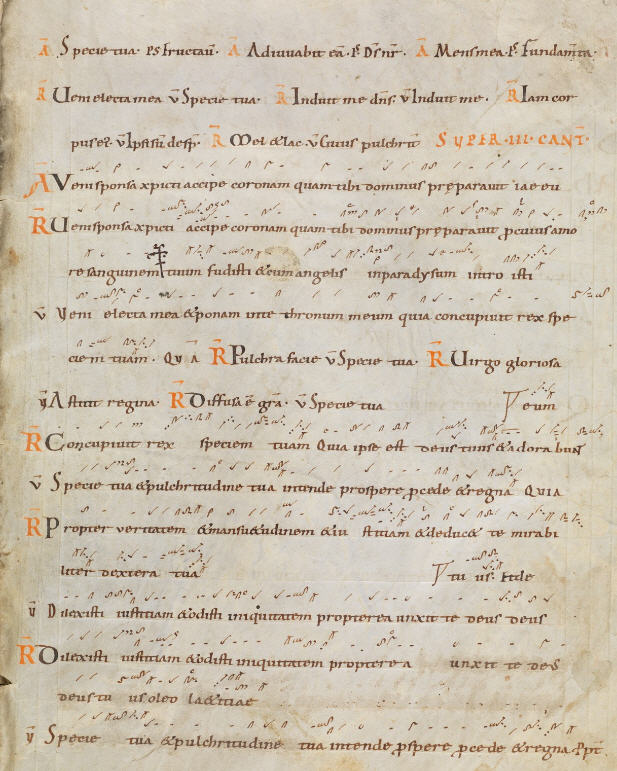
ST. GALL
MANUSCRIPT
Codex.Sang. 391
(ca. 980)
Hartker Antiphoner,
p.189 (with Veni Sponsa Christi)
|
|
|
Hartker Antiphoner,
p.189, Antiphons for Feasts of Virgins and Virgin Martyrs |
|
|
|
VENI SPONSA CHRISTI ANTIPHON from PAGE ABOVE |
But alongside the florid pieces that were originally intended to be sung by soloists, the fully-trained cantors, there was a steadily growing repertoire of simple chants for the ordinary people. And many of these simpler plainsong melodies are ideal for congregations: this music is straightforward unison music, and it doesn’t need any harmony from the choir to bolster it up, nor does it need any organ accompaniment. In fact, it sounds far better and is much more authentic when sung on its own, unaccompanied. For the specialised and more ambitious choirs there is also an almost unlimited choice of more elaborate chants of great beauty, and there are other, quite simple chants, that can be sung unaccompanied in alternation with polyphonic settings by sixteenth and seventeenth century composers — the Tallis hymn settings, for example.
|
|
|
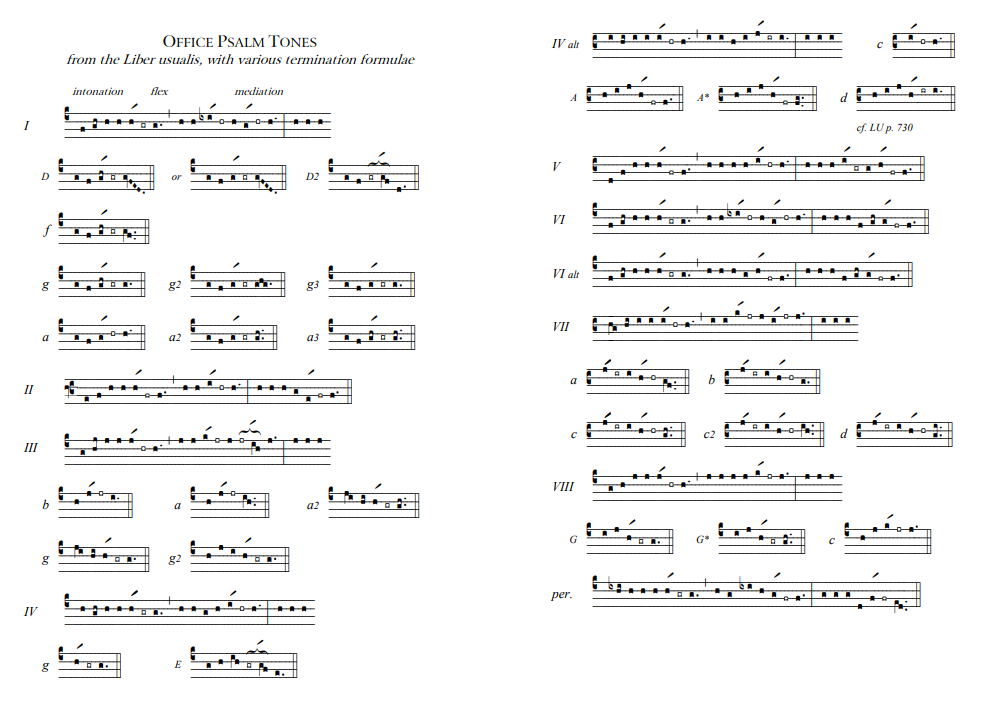
THE EIGHT GREGORIAN MODES in MODERN NOTATION |
|
|
|
THE EIGHT GREGORIAN MODES as PSALM TONES with Initial and various Finals |
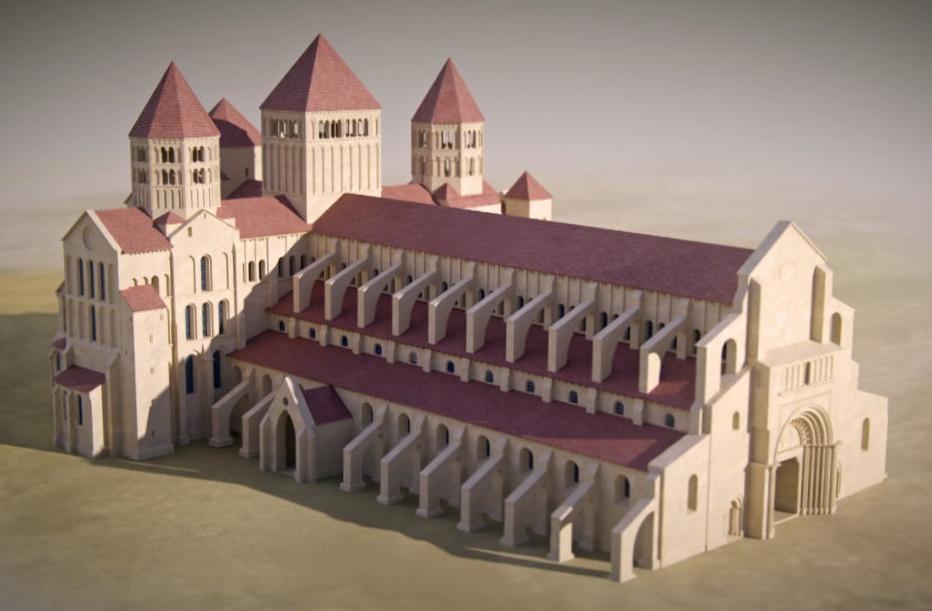
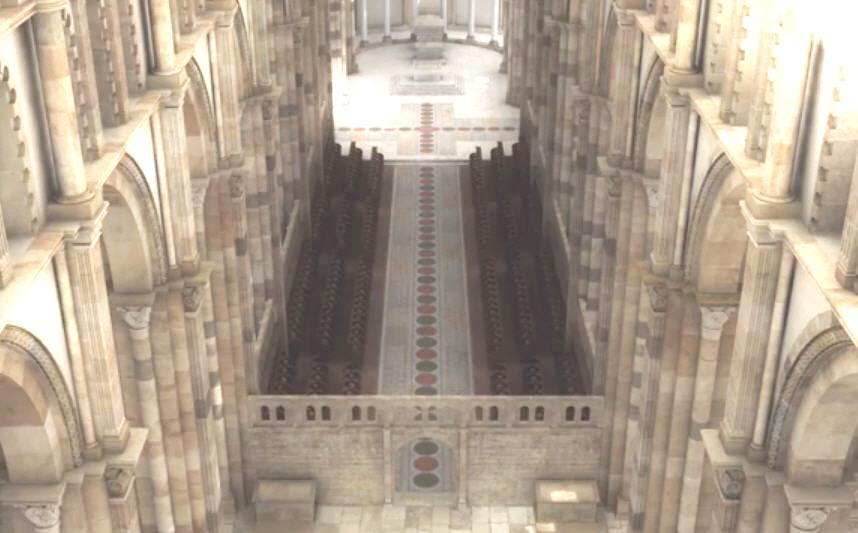
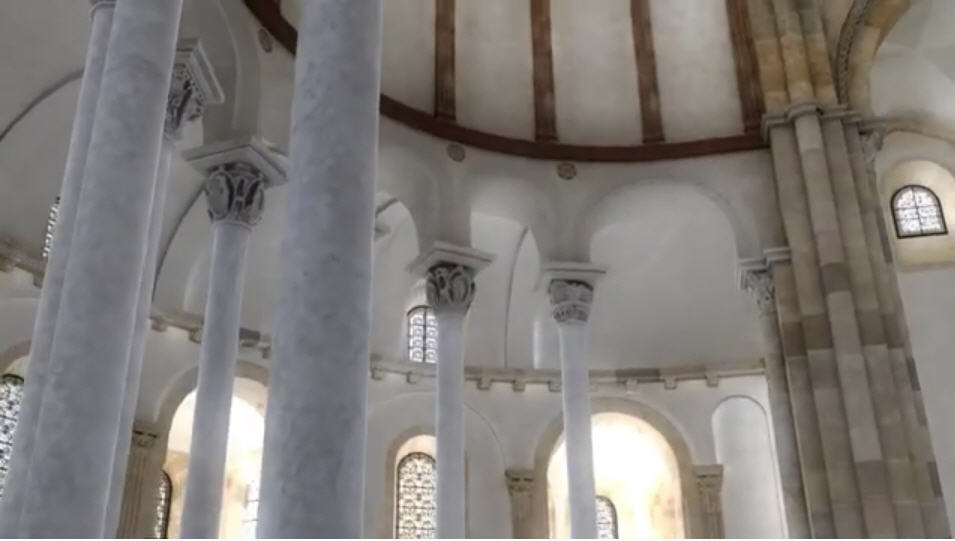
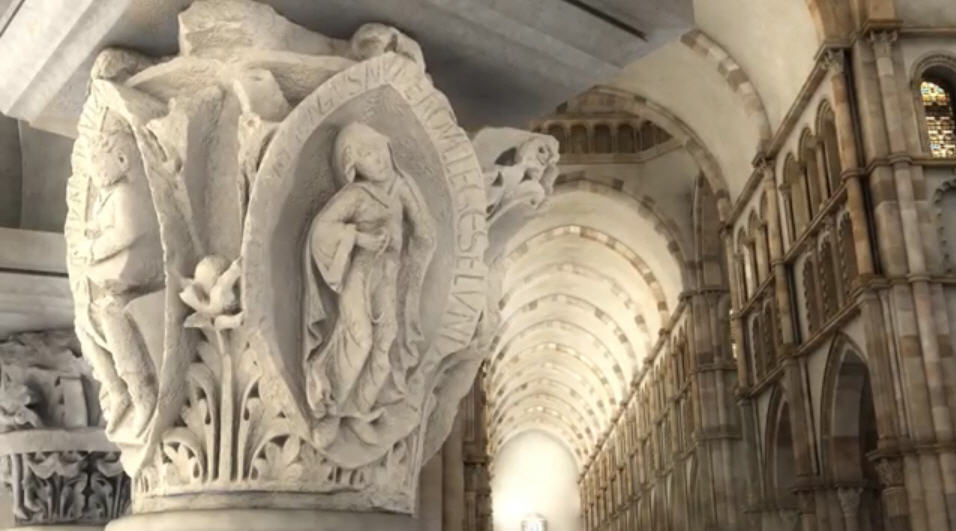
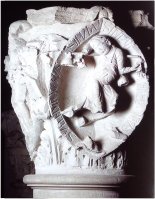
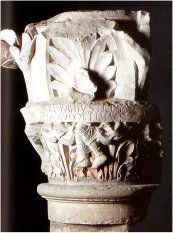
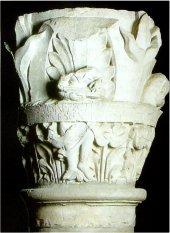
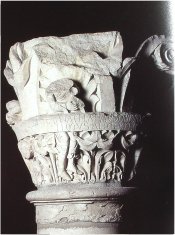
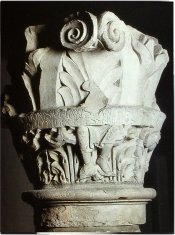
AT CLUNY There were capitals (carvings at the top of pillars) in the monastic choir depicting the Gregorian modes
|
|
|
CLUNY (c.g.i. Reconstruction) |
|
|
|
CLUNY, MONASTIC CHOIR (Reconstruction) |
|
|
|
CLUNY, CAPITALS in THE MONASTIC CHOIR (Reconstruction) |
|
|
|
CLUNY, CAPITAL in THE MONASTIC CHOIR (Reconstruction) |
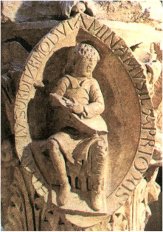
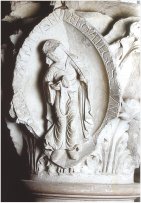
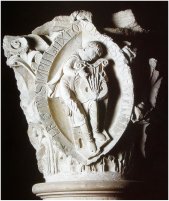
AT CLUNY The capitals depicting the Gregorian modes are each inscribed with a Latin verse.
1st mode: Hic tonus orditur modulamina musica primus.
The tone begins [regulates?] the first music melodies
2nd mode: Subsequor ptongus numero vel lege secundus.
The second follows by measure and rule
3rd mode: Tertius impingit Christumque resurgere pingit.
The third depicts Christ’s resurrection
4th mode: Succedit quartus simulans in carmine planctus.
The fourth follows, imitating in song the [lamentation of] mourning
5th mode: Ostendit quintus quam sit quisquis tumet imus.
The fifth potrays how debased is one who is puffed up
6th mode: Si cupis affectum pietatis respice sextum.
If you desire the feeling of piety, give attention to the sixth
7th mode: Insinuat flatum cum donis septimus almum.
The seventh wafts the Spirit with gifts into [the hearer]
8th mode: Octavus sanctos omnes docet esse beatos.
The eighth teaches that all the saints are blessed
|
|
1st mode: Hic tonus orditur modulamina musica primus.
The tone begins [regulates?] the first music melodies |
|
|
2nd mode: Subsequor ptongus numero vel lege secundus.
The second follows by measure and rule |
|
|
3rd mode: Tertius impingit Christumque resurgere pingit.
The third depicts Christ’s resurrection |
|
|
4th mode: Succedit quartus simulans in carmine planctus.
The fourth follows, imitating in song the [lamentation of] mourning |
|
|
5th mode: Ostendit quintus quam sit quisquis tumet imus.
The fifth potrays how debased is one who is puffed up |
|
|
6th mode: Si cupis affectum pietatis respice sextum.
If you desire the feeling of piety, give attention to the sixth |
|
|
7th mode: Insinuat flatum cum donis septimus almum.
The seventh wafts the Spirit with gifts into [the hearer] |
|
|
8th mode: Octavus sanctos omnes docet esse beatos.
The eighth teaches that all the saints are blessed |
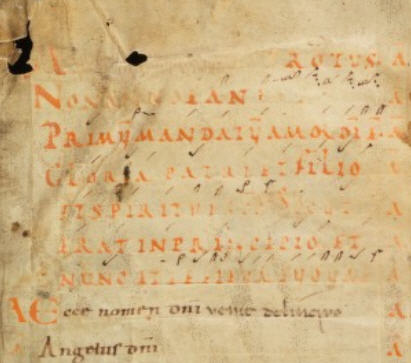
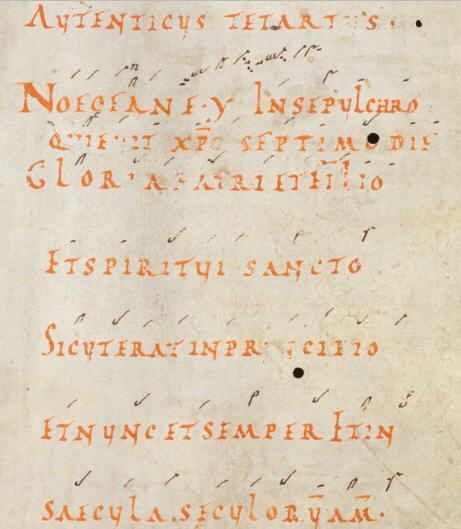
THIS mystical interpretation of the fundamentals of Gregorian chant is in the contemporaneous [ca. 990] Hartker Sangalensis codex (SG 390), which contains the following noted antiphons:
|
|
|
|
Hartker MS SG 390 p1 Primum Mandatum. |
MS SG 390 p3 In sepulcro septimo die |
Primum mandatum amor Dei est.
The first commandment is love of God.
Secundum est amor proximi.
The second is love of neighbor.
Die tertia gratiae nobis Christus natus est.
The grace of the third day is the birth of Christ.
Quaternos libros sumpsimus ab ore Dei.
We receive four books (i.e the Gospels) from the mouth of God.
Quinta die Jesus finivit legem.
On the fifth day Jesus fulfilled the Law.
Sexta die et ipsa hora crucifixus est pro nobis.
On the sixth day, and that very hour He was crucified for us.
In sepulchro quievit Christus septimo die.
In the tomb Christ rested on the seventh day.
Octavas surrexit et multos secum suscitavit.
On the Eighth He rose, and many came to life with Him.
|
|
|
THE EIGHT GREGORIAN MODES in MODERN NOTATION |
|
|
|
THE EIGHT GREGORIAN MODES as PSALM TONES with Initial and various Finals |
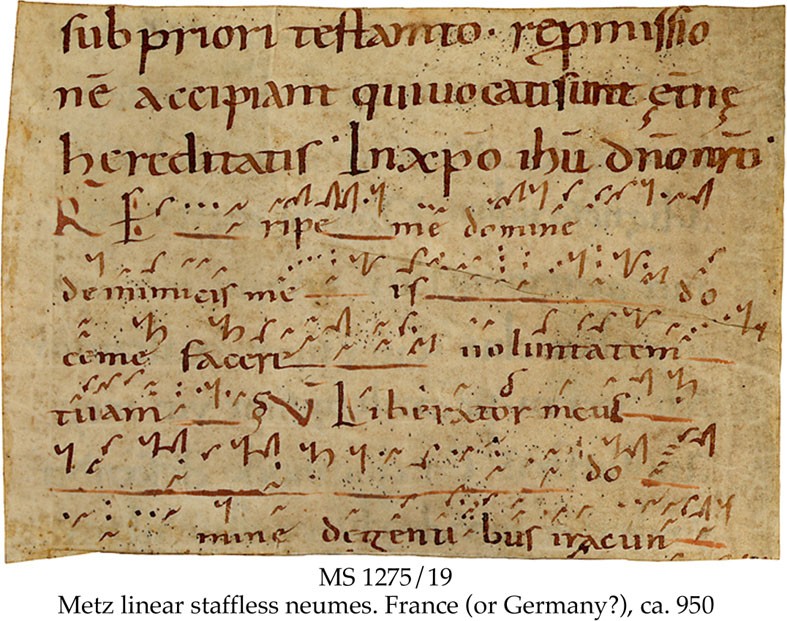
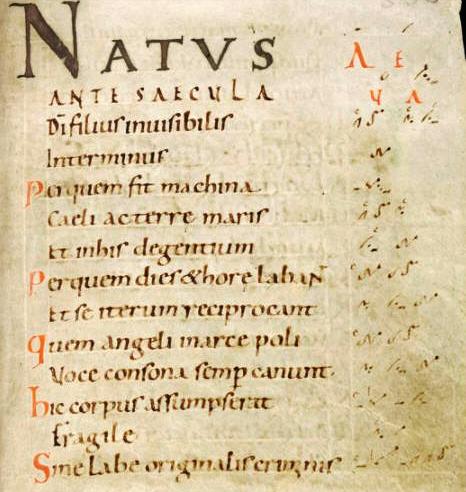
NEUMES
CAROLINGIAN
MUSICAL
NOTATION
 |
|
CHRISTMAS
SEQUENCE
of NOTKER: Natus ante Saecula (c. 870?) |
|
|
MODERN
ADAPTATIONS
of the EIGHT
GREGORIAN
MODES
 |
|
SAINT
MEINRAD
PSALM
TONES https://russellstutler.com/russ/st_meinrad_tones.html |
|
GELINEAU |
PSALM TONES |
 |
 |
 |
 |
|
GELINEAU |
PSALM TONES |
WORKSHOP
THEMES
CHANTED
PSALMODY
and
SILENT
PRAYER
in:
Saint Benedict
(nav.);
The Rule of The
Master (nav.);
John Cassian
(nav.)
[Desert]
CONSECRATION
of
THE
ORDINARY
in:
Saint Antony
(nav.);
Brother Lawrence
nav.
PSALMODY
─
MIRROR
of
THE
SOUL
in:
Saint Athanasius
[sel.]
(nav.);
Saint Gregory of Nyssa
(nav.);
GREGORIAN
CHANT
- CONTEMPLATION
in WORD
and MUSIC
(nav.)
Latin Ferial Monastic Office from Antiphonale Monasticum
(new
p.)
RHYTHMS
of
LIFE
and
PRAYER:
Introduction to Rhythms of Consciousness and Life;
Evagrius of Pontus on
Rhythms of Psalmody and Prayer
THE
APOPHATIC
and
KATAPHATIC WAYS
Introduction to Apophatic and Kataphatic Prayer and Practices
Evagrius
on Psalm 137: distractions and dunamis
CONTEMPLATION
and MEDITATION
Natural Contemplation and Theologia
Evagrius
On Thoughts: The Inner Shepherd
EXEGESIS
of SACRED
SCRIPTURE
and of THE
SELF
Spiritual (Contemplative)
Exegesis
MYSTICS
and SACRED
CHANT
Saint Hildegard of Bingen;
Saint Gertrude the Great;
Prosper Gueranger,
OSB
THE
LITURGICAL
YEAR:
MIRROR
of SALVATION
HISTORY
and MIRROR
of OUR
PERSONAL
PILGRIM-JOURNEY
THE LITURGICAL MOVEMENT and THE CHURCH TODAY
EXEGESIS of SACRED SCRIPTURE and of THE SELF
|
|
|
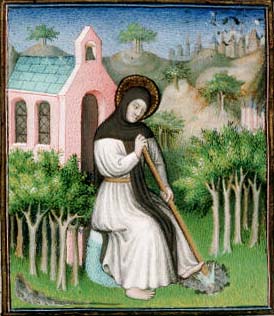
Labor
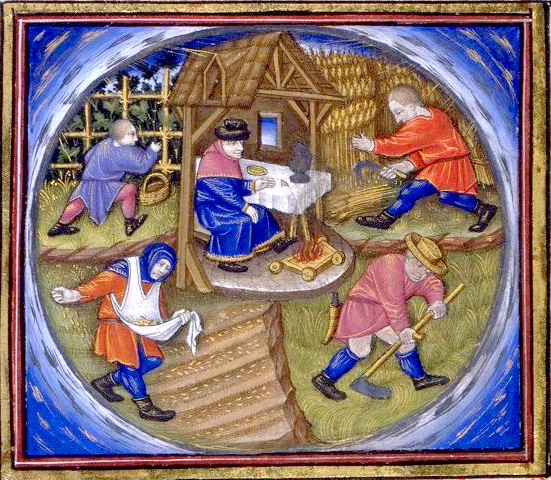
During the Four Seasons |
|
|
|
|
|
“We speak to [God] when we pray;
We listen to Him when we read the divine saying.”
St. Ambrose,
De Officiis ministrorum I, 20, 88:
(PL 16,50)
|
|
|
“Listen,
my son to the teachings of the Master,
and incline the ear of your heart
. . .Freely receive and carry out
with care
the precepts of your loving Father.”
The Rule of St. Benedict,
Prologue
|
|
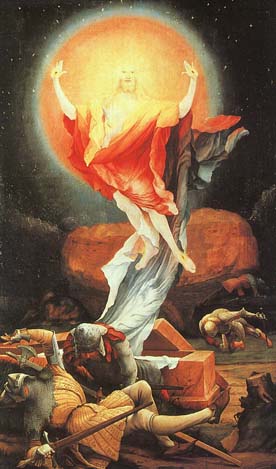
Resurrection, Grunewald |
|
|
AND yet the Incarnation requires us to embrace as well the kataphatic “Way of Affirmation” which proclaims the absolute necessity and value of images, words, and concepts in our relationship with the Word made flesh.-
|
|
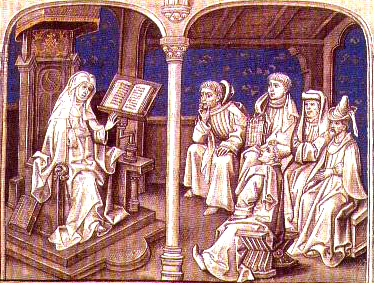
Abbess Giving a Spiritual Conference |
|
|
|
|
THE KATAPHATIC TRADITION (The Way of Affirmation)
[COMPLEX
VARIETY; MULTIPLE
IMAGES; LIGHT; LITERATURE;
POETRY; HYMNODY]
PUBLIC WORSHIP Sacramental & Scriptural Focus Vernacular Psalmody Liturgy of the Hours Ritual Chant Taizé, Gregorian Chant
PRIVATE DEVOTION Icon-Meditation, Litanies, Stations of the Cross; The Rosary
DISCURSIVE MEDITATION Ignatian, Sulpician, Salesian
DISCERNMENT RETREAT Ignatian Spirituality
|
THE APOPHATIC TRADITION (The Way of Negation) [SIMPLICITY, ABSENCE of IMAGES; DARKNESS; WORDLESS INTUITION; HUMILITY]
MONOLOGISTIC (Private-) PRAYER
The
Jesus Prayer (Hesychasm)
The prayer of the Cloud of Unknowing
“Centering
Prayer”
“Christian Mantra”
“Christian Zen”
“ABANDONMENT
to
|
|
LECTIO DIVINA (Contemplative praying of the Scriptures) LITURGICAL PRAYER with SILENCES |
|
|
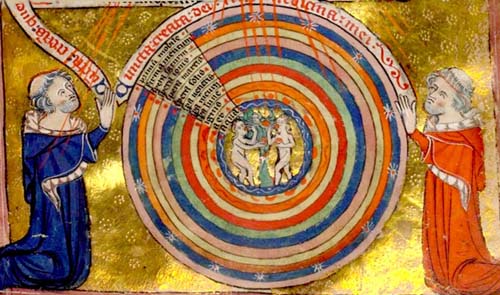
St. Benedict and Servandus contemplate the universe in a single ray of light |
|
NAVIGATION BAR LINKS: CONTEMPLATION; MEDITATION
CONTEMPLATION (Latin contemplatio/contemplare; Greek theōria/theōreō: θεωρία/θεωρέω). Literally, beholding, seeing. For Plato and the Christian authors from the third century onwards it describes a deep, mystical perception by the nous or deepest part of the soul (the image of God), a beholding of the underlying meanings or purposes of God hidden beneath surface appearance. In the New Testament the noun is used only once, together with the verb in Luke 23:49, of the crowds who have beheld (theōrountes/ θεωροῦντες) the spectacle (theōria/θεωρία) of the crucifixion of Christ.
MEDITATION (Latin meditatio/meditare, Greek melétē/meletáō: μελέτη/μελετάω). In the Septuagint (Greek version of the Old Testament) it is used frequently in the context of “meditating on the law” in the sense of study, practice, repeating to one’s self in order to memorize. In classical Greek it meant “care, attention”, practice, exercise, and repetition, rehearsal by an orator of his speech. See also the 1989 Document of the Congregation for the Doctrine of the Faith: On Some Aspects of Christian Meditation.
|
|
|
Hermit Monks at Prayer |
|
DURING the next eight hundred years this practice is only occasionally alluded to in the spiritual literature of East and West. It blossoms into prominence in the high middle ages in the West as the paternoster and rosary prayers, and in the East as the Jesus Prayer; and detailed descriptions and commentaries abound from the fourteenth century to the present. See also the 1989 document of the Congregation for the Doctrine of the Faith: On Some Aspects of Christian Meditation.
|
|
|
|
NAVIG.BAR: LITURG.CONTEMPL.; PSALMODY / SONG
CHRISTIAN poems and hymns are found in the New Testament. Together with the antiphons that precede and follow the psalms in Gregorian chant, these musical icons are the distilled contemplative experience of our Christian forbears, transformed into poetry and music.
|
|
|
|
|
|
|
[...] CHANT PSALMS in such a way that our mind and voice are in concord with each other. (RB 19.6) |
[...] PRAYER ought to be brief and pure,(RB 20.4) |
|
83. PSALMODY calms the passions and puts to rest the body’s disharmony; |
PRAYER arouses the nous to activate its own proper activity. (Evagrius On Prayer, 83) |
|
85. PSALMODY pertains to multiform wisdom; |
PRAYER is the prelude to immaterial and uniform knowledge. (Evagrius On Prayer, 85) |
|
|
|
|
|
|
|
|
“We speak to [God] when we pray;
We listen to Him when we read the divine saying.”
St. Ambrose,
De Officiis ministrorum I, 20, 88:
(PL 16,50)
|
|
Moses Receives The Law; Byzantine Icon |
|
|
|
|
The Four Qualities and Humors |
|
|
|
|
|
|
CHRISTIANITY
ADAPTED
THE
TRIPARTITE
MODEL
of THE
SOUL
SUGGESTED by
PLATO
|
3) VIRTUES AND VICES of the TRIPARTITE SOUL |
|
“All these kingdoms are mine [says the devil] … worship me and I will give them to you.” (Mt 4:9; Lk 4:6-7)
“You
shall worship the Lord your God, and him only shall you serve”. |
THE
LOGISTIKON
Reasoning, Contemplative Self
|
VIRTUES |
MIND (Reason) nous / logos / intellectus |
VICES |
|
understanding
|
|
vainglory
|
THE
PATHETIKON
Feeling Self, Subject to Emotions
|
DESIRE |
STRENGTH |
| VIRTUES |
VICES |
VIRTUES |
VICES |
|
abstinence temperance almsgiving |
gluttony |
courage endurance zeal enthusiasm |
cowardice |
|
“Command these stones to become bread.”(Mt 4:3; Lk 4:3) Man shall not live by bread alone, but by every word that proceeds from the mouth of God.(Mt 4:4; Lk. 4:4) |
“Throw yourself down from here.” (Mt 4:6; Lk 4:9) You shall not tempt the Lord your God. (Mt. 4:7; Lk 4:12) |
|
|
|
4) VIRTUE
AS BALANCE
(mean / midpoint) |
|
[vice of] EXCESS |
[virtuous] MEAN |
[vice
of] |
[A] With regard to feelings of Fear and Confidence:
|
Rashness |
Courage |
Cowardice |
|
|
▲ |
|
[B] With regard to Pleasures and Pains:
|
Self-Indulgence |
Temperance |
Insensibility |
|
|
▲ |
|
[C] With regard to Truth:
|
Boastfulness |
Truthfulness |
False Modesty |
|
|
▲ |
|
THE German-British psychologist Hans Jürgen Eysenck (1916 – 1997) proposed a theory of personality based on biological factors that has subsequently become influential. He believed that individuals inherit a type of nervous system that affects their ability to learn and adapt to the environment.
|
|
|
St. Jerome, Teaching |
|
|
SKILL in this textual art enables the practitioner to look up from the Sacred Text and apply this technique to the perception of and interaction with other human beings. Both the innermost self and the neighbor can thus increasingly bee seen as bearing the Divine Image.
|
|
|
Littera gesta docet,
quid credas allegoria, |
|
|
|
Moralis quid agas,
quo tendas anagogia. |
|
Sometimes attributed to Nicholas of Lyra, c. 1340,
|
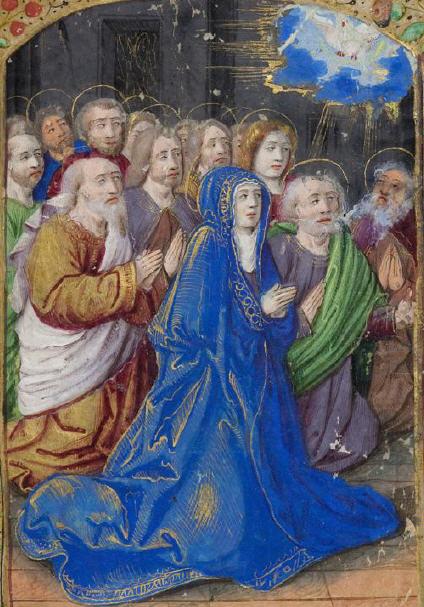
Pentecost, De Firenze, 1536 |
|
|
|
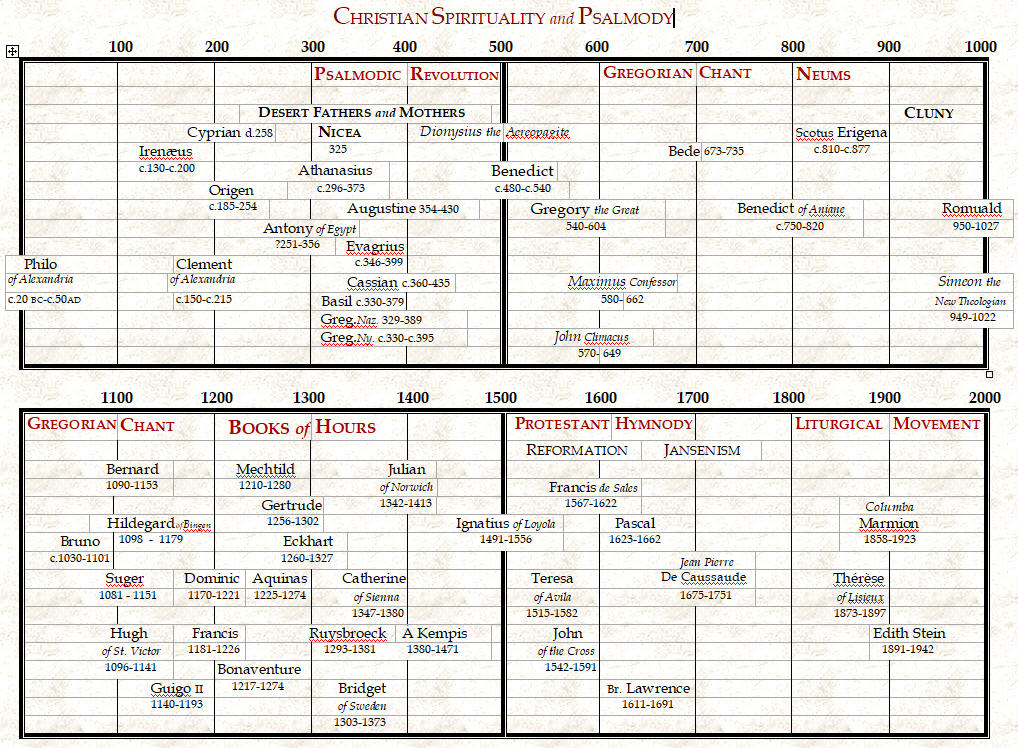
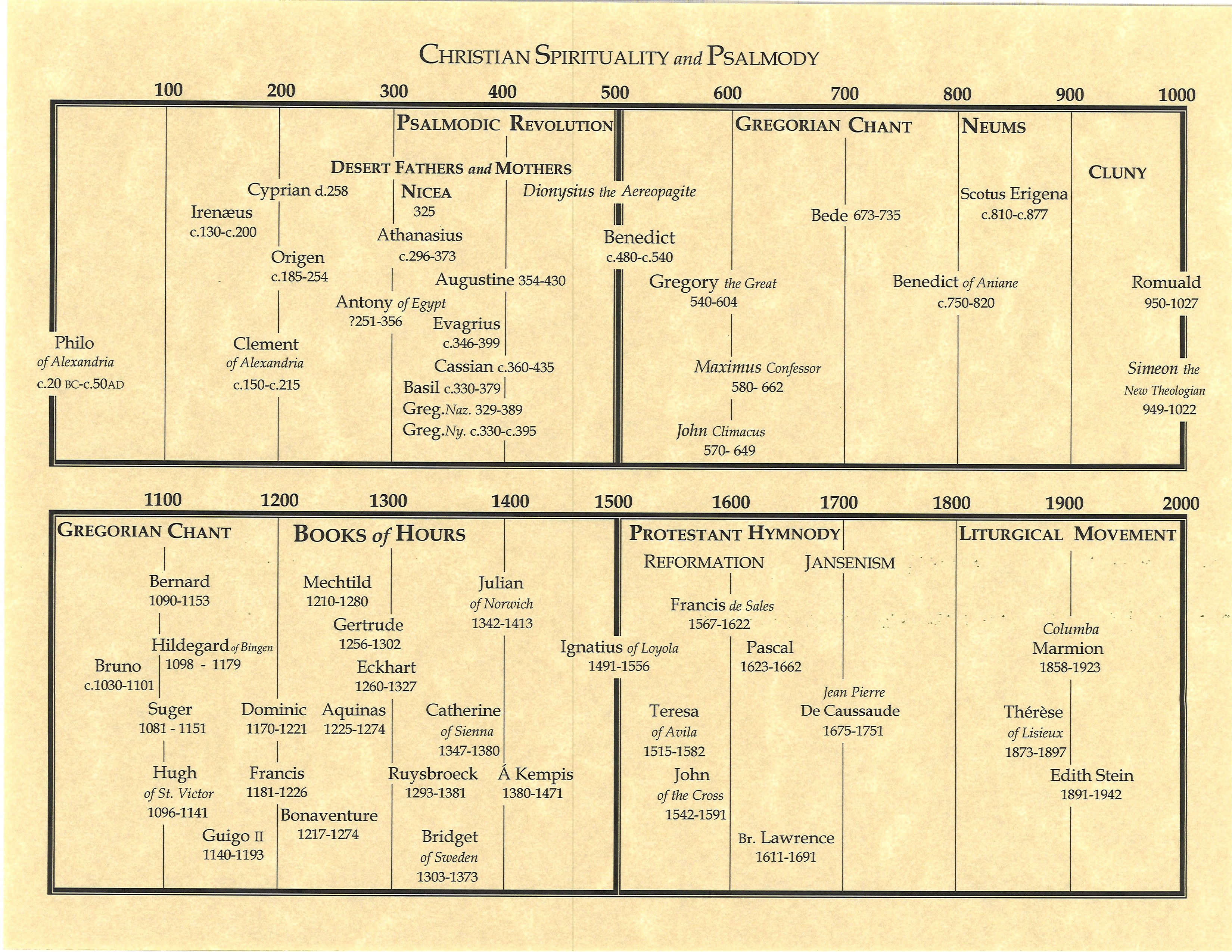
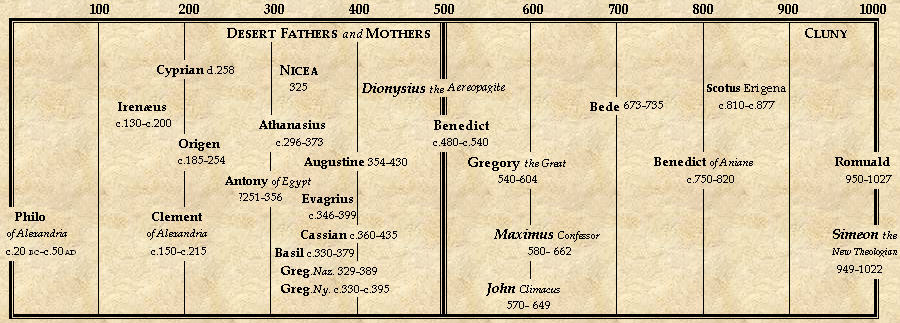
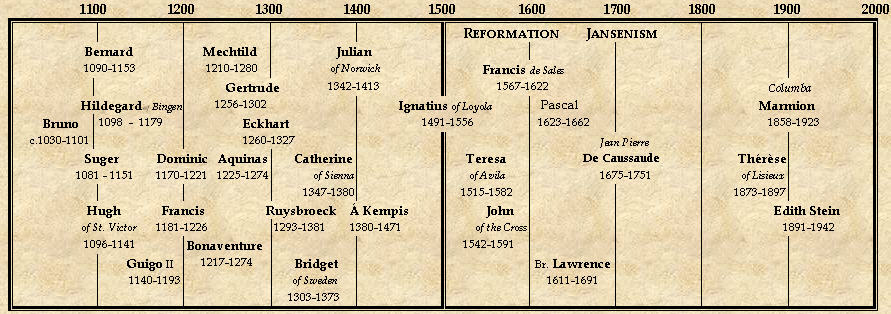
TIMELINES
CHRISTIAN SPIRITUALITY
|
|
|
|
This Webpage was created for a workshop held at Saint Andrew's Abbey, Valyermo, California in 2003
ANTIPHONS (mp3): You are my Inheritance ♦ Portio Mea ♦ Rorate (Introit) ♦ Rorate (Antiphon/Hymn) ♦ Homo quidam
ATIPHONS: You Are my Inheritance; Like the Deer; Deep Waters; [Christus Vincit?]
The Liturgical Year, Week, Day
ADVENT [HEAVEN]
CHRISTMAS [INCARNATION/Theosis – God becomes Human]
LENT [ASCESIS - DISCOVERING SELF]
EASTER [RESURRECTION/TRANSFORMATION – Theosis – Humans become divine]
ORDINARY TIME (Transfiguration – Living out Theosis in Community and relationships)
The Liturgical Movement – The Liturgy as a Source of Catechesis and Spiritual Growth
The Liturgy as a Pilgrimage towards God
Liturgical Prayer – and Natural Rhythms
Contemplation and Action as Interior Experiences
Spiritual Progress as Ongoing Consecation