|
|
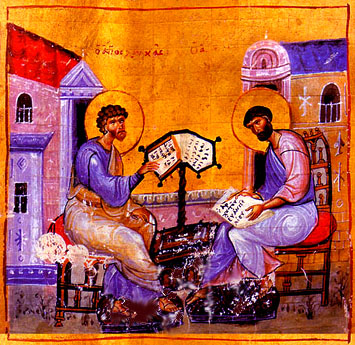
Based on: Matthew and John, 12c illum MS, Athos, Protaton. (image modif.) |
|
|
Based on: Matthew and John, 12c illum MS, Athos, Protaton. (image modif.) |
Transl. Luke Dysinger,O.S.B.
(translation in public domain) [MS-Word.doc]
N.B.:The
English translation of the title as Reflections was suggested by
Sinkewicz (2003). The
treatise was previously known as Skemmata
Muyldermans, “Evagriana,” Le Muséon 44, 37-68; 369-383 [Muyl]. Cod. Barb. Lat. 3024. Evagrii Monachi Capita Cognoscitiva. Franz Diekamp, Doctrina Patrum de Incarnatione Verbum, Ein griechisches Florilegium aus der Wende des 7. und 8. Jahrhunderts, Münster, 1981, pp. 248-267; W. Frankenberg, Evagrius Ponticus, “Cent. Suppl.”Abhandlung der Königlichen Gesellschaft der Wisenschaften zu Göttingen, Philologisch-Historische Klasse, Neue Folge, vol. 13, no. 2, pp. 452-467, (Berlin, 1912) . Sinkewicz, , (2003) Reflections, 210-216; 304-305
|
|
|
|
1-39: GNOSTIC CHAPTERS |
|
|
|
|
|
|
|
|
1. THE CHRIST[:] as Christ, has essential knowledge; while as creator [he has] the logoi [inner meanings] of the ages; and as incorporeal [he has] the logoi of incorporeal [being]s. |
α' Ο Χριστὸς ᾗ μέν ἑστι Χριστὸς, ἔχει τὴν γνῶσιν τὴν οὐσιώδη· ᾗ δὲ δημιουργὸς, τοὺς λόγους τῶν αἰώνων· ᾗ δὲ ἀσώματος, πάλιν τοὺς λόγους τῶν ἀσωμάτων. |
|
|
|
|
|
|
|
2. IF any would see the state of the[ir] nous, let them deprive themsel[ves] of all concepts (noemata)[:] and then they will see themsel[ves] like a sapphire or the color of heaven; (Exod. 24:10) but this cannot be accomplished without apatheia, [dispassion] since it requires the cooperation of God who breathes into them the kindred light. Cent. Suppl. 2 (=Fr. 425): PG 147,749 B; 147,832. |
1. Εἴ τις βούλοιτο ἰδεῖν τὴν τοῦ νοῦ κατάστασιν, στερησάτω ἑαυτὸν πάντων τῶν νοημάτων, καὶ τότε ὄψεται ἑαυτὸν σαπφείρῳ ἢ οὐρανίῳ χρώματι παρεμφερῆ· τοῦτο δὲ ποιῆσαι ἄνευ ἀπαθείας, τῶν ἀσυνάτων ἐστι· Θεοῦ γὰρ χρεία συννεργοῦντος τοῦ ἀναπνέοντος αὐτῷ τὸ συγγενὲς φῳς·- |
|
On the light of the nous and its possible origins: cf. KG 1.35, 1.74; 1.81, 2.29; 3.44, 3.52, 5.15; Sch.258 on Prov. 23.22 ; Prak. 64; Gnost. 45; Prayer 75; Thoughts/Peri.Log. 17, 39, 40, 42; Skem. 4, 23, 25, 27; Letter 39.5; Antiret. 6.16. |
|
|
|
|
|
|
|
|
3. APATHEIA is [the] quiet state of the reasoning soul composed of gentleness and temperance. Cent.S. 3 (=Fr.427) Doct.Patr. 250. |
2.Ἀπάθειά ἐστι κατάστασις ἠρεμαῖα ψυχῆς λογικῆς, ἐκ πραύτητος καὶ σωφροσύνης συνισταμένη· |
|
|
|
|
|
|
|
4. THE state of the nous is the noetic (intelligible) height like the color of heaven, upon which the light of the holy Trinity comes at the time of prayer. CS 4 (=Fr 427): PG 147, 749 C. |
3. [Ν]Οῦ κατάστασίς ἐστιν ὕψος νοητὸν οὐρανιῳ χρώματι παρεμφερές· ᾧ καὶ τὸ της ἁγίας Τριάδος κατὰ τὸν καιρὸν τῆς προσευχῆς ἐπιγίνεται φῶς;- |
|
On the light of the nous and its possible origins: cf. KG 1.35, 1.74; 1.81, 2.29; 3.44, 3.52, 5.15; Sch.258 on Prov. 23.22 ; Prak. 64; Gnost. 45; Prayer 75; Thoughts/Peri.Log. 17, 39, 40, 42; Skem. 2, 23, 25, 27; Letter 39.5; Antiret. 6.16. |
|
|
|
|
|
|
|
|
5. CHRIST is [the] reasoning nature who has [with]in himself what is symbolized by the dove descending upon him. (cf Sch 2 on Ps 54.7) |
ε' Χριστος ἐστι φύσις λογικὴ, τὸ ὑπὸ τῆς καταπτάσης ἐπ' αὐτὸν περιστερᾶς σημαινόμενον ἔχων ἐν ἑαυτῷ. |
|
|
|
|
|
|
|
6. A CENSER is the pure nous at the time of prayer: it has no matters associated with the senses joined to it. (cf. Sch.1 on Ps.140) According to virtue we will be one on the eighth day; while according to knowledge [we will be one] on the last day. (cf. Sch 76 on Ps.118.164) CS 6(=Fr 429). In KG 4.44 the six years of praktike correspond to the askesis of human life prior to death; the seventh (sabbath) corresponds to the comparatively restful transformations (judgments) after death; and the eighth year (or day) is the Eschaton. See KG 5.8 and KG 6.66 for significance of the sixth, seventh, and eighth days/years. For symbolic circumcision of the eighth day see KG 6.7; for circumcision on the sixth, seventh and eighth days, KG 5.83.
|
4.
θυμιατήριόν ἐστι νοῦς καθαρὸς κατὰ τὸν καιρὸν τῆς προσευχῆς, μὴ
ἐφαπτόμενος πράγματος αἰσθητοῦ· |
|
|
|
|
|
|
|
7. THE kiss of the nous is a blameworthy thing, an impassioned thought (noema) of a sensible concern. And thus the Savior said to the disciples, Greet no one along the way of virtue (cf. Lk 10:4). |
ζ' Νοῦ φίλημα ἐστι ψεκτὸν, νόημα ἐμπαθὲς πράγματος αἰσθητοῦ· δι' ὅπερ καὶ λέγει ὁ Σωτὴρ τοῖς μαθηταῖς·<Μηδένα κατὰ τὴν τῆς ἀρετῆς ὁδὸν ἀσπάσησθε> {Λυκ 10.4} |
|
|
|
|
|
|
|
8. IRASCIBILITY (thumos) is a power of the soul destructive of [tempting-]thoughts (logismoi). CS 40 (Fr 459):Doct Patr 258. |
24. Θυμός ἐστι δυναμις ψυχῆς, φθαρτικὸς λογισμῶν·- |
|
|
|
|
|
|
|
9. LIKE a [guard-]dog [lit. dog-like] is the contemplative nous: through the movements of irascibility it hunts down all impassioned [tempting-]thoughts. CS 10 (=Fr 431) |
5. Κυνικός ἐστι νοῦς θεωρητικὸς διὰ τῆς κινήσεως τοῦ θυμοῦ, πάντας ἀποδιώκων τοὺς ἐμπαθεῖς λογισμούς·- |
|
|
|
|
|
|
|
10. LIKE a [guard-]dog [lit. dog-like] is the ascetical nous, hunting down unjust [tempting-]thoughts. CS 11 (=Fr 431) |
6. Κυνικός ἐστι νοῦς πρακτικὸς, πάντας τοὺς ἀδίκους καθυλακτῶν λογισμούς·- |
|
|
|
|
|
|
|
11. INSTRUCTION is [the] denial of impiety and worldly desires. CS 12 (=Fr 433) |
7. Παιδεία ἐστὶν ἄρνησις ἀσεβείας καὶ κοσμικῶν ἐπιθυμιῶν·- |
|
|
|
|
|
|
|
12. FEAR is betrayal of the thoughts that come to [our] assistance. |
ιβ' Φόβος ἐστὶ προδοσία τῶν ἀπὸ λογισμῶν βοηθημάτων. |
|
|
|
|
|
|
|
13. A DEMONIC [tempting-]thought is the image of the sensing man, constituted according to reason through which the nous that has fallen [lit. moved] through passion secretly says or does something lawlessly to an idol that is has [allowed] to creep in. CS 14 (Fr 433) |
26. Λογισμὸς δαιμονιώδης ἐστὶν εἰκὼν τοῦ αἰσθητοῦ ἀνθρώπου, συνισταμένη κατὰ διανοιαν, μεθ' ἧς ὁ νοῦς κινούμενος ἐμπαθῶς λέγει τί ἢ πράττει ἀνόμως ἐν τῷ κρυπτῷ πρὸς τὸ περεμπεσὸν εἴδωλον ἐκδιωχθεὶς ὑπ' αὐτοὺ. |
|
|
|
|
|
|
|
14. THE anchorite is one who, in the world erected according to reason, dwells justly and piously. (cf. Skem 38, 39. cf. KG. 5.81) |
ιθ' Ἀναχωρητής ἐστιν, ὁ ἐν τῷ κατὰ διάνοιαν κόσμῳ συνισταμένῃ, εὐσεβῶς καὶ δικαίως ἀναστρεφόμενος. |
|
|
|
|
|
|
|
|
|
|
15. AN ascetical person is one who makes appropriate use of the gifts from God. (KG 3.59; Thoughts /Peri.Log 19) CS 16 (Fr 435) |
25.Ἄνθρωπός ἐστι πρακτικὸς, ὁ τοῖς παρὰ Θεοῦ δοθεῖσι κεχρημένος ὁρθῶς·- |
|
|
|
|
|
|
|
|
|
|
16. THE ascetical nous is one that always receives the thoughts of this world with apatheia. CS 17 (Fr 435). |
8. Νοῦς ἐστι πρακτικὸς, ὁ τοῦ κόσμου τούτου ἀπαθῶς ἀεὶ δεχόμενος τὰ νοήματα·- |
|
|
|
|
|
|
|
|
|
|
17. THERE are four ways by which the nous receives thoughts. The first way is through the eyes; the second, through hearing; the third, through memory; the fourth, through temperament [krasis]. Through the eyes it receives only forms of thoughts. Through hearing, [it receives] both forms and unformed [thoughts]; the mind [logos] signifying matters both sensed and contemplated. Memory and temperament [krasis] follow upon hearing, each forming the nous or not forming it in imitation of hearing. CS 18 (=Fr 435) |
9. Τέσσαρες τρόποι εἰσὶ δι' ὧν ὁ νοῦς λαμβάνει νοήματα· καὶ πρῶτος μὲν τρόπος, ὁ διὰ τῶν ὀφθαλμῶν· δεύτερος, ὁ διὰ τῆς ἀκοῆς· τρίτος, ὁ διὰ τῆς μνήμης· τέταρτος, ὁ διὰ τῆς κράσεως· καὶ διὰ μὲν τῶν ὀφθαλμῶν, μορφοῦντα μόνον λαμβάνει νοήματα· διὰ δὲ τῆς ἀκοῆς, καὶ μορφοῦντα καὶ μὴ μορφοῦντα, τῷ τὸν λόγον σημαίνειν πράγματα αἰσθητὰ καὶ θεωρητά· ἡ δὲ μνήμη καὶ ἡ κράσις ἀκολουθοῦσι τῃ ἀκοῇ ἑκάτερα γὰρ μορφοῦσι τὸν νοῦν καὶ οὐ μορφοῦσι μιμούμενα τὴν ἀκοήν·- |
|
|
|
|
|
|
|
|
|
|
18. IN bodies there [can be] both equality of essence and difference of essence. While in incorporeal [beings] there is only equality of essence, in [forms of] knowledge there is only difference of essence. |
ιη' Ἐν μὲν τοῖς σώμασι, καὶ ὁμοουσιότης καὶ ἐτεροουσίοτης· ἐν δὲ τοῖς ἀσωμάτοις, μόνον ὁμοουσιότης· ἐν δὲ γνώσεσιν, ἐτεροουσίοτης· |
| For none of the contemplations is the same except contemplation of the stars. In the Trinity, [there is] only equality of essence [consubstantiallity], for there are no different underlying objects as in [other] contemplations. Nor does [the Trinity] consist of many essences as bodies do . | οὐδεμία γὰρ τῶν θεωριῶν ἐστιν ἡ αὐτή, ἤπερ ἄστρων ἐστὶ θεωρία· ἐν δὲ Τριάδι μόνον ὁμοουσιότης· οὐδὲ γάρ ἐστι διάφορα ὑποκείμενα πράγματα ὡς ἐν ταῖς θεωρίας· οὐδὲ πάλιν ἐκ πλειόνων οὐσιῶν συνέστηκεν ὡς ἐν τοῖς σώμασι· |
| And by “essences” I mean those that contribute to the composition of a designation that indicates the being of the subject; but not as in the case of incorporeal [beings], although we [may] speak of them as equal in essence [consubstantial] in their receptiveness to the same knowledge. | οὐσίας δὲ νῦν λέγω, τὰς συντελούσας εἰς σύστασιν τοῦ ὅρου τοῦ δηλοῦντος τὸ τί εἶναι τοῦ ὑποκειμένου, ἀλλ' ουδ' ὡς ἐν τοῖς ἀσωμάτοις· εἴγε κάκεῖνα ὁμοούσια λέγομεν τή͂ τῆς αὐτῆς εἶναι γνώσεως δεκτικά. |
|
. |
|
|
|
|
|
|
|
|
19. SINCE the nous receives [tempting] thoughts from the five senses, one should ponder from which [they are received] with greatest difficulty. And it is evident that it is by means of hearing, since a depressing word disturbs the heart of a man, according to the proverb (Prov 12:25). |
ιθ' Ἐπειδὴ ἐκ τῶν πέντε αἰσθήσεων λαμβάνει ὁ νοῦς λογισμοὺς, τηρητέον ἐκ ποίας μᾶλλον γίνονται χαλεπώτεροι· φανερὸν μὲν οὖν ὅτι ἐκ τῆς ἀκοῆς, εἴγε καὶ λυπηρὸς ταράσσει καρδίαν ἀνδρὸς κατὰ τὴν παροιμίαν. |
|
|
|
|
|
|
|
|
|
| 20. THE nous occupied in ascetical practice is in the thoughts of this world. When occupied with knowledge it is employed in contemplation. When it [attains] to prayer, it is in formlessness*, which is called the “place of God”. Then it will see the equality of essence and the difference of essence in bodies, in contemplations, and in God. | κ' ῾ Ο νοῦς ἐν πρακτικῇ ὢν, ἐν τοῖς νοήμασιν ἐστιν τοῦ κόσμου τούτου· ἐν δὲ γνώσει ὢν, ἐν θεωρίᾳ διατρίβει· ἐν δὲ προσευχῇ γινόμενος, ἐν ἀνειδέῳ ἐστὶ, ὅπερ ὀνομάζεται τόπος Θεοῦ· αὐτὸς οὖν ὄψεται τήν τε ἐν τοῖς σώμασιν ὁμοουσιότητα καὶ ἑτεροουσιότητα καὶ τοῖς ἐν θεωρήμασι καὶ τὴν ἐν Θεῳ· |
|
That which concerns God clearly pertains to what is impossible, since essential knowledge is obscure and change does not pertain to essential knowledge. |
ὅπερ ἐπὶ Θεοῦ, τῶν ἀδυνάτων ἐστὶν σαφῶς, ἀδήλου οὔσης τῆς οὐσιώδους γνώσεως καὶ μηδεμίαν ἐχούσης παραλλαγὴν πρὸς γνῶσιν οὐσιωδη. |
|
* one Syriac MS has formless light |
|
|
|
|
|
|
|
|
|
|
|
21. SOME temptations lead to pleasures, others to sadness [depression], still others to bodily pain for human beings. CS 22 (=Fr.443) |
11. Τῶν πειρασμῶν οἱ μὲν ἡδονάς· οἱ δὲ λύπας· οἱ δὲ ὀδύνας σωματικὰς τοῖς ἀνθρώποις προσάγουσιν·- |
|
|
|
|
|
|
|
|
|
|
22. THE mind sometimes moves from one thought to another thought, sometimes from one contemplation to another contemplation, and then from contemplation to thoughts. But there are also [times] when it moves from an imageless state to thoughts or to contemplations and [then] back again from these to the imageless state. This happens to it at the time of prayer. |
κβ'῾ Ο νοῦς ποτὲ μὲν ἀπὸ νοήματος εἰς νοήματα μεταβαίνει· ποτὲ δὲ ἀπὸ θεωρήματος εἰς θεωρήματα, καὶ ἀπὸ θεωρήματος ἐπὶ νοήματα· ἔστι δὲ ὅτε καὶ ἀπὸ τῆς ἀνειδέου καταστάσεως ἐπὶ νοήματα ἢ ἐπὶ θεωρήματα, καὶ ἀπὸ τούτων πάλιν ἐπὶ τὴν ἀνείδεον κατάστασιν ἀνατρέχει· τοῦτο δὲ αὐτῳ συμβαίνει κατὰ τὸν καιρὸν τῆς προσευχῆς. |
|
|
|
|
|
|
|
|
|
|
23. THE mind is unable to see the ‘place of God’ in itself unless it has been raised higher than all thoughts of practical matters. And it will not be raised higher unless it has put aside all the passions that bind it to perceptible objects through thoughts. And passion will be put aside through the virtues, and simple thoughts through spiritual contemplation. And this will happen when the light has been manifested to it. |
12.
Οὐκ ἂν ἴδοι ὁ νοῦς τὸν τοῦ Θεοῦ τόπον ἐν ἑαυτῷ, μἠ πάντων των τῶν ἐν
τοῖς πράγμασι νοημάτων ὑψηλότερος γεγονως· οὐ γενήσεται δὲ
ὑψηλότερος γεγονώς· οὐ γενήσεται δὲ ὑψηλότερος, μὴ τὰ πάθη
ἀπεκδυσάμενος τὰ συνδεσμοῦντα αὐτὸν διὰ τῶν νοημάτων τοῖς πράγμασι
τοῖς αἰσθητοῖς· καὶ τὰ μὲν πάθη ἀποθήσεται διὰ τῶν ἀρετῶν, τοὺς δὲ
ψιλοὺς λογισμοὺς διὰ τῆς πνευματικῆς θεωρίας· καὶ ταύτην πάλιν,
ἐπιφανέντος αὐτῷ τοῦ φωτός. |
|
On the light of the nous and its possible origins: cf. KG 1.35, 1.74; 1.81, 2.29; 3.44, 3.52, 5.15; Sch.258 on Prov. 23.22 ; Prak. 64; Gnost. 45; Prayer 75; Thoughts/Peri.Log. 17, 39, 40, 42; Skem. 2, 4, 25, 27; Letter 39.5; Antiret. 6.16. |
CS 26 & 28 [23 & 24?] (=Fr. 451-453): Cs Supp 26=Prak I, no 71, PG 40, 1244 & Ἐκλογὴ ... περὶ προσευχῆς καὶ προσοχῆς, PG 147,832 |
|
|
|
|
|
|
|
|
|
|
24. DEMONIC thoughts blind the left eye of the soul, which is given over to contemplation of things that have come to be. CS 27 (Fr 451) |
27. Οἱ δαιμονιώδεις λογισμοὶ τὸν εὐώνυμον ὀφθαλμὸν τῆς ψυχῆς ἐκτυφλοῦσι, τὸν επιβαλλοντα τῇ θεωρίᾳ τῶν γεγονότων·- |
|
|
|
|
|
|
|
|
|
|
25. FROM holy David we have exactly learned what the ‘place of God’ is, for he says: In peace is His place established and his dwelling on Zion (Ps 75:3). The ‘place of God’ is therefore the reasoning soul, and his dwelling [is] the luminous nous that has renounced the desires of the world and been taught to behold the logoi of the earth. |
[12_β] Παρὰ δὲ τοῦ ἁγίου Δαυὶδ σαφῶς μεμαθήκαμεν τίς ὁ τόπος τοῦ Θεοῦ· ἐγενήθη γάρ, φησὶν, ἐν εἰρήνῃ ὁ τόπος τοίνυν ἐστὶ Θεοῦ, ψυχὴ λογική· κατοικητήριον αὐτοῦ ἐν Σιών [Ψ 75,3]· τόπος τοίνυν ἐστι Θεοῦ, ψυχὴ λογική· κατοικητήριον δὲ νοῦς φωτοειδὴς τὰς κοσμικὰς ἐπιθυμίας ἀρνησάμενος, τοὺς τὴς γῆς λόγους ἀποσκοπεύειν δεδιδαγμένος·- |
|
On the light of the nous and its possible origins: cf. KG 1.35, 1.74; 1.81, 2.29; 3.44, 3.52, 5.15; Sch.258 on Prov. 23.22 ; Prak. 64; Gnost. 45; Prayer 75; Thoughts/Peri.Log. 17, 39, 40, 42; Skem. 2, 4, 23, 27; Letter 39.5; Antiret. 6.16. |
|
|
|
|
|
|
|
|
|
|
|
26. PRAYER is a state of the nous destructive of every earthly thought. Cent. Suppl. 29 & 30 (=Fr 453-455); = Doctrina Patrum, édit. Diekamp, p. 264. cf. p. 47, no. 5. |
17. Προσευχή ἐστι κατάστασι νοῦ, φθαρτικὴ παντὸς ἐπιγείου νοήματος· |
|
|
|
|
|
|
|
|
|
|
27. PRAYER is the state of the nous [illuminated] by the sole light of the Blessed Trinity. |
χζ' Προσευχή ἐστι κατάστασις νοῦ ὑπὸ φωτὸς μόνου γινομένη τῆς ἁγίας Τριάδος. |
|
On the light of the nous and its possible origins: cf. KG 1.35, 1.74; 1.81, 2.29; 3.44, 3.52, 5.15; Sch.258 on Prov. 23.22 ; Prak. 64; Gnost. 45; Prayer 75; Thoughts/Peri.Log. 17, 39, 40, 42; Skem. 2, 4, 23, 25, 27; Letter 39.5; Antiret. 6.16. |
|
|
|
|
|
|
|
|
|
|
|
28. A PETITION is a conversation of the nous with God requesting supplication, encompassing help or requesting good things. Cent. Suppl. 31 (=Fr 455). |
18. Δέησις ἐστιν ὁμιλία νοῦ πρὸς Θεὸν μεθ' ἱκεσίας, βοήθειαν ἢ αἴτησιν ἀγαθῶν περιέχουσα |
|
|
|
|
|
|
|
|
|
|
29. A VOW is a willing promise of good things. Cent. Suppl. 32 (=Fr 455); = Doctrina Patrum, édit. Diekamp, p. 257. cf. p. 47, no. 6. |
16. Εὐχη ἐστιν ὑπόσχεσις ἀγαθῶν ἑκούσιος [53] |
|
|
|
|
|
|
|
|
|
|
30. AN intercession is an invocation presented to God for the salvation of others by one who is greater. Cent. Suppl. 33 (=Fr 455); = Doctrina Patrum, édit. Diekamp, p. 258. cf. p. 47, no. 7. |
19. Ἔντευξίς ἐστι παράκλησις ὑπὸ μείζονος προσαγομένη Θεῷ περί σωτηρίας ἑτέρων |
|
|
|
|
|
|
|
|
|
|
31. HADES is a lightless region filled with eternal darkness and gloom. |
λα' ᾅδης ἐστι χωρίον ἀφεγγὲς, σκότους αἰωνίου καὶ ζόφου πεπληρωμένον. |
|
|
|
|
|
|
|
|
|
|
32. THE gnostic is a salaried day-laborer. (Cf. Gnost. 1) CS 35 (=Fr 457) |
20. Γνωστικός ἐστιν αὐθημερινὸς μίσθιος·- |
|
|
|
|
|
|
|
|
|
|
33. THE ascetic is a day-laborer, awaiting his payment. (Cf. Gnost. 1.) (CS 36=Fr 459) |
21. Πρακτικός ἐστι μισθωτὸς, ἀναμένων τὸν μισθὸν αὐτοῦ·- |
|
|
|
|
|
|
|
|
|
|
34. THE nous is the temple of the Holy Trinity. (KG 5.84) CS 37 (=Fr 457). |
13. Νοῦς ἐστι ναὸς τῆς ἁγίας Τριάδος·- |
|
|
|
|
|
|
|
|
|
|
35. THE incarnate nous is the contemplator of all the ages. |
14. Νοῦς ἐνσώματος ἐστιν, ὁ πάντων τῶν αἰώνων θεατής·- |
|
|
|
|
|
|
|
|
|
|
36. THE impure nous is one that delays over a blameworthy passion [arising from] through perceptible things. CS 39 (=Fr 457) |
15. Νοῦς ἀκάθαρτός ἐστιν, ὁ ἐγκρονίζων μετὰ πάθους ψεκτοῦ τοῖς πράγμασι τοῖς αἰσθητοῖς·- |
|
|
|
|
|
|
|
|
|
|
37. DESIRE is the power of the soul that destroys anger. |
Ἐπιθυμία ἐστὶ δύναμις ψυχῆς, ὀργῆς ἀφανιστική. |
|
|
|
|
|
|
|
|
|
|
38. THE ascetic is one who lives piously and justly [as a free citizen] in the world erected according to reason (dianoia). (cf. Skem14. cf. KG. 5.81) CS 41 (=Fr 459) |
22. Πρακτικός ἐστιν, ὁ ἐν τῷ κατὰ διάνοιαν κόσμῳ συνισταμένῳ εὐσεβῶς καὶ δικαίως πολιτευόμενος. |
|
|
|
|
|
|
|
|
|
|
39. THE contemplative is one who shapes the sensible world according to [his] reason (dianoia) solely on account of its knowledge. (cf. Skem14. cf. KG. 5.81) CS 42 (=Fr 459) |
23. Θεωρητικός ἐστιν ὁ πλάττων τὸν αἰσθητὸν κόσμον κατὰ διάνοιαν, τῆς αὐτοῦ μόνον γνωσεως ἕνεκεν·- |
|
|
|
|
40-62: ON THOUGHTS |
|
|
|
|
|
|
|
|
|
|
|
|
|
|
40. OF the [tempting-]thoughts, some accompany us as living beings [animals], others as human beings. [Accompanying us] as living beings are those that arise from desires and anger; [Accompanying us] as human beings are those arising from sadness [depression], vainglory, and pride; while the ones arising from acedia are a blend [of vices that accompany us both] as living beings and human beings. |
28. Τῶν λογισμὼν οἱ μὲν, ὡς ζώοις ἡμῖν ἐπισυμβαίνουσιν· οἱ δὲ, ὡς ἀνθρώποις· καὶ ὁς ζώοις μὲν, ὅσοι ἀπὸ ἐπιθυμίας εἰσὶ καὶ θυμοῦ· ὡς ἀνθρώποις δὲ, ὅσοι ἀπὸ λύπης εἰσὶ καὶ καὶ κενοδιξίας και ὑπερηφανίας· οἱ δὲ ἐκ τῆς ἀκηδιας, και ὡς ζώοις καὶ ὡς ἀνθρώποις μικτοὶ ὄντες·- |
|
|
|
|
|
|
|
|
|
| 41. OF the [tempting-]thoughts, some lead, while others follow. Those of pride* lead, those of anger (thumos) follow. | 29. Τῶν λογισμὼν οἱ μὲν ἡγοῦνται, οἱ δὲ ἕπονται· καὶ ἡγοῦνται μὲν οἱ ἐκ τῆς ὑπερηφανίας. ἕπονται δὲ οἱ ἐκ τοῦ θυμοῦ·- |
|
* Some MSS have: Those of desire lead ... |
|
|
|
|
|
|
|
|
|
|
|
42. OF the [tempting-]thoughts that lead, some are likewise in front while others follow. The ones in front arise from gluttony, while those that follow arise from lust. |
30. Τῶν ἡγουμένων λογισμῶν οἱ μὲν πάλιν προηγοῦνται, οἱ δὲ ἕπονται· καὶ προηγοῦνται μὲν οἱ ἐκ τῆς γαστριμαργίας, ἕπονται δὲ οἱ τῆς πορνείας·- |
|
|
|
|
|
|
|
|
|
|
43. OF the [tempting-]thoughts that follow after the first ones, some lead and some follow. Those that lead are from sadness [depression], while the ones that follow are from anger. Thus, as Proverbs says, a sad word give rises to anger (Prov. 15:1). |
31. Τῶν ἑπομένων τοῖς πρώτοις οἱ μὲν ἡγοῦνται, οἱ δὲ ἕπονται· καὶ ἡγοῦνται μὲν οἱ εκ τῆς λύπης, ἕπονται δὲ οἱ ἐκ τῆς ὀργῆς· εἴγε, κατὰ τὴν παροιμίαν, λόγος λυπηρὸς ἐγείρει ὀργάς·- (Prov. 15:1) |
|
|
|
|
|
|
|
|
|
|
44. OF the [tempting-]thoughts, some are immaterial, others have some matter [i.e. objects], and still others have abundant matter [ie. objects]. The immaterial are those from the first pride; those from lust have some matter [ie. objects]; and those from vainglory have abundant matter [ie. objects]. (cf.Peri Log. 14) |
32. Τῶν λογισμῶν οἱ μὲν ἄϋλοι εἰσίν· οἱ δὲ ὀλιγόϋλοι· οἱ δὲ πολύϋλοι· καὶ ἄϋλοι μὲν, οἱ ἀπὸ τῆς πρώτης ὑπερηφανίας· ὀλιγόϋλοι δὲ, οἱ τῆς πορνείας· πολύϋλοι δὲ, οἱ τῆς κενοδοξίας·- |
|
|
|
|
|
|
|
|
|
|
45. OF the [tempting-]thoughts, some cause harm over time, others by assent. The latter [harm] by the committing of sin. Those that only [harm] over time are natural. And those that [harm] both over time and by the committing [of sin] are those against nature: the demonic and those that propose vice. |
33. Τῶν λογισμων οἱ μὲν, ἀπὸ χρόνου βλάπτουσιν· οἱ δὲ, ἀπὸ τῆς συγκαταθέυσεως· οἱ δὲ, ἀπὸ τῆς κατ' ἐνέργειαν ἁμαρτίας· καὶ ἐκ τοῦ χρόνου μὲν μόνου, οἱ φυσικοί· ἐκ τοῦ χρόνου δὲ καἰ ἐκ τῆς ἐνεργείας, ἡ παρὰ φύσιν, ὅ τε δαιμονιώδης, καὶ ὁ τῆς κακῆς προαιρέσεως·- |
|
|
|
|
|
|
|
|
|
|
46. TO thoughts that are good, two [tempting-]thoughts are opposed: the demonic and those proposing vice. To evil [thoughts] three [are opposed]: from nature, from proposing uprightness, and from an angel. |
34. Τῷ λογισμῷ τῷ ἀγαθῷ δύο ἀντικεινται λογισμοὶ, ὅ τε δαιμονώδης και ὁ τῆς κακῆς προαιρέσεως· τῳ δὲ πονηρῷ τρεῖς, ἐκ φύσεως, ἐκ τῆς ὀρθῆς προαιρέσεως, ἐξ ἀγγέλου·- |
|
|
|
|
|
|
|
|
|
|
47. OF the [tempting-]thoughts, some have external matter [ie. objects] , while those of lust [have matter [ie. objects] ] from the body. |
35. Τῶν λογισμῶν οἱ μὲν ἔξωθεν ἔχουσι τὰς ὕλας· οἱ δὲ τῆς πορνείας ἐκ τοῦ σώματος·- |
|
|
|
|
|
|
|
|
|
|
48. OF the [tempting-]thoughts, some arise from the fallen [lit. ‘moved’] soul, while others arise externally by means of demons. |
36. Τῶν λογισμῶν οἱ μὲν ἐκ τῆς ψυχῆς κινουμένης γεννῶνται· οἱ δὲ ἔξωθεν ὑπὸ δαιμόνων ἐγγίνονται·- |
|
|
|
|
|
|
|
|
|
|
49. OF the unclean [tempting-]thoughts: some depict God as unjust, others as prejudiced, others as impotent, and still others as without mercy. [Depicting God as] unjust are those arising from lust and vainglory; as prejudiced, the [tempting-]thoughts originating from the second pride; as impotent, those arising from the first pride; and as unmerciful, the rest. |
37. Τῶν ἀκαθάρτων λογισμῶν οἱ μὲν, ἄδικον· οἱ δὲ, προσωπολήπτην· οἱ δὲ, ἀδύνατον· οἱ δὲ, ἀνελεήμονα δεικνύουσι τὸν Θεόν· ἄδικον μὲν, οἱ τῆς πορνείας καὶ κενοδοξίας· προσωπολήπτην δὲ, οἱ τῆς δευτέρας ὑπερηφανίας γινόμενοι λογισμοί· ἀδύνατον δὲ οἱ τῆς πρώτης ὑπερηφανίας· ἀνελεήμονα δὲ, οἱ λοιποί·- |
|
|
|
|
|
|
|
|
|
|
50. OF the [tempting-]thoughts, some [remain and] accompany us as monks; others [with us as] men of the world. |
38. Τῶν λογισμῶν οἱ μὲν ὡς μοναχοῖς ἡμῖν ἐπισυμβαίνουσιν· οἱ δὲ ὡς κασμικοῖς·- |
|
|
|
|
|
|
|
|
|
|
51. EVERY [tempting-]thought is followed by pleasure except the [tempting-]thought of deep sorrow [depression]. |
39. παντὶ λογισμῷ ἕπεται ἡδονὴ χωρὶς τῶν τῆς λύπης λογισμῶν·- |
|
|
|
|
|
|
|
|
|
|
52. OF the [tempting-]thoughts, some are preceded by fantasies of their own [items of] knowledge, others by [items of] knowledge. |
40. Τῶν λογισμῶν οἱ μὲν τάς φαντασίας ἔχουσι προτέρας τῶν ἰδίων γνώσεων· οἱ δὲ τὰς γνώσεις·- |
|
|
|
|
|
|
|
|
|
|
53. THE first of all [tempting-]thought[s] is love of self; after it [come] the eight. |
41. Πρῶτος πάντων λογισμός ἐστιν ὁ τῆς φιλαυτίας, μεθ' ὃν οἱ ὀκτώ·- |
|
|
|
|
|
|
|
|
|
|
54. SOME [tempting-]thoughts arise from requesting [seeking]; others arise from the common struggle. |
42. Τῶν λογισμῶν οἱ μὲν ἐξ αἰτήσεως5 οἰ δὲ ἐκ τοῦ κοινοῦ πολεμίου εἰσί·- |
|
|
|
|
|
|
|
|
|
|
55. SOME thought form [imprint] the mind [dianoia]; others do not form it. [The ones that] form it are things that arise from sight; [the ones that] do not form it are such things arising from the other senses that [remain and] accompany us. |
43. Των λογισμῶν οἱ μὲν μορφοῦσι τὴν διάνοιαν, οἱ δὲ οὐ μορφοῦσι· καὶ μορφοῦσι μὲν ὅσοι ἐξ ὁράσεως, οὐ μορφουσι δὲ ὅσοι ἐκ τῶν λοιπῶν αἰσθήσεων ἡμῖν ἐπισυμβαίνουσι·- |
|
|
|
|
|
|
|
|
|
|
56. OF the [tempting-]thoughts, some are according to nature, while others are contrary to nature. And contrary to nature are those [arising] from desire and anger; while according to nature are those [arising] from father, mother, wife, and children. |
44. Τῶν λογισμῶν οἱ μὲν εἰσὶ κατὰ φύσιν, οἱ δὲ παρὰ φύσιν· καὶ παρὰ φύσιν μὲν ὅσοι ἐξ ἐπιθυμίας εἰσὶ καὶ θυμοῦ, κατὰ φύσιν δὲ ὅσοι εἰσὶν ἐκ πατρὸς, ἢ μητρὸς, ἢ γυναικὸς, ἢ τέχνων·- |
|
|
|
|
|
|
|
|
|
|
57. AMONG the [tempting-]thoughts, only the [tempting-]thoughts of vainglory and pride [remain and] accompany us after conquest of the other [tempting-]thoughts. |
45. Μόνοι τῶν λογισμῶν οἱ τῆς κενοδοξίας καὶ ὑπερηφανίας, μετὰ τὴν ἧτταν τῶν λοιπῶν λογισμῶν, ἐπισυμβαίνουσι λογισμοί·- |
|
|
|
|
|
|
|
|
|
|
58. TO cause injury [mislead] is common to all thoughts. |
46. Κοινόν πάντων τῶν λογισμῶν, τὸ βλάπτειν·- |
|
|
|
|
|
|
|
|
|
|
59. OF the fallen passions, some are moved by memory, others by the senses, still other by demons. |
47. Τῶν κινουμένων παθῶν, τὰ μὲν ἐκ μνήμης κινεῖται, τὰ δὲ ὲξ αἰσθήσεως, τὰ δὲ ἐκ δαιμόνων·- |
|
|
|
|
|
|
|
|
|
|
60. ALL the impure [tempting-]thoughts are from desire or from anger or from deep sadness [depression] chain the nous. |
48. Πάντες οἱ ἀκάθαρτοι λογισμοὶ ἢ ἐξ επιθυμίας, ἢ ἐκ θυμοῦ ἢ λύπης δεσμουσι τὸν νοῦν·- |
|
|
|
|
|
|
|
|
|
|
61. ONLY the [tempting-]thoughts of deep sadness [depression] are destructive of all the [tempting-]thoughts. |
49. Μόνοι τῶν λογισμῶν οἱ τῆς λύπης, φθαρτικοὶ εἰσι πάντων τῶν λογισμῶν. |
|
|
|
|
|
|
|
|
|
|
62. THE thoughts arising from sensation are five; those from memory are ten. Of these, five are pure if they are accomplished well; five are impure if they are accomplished badly. From angels there are five spiritual [concepts]; there are five from demons. Of these, those from [?a]vision are five: from [1] good and [2] evil memory; [3] from an angel; [4] from sight, and [5] from demons. Of these, two are evil: [1] from evil memory; and [2] from demons imitating a vision. There are three pure [thoughts]; but the imageless are twenty-eight. CS 20 [=Fr.441] |
ξβ' Τῶν νοημάτων τὰ μὲν ἐξ αἰσθήσεως, ἔστι πέντε. τὰ δ' ἐκ μνήμης, δέκα· ὧν τὰ πέντε καθαρὰ εἰ εὖ πράττοιτο, τὰ δὲ πέντε ἀκάθαρτα εἰ κακῶς ἄγοιν ἑαυτὸν· τὰ δὲ ἐξ ἀγγέλων πέντε πνευματικὰ, τὰ δὲ ἐκ δαιμόνων πέντε· τούτων τὰ μὲν ἐξ ὁράσεως ἐστὶ πέντε, ἐκ μνήμης ἀγαθῆς καὶ κακῆς, ἐξ ἀγγέλου, ἐξ ὁράσεως, ἐκ δαιμόνων; ὦν τὰ μὲν δύο πονηρὰ, ἐκ μνήμης κακῆς καὶ δαιμόνων μιμουμένων τὴν ὅρασιν· τὰ δὲ τρία καθαρά· ἀνείδεα δὲ εἰκοσιοκτώ. |
|
|
|
|
“INSTRUCTION” |
|
|
|
|
|
50. KNOWLEDGE (gnosis) will not be fit for a senseless person; and a rock is unhonored in a gold ring. (=Arm. 1) |
50. Οὐχ ἁρμόσει ἄφρονι γνῶσις· καὶ λίθος ἄτιμος ἐν σφενδόνι χρυσοῦ·- |
|
|
|
|
51. CHILDREN of the wise will not please a senseless person; a foolish man denies his own [children]. (=Arm. 4). |
51. Οὐκ ἀρέσει ἄφρονι τέκνα σοφῶν· καὶ ἀσύνετος ἀθετήσει αὐτά·- |
|
|
|
|
52. A GREAT deal of time will not give wisdom, and many ages will not give knowledge (gnosis). . (=Arm. 5) |
52. χρόνος μακρὸς οὐ δίδωσι σοφίαν· καὶ ἔτη πολλὰ οὐ δωρεῖται γνῶσιν·- |
|
|
|
|
53. AS the current of a river hard to lay hold of, so the greed of an unjust man is insatiable. (=Arm. 2) |
53.Ὥσπερ ποταμοῦ ῥοῦς δυσκάθεκτος· οὕτως ἀνδρὸς ἀδίκου πλεονεξία ἀκόρεστος·- |
|
|
|
|
54. A WORM in the wood is a remembering-past-wrongs thought in its soul. (=Arm. 3) |
54. Σκώληξ ἐν ξύλῳ· καὶ λόγος μνησικακοῦντος ἐν ψυχῇ αὐτοῦ·- |
|
|
|
|
55. IF you would acquire love, you will receive the words of the wise and you will be eager for peace and you will not set at naught the fruits of their womb. (=Arm. 6) |
55.Ἐὰν κτήσῃ ἀγάπην, συνήσεις λόγους σοφῶν· καὶ ζητήσης εἰρήνην· καὶ οὐκ ἐξουδενώσης καρποὺς κοιλίας αὐτῶν·- |
|
|
|
|
56. AN angry man will not see light and the unclean [man] will not attain it. . (=Arm. 7) |
56.Ἀνὴρ θυμώδης οὐκ ὄψεται φῶς· καὶ ἀκαθαρτος οὐ συνήσει αὐτό·- |
|
|
|
|
57. THE gentle man drinks water of truth; to the angry man will be given the water of falsehood. (=Arm. 8) |
57.Ὕδωρ ἀληθινὸν πιέται ἀνὴρ πραύς· ὕδωρ δὲ ψεύδους δοθήσεται ἀνδρὶ ὀργίλῳ·- |
|
|
|
|
58. BY every watchman, the wealth of the fathers is watched over, and do not be forgetful of the one who begot you. (=Arm. 9) |
58. Πάσῃ φυλακῇ τήρει πατέρων πλοῦτον· καὶ μὴ ἐπιλάθῃ τοῦ γεννήσαντός σε·- |
|
|
|
|
59. THE sleepy slave loses the gold in his mantle, and the drunken man [loses] his life. (=Arm. 10) |
59. Δοῦλος ὑπνώδης ἀπολεῖ τὸ χρυσίον τὸ ἐν τῷ κόλπῳ αὐτοῦ· καὶ μέθυσος τὴν ζωὴν αὐτοῦ·- |
|
|
|
|
|
|
|
|
|
|
60. SEE men like fledgling vultures rising up from their nests, and at the stench of death, coming back to earth again. (=Arm. 11) |
60.,Εἶδον ἄνδρας ὡς νεοσσοὺς γυπῶν ὑψωθέντας· καὶ ὑπὸ ὀσμῆς τεθνηκότος, πάλιν εἰς γῆν κατενε χθέντας·- |
|
|
|
|
|
|
|
|
|
|
61. THE merciful man guards his wealth, while the arrogant loses even his clothes. (=Arm. 12) |
61.Ἐλεήμων ἀνὴρ φυλάξει τὸν πλοῦτον αὐτοῦ· ὁ δὲ θρασὺς προσθήσει καὶ τὸ ἱμάτιον αὐτοῦ·- |
|
|
|
|
|
|
|
|
|
|
62. LOVING education you irritate your enemies, and seeking after wisdom you afflict them. (=Arm. 13) |
62.Ἐρασθεὶς παιδείας, παροξύνης τοὺς ἐχθρούς σου· καὶ ζητῶν σοφίαν, ἐκθλίψεις αὐτοὺς·- |
|
|
|
|
|
|
|
|
|
|
63. LAWLESS sons scatter wealth, and the imprudent will not see the treasure of their fathers. (=Arm. 14) |
63. Διασκορπιοῦσι πλοῦτον υἱοὶ παράνομοι· καὶ ἀφρονες οὐκ ὄψονται θησαυρὸν πατέρων αὐτῶν·- |
|
|
|
|
|
|
|
|
|
|
64. THE destruction of idols rejoices the just, while the same thing saddens the souls of the unjust. (=Arm. 15) |
64. Λυομένων στοιχείων εὐφρανθήσονται δίκαιοι· ἀδίκων δὲ ψυχαὶ πενθήσουσιν ἑαυτους·- |
|
|
|
|
|
|
|
|
|
|
65. THE poor plunder the branches of the rich, while the humble share out their wealth. (cf. Gnost 7) (=Arm. 16) |
65. Πτωχοὶ διαρπάσουσι σκεύη πλουσίων· καὶ ταπεινοὶ μεριοῦνται πλοῦτον αὐτῶν·- |
|
|
|
|
|
|
|
|
|
|
66. A PURSUING wolf tracks down the shepherd, and the spirit of lust [tracks down] those who fill their belly. (=Arm. 17) |
66. Λύκος πεισῶν ἐξιχνιάσει ποίμνην· καὶ πνεῦμα πορνείας τοὺς πληροῦντας γαστέρα αὐτῶν5 |
|
|
|
|
|
|
|
|
|
|
67. THE houses of the avaricious are filled with anger of beasts; and the birds of sadness will rest in them. (=Arm. 18) |
67. Οἶκοι φιλαργύρων πλησθήσονται θηρίων ὀργῆς· καὶ λύπης ὄρνιθες νοσσεύσουσιν ἐν αὐτοῖς· |
|
|
|
|
|
|
|
|
|
This Webpage was created for a workshop held at Saint Andrew's Abbey, Valyermo, California in 2001